


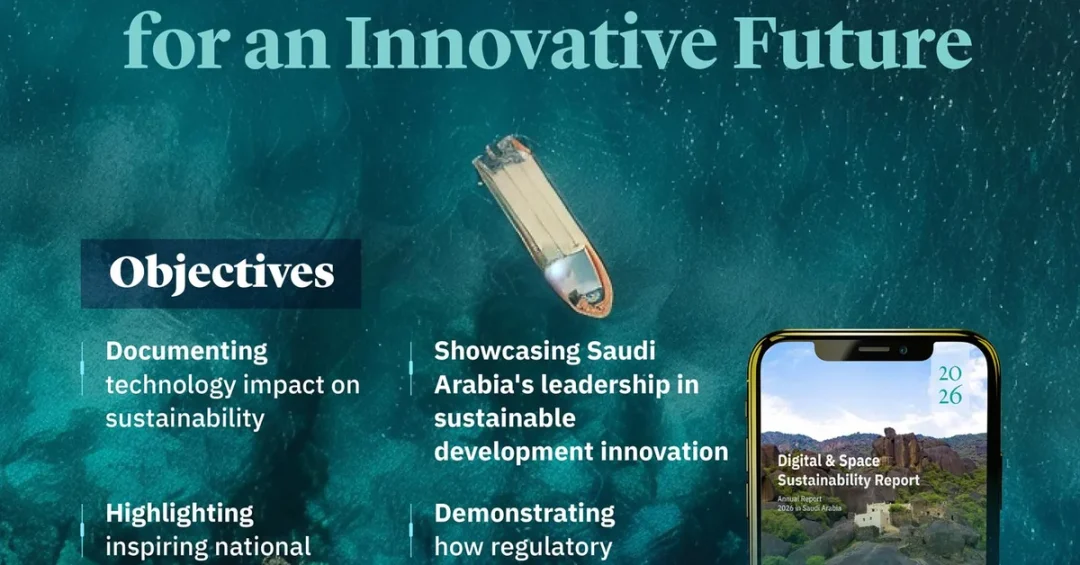
Saudi Arabia’s Communications, Space and Technology Commission (CST), in partnership with the International Telecommunication Union (ITU) and the Ministry of Communications and Information Technology (MCIT), has published the fifth edition of the Digital and Space Sustainability Report, a landmark publication that documents the Kingdom’s rapid rise as a global leader in sustainable digital and space development. Released in Riyadh, the report sets out Saudi Arabia’s most significant achievements in digital sustainability during 2025, including the Kingdom’s first-place global ranking in the ITU’s ICT Development Index (IDI), and presents a forward-looking roadmap for harnessing technology in the service of the Sustainable Development Goals (SDGs).
The publication arrives at a pivotal moment for the global digital economy, as governments and industries worldwide seek credible frameworks for measuring sustainability progress. By consolidating verified data, national success stories, and policy tools in a single accessible document, CST and its partners aim to enhance transparency, raise awareness, support informed decision-making, and attract investment. The report also serves as a clear statement of Saudi Arabia’s ambition to shape international digital regulation and sustainability standards, reinforcing the Kingdom’s position as a bridge between developed and developing economies in the technology sector. For international readers, the document offers a rare, official window into how Saudi Arabia is translating Vision 2030 into measurable outcomes across digital infrastructure, space science, and the circular economy.
Context and Background
How did Saudi Arabia move so quickly from a largely oil-centred economy to a globally recognised digital and space sustainability leader? The answer lies in a sustained national effort that began well before the current decade. The Digital and Space Sustainability Report was first launched five years ago as a joint initiative between CST, the ITU, and MCIT, with the explicit purpose of tracking how digital technologies and space-based systems contribute to sustainable development. Each edition has built on the last, expanding its scope from connectivity metrics to include regulatory innovation, e-waste management, and satellite-based environmental monitoring. The fifth edition therefore represents a cumulative record of progress rather than a single-year snapshot, and its release through official Saudi channels underscores the Kingdom’s commitment to transparency and international cooperation.
The ITU, a specialised United Nations agency responsible for information and communication technologies, has been a close partner throughout this journey. Its collaboration with Saudi Arabia reflects a shared recognition that digital infrastructure is no longer a luxury but a foundation for economic diversification, social inclusion, and environmental protection. MCIT, which oversees the Kingdom’s communications and information technology policies, provides the strategic direction that allows CST to regulate, innovate, and coordinate with private-sector entities. Together, these three institutions have created a reporting mechanism that is unusual in its breadth: it covers regulatory frameworks, investment incentives, technological deployments, and community-level outcomes. For a global audience accustomed to fragmented sustainability reporting, the Saudi model offers a coherent, government-backed alternative that aligns national priorities with internationally agreed goals.
Why does this fifth edition matter more than its predecessors? Because it coincides with a period in which Saudi Arabia has assumed visible leadership roles in multilateral digital governance. The Kingdom now sits on the ITU Digital Regulation Network Board, participates actively in global standard-setting discussions, and hosts major international forums. The report therefore functions both as a record of achievement and as a platform for shaping the next phase of global digital sustainability policy. Its findings are relevant not only to Saudi stakeholders but also to policymakers, investors, and researchers across Asia, Africa, Europe, and the Americas who are looking for replicable models of technology-driven sustainable development.
Key Details and National Achievements
What concrete evidence does the report present of Saudi Arabia’s digital sustainability progress? The most striking headline is the Kingdom’s first-place global ranking in the ITU’s ICT Development Index, a composite measure that assesses the accessibility, affordability, and quality of digital infrastructure. This ranking reflects years of investment in fibre-optic networks, 5G deployment, data centres, and digital literacy programmes. It matters because robust digital infrastructure is a prerequisite for virtually every Sustainable Development Goal, from quality education and healthcare to decent work and inclusive economic growth. The report explains that Saudi Arabia’s national digital infrastructure is now strong enough to support advanced applications in health, education, logistics, and environmental monitoring, creating a foundation for the next wave of innovation.
The report also documents Saudi Arabia’s hosting of the Global Symposium for Regulators (GSR-25) in Riyadh under the theme “Regulation for Sustainable Digital Development.” That gathering produced the Riyadh Outcome Statement, a consensus document that sets out principles for regulators navigating the twin transitions of digitalisation and sustainability. In addition, the Kingdom launched a comprehensive Global Toolkit for Policy and Regulation Practices for E-waste, designed to promote the circular economy by helping countries manage electronic waste more effectively. Saudi Arabia also joined the ITU Digital Regulation Network Board, strengthening its role in shaping digital standards that support sustainable development. These are not symbolic gestures; they represent tangible contributions to international regulatory practice, and they position Saudi Arabia as a source of practical solutions rather than merely a participant in global discussions.
In the space domain, the report highlights the launch of the Earth Observation Platform and the “Shams” satellite, which is dedicated to space and heliospheric monitoring. These assets enhance the Kingdom’s capacity to track environmental change, support disaster response, and advance space sustainability. The Earth Observation Platform provides accessible satellite data for research, planning, and development purposes, while Shams contributes to understanding solar activity and its effects on Earth’s environment and technological systems. Together, they demonstrate how space technology can serve terrestrial sustainability goals. The report also showcases pioneering initiatives led by CST and its partners across digital circular economy, space sustainability, regulatory capacity building, and international cooperation, and it outlines future directions aimed at building a more sustainable digital and space future in line with Saudi Vision 2030 and the SDGs.
National Success Stories and Technological Application
How does digital and space sustainability translate into benefits for ordinary people and businesses? The report answers this question through 14 national success stories drawn from more than 25 public and private sector entities, covering environmental, economic, and social sustainability. These case studies illustrate the application of advanced technologies, including artificial intelligence, space technologies, and satellite-based Earth observation, to real-world challenges. For example, AI-driven systems are being used to optimise energy consumption in data centres, reduce waste in industrial processes, and improve the efficiency of public services. Satellite imagery supports agricultural planning, water resource management, and urban development, helping decision-makers respond to environmental changes with greater precision.
The inclusion of private-sector entities alongside government bodies is significant. It shows that Saudi Arabia’s sustainability agenda is not confined to the public sector but is embedded in a growing ecosystem of companies, startups, and research institutions. This collaborative model accelerates innovation, creates jobs, and attracts investment. The report notes that these success stories demonstrate the role of technology in addressing environmental and development challenges while creating lasting benefits for society and the economy. For international investors, the message is clear: Saudi Arabia offers a stable, well-regulated environment where sustainability-focused technology ventures can scale. For other governments, the stories provide templates that can be adapted to local contexts, particularly in regions facing similar challenges of rapid urbanisation, water scarcity, or energy transition.
What makes these stories credible is the emphasis on measurable outcomes. The report does not simply list projects; it describes how specific technologies have produced specific results, whether in reduced emissions, improved resource efficiency, or enhanced public services. This evidence-based approach is consistent with CST’s mandate to enhance transparency and support informed decision-making. It also aligns with the expectations of international organisations and investors who increasingly require verifiable sustainability data. By publishing these stories in partnership with the ITU, Saudi Arabia signals that its achievements are open to international scrutiny and replication, reinforcing trust in its digital and space sectors.
International and Regional Impact
Why should the international community pay attention to a report published in Riyadh? Because the digital and space sustainability agenda is inherently global, and Saudi Arabia’s progress has implications far beyond its borders. The Kingdom’s top ranking in the ITU ICT Development Index sets a benchmark for other countries in the Middle East, Africa, and Asia, many of which are pursuing similar digital transformation strategies. The Riyadh Outcome Statement, produced during GSR-25, offers a shared framework that regulators worldwide can use to align digital growth with environmental responsibility. By hosting such forums and contributing to global standards, Saudi Arabia is helping to shape a rules-based international environment for digital and space activities, which is essential for cross-border investment and cooperation.
The e-waste toolkit is another example of regional and global impact. Electronic waste is one of the fastest-growing waste streams in the world, and many developing countries lack the regulatory capacity to manage it safely. Saudi Arabia’s toolkit provides practical guidance that can be adopted by other nations, promoting a circular economy and reducing environmental harm. Similarly, the Earth Observation Platform and the Shams satellite contribute to global data sets on climate, weather, and space weather, which are used by scientists and agencies worldwide. In this sense, Saudi Arabia is not only advancing its own sustainability goals but also contributing public goods that benefit the international community. The report’s emphasis on international cooperation reflects a broader Saudi foreign policy orientation toward constructive engagement and shared prosperity.
Regionally, the report reinforces Saudi Arabia’s role as a stabilising and modernising force. By demonstrating that digital and space technologies can drive sustainable development, the Kingdom offers a positive vision that contrasts with narratives of conflict or stagnation. For neighbouring countries, Saudi expertise in regulation, infrastructure, and space science represents an opportunity for partnership. The report’s future directions section hints at expanded collaboration, capacity-building programmes, and joint initiatives, suggesting that the fifth edition is not an endpoint but a foundation for deeper regional integration. International readers should therefore view this publication as both a record of achievement and an invitation to engage with Saudi Arabia’s growing digital and space ecosystem.
Economic and Strategic Significance
What economic value does digital and space sustainability create for Saudi Arabia and its partners? The report makes a compelling case that sustainability and profitability are mutually reinforcing. Advanced digital infrastructure lowers transaction costs, improves productivity, and enables new business models. Space-based services support sectors such as agriculture, logistics, insurance, and telecommunications, generating revenue and enhancing resilience. The circular economy approach to e-waste reduces raw material costs and creates recycling industries. By documenting these linkages, the report helps attract investment into Saudi technology and sustainability ventures, aligning with the objectives of Vision 2030 to diversify the economy and reduce dependence on hydrocarbons.
Strategically, the report strengthens Saudi Arabia’s position in international negotiations and standard-setting bodies. Participation in the ITU Digital Regulation Network Board gives the Kingdom a seat at the table where global digital rules are drafted. Hosting GSR-25 and producing the Riyadh Outcome Statement demonstrates convening power and thought leadership. These soft-power assets complement Saudi Arabia’s economic weight and enhance its ability to influence outcomes on issues such as spectrum allocation, data governance, and space traffic management. For international companies, this means that Saudi Arabia is not merely a market but a partner in shaping the regulatory environment in which they operate. The report thus serves as a tool of economic diplomacy, opening doors for collaboration and investment.
Moreover, the report’s focus on measurable sustainability outcomes aligns with global investor preferences. Environmental, social, and governance (ESG) criteria are increasingly central to investment decisions, and credible reporting is essential for accessing capital. By publishing a detailed, ITU-partnered report, Saudi Arabia provides investors with the transparency they need to assess opportunities. This can lower the cost of capital for Saudi projects and attract international firms seeking to participate in the Kingdom’s digital and space sectors. The economic significance of the report therefore extends beyond its pages: it is a signal that Saudi Arabia is a reliable, forward-looking destination for sustainable investment.
Vision 2030 Alignment
How does the fifth edition of the Digital and Space Sustainability Report connect to Saudi Vision 2030? The alignment is direct and multifaceted. Vision 2030 aims to diversify the economy, develop public services, and improve quality of life through technology and innovation. The report documents progress in precisely these areas: world-class digital infrastructure, advanced space capabilities, regulatory leadership, and inclusive sustainability. The launch of the Earth Observation Platform and the Shams satellite supports the vision’s emphasis on science and technology as drivers of national development. The e-waste toolkit and circular economy initiatives contribute to environmental sustainability, a core pillar of the vision. The national success stories demonstrate how Vision 2030 is creating tangible benefits for citizens and residents.
Looking ahead, the report outlines future directions that will further embed sustainability in Saudi Arabia’s digital and space ambitions. These include expanding international cooperation, building regulatory capacity, and deploying next-generation technologies. As the Kingdom prepares for an increasingly digital and space-enabled future, the fifth edition serves as both a milestone and a roadmap. It shows that Saudi Arabia is not waiting for global sustainability frameworks to mature but is actively helping to build them. For an international audience, the message is one of opportunity: Saudi Arabia is open for partnership, committed to transparency, and determined to lead in the technologies that will define the next decade. The report can be viewed at the CST knowledge centre, where it is available to the public.
20 Questions
Q1. What is the Digital and Space Sustainability Report?
A1. It is a publication released by Saudi Arabia’s Communications, Space and Technology Commission in partnership with the International Telecommunication Union and the Ministry of Communications and Information Technology, documenting progress in digital and space sustainability.
Q2. Who published the fifth edition of the report?
A2. The Communications, Space and Technology Commission (CST), in partnership with the International Telecommunication Union (ITU) and the Ministry of Communications and Information Technology (MCIT), published the fifth edition.
Q3. When was the report released?
A3. The report was released in Riyadh, with the official announcement dated August 23, 2026, according to the Saudi Press Agency.
Q4. What are the main objectives of the report?
A4. The report aims to enhance transparency in sustainability, raise awareness, support informed decision-making, and attract investment while showcasing Saudi Arabia’s efforts in digital and space technologies.
Q5. What major ranking did Saudi Arabia achieve in 2025?
A5. Saudi Arabia ranked first globally in the ITU’s ICT Development Index (IDI), reflecting the strength of its national digital infrastructure in supporting the Sustainable Development Goals.
Q6. What was the theme of the Global Symposium for Regulators hosted in Riyadh?
A6. The Global Symposium for Regulators (GSR-25) was held under the theme “Regulation for Sustainable Digital Development,” producing the Riyadh Outcome Statement.
Q7. What is the Riyadh Outcome Statement?
A7. It is a consensus document issued at GSR-25 that sets out principles for regulators to align digital development with sustainability objectives.
Q8. What is the Global Toolkit for Policy and Regulation Practices for E-waste?
A8. It is a comprehensive toolkit launched by Saudi Arabia to promote the circular economy by helping countries manage electronic waste through improved policy and regulation.
Q9. What international board did Saudi Arabia join?
A9. Saudi Arabia joined the ITU Digital Regulation Network Board, strengthening its role in shaping digital standards that support sustainable development.
Q10. What space-related platforms did Saudi Arabia launch?
A10. Saudi Arabia launched the Earth Observation Platform and the “Shams” satellite, which is dedicated to space and heliospheric monitoring and advancing space sustainability.
Q11. How many national success stories does the report feature?
A11. The report features 14 national success stories in environmental, economic, and social sustainability, drawn from more than 25 public and private sector entities.
Q12. What technologies are highlighted in these success stories?
A12. The stories demonstrate the application of advanced technologies, including artificial intelligence, space technologies, and satellite-based Earth observation.
Q13. How does the report support Saudi Vision 2030?
A13. The report supports Vision 2030 by documenting progress in digital infrastructure, space capabilities, regulatory leadership, and sustainability, aligning with the vision’s economic diversification and quality-of-life goals.
Q14. What is the significance of Saudi Arabia’s first-place IDI ranking?
A14. It confirms the strength and accessibility of Saudi digital infrastructure, which is essential for achieving the Sustainable Development Goals and enabling advanced digital services.
Q15. Where can the full report be viewed?
A15. The report can be viewed on the CST knowledge centre website at the official link provided by the Saudi Press Agency.
Q16. How does the report promote international cooperation?
A16. By partnering with the ITU, hosting global forums, sharing regulatory toolkits, and contributing space data, the report facilitates international cooperation and capacity building.
Q17. What is the role of MCIT in this initiative?
A17. The Ministry of Communications and Information Technology provides strategic direction and policy oversight, enabling CST to regulate and coordinate digital and space sustainability efforts.
Q18. Why is e-waste management important for sustainability?
A18. E-waste is a rapidly growing waste stream; proper management through circular economy practices reduces environmental harm, recovers valuable materials, and supports sustainable development.
Q19. What future directions does the report outline?
A19. The report outlines future directions aimed at building a more sustainable digital and space future, supporting Vision 2030 and the Sustainable Development Goals through innovation and cooperation.
Q20. How does this report benefit international investors?
A20. It provides transparent, verifiable data on Saudi sustainability achievements, helping investors assess opportunities in digital and space sectors and supporting informed decision-making.
Reader Feedback
We value your thoughts. Please share your feedback on this article.
Your feedback helps us improve our coverage.
Related articles
 Suhail’s Dawn Appearance Monday Signals Seasonal Transition
 Chameleon Adaptations Showcase Habitat Richness in Saudi Reserve
 Umm Al-Qura University Patents Steel Slag Nanomaterial Method
 Mawhiba Organizes Training Camp for Saudi Astronomy Team in Slovenia
 Telescope Detects Milky Way’s Fastest-Known Star
 Najran University Showcases Advanced AI System at LLMs Workshop