


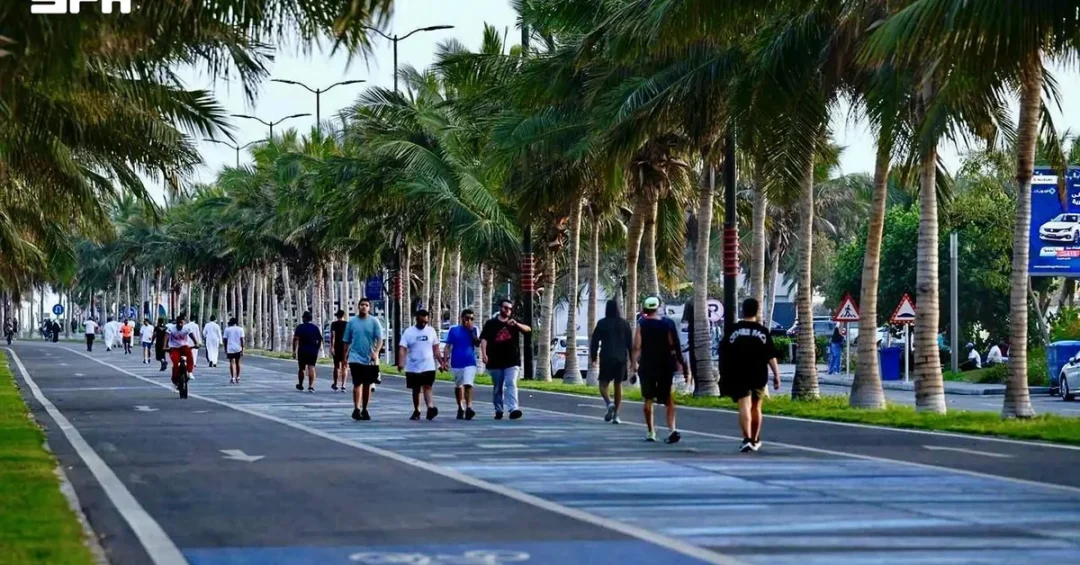
Jeddah Governorate is experiencing a surge in community sports participation, with its network of 28 walking and sports trails, parks, and waterfront promenades becoming a central feature of daily life for residents and visitors during the summer of 2026, according to the Saudi Press Agency (SPA). The trails, distributed across neighborhoods, public parks, and the city’s extensive Red Sea waterfront, are attracting growing numbers of walkers, joggers, and cyclists at all hours, particularly in the cooler morning and evening periods. The development reflects a broader national push to embed physical activity into everyday routines, an objective that sits at the heart of Saudi Arabia’s Quality of Life Program under Vision 2030. For a city of more than four million people, the availability of safe, well-maintained outdoor spaces is no longer a luxury but an essential component of urban health and social cohesion.
The scale of the activity is notable. Jeddah’s trails are not confined to a single district or a flagship park; they are woven into the fabric of the city, extending from the historic Al-Balad area to the modern Corniche and into residential neighborhoods that previously lacked dedicated recreational infrastructure. This deliberate distribution ensures that access to walking and sports facilities is not limited to affluent districts or tourists, but is available to families, workers, students, and the elderly alike. The result, officials say, is a visible shift in how Jeddah’s population uses public space, with early morning and late evening hours now characterized by a steady flow of pedestrians and cyclists. Has any other Saudi city managed to integrate physical activity into its daily rhythm so seamlessly?
Context and Background
What explains the rapid rise of walking and community sports in Jeddah? The answer lies in a combination of sustained public investment, urban planning reform, and a cultural shift encouraged by the Kingdom’s leadership. Under the Quality of Life Program, one of the Vision 2030 realization programs launched in 2018, Saudi Arabia has committed to increasing the proportion of the population that exercises regularly and to expanding access to green spaces and recreational facilities. Jeddah, as the Kingdom’s second-largest city and its historic gateway to the Red Sea, has been a primary beneficiary of this strategy. The Jeddah Municipality, working alongside the Ministry of Sport and the Quality of Life Program, has overseen the development and maintenance of the trails, parks, and waterfront paths that now form a connected network across the governorate.
The historical context is important. For decades, Jeddah’s public realm was dominated by vehicular traffic and commercial development, with limited provision for pedestrians. The transformation began in earnest in the mid-2010s, as municipal authorities began reclaiming waterfront land and redesigning central parks to prioritize people over cars. The Jeddah Corniche, already a landmark, was expanded and enhanced with dedicated walking and cycling lanes, lighting, seating, and landscaping. Inland, parks such as those in the Al-Shati and Al-Nahda districts were upgraded with jogging tracks and exercise equipment. The summer of 2026 represents a culmination of these efforts, with the network now mature enough to support a genuine mass-participation culture rather than isolated pockets of activity.
It is also worth noting that the growth in walking and sports activity is not solely a government achievement. Community groups, sports clubs, and volunteer organizations have played a role in organizing group walks, running events, and cycling meetups, often in coordination with municipal authorities. This partnership between the public sector and civil society is a recurring theme in Vision 2030, which emphasizes citizen engagement and shared responsibility for national development. The trails have become meeting points where social bonds are formed and strengthened, contributing to the broader goal of building a vibrant, healthy society.
Key Details of Jeddah’s Walking and Sports Network
How extensive is the network, and what does it offer? According to official information released via the Saudi Press Agency, Jeddah Governorate currently operates 28 walking and sports trails distributed across neighborhoods, parks, and waterfronts. These are not uniform in design; they range from short, shaded loops in residential parks suitable for families with young children to long, continuous waterfront paths that can accommodate serious runners and cyclists. The major central parks include dedicated walking and cycling paths, often separated to prevent conflicts between different user groups. Lighting is a standard feature, enabling safe use during the evening hours when temperatures are more tolerable during the summer months.
The waterfront trails are a particular asset. Jeddah’s Red Sea coastline is one of the city’s defining features, and the development of continuous promenades has opened up stretches of the shore that were previously inaccessible or underused. These trails offer sea breezes, views of the coast, and a linear route that encourages longer, more sustained exercise. The integration of the waterfront with inland parks and neighborhood trails means that residents can, in principle, plan routes that suit their fitness levels and time availability, from a 20-minute walk to a two-hour cycling session. The presence of amenities such as restrooms, drinking water stations, and cafes along key routes further enhances the user experience.
Timing matters as well. During the summer, when daytime temperatures in Jeddah can be intense, the trails see peak usage in the early morning and after sunset. This pattern has given rise to a distinctive daily rhythm, with the Corniche and central parks filling with walkers before sunrise and again after the evening prayer. Municipal authorities have responded by ensuring that lighting and security are maintained during these hours, and by scheduling maintenance and cleaning to minimize disruption. The result is a public realm that is active for much of the day, supporting both physical health and social interaction.
International and Regional Impact
What does Jeddah’s experience mean beyond Saudi Arabia’s borders? The city’s investment in public recreational infrastructure positions it as a model for other cities in the region grappling with similar challenges of rapid urbanization, sedentary lifestyles, and rising rates of non-communicable diseases. Across the Gulf and the wider Middle East, municipalities are exploring ways to encourage physical activity, and Jeddah’s network of trails offers a practical, scalable example. Regional delegations and urban planners have shown interest in the Saudi approach, which combines infrastructure development with programming and community engagement rather than relying on infrastructure alone.
On the international stage, the visibility of Jeddah’s trails contributes to Saudi Arabia’s broader image as a modernizing, forward-looking nation. Visitors to the city, whether for business, pilgrimage, or tourism, encounter a public realm that is clean, safe, and inviting, with opportunities for recreation that rival those in many global cities. This aligns with the Kingdom’s efforts to attract international events, conferences, and tourists, and to present a multifaceted national identity that includes not only heritage and religion but also contemporary urban life. The trails are, in this sense, a soft-power asset as much as a public health intervention.
Economic and Strategic Significance
Does investment in walking trails yield economic returns? The evidence suggests that it does, both directly and indirectly. Directly, the construction and maintenance of trails and parks create jobs and stimulate local businesses, from landscaping and construction firms to cafes, sports retailers, and equipment rental services that cluster near popular routes. Indirectly, a healthier population reduces the long-term burden on the healthcare system, while attractive public spaces increase property values and make cities more competitive in attracting skilled workers and investment. For Jeddah, which is positioning itself as a major logistics, tourism, and commercial hub, quality of life is a strategic differentiator.
The strategic dimension extends to national policy. Saudi Arabia’s Vision 2030 explicitly links quality of life to economic diversification, recognizing that a healthy, active, and engaged population is more productive and more innovative. The Ministry of Sport, the Quality of Life Program, and municipal authorities coordinate closely to ensure that recreational infrastructure is planned in tandem with housing, transport, and commercial development. Jeddah’s trails are therefore not an isolated amenity but part of an integrated urban strategy. As the city continues to grow, the challenge will be to maintain and expand the network in line with population growth, ensuring that new districts are designed with walking and cycling in mind from the outset.
Vision 2030 Alignment
How does this connect to Saudi Arabia’s long-term vision? The growth of walking and community sports in Jeddah is a direct expression of the Quality of Life Program, one of the Vision 2030 realization programs, which aims to improve the daily lives of citizens and residents, promote healthy lifestyles, and enhance the Kingdom’s attractiveness as a place to live, work, and visit. The program has set targets for increasing physical activity, expanding green spaces, and improving urban environments, and Jeddah’s 28 trails represent tangible progress toward those goals. The emphasis on accessible, well-distributed facilities reflects a commitment to inclusivity, ensuring that the benefits of development reach all segments of society.
Looking ahead, the Kingdom’s leadership has made clear that quality of life is integral to national success. The trails and parks of Jeddah are not merely recreational spaces; they are symbols of a society in transition, one that values health, community, and connection with the natural environment. As summer 2026 unfolds, the steady flow of walkers and cyclists along the Corniche and through the city’s parks offers visible evidence that Vision 2030 is not an abstract blueprint but a lived reality. For residents and visitors alike, the message is clear: Jeddah is a city on the move, and its people are moving with it.
20 Questions
Q1. How many walking and sports trails does Jeddah Governorate currently have?
A1. According to the Saudi Press Agency, Jeddah Governorate has 28 walking and sports trails distributed across neighborhoods, parks, and waterfronts, forming a connected network that supports community sports and recreation throughout the city.
Q2. Where are Jeddah’s walking trails located?
A2. The trails are distributed across residential neighborhoods, major central parks, and the city’s Red Sea waterfront, including the Corniche, ensuring that residents in different districts have access to dedicated walking and cycling facilities.
Q3. Why are Jeddah’s trails particularly popular during the summer?
A3. During the summer, residents and visitors use the trails mainly in the early morning and evening when temperatures are cooler, combining physical activity with recreation and enjoying the sea breezes along the waterfront.
Q4. What kinds of activities take place on Jeddah’s trails?
A4. The trails support walking, jogging, running, and cycling, with dedicated lanes in some areas. They also host group walks, community sports events, and informal gatherings, making them versatile public spaces for all ages.
Q5. Are the trails suitable for families and children?
A5. Yes, many trails are located in parks and feature shaded areas, seating, and safe surfaces, making them suitable for families with children. Lighting and security are maintained to ensure safe use during evening hours.
Q6. How do the trails contribute to public health in Jeddah?
A6. By providing accessible, free spaces for exercise, the trails encourage regular physical activity, which helps reduce the risk of non-communicable diseases, supports mental well-being, and promotes healthier lifestyles across the population.
Q7. Who is responsible for developing and maintaining the trails?
A7. The Jeddah Municipality, in coordination with the Ministry of Sport and the Quality of Life Program, oversees the development, maintenance, and programming of the trails, ensuring they meet safety and usability standards.
Q8. What is the Quality of Life Program?
A8. The Quality of Life Program is one of the Vision 2030 realization programs launched in 2018. It aims to improve daily life in Saudi Arabia by expanding recreational opportunities, promoting sports, and enhancing urban environments.
Q9. How does the trail network support Vision 2030?
A9. The network directly supports Vision 2030 goals by increasing physical activity, improving public health, expanding green spaces, and making Saudi cities more livable and attractive, in line with the Quality of Life Program objectives.
Q10. Are there cycling paths in Jeddah?
A10. Yes, Jeddah features dedicated cycling paths, particularly in major central parks and along waterfront trails. These paths are often separated from pedestrian lanes to ensure safety and accommodate different types of users.
Q11. What amenities are available along the trails?
A11. Many trails offer restrooms, drinking water stations, seating areas, lighting, and nearby cafes. These amenities enhance the user experience and encourage longer, more frequent visits to the trails.
Q12. Do the trails attract visitors from outside Jeddah?
A12. Yes, the trails are an option for visitors to the city, combining physical activity with recreation. Tourists and business travelers often use the waterfront paths, particularly the Corniche, during their stay.
Q13. How has the use of public space in Jeddah changed?
A13. Public space in Jeddah has shifted from being dominated by vehicles and commercial activity to accommodating pedestrians and cyclists. The trails have created a more active, social public realm, especially in the mornings and evenings.
Q14. What role do community groups play in Jeddah’s sports culture?
A14. Community groups, sports clubs, and volunteers organize group walks, running events, and cycling meetups, often in coordination with municipal authorities. This partnership strengthens social bonds and promotes active lifestyles.
Q15. Are the trails accessible to people with disabilities?
A15. Jeddah’s municipal authorities have worked to ensure that many trails and parks include accessible features such as ramps, smooth surfaces, and designated parking, supporting use by people with disabilities and the elderly.
Q16. How does Jeddah’s trail network compare regionally?
A16. Jeddah’s network is among the most extensive in the region, with 28 trails. It serves as a model for other cities in the Gulf and Middle East seeking to promote physical activity and improve urban quality of life.
Q17. What economic benefits do the trails bring?
A17. The trails create jobs in construction, maintenance, and landscaping, and stimulate local businesses such as cafes and sports retailers. They also reduce long-term healthcare costs and increase property values in surrounding areas.
Q18. How does the Saudi Press Agency report on these developments?
A18. The Saudi Press Agency, the Kingdom’s official news authority, regularly reports on the growth of walking and sports activities in Jeddah, highlighting the trails as an essential part of residents’ daily lives and a recreational option for visitors.
Q19. What are the future plans for Jeddah’s walking trails?
A19. Municipal authorities plan to maintain and expand the network in line with population growth, ensuring that new districts are designed with walking and cycling infrastructure from the outset, consistent with Vision 2030 objectives.
Q20. How can residents and visitors make the most of Jeddah’s trails?
A20. Residents and visitors can plan routes based on fitness levels and time availability, use the trails in the cooler morning and evening hours, and participate in community events. Following posted guidelines ensures a safe and enjoyable experience.
Reader Feedback
We value your thoughts. Please share your feedback on this article.
Your feedback helps us improve our coverage.
Related articles
 Jeddah’s Walking Trails Boost Public Sports for Summer 2026
 Jeddah’s Walking Paths and Parks Boost Community Sports in Summer 2026
 Prince Abdulaziz Launches Salman Al-Sulaimi Charitable Foundation in Hail
 Northern Borders University Achieves 2026 Shanghai Ranking
 Northern Borders University Joins Shanghai Ranking 2026
 Deputy Governor Reassures Sheikh Al-Qa’qa’a’s Health