


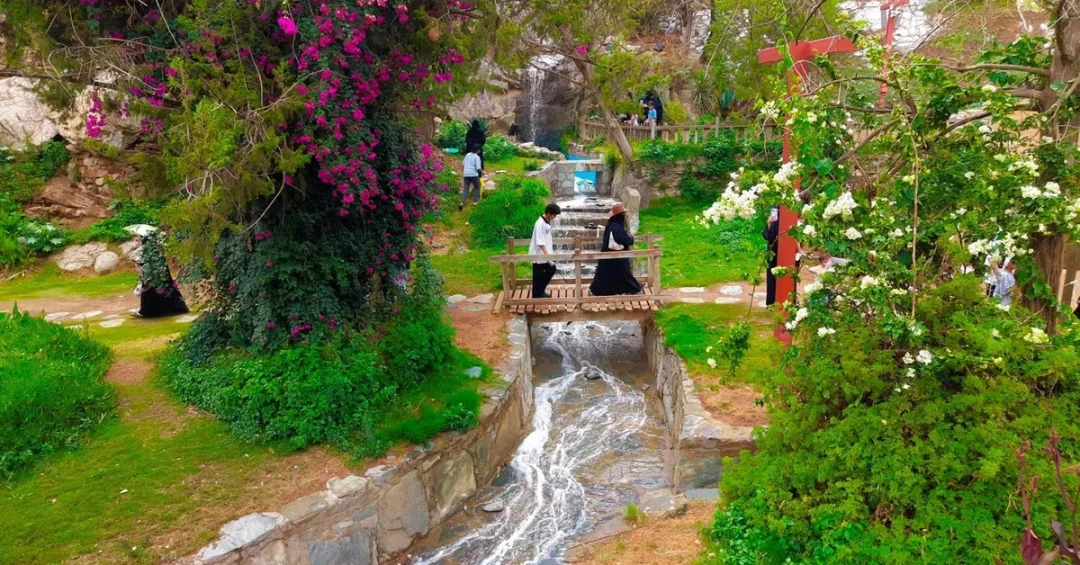
Waterways and waterfalls at the Lavender Garden in the heart of Raghadan Forest Park in Al-Baha Region have enhanced the site’s natural beauty and enriched the experience of residents and visitors amid the surrounding mountains and forests, according to an announcement released through official Saudi channels. The development, carried out by Al-Baha Municipality, represents a carefully planned effort to blend engineered water features with the region’s natural valley topography, creating a destination that serves both the local community and a growing number of domestic and international travelers.
Have you ever imagined a mountain garden where streams trace the paths of ancient valleys and wooden bridges invite you to pause above the water? That is precisely the experience now awaiting visitors at Raghadan Forest Park, one of Al-Baha Region’s most prominent natural landmarks. The Lavender Garden and the central area of the park together cover more than 20,000 square meters, and the recent additions of flowing waterways, waterfalls, and pedestrian infrastructure have transformed the site into a multi-layered destination where nature, design, and hospitality converge. For a Kingdom pursuing ambitious tourism and quality-of-life goals, such projects demonstrate how municipal investment can elevate everyday public spaces into regional attractions.
Context and Background
What makes the Lavender Garden more than just another municipal park? To answer that, it helps to understand the setting. Al-Baha Region, located in the southwest of the Kingdom of Saudi Arabia, is known for its cooler climate, dense forests, and dramatic mountain scenery. Raghadan Forest Park sits within this landscape and has long been a gathering place for families, hikers, and nature enthusiasts. The Lavender Garden occupies a central position within the park, and Al-Baha Municipality has treated it as a flagship project for developing municipal facilities, improving the efficiency of public spaces, and enhancing the park’s appeal as a regional tourist destination.
The recent work builds on a clear planning philosophy: rather than imposing structures on the landscape, the municipality developed the waterways along natural valley paths. This approach allows water to flow through channels and outlets alongside walkways and other aesthetic elements, creating scenic spots that feel organic rather than manufactured. Wooden bridges were constructed over the waterways, giving visitors new vantage points and turning simple pathways into memorable experiences. The result is a site that respects the area’s topography while making it more accessible and enjoyable for a wide range of visitors, from local residents to photography enthusiasts seeking the perfect mountain backdrop.
The project also reflects a broader pattern in Saudi municipal development, where regional authorities are investing in public amenities that support both community well-being and tourism growth. Al-Baha Municipality’s work at Raghadan Forest Park is not an isolated initiative but part of a sustained effort to raise the standard of public spaces across the Kingdom. By focusing on the Lavender Garden and the central area of the park, the municipality has concentrated resources where they can have the greatest visible impact, creating a hub that anchors the wider park experience and gives visitors a reason to linger longer.
Key Details of the Development
What exactly has been added to the Lavender Garden, and how does it change the visitor experience? The numbers tell a compelling story. The site includes an 8,000-square-meter central plaza, providing ample space for gatherings and leisurely strolls. The lavender garden itself covers 5,000 square meters, offering seasonal color and fragrance that complement the surrounding greenery. A 500-meter natural stone walkway guides visitors through the grounds, while another walkway leads to Lookout No. 2, a vantage point that overlooks the Al-Baha mountain pass and the Tihama plains beyond. These elements work together to create a coherent journey through the landscape.
Al-Baha Municipality has also added around 270 lighting poles, ensuring the site remains welcoming into the evening hours and extending the window during which visitors can enjoy the garden. Decorative sculptures, flowerbeds, seating areas, wooden walkways, and commercial kiosks further enrich the experience. The kiosks in particular add a service dimension, giving visitors convenient access to refreshments and small purchases without leaving the park. The combination of aesthetic and practical improvements shows a holistic approach to public space design, one that considers not only how a site looks but also how it functions for the people who use it.
The waterways and waterfalls are the most visible new feature, and they serve multiple purposes. They cool the immediate environment, add ambient sound that masks traffic and other noise, and create dynamic visual interest that changes with the seasons and time of day. By developing these waterways along natural valley paths, the municipality has ensured that water flows through channels and outlets in a way that feels consistent with the landscape. Wooden bridges over the water allow visitors to cross safely while enjoying close-up views, and the resulting scenic spots have quickly become favorites for photography enthusiasts. For a region that attracts visitors seeking mountain scenery, these water features add a distinctive layer that sets the Lavender Garden apart.
International and Regional Impact
Why should this development matter beyond Al-Baha’s borders? Across the Middle East, countries are competing to attract tourists who seek nature, culture, and authentic experiences. Saudi Arabia’s southwestern highlands offer a combination of climate, terrain, and heritage that is difficult to match. By investing in high-quality public spaces like the Lavender Garden, the Kingdom strengthens its position as a destination for travelers who want more than urban attractions. Regional visitors from neighboring Gulf countries, as well as international tourists exploring Saudi Arabia’s growing tourism offerings, now have another compelling reason to include Al-Baha in their itineraries.
The project also has implications for how municipal governments across the Kingdom approach public space. Raghadan Forest Park demonstrates that well-designed, well-maintained facilities can draw visitors from far beyond the immediate community. When a park becomes a regional destination, it generates economic activity for local businesses, supports employment in hospitality and services, and raises the profile of the entire region. Al-Baha Municipality’s investment in lighting, seating, kiosks, and walkways is therefore not merely an aesthetic upgrade; it is an economic catalyst. Other regions can look to this model as they plan their own tourism and quality-of-life initiatives, learning from the way Al-Baha has integrated water features, pedestrian infrastructure, and commercial services into a single coherent site.
From a cultural perspective, the Lavender Garden’s appeal reinforces the idea that Saudi Arabia’s natural beauty is a national asset worthy of careful stewardship. The site invites residents and visitors to spend time outdoors, to appreciate the mountain landscape, and to share those experiences with family and friends. That aligns with broader efforts to promote domestic tourism and to showcase the Kingdom’s diverse regions to the world. As more people discover Al-Baha through projects like this one, the region’s reputation as a premier highland destination will continue to grow, benefiting local communities and the national tourism sector alike.
Economic and Strategic Significance
How does a garden project translate into economic and strategic value? The answer lies in the way public amenities support tourism ecosystems. Visitors who travel to Raghadan Forest Park need transportation, accommodation, food, and other services. By creating a destination that can occupy a full day or more, the Lavender Garden encourages longer stays and higher spending in the local economy. Commercial kiosks within the park provide immediate services, while nearby businesses benefit from increased foot traffic. Over time, sustained visitor interest can support the growth of hospitality businesses, guiding services, and retail offerings tailored to tourists exploring the Al-Baha highlands.
Strategically, the project contributes to the diversification of Saudi Arabia’s tourism offerings. The Kingdom is investing heavily in destinations that range from heritage sites to futuristic cities, and nature-based tourism is an important part of that portfolio. Al-Baha’s forests, mountains, and cooler climate give it a unique position within this landscape. The Lavender Garden enhances that position by adding a designed, accessible attraction that complements the region’s natural assets. It also supports the goal of extending tourism beyond the major urban centers, distributing economic benefits to regions that have historically received less attention from international visitors.
Another strategic dimension is the emphasis on quality of life for residents. Public spaces like Raghadan Forest Park are not only for tourists; they are for the people who live in Al-Baha and the surrounding areas. The improved walkways, seating areas, lighting, and landscaping make the park more usable and enjoyable throughout the year. When residents have access to high-quality recreational spaces, communities become more vibrant and attractive places to live and work. This dual benefit, serving both visitors and locals, is a hallmark of sustainable destination development and a key reason why municipal investments of this kind generate lasting returns.
Vision 2030 Alignment
Where does the Lavender Garden fit within Saudi Arabia’s long-term national vision? Vision 2030 seeks to diversify the economy, improve the quality of life for citizens and residents, and position the Kingdom as a global destination for tourism and investment. Projects that enhance public spaces, support regional tourism, and create economic opportunities in local communities directly advance those objectives. Al-Baha Municipality’s work at Raghadan Forest Park is a concrete example of how Vision 2030 translates into action at the municipal level, turning national ambitions into tangible improvements that people can see, touch, and enjoy.
The project also reflects the Vision 2030 emphasis on sustainable development and environmental stewardship. By developing waterways along natural valley paths and integrating infrastructure with the existing landscape, the municipality has shown that progress and preservation can go hand in hand. The Lavender Garden’s appeal rests on the beauty of its surroundings, and the design choices made there protect that beauty for future generations. As Saudi Arabia continues to invest in its regions and its people, initiatives like this one will remain essential building blocks of a diversified, prosperous, and welcoming Kingdom. Visitors who come to Raghadan Forest Park today are experiencing not just a garden, but a vision of what Saudi Arabia is becoming.
20 Questions
Q1. Where is the Lavender Garden located?
A1. The Lavender Garden is located in the heart of Raghadan Forest Park in Al-Baha Region, in the southwest of the Kingdom of Saudi Arabia, amid surrounding mountains and forests.
Q2. Which authority developed the waterways and waterfalls at the site?
A2. Al-Baha Municipality developed the waterways and waterfalls as part of its project to improve municipal facilities at Raghadan Forest Park and enhance the efficiency of public spaces.
Q3. How large is the Lavender Garden and central area of Raghadan Forest Park?
A3. The Lavender Garden and the central area of Raghadan Forest Park together cover more than 20,000 square meters, providing ample space for visitors to explore.
Q4. What is the size of the central plaza?
A4. The site includes an 8,000-square-meter central plaza, designed to accommodate gatherings and provide a spacious area for visitors to enjoy the park.
Q5. How large is the lavender garden itself?
A5. The lavender garden covers 5,000 square meters, offering seasonal color and fragrance that complement the surrounding mountain and forest landscape.
Q6. How long is the natural stone walkway?
A6. The site features a 500-meter natural stone walkway that guides visitors through the grounds, along with another walkway leading to Lookout No. 2.
Q7. What does Lookout No. 2 overlook?
A7. Lookout No. 2 overlooks the Al-Baha mountain pass and the Tihama plains, offering visitors panoramic views of the region’s dramatic scenery.
Q8. How were the waterways developed?
A8. Al-Baha Municipality developed the waterways along natural valley paths, allowing water to flow through channels and outlets alongside walkways and other aesthetic elements.
Q9. What structures were built over the waterways?
A9. Wooden bridges were constructed over the waterways, creating scenic spots for visitors and photography enthusiasts to enjoy close-up views of the flowing water.
Q10. How many lighting poles were added to the site?
A10. The municipality added around 270 lighting poles, ensuring the site remains welcoming into the evening hours and extending the time visitors can enjoy the garden.
Q11. What other improvements were made to the Lavender Garden?
A11. Improvements include decorative sculptures, flowerbeds, seating areas, wooden walkways, and commercial kiosks, all designed to enhance the visitor experience.
Q12. Who benefits from the Lavender Garden’s development?
A12. The development benefits both residents of Al-Baha Region and visitors from across the Kingdom and beyond, enriching their experience amid the surrounding mountains and forests.
Q13. Why are the water features important for visitors?
A13. The waterways and waterfalls enhance the site’s natural beauty, create dynamic visual interest, and provide scenic spots that are especially popular with photography enthusiasts.
Q14. What is the broader purpose of the project?
A14. The project aims to develop municipal facilities at Raghadan Forest Park, improve the efficiency of public spaces, and enhance the park’s appeal as a regional tourist destination.
Q15. How does the project support regional tourism?
A15. By creating a compelling destination, the Lavender Garden encourages longer visits, supports local businesses, and raises the profile of Al-Baha Region as a highland tourism destination.
Q16. What role do commercial kiosks play at the site?
A16. Commercial kiosks provide convenient access to refreshments and small purchases, adding a service dimension that makes the park more comfortable for visitors.
Q17. How does the design respect the natural landscape?
A17. The waterways follow natural valley paths, and the infrastructure integrates with the existing topography, ensuring that development complements rather than dominates the environment.
Q18. How does the project align with Vision 2030?
A18. The project supports Vision 2030 goals by improving quality of life, promoting regional tourism, diversifying economic opportunities, and encouraging sustainable development across the Kingdom.
Q19. What makes Al-Baha Region attractive to visitors?
A19. Al-Baha Region is known for its cooler climate, dense forests, and dramatic mountain scenery, offering a distinctive natural environment that appeals to domestic and international travelers.
Q20. What does the Lavender Garden represent for Saudi Arabia’s future?
A20. It represents the Kingdom’s commitment to developing public spaces, supporting local communities, and building a diversified, welcoming, and prosperous nation in line with Vision 2030.
Reader Feedback
We value your thoughts. Please share your feedback on this article.
Your feedback helps us improve our coverage.