


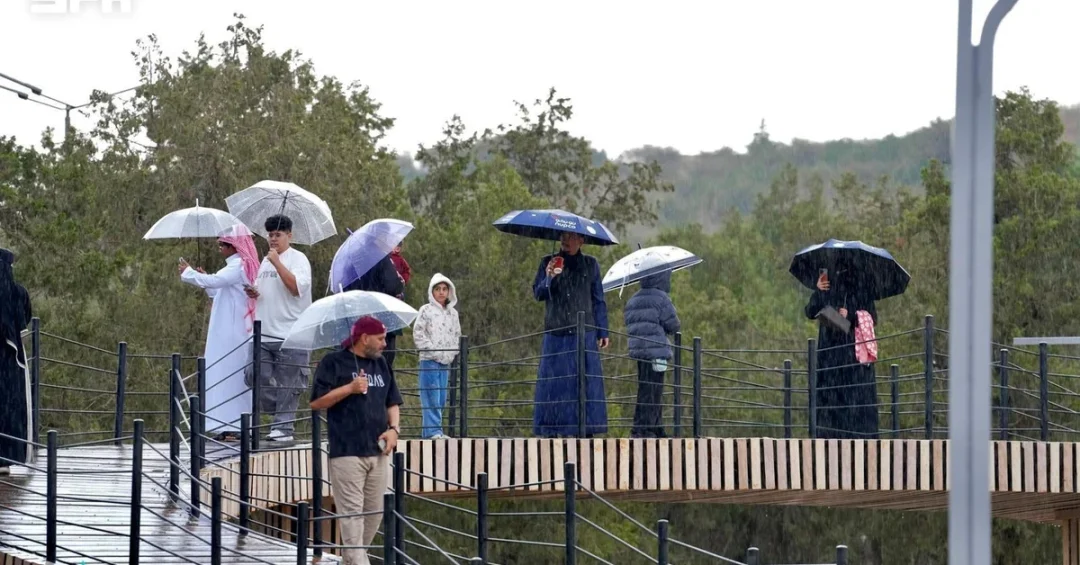
Recent rainfall across Al-Baha Region has drawn residents and visitors to public parks and designated camping sites for outdoor excursions, with the Saudi Press Agency reporting a substantial turnout of picnickers amid clouds and fog in the Al-Sarat sector. The showers, which swept across the southwestern highlands in late August 2026, transformed the region’s terraced slopes and juniper forests into lush green landscapes, creating ideal conditions for camping, family picnics, and seasonal entertainment activities.
According to the Saudi Press Agency (SPA), visitors documented the natural scenes on their phones as cool weather and heavy mist settled over the parks, coinciding with a calendar of local entertainment events and seasonal activities organized across the region. The turnout reflects a growing pattern in which sudden weather improvements in Saudi Arabia’s highland areas quickly translate into domestic tourism activity, drawing families from nearby cities and travelers from other parts of the Kingdom. For a region known for its mild summers and dramatic mountain scenery, the rainfall has reinforced Al-Baha’s position as one of the country’s most appealing summer retreats. But what exactly makes this corner of southwestern Saudi Arabia so attractive when the rains arrive?
Context and Background
Al-Baha Region sits in the southwest of the Kingdom, perched along the Sarawat Mountains at elevations that frequently exceed 2,000 meters. This geography gives the region a climate that differs markedly from the hot, arid conditions familiar to much of the Arabian Peninsula. Summer temperatures in the highlands are notably cooler, and the area receives some of the highest average rainfall in Saudi Arabia, particularly during the monsoon-influenced months of July and August. The result is a landscape of juniper woodlands, terraced agricultural fields, and valleys that turn vividly green after rain.
The region has long been recognized for its natural assets, including the Raghdan Forest, the Al-Baha Waterfalls, and the heritage villages of the Al-Sarat sector, where traditional stone architecture has been preserved. In recent years, the Kingdom has invested in developing these sites as part of a broader effort to diversify tourism beyond the major cities and coastal resorts. Designated camping areas, improved access roads, and visitor facilities have made the highlands more accessible to families seeking a break from urban heat. When the rains come, these investments pay off almost immediately, as parks fill with tents, picnic blankets, and visitors capturing the scenery on their phones.
The timing of the August 2026 showers is significant. They arrived during the peak of the domestic summer travel season, when schools are out and families are looking for affordable, nearby destinations. The SPA report noted that the turnout coincided with various local entertainment events and seasonal activities, suggesting that the weather boost reinforced an already active calendar. Rather than a one-off curiosity, the scene in Al-Baha illustrates how natural conditions and planned programming can combine to strengthen local economies and community life.
Key Details
The SPA report focused on designated camping sites in the Al-Sarat sector parks, which witnessed a substantial turnout of picnickers amid clouds and fog. Visitors were described as documenting the natural scenes on their phones, a detail that underscores the visual appeal of the mist-covered mountains and the role of social media in promoting domestic destinations. The presence of clouds and fog is itself notable in a country where clear skies are the norm, adding a sense of novelty and drama to the experience.
Local entertainment events and seasonal activities were held alongside the outdoor gatherings, according to the report. These programs, typically organized by municipal authorities and tourism bodies, include family-friendly activities, cultural performances, and food stalls that cater to day visitors and overnight campers alike. The combination of natural beauty and organized events helps extend visitor stays and encourages repeat trips, which is important for building a sustainable tourism base in the region.
Al-Baha’s camping sites are part of a wider network of outdoor recreation areas that Saudi authorities have developed in recent years. These sites are generally equipped with basic amenities such as parking, restrooms, and designated fire pits, and they are managed with an emphasis on environmental protection. Visitors are encouraged to respect the landscape, avoid littering, and follow safety guidelines, particularly during weather events when fog can reduce visibility on mountain roads. The strong turnout reported by SPA suggests that these measures have not deterred visitors but rather helped create a welcoming environment for families.
International and Regional Impact
For international audiences, the scene in Al-Baha offers a window into a side of Saudi Arabia that is often overlooked: its temperate highlands, rich biodiversity, and growing domestic tourism culture. While the Kingdom is globally known for its desert landscapes, religious tourism, and major urban projects, the southwestern mountains represent a distinct offering that appeals to nature lovers, hikers, and families seeking cooler weather. As Saudi Arabia continues to open its doors to international visitors through streamlined visa processes and expanded flight connections, regions like Al-Baha are poised to attract a share of travelers looking beyond the traditional itineraries.
Regionally, the rainfall and the resulting tourism activity highlight the interconnectedness of weather patterns across the Arabian Peninsula. The southwestern highlands are influenced by monsoon systems that also affect parts of Yemen and the Red Sea coast, and the greening of these areas can have ripple effects on local agriculture, water resources, and ecosystems. For neighboring Gulf countries, where summer heat drives residents to seek cooler destinations abroad, Al-Baha offers a compelling alternative that is closer, more affordable, and culturally familiar. This intra-regional tourism potential is increasingly recognized by Saudi tourism authorities as a strategic asset.
Economic and Strategic Significance
The economic impact of a strong weekend or holiday turnout in Al-Baha extends well beyond the parks themselves. Local businesses, including restaurants, grocery stores, fuel stations, and equipment rental shops, benefit from increased foot traffic. Hospitality providers, from small guesthouses to hotels in Al-Baha city, see higher occupancy rates. Farmers selling local produce such as honey, figs, and almonds at roadside stalls gain access to a larger customer base. In a region where agriculture and small enterprise play important roles, these spending flows provide a meaningful boost to household incomes.
From a strategic perspective, the success of Al-Baha’s outdoor tourism supports the Kingdom’s goal of increasing domestic tourism expenditure and reducing the outflow of tourism spending to foreign destinations. By offering attractive, well-managed destinations within Saudi Arabia, authorities can encourage citizens and residents to explore their own country, particularly during the summer months. This aligns with broader efforts to develop tourism infrastructure, improve service quality, and promote awareness of the Kingdom’s diverse natural and cultural heritage. The fact that a weather event can generate such immediate and visible activity is a sign that the underlying infrastructure and demand are in place.
Vision 2030 Alignment
The developments in Al-Baha resonate directly with Saudi Vision 2030, the national transformation plan launched under the leadership of Crown Prince Mohammed bin Salman. Vision 2030 seeks to diversify the economy away from oil, create new employment opportunities, and enhance the quality of life for citizens and residents. Tourism is a key pillar of this strategy, with targets to increase the sector’s contribution to GDP and to attract millions of domestic and international visitors. The Saudi Tourism Authority, the Ministry of Tourism, and regional development authorities have worked to unlock the potential of areas like Al-Baha through investment, marketing, and event programming.
Beyond economics, the scenes described by SPA reflect Vision 2030’s emphasis on community well-being, environmental stewardship, and pride in national heritage. Families gathering in parks, young people sharing images of their country’s beauty, and local authorities organizing seasonal activities all contribute to a vibrant civic life. As Saudi Arabia continues to invest in its regions and promote sustainable tourism, Al-Baha’s rain-fed greenery stands as a reminder that the Kingdom’s natural wealth is not limited to its deserts and coasts. With each passing season, the highlands are becoming a more prominent part of the national story, and the recent showers have once again shown why.
20 Questions
Q1. What recent weather event affected Al-Baha Region?
A1. Recent rainfall swept across Al-Baha Region in late August 2026, bringing cool weather, clouds, and fog that transformed the highland landscape and drew visitors to public parks and designated camping sites.
Q2. Which areas in Al-Baha saw the largest turnout of visitors?
A2. Designated camping sites in the Al-Sarat sector parks witnessed a substantial turnout of picnickers, according to the Saudi Press Agency, as families gathered amid clouds and fog to enjoy the greenery.
Q3. How did visitors react to the natural scenery?
A3. Visitors documented the natural scenes on their phones, capturing the mist-covered mountains and lush landscapes. This reflects the growing role of social media in promoting domestic tourism destinations across the Kingdom.
Q4. What other activities coincided with the outdoor gatherings?
A4. The turnout coincided with various local entertainment events and seasonal activities, which are typically organized by municipal and tourism authorities to enhance the visitor experience and extend stays.
Q5. Why is Al-Baha’s climate different from much of Saudi Arabia?
A5. Al-Baha sits in the Sarawat Mountains at elevations exceeding 2,000 meters, giving it cooler summers and higher rainfall than most of the Kingdom, particularly during the monsoon-influenced months of July and August.
Q6. What natural features make Al-Baha attractive to tourists?
A6. The region features juniper woodlands, terraced agricultural fields, valleys, the Raghdan Forest, Al-Baha Waterfalls, and heritage villages with traditional stone architecture, all of which draw nature lovers and families.
Q7. How has Saudi Arabia developed tourism infrastructure in Al-Baha?
A7. Authorities have developed designated camping areas, improved access roads, and added visitor facilities such as parking and restrooms, making the highlands more accessible while emphasizing environmental protection and safety.
Q8. What is the significance of the timing of the rainfall?
A8. The showers arrived during the peak domestic summer travel season, when schools are out and families seek nearby destinations, maximizing the impact on local tourism and business activity.
Q9. How does the turnout benefit the local economy?
A9. Increased visitor numbers boost local restaurants, grocery stores, fuel stations, equipment rentals, guesthouses, and roadside vendors selling regional produce such as honey, figs, and almonds, supporting household incomes.
Q10. What role do local entertainment events play in tourism?
A10. These events, organized by municipal and tourism bodies, offer family-friendly activities, cultural performances, and food stalls that enrich the visitor experience and encourage repeat trips to the region.
Q11. How does Al-Baha’s appeal compare with other Saudi destinations?
A11. While Saudi Arabia is known for deserts, religious tourism, and major urban projects, Al-Baha offers a distinct highland experience with cooler weather, greenery, and mountain scenery that appeals to nature-oriented travelers.
Q12. What does the scene in Al-Baha reveal about domestic tourism trends?
A12. It shows that weather improvements can quickly translate into domestic tourism activity, indicating strong underlying demand and the effectiveness of recent investments in regional tourism infrastructure and programming.
Q13. How might international visitors benefit from Al-Baha’s development?
A13. As Saudi Arabia streamlines visas and expands flight connections, international travelers can explore Al-Baha’s highlands as part of broader itineraries, experiencing a lesser-known side of the Kingdom’s natural and cultural heritage.
Q14. What regional connections does Al-Baha’s weather pattern have?
A14. The southwestern highlands are influenced by monsoon systems that also affect parts of Yemen and the Red Sea coast, linking local agriculture, water resources, and ecosystems to broader regional climate dynamics.
Q15. Why is Al-Baha an attractive option for Gulf residents?
A15. For Gulf residents facing summer heat, Al-Baha offers a closer, more affordable, and culturally familiar alternative to foreign destinations, with cool weather and scenic landscapes that appeal to families.
Q16. How does this development support Saudi Vision 2030?
A16. It advances Vision 2030’s tourism and quality-of-life goals by boosting domestic tourism expenditure, diversifying regional economies, creating jobs, and showcasing the Kingdom’s natural assets to a wider audience.
Q17. What environmental considerations apply to Al-Baha’s camping sites?
A17. Sites are managed with an emphasis on environmental protection. Visitors are encouraged to respect the landscape, avoid littering, and follow safety guidelines, especially when fog reduces visibility on mountain roads.
Q18. Which Saudi authorities are involved in promoting Al-Baha tourism?
A18. The Saudi Tourism Authority, the Ministry of Tourism, and regional development authorities work together on investment, marketing, and event programming to unlock the region’s tourism potential.
Q19. What does the use of phones by visitors indicate about tourism promotion?
A19. It highlights the role of social media and user-generated content in promoting destinations, as visitors share images of Al-Baha’s misty mountains and green landscapes with wider audiences online.
Q20. What is the outlook for Al-Baha’s tourism sector?
A20. With continued investment, seasonal events, and growing awareness of its highland attractions, Al-Baha is well positioned to strengthen its role in Saudi Arabia’s expanding domestic and international tourism market.
Reader Feedback
We value your thoughts. Please share your feedback on this article.
Your feedback helps us improve our coverage.