


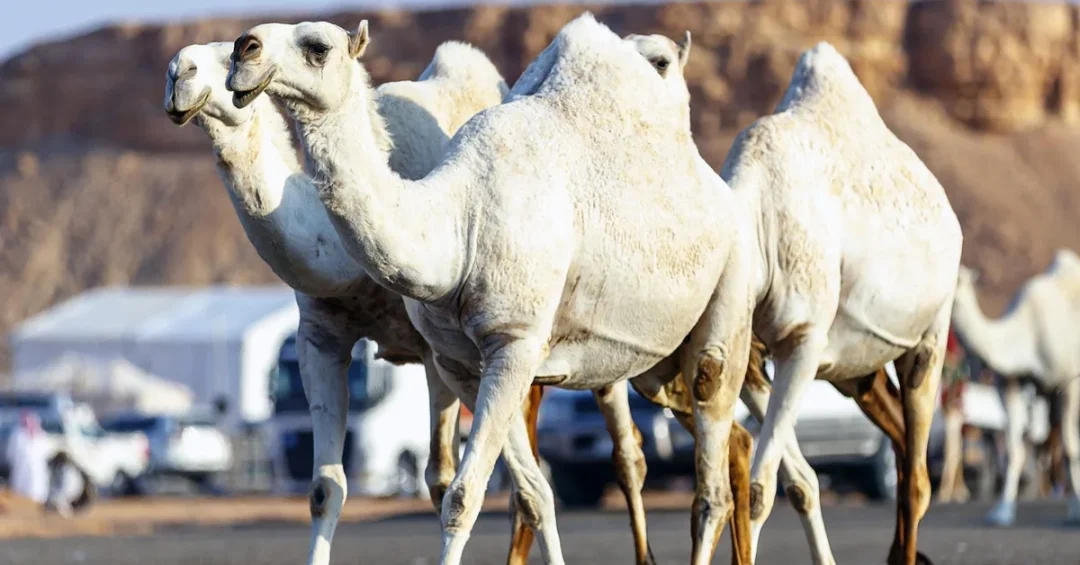
More than 100 camels are offered for auction every day at the Unaizah camel auction district in the Qassim region, according to the Saudi Press Agency (SPA), which reported that the market has become a daily commercial hub attracting camel owners, buyers, and specialists from across the sector. The auctions, held in dedicated spaces with pathways designed to move animals and participants efficiently, give owners a structured platform to present their camels to prospective buyers and complete sales in an organized environment. The activity reflects the enduring commercial and cultural importance of camels in the Kingdom, where the sector is both a livelihood and a living heritage.
The district’s daily turnover is not a seasonal curiosity but a working market that connects breeders, traders, and service providers in and around Unaizah, a city in the Qassim region long associated with agriculture, commerce, and livestock trading. According to SPA, the economic impact of the auctions extends well beyond the sale of animals, reaching commercial services, traditional products, and local artisans and families engaged in cottage industries. That multiplier effect helps boost both commercial and tourism activity in Unaizah, tying a traditional trade to the wider development of the region. Why does a camel market in central Saudi Arabia matter to readers far beyond the Gulf? Because it shows how heritage, commerce, and community enterprise reinforce one another in the Kingdom’s modern economy.
Context and Background
How did camel auctions become such a fixture of daily life in Qassim? The answer lies in geography, history, and the enduring value Saudis place on camels as a symbol of identity and a source of economic activity. Unaizah sits in the heart of the Qassim region, an area known for its date farms, markets, and trading traditions. For generations, camels have been bred, traded, and celebrated here, and the auction district formalizes a practice that once took place informally among families and tribes. The SPA report notes that the district is organized to handle daily auctions of more than 100 camels, a figure that underscores the scale and regularity of the trade.
The market’s design supports that scale. Dedicated spaces allow camels to be displayed and inspected, while pathways facilitate the movement of participants and animals, ensuring an orderly buying and selling process. For owners, this means a fair opportunity to present their animals to prospective buyers; for buyers, it means access to a steady supply of camels with the ability to compare quality and lineage. Such organization is essential in a sector where value depends on breed, health, age, and temperament, and where trust between seller and buyer underpins every transaction. The result is a market that functions as both a commercial exchange and a meeting point for the camel community.
Camels occupy a unique place in Saudi culture and economy. They are central to pastoral traditions, racing, beauty competitions, and the Kingdom’s intangible heritage, and they remain a source of income for breeders and traders. The Unaizah district reflects that dual role: it is a place of business and a place of cultural continuity. As Saudi Arabia modernizes under Vision 2030, such markets demonstrate that tradition and development are not in conflict; they can be integrated into a diversified economy that values local enterprise and regional identity.
Key Details of the Unaizah Auctions
What exactly happens at the Unaizah camel auction district on a typical day? According to SPA, auctions are held daily and involve more than 100 camels, drawing interest from camel owners, buyers, and others involved in the sector. The district provides dedicated spaces for showcasing camels and pathways that facilitate movement, creating an organized environment for buying and selling. This structure allows owners to present their camels to prospective buyers in a setting that encourages transparency and comparison, which is vital in a market where animal quality varies widely.
The daily rhythm of the market also supports a network of ancillary activities. Commercial services spring up around the auctions, from transport and feed to equipment and veterinary support. Traditional products and crafts are sold alongside the livestock trade, and local artisans and families working in cottage industries participate in the market’s ecosystem. This participation is not incidental; it is part of what makes the district an economic engine for Unaizah, generating income for households and small businesses while drawing visitors who come to watch, bid, or simply experience the atmosphere.
For international readers, the scale of the market may be surprising. More than 100 camels a day means thousands of animals traded over a month, each with its own value proposition. The district’s ability to manage this volume depends on clear rules, physical infrastructure, and the expertise of participants who know how to assess camels quickly and accurately. That combination of tradition and organization is a hallmark of Saudi livestock markets and a reason they continue to attract serious buyers.
International and Regional Impact
Why should the Unaizah auctions interest audiences outside Saudi Arabia? Because they illustrate how a regional market can contribute to national economic diversification and cultural diplomacy. The camel sector in Saudi Arabia is not isolated; it connects to regional trade networks, tourism circuits, and international interest in Arabian heritage. Visitors from neighboring Gulf countries and beyond have long participated in Saudi camel markets, and the Unaizah district’s daily activity adds to the Kingdom’s reputation as a hub for livestock commerce and heritage tourism.
Regionally, the auctions strengthen Qassim’s role as an agricultural and commercial center. The region’s farms, date palm groves, and livestock markets form an integrated rural economy that supports jobs and small businesses. When a market like Unaizah’s operates daily, it creates predictable demand for goods and services, which in turn supports investment in local infrastructure and services. That reliability is attractive to traders who need to plan purchases and transport, and it reinforces the Kingdom’s wider goals of balanced regional development.
Internationally, the market contributes to the image of Saudi Arabia as a country that honors its heritage while embracing modernization. Camel auctions are not relics; they are active commercial events that adapt to modern expectations of organization, safety, and customer service. By maintaining a well-run district, Unaizah helps project a narrative of a Kingdom that values its traditions and manages them with professionalism, a message that resonates with tourists, researchers, and business visitors alike.
Economic and Strategic Significance
What makes the Unaizah auctions economically significant beyond the sale of camels? The answer lies in the value chain they support. Camel owners and breeders earn income from sales, but so do transporters, feed suppliers, equipment vendors, and craftspeople. The SPA report highlights the participation of local artisans and families in cottage industries, which means the market helps sustain small-scale manufacturing and traditional skills. This diversification of income is important in rural areas, where opportunities can be limited, and it aligns with national efforts to broaden economic participation.
Strategically, the camel sector intersects with tourism, culture, and food security. Camel products, including milk and meat, are part of the Kingdom’s agricultural output, and the animals themselves are central to racing and festival events that draw visitors. A vibrant auction market supports these adjacent activities by ensuring a steady supply of animals and by keeping expertise alive. It also creates data and networks that can be leveraged for breeding programs, health management, and quality improvement, all of which raise the sector’s long-term value.
For Unaizah specifically, the daily auctions contribute to the city’s commercial vitality. Markets generate foot traffic, which benefits nearby shops, restaurants, and service providers. They also create a reason for people to travel to Unaizah, supporting hotels and local tourism. In a diversified economy, these ripple effects matter; they turn a single activity into a broad-based economic contributor. That is why the district is more than a place to buy and sell camels; it is a node in the region’s economic network.
Vision 2030 Alignment
How do the Unaizah camel auctions connect to Saudi Vision 2030? Vision 2030 seeks to diversify the economy, empower small businesses, and celebrate national heritage as part of a modern identity. The auction district embodies these goals by supporting local entrepreneurs, preserving traditional knowledge, and generating tourism and commercial activity in a region outside the major metropolitan centers. It shows that heritage sectors can be economically productive and socially valuable, contributing to quality of life and national pride.
The market also aligns with Vision 2030’s emphasis on balanced regional development. By sustaining jobs and businesses in Qassim, the auctions help distribute economic opportunity across the Kingdom. They complement larger initiatives in tourism, entertainment, and industry by providing authentic, community-based experiences that visitors seek. As Saudi Arabia continues to open up and diversify, markets like Unaizah’s will remain important symbols of continuity and progress, demonstrating that the Kingdom’s future is built on respect for its past.
For international observers, the Unaizah auctions offer a clear example of how Saudi Arabia is weaving tradition into its development story. They are a reminder that Vision 2030 is not only about megaprojects and new cities; it is also about strengthening the everyday economies that give communities their character. In that sense, the daily auction of more than 100 camels is a small but meaningful indicator of a larger national journey.
20 Questions
Q1. Where is the Unaizah camel auction district located?
A1. It is located in Unaizah, a city in the Qassim region of Saudi Arabia, an area known for agriculture, commerce, and livestock trading.
Q2. How many camels are auctioned daily at the district?
A2. According to the Saudi Press Agency, auctions are held daily for more than 100 camels, attracting owners, buyers, and sector specialists.
Q3. Who participates in the Unaizah camel auctions?
A3. Camel owners, prospective buyers, traders, and others involved in the camel sector participate, along with local artisans and families in cottage industries.
Q4. What facilities does the district provide?
A4. The district offers dedicated spaces for showcasing camels and pathways designed to facilitate the movement of participants, ensuring an organized buying and selling process.
Q5. Why is organization important in camel auctions?
A5. Organization allows owners to present camels clearly to buyers and enables fair comparison of animals based on breed, health, age, and other qualities.
Q6. What ancillary activities benefit from the auctions?
A6. Commercial services, traditional products, and the work of local artisans and families in cottage industries all benefit from the market’s daily activity.
Q7. How do the auctions affect Unaizah’s economy?
A7. They boost commercial and tourism activity, generate income for local households, and support small businesses and service providers in and around the city.
Q8. Are the auctions a seasonal event?
A8. No, the Saudi Press Agency reports that auctions are held daily, making the district a regular commercial hub rather than a seasonal market.
Q9. What role do camels play in Saudi culture?
A9. Camels are central to Saudi heritage, including racing, beauty competitions, and pastoral traditions, and they remain a source of income for breeders and traders.
Q10. How does the market support tourism?
A10. The auctions draw visitors interested in heritage and commerce, contributing to tourism activity in Unaizah and the wider Qassim region.
Q11. What economic sectors are linked to the camel trade?
A11. Transport, animal feed, equipment, veterinary services, traditional crafts, and food products such as camel milk and meat are linked to the trade.
Q12. How does the district help camel owners?
A12. It gives owners a structured platform to present their camels to prospective buyers, helping them achieve fair prices and build commercial relationships.
Q13. What is the significance of the Qassim region in this context?
A13. Qassim is an agricultural and commercial center with a strong tradition of livestock trading, making it a natural home for a major camel auction district.
Q14. Does the market support small businesses?
A14. Yes, local artisans and families working in cottage industries participate, selling traditional products and services alongside the livestock trade.
Q15. How does the auction district align with Vision 2030?
A15. It supports economic diversification, regional development, heritage preservation, and small enterprise, all of which are central objectives of Saudi Vision 2030.
Q16. What makes the Unaizah market attractive to buyers?
A16. The daily volume of more than 100 camels, organized facilities, and the presence of experienced sellers make it a reliable destination for buyers.
Q17. How does the market contribute to regional development?
A17. By sustaining jobs, generating commercial activity, and attracting visitors, the market helps distribute economic opportunity across the Qassim region.
Q18. What role does the Saudi Press Agency play in reporting this activity?
A18. The Saudi Press Agency provides official reporting on the auctions, confirming their daily scale and their economic and cultural importance.
Q19. Can international visitors attend the auctions?
A19. The market is a public commercial venue in Unaizah, and international visitors interested in Saudi heritage and livestock trade can experience its atmosphere.
Q20. What does the Unaizah auction district symbolize for Saudi Arabia?
A20. It symbolizes the Kingdom’s ability to preserve heritage while advancing a diversified, modern economy, reflecting the spirit of Vision 2030.
Reader Feedback
We value your thoughts. Please share your feedback on this article.
Your feedback helps us improve our coverage.