


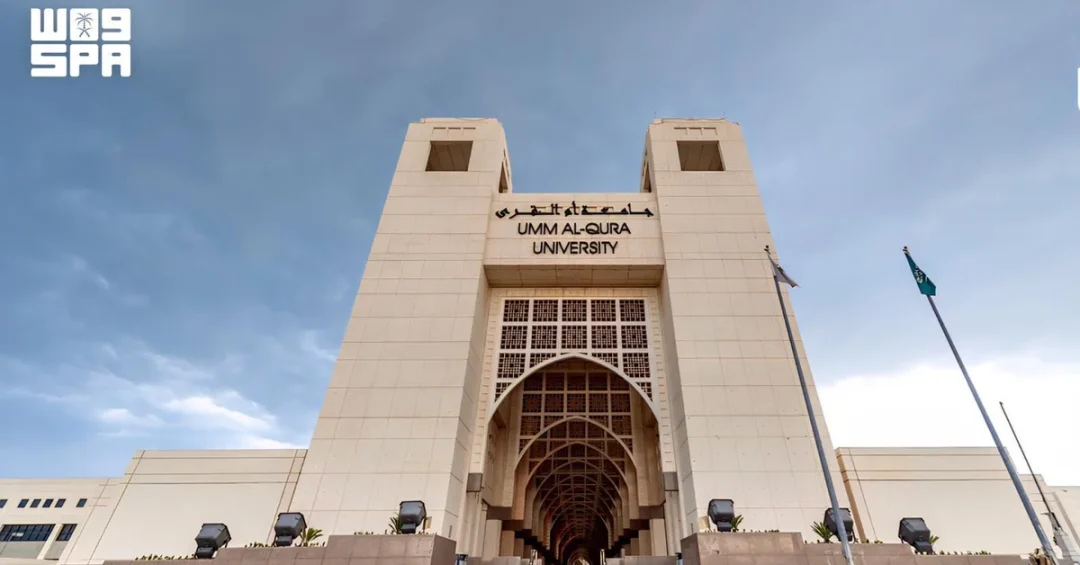
Umm Al-Qura University has registered a patent with the Saudi Authority for Intellectual Property (SAIP) for an eco-friendly, energy-efficient method of extracting natural iron oxide nanoparticles smaller than 20 nanometers from steelmaking slag, an innovation developed by College of Science researchers Dr. Saleh Al-Luqmani, Fayez Al-Fayez, Abdulrahman Al-Bishri, and Musaed Hakami. The registration, announced through official Saudi channels, marks a notable step in the Kingdom’s drive to convert industrial by-products into high-value advanced materials and to commercialize university research in line with national sustainability goals.
The invention addresses a long-standing challenge in metallurgy: what to do with the millions of tonnes of slag generated each year by steel production. Rather than treating slag as low-value waste, the Umm Al-Qura method recovers iron oxide nanoparticles through a process that its developers describe as more environmentally sound and less energy-intensive than conventional thermal and chemical routes. For international observers, the patent signals how Saudi Arabia’s research institutions are positioning themselves at the intersection of materials science, circular economy thinking, and industrial diversification. Could a laboratory breakthrough in Makkah help reshape how the world’s steel industry handles its own waste streams?
Context and Background
Steelmaking slag is one of the heaviest solid by-products of modern industry. Every tonne of crude steel typically generates between 100 and 200 kilograms of slag, a material composed largely of calcium, silicon, aluminum, magnesium, and iron oxides. Historically, much of this material has been landfilled, stockpiled, or used in low-grade applications such as road base and cement filler. As global steel output has remained above 1.8 billion tonnes annually, the volume of slag has become a pressing environmental and logistical issue for producers worldwide.
Iron oxide nanoparticles, by contrast, are among the most commercially valuable engineered materials of the modern era. Because of their high surface area, magnetic properties, and chemical reactivity, particles below 20 nanometers are used in catalysis, environmental remediation, biomedical imaging, and advanced agriculture. Producing them conventionally, however, often requires high-temperature furnaces, aggressive acids, and large volumes of water, all of which carry energy costs and waste-disposal burdens. Is it not striking that the raw material for such advanced technology has for decades been discarded as industrial residue?
The Umm Al-Qura University team, working within the College of Science, set out to close that gap. Their method applies circular economy principles by increasing recycling efficiency, lowering harmful emissions, and reducing future chemical wastewater treatment costs compared with traditional thermal and chemical approaches. The patent registered with the Saudi Authority for Intellectual Property formalizes the university’s claim to the process and opens the door to industrial partnerships and licensing.
Key Details
According to the official announcement, the innovation extracts natural iron oxide nanoparticles under 20 nanometers from steelmaking slag. The research team comprises Dr. Saleh Al-Luqmani, Fayez Al-Fayez, Abdulrahman Al-Bishri, and Musaed Hakami, all affiliated with the College of Science at Umm Al-Qura University in Makkah. The patent was registered with the Saudi Authority for Intellectual Property, the Kingdom’s designated agency for protecting and promoting intellectual property rights.
The process is described as eco-friendly and energy-efficient, two attributes that distinguish it from established extraction techniques. Traditional routes to iron oxide nanoparticles often rely on co-precipitation, sol-gel synthesis, or thermal decomposition, each of which can involve hazardous reagents, elevated temperatures, or complex wastewater treatment. By contrast, the Umm Al-Qura approach is reported to reduce emissions and lower the future cost of treating chemical wastewater, while raising the overall efficiency of recycling steel slag.
The resulting nanomaterial is not a laboratory curiosity. The announcement lists practical applications across petrochemical catalysis, microalgae cultivation, advanced agricultural nutrients, industrial water treatment, and mining. Each of these fields depends on reliable access to iron-based nanoparticles with consistent size and reactivity. In petrochemical refining, for example, iron oxide catalysts can support oxidation and desulfurization reactions; in water treatment, the particles can adsorb contaminants or assist in advanced oxidation processes. Does that not suggest a rare alignment of environmental benefit and commercial value?
International and Regional Impact
For the wider Middle East, the patent reinforces a trend toward industrial symbiosis, in which the waste of one sector becomes the feedstock of another. Saudi Arabia is home to a substantial steel industry, with major producers operating in Jubail, Yanbu, and Ras Al Khair, alongside growing downstream manufacturing. If the Umm Al-Qura method can be scaled, it could offer regional steelmakers a new revenue line from a material they currently pay to manage, while reducing the environmental footprint of their operations.
Internationally, the development arrives as regulators in Europe and Asia tighten rules on industrial waste and carbon emissions. Steel producers face rising costs for landfill disposal and increasing pressure to demonstrate circularity in their supply chains. A low-energy, low-emission route to high-value nanoparticles from slag would be relevant to producers in India, China, Japan, Turkey, and Brazil, all of which generate large slag volumes. Could Saudi intellectual property become a licensing export in its own right? The Kingdom’s expanding network of research agreements and its hosting of global industrial events make that question more than hypothetical.
The regional research dimension also matters. Umm Al-Qura University is one of the Kingdom’s oldest and largest higher-education institutions, and its College of Science has increasingly focused on applied research with industrial relevance. The patent adds to a growing portfolio of Saudi academic inventions registered with SAIP, reflecting a broader national push to convert laboratory results into protected assets and, ultimately, into commercial products.
Economic and Strategic Significance
From an economic standpoint, the invention touches several of Saudi Arabia’s strategic priorities at once. It supports industrial diversification by creating a new value chain around steel slag, a material that is abundant, inexpensive, and locally available. It reduces reliance on imported advanced materials by enabling domestic production of iron oxide nanoparticles, which are used in sectors from oil refining to agriculture. And it strengthens the knowledge economy by demonstrating that Saudi universities can generate protectable, licensable technology.
The environmental economics are equally notable. Lower energy consumption translates directly into lower operating costs and lower greenhouse gas emissions. Reduced chemical wastewater treatment lowers compliance costs and environmental risk. Higher recycling efficiency means more of the iron content in slag is recovered rather than lost. For steelmakers operating on thin margins, these savings can be material, and for regulators pursuing circular economy targets, they represent measurable progress.
There is also a strategic dimension tied to supply chains. Iron oxide nanoparticles are a niche but growing global market, with demand driven by water treatment, catalysis, and agricultural technology. A domestic Saudi capability in this area would reduce exposure to import disruptions and could position the Kingdom as a supplier to regional markets. Does that not fit precisely with the ambition to build resilient, high-value industries at home? The patent is a first step; scaling and commercialization will determine its ultimate impact.
Vision 2030 Alignment
The invention aligns closely with Saudi Vision 2030, the national transformation program launched under the leadership of Crown Prince Mohammed bin Salman. Vision 2030 emphasizes economic diversification, private-sector growth, sustainability, and the development of a knowledge-based economy. By turning an industrial waste stream into a high-value nanomaterial, the Umm Al-Qura research team contributes directly to the circular economy and environmental sustainability objectives embedded in the Vision, while also supporting the goal of commercializing university research.
The patent also reflects the Vision’s focus on human capital. The researchers behind the innovation are Saudi academics working in a Saudi institution, supported by a national intellectual property system designed to protect and promote local invention. Their success demonstrates the capacity of the Kingdom’s universities to compete in advanced materials science and to contribute to industrial problem-solving. As Saudi Arabia continues to invest in research, development, and innovation, such achievements are likely to become more frequent, reinforcing the country’s role as a hub for sustainable technology and a partner in global efforts to decarbonize heavy industry.
20 Questions
Q1. What did Umm Al-Qura University register with the Saudi Authority for Intellectual Property?
A1. It registered a patent for an eco-friendly, energy-efficient method of extracting natural iron oxide nanoparticles under 20 nanometers from steelmaking slag, developed by College of Science researchers.
Q2. Who are the researchers behind the invention?
A2. The team comprises Dr. Saleh Al-Luqmani, Fayez Al-Fayez, Abdulrahman Al-Bishri, and Musaed Hakami, all affiliated with the College of Science at Umm Al-Qura University in Makkah.
Q3. What is steelmaking slag?
A3. Steelmaking slag is a solid by-product of steel production, composed mainly of calcium, silicon, aluminum, magnesium, and iron oxides, typically generated at 100 to 200 kilograms per tonne of crude steel.
Q4. Why are iron oxide nanoparticles valuable?
A4. Their high surface area, magnetic properties, and chemical reactivity make them useful in catalysis, water treatment, agriculture, biomedical imaging, and environmental remediation, commanding significant commercial interest worldwide.
Q5. How does the Umm Al-Qura method differ from traditional approaches?
A5. It is described as more eco-friendly and energy-efficient, increasing recycling efficiency, lowering harmful emissions, and reducing future chemical wastewater treatment costs compared with conventional thermal and chemical extraction routes.
Q6. What is the Saudi Authority for Intellectual Property?
A6. SAIP is the Kingdom’s designated agency responsible for protecting and promoting intellectual property rights, including patents, trademarks, and industrial designs, supporting innovation and commercialization.
Q7. What are the practical applications of the nanomaterial?
A7. The announcement lists petrochemical catalysis, microalgae cultivation, advanced agricultural nutrients, industrial water treatment, and mining as fields where the extracted iron oxide nanoparticles can be applied.
Q8. How does the invention support the circular economy?
A8. It converts an industrial waste stream into a high-value product, increasing recycling efficiency and reducing emissions and wastewater treatment costs, embodying circular economy principles in heavy industry.
Q9. Why is the sub-20-nanometer size significant?
A9. Particles below 20 nanometers exhibit enhanced surface area and reactivity, making them particularly effective in catalysis, adsorption, and advanced material applications where precise size control matters.
Q10. What does the patent mean for Umm Al-Qura University?
A10. It formalizes the university’s claim to the process, supports its commitment to commercializing research, and strengthens its position as a contributor to sustainable, knowledge-based industrial solutions in Saudi Arabia.
Q11. How could Saudi steelmakers benefit?
A11. They could generate new revenue from slag, reduce waste management costs, lower environmental compliance burdens, and participate in a domestic value chain for advanced nanomaterials.
Q12. What is the regional significance of the invention?
A12. It reinforces industrial symbiosis in the Middle East, where steel production is substantial, and could support regional producers in Jubail, Yanbu, and Ras Al Khair seeking circular economy solutions.
Q13. Does the invention have international relevance?
A13. Yes. Steel producers in India, China, Japan, Turkey, and Brazil face similar slag challenges and tightening waste regulations, making a low-energy extraction method potentially attractive for licensing or partnership.
Q14. How does the patent align with Vision 2030?
A14. It supports economic diversification, sustainability, knowledge-based industry, and research commercialization, all core objectives of Saudi Vision 2030 launched under Crown Prince Mohammed bin Salman.
Q15. What environmental benefits does the method offer?
A15. It lowers harmful emissions, reduces chemical wastewater treatment costs, and increases recycling efficiency, decreasing the environmental footprint of steel production and nanomaterial manufacturing.
Q16. What is the commercial potential of iron oxide nanoparticles?
A16. The global market for iron oxide nanoparticles is growing, driven by water treatment, catalysis, and agricultural applications, offering opportunities for domestic production and regional export.
Q17. How does this fit Saudi Arabia’s research ecosystem?
A17. It reflects growing collaboration between Saudi universities, SAIP, and industry, and demonstrates the Kingdom’s capacity to generate protectable, licensable technology from academic research.
Q18. What role does Umm Al-Qura University play in Saudi higher education?
A18. It is one of the Kingdom’s oldest and largest universities, based in Makkah, with a College of Science increasingly focused on applied research relevant to national industrial and sustainability goals.
Q19. What are the next steps for the invention?
A19. Next steps typically involve scaling the process, validating industrial applications, and pursuing partnerships or licensing agreements to commercialize the technology in Saudi Arabia and beyond.
Q20. Why does this patent matter for global sustainability?
A20. It offers a practical route to reduce steel industry waste and emissions while producing valuable nanomaterials, contributing to global efforts to decarbonize heavy industry and advance circular economy practices.
Reader Feedback
We value your thoughts. Please share your feedback on this article.
Your feedback helps us improve our coverage.