


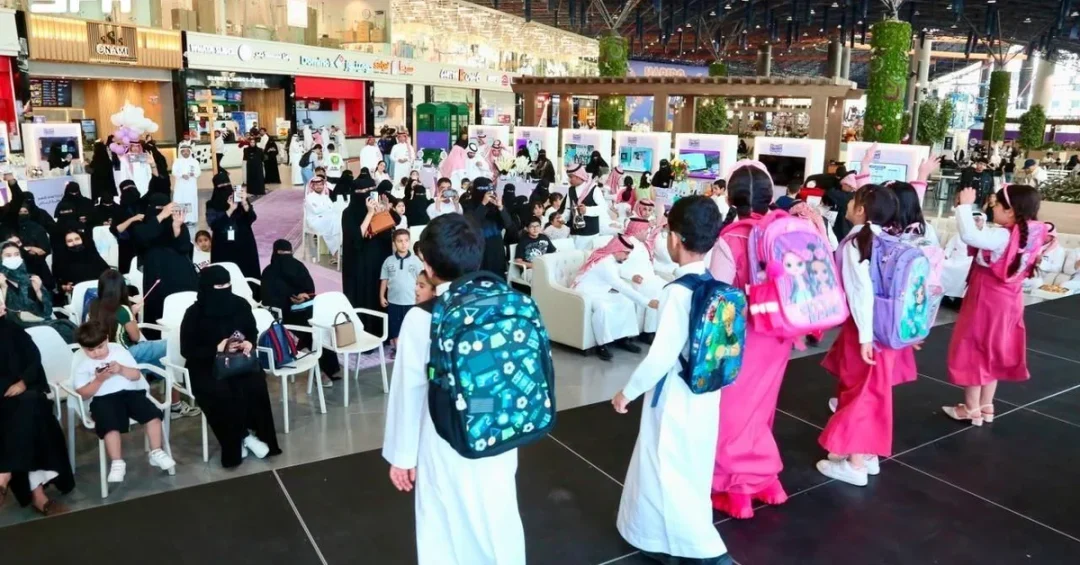
The General Administration of Education in Riyadh Region concluded its two-day “Back to School” program at Panorama Mall, marking the start of the 1448-1449 AH academic year with broad participation from students, education staff, and parents. The event, announced via the Saudi Press Agency, was designed to boost readiness for the new academic year and foster a positive, confident start to schooling across the Saudi capital. It brought together families, teachers, and education officials in a range of interactive activities that combined practical guidance with community celebration. For a city that welcomes millions of residents and hosts the Kingdom’s largest student population, the program reflected a carefully coordinated effort to ensure that the school year begins smoothly and enthusiastically.
Why does a two-day event at a shopping mall matter in a country transforming its entire education system? Because in Saudi Arabia, back-to-school is no longer just an administrative date on the calendar. It is a national moment that connects families, schools, and government institutions to the goals of Vision 2030. The Riyadh program offered a visible, accessible way for parents to learn about enrollment procedures, curriculum updates, and student support services, while giving children a chance to engage with learning in a fun, informal setting. The initiative also underlined the Kingdom’s commitment to making quality education a shared responsibility between home, school, and state.
Context and Background
How did this program come together, and what does it say about Saudi Arabia’s educational priorities? The General Administration of Education in Riyadh Region, a branch of the Ministry of Education, organized the two-day event as part of a broader national push to prepare students and families for the 1448-1449 AH academic year. The Hijri calendar places the start of the school year in a period that follows the summer break, and Saudi authorities have increasingly used the weeks before classes begin to roll out orientation campaigns, awareness drives, and family engagement activities. Panorama Mall, a popular retail and leisure destination in Riyadh, provided a high-traffic, family-friendly venue that made the program accessible to a wide cross-section of the city’s residents.
The choice of a mall as the venue was deliberate. It allowed the education administration to meet families where they already spend time, removing barriers that can keep parents from attending formal meetings at schools or government offices. Interactive booths, informational sessions, and children’s activities turned the mall into a temporary learning hub. Education staff were on hand to answer questions about registration, school supplies, transportation, and health and safety protocols. Parents could also learn about the range of student support services available, from academic counseling to extracurricular programs. The result was a lively, welcoming environment that framed the return to school as an exciting milestone rather than a logistical burden.
This approach aligns with a wider shift in Saudi education toward community involvement and student well-being. In recent years, the Ministry of Education has emphasized that families are essential partners in learning, and that schools must be safe, stimulating places. The Riyadh program is one of many regional initiatives that translate these principles into practice. By bringing together students, teachers, and parents, it created a feedback loop: officials could hear concerns directly, while families could receive clear, authoritative information. That two-way communication is vital in a system that serves millions of students and is continuously updating its curricula, teaching methods, and digital infrastructure.
Key Details
What exactly happened during the two days, and who took part? The program featured a wide range of interactive activities aimed at students of different age groups. Younger children participated in educational games, storytelling, and creative workshops that introduced basic concepts in a playful way. Older students engaged in sessions on study skills, time management, and goal setting, helping them approach the new academic year with confidence. Parents attended orientation talks that covered school schedules, uniform requirements, and the various channels through which they can communicate with teachers and administrators. Education staff provided one-on-one guidance on enrollment and answered questions about curricula and assessment.
The event also highlighted the importance of health and safety. With the start of the school year, authorities typically reinforce protocols related to student well-being, including nutrition, physical activity, and mental health support. At Panorama Mall, families could learn about these services and how to access them. The program included informational materials on healthy routines, the importance of sleep and exercise, and the role of school counselors. For many parents, these practical tips were among the most valuable aspects of the event, offering simple ways to support their children’s success beyond the classroom.
Another key detail was the emphasis on inclusivity. The General Administration of Education in Riyadh Region serves a diverse student population, including children with special educational needs and those from different cultural backgrounds. The program included activities designed to be accessible to all, and staff were available to discuss individualized support plans. This inclusive approach reflects the Kingdom’s commitment to ensuring that every student has the opportunity to thrive. By making the event open to the public and locating it in a popular mall, the organizers also reached families who might not otherwise seek out such information, extending the reach of official guidance.
International and Regional Impact
How does a local back-to-school event connect to Saudi Arabia’s growing global role? The Riyadh program is part of a national education strategy that has attracted international attention. Saudi Arabia has invested heavily in education as a driver of economic diversification and social development. The Kingdom’s participation in global education benchmarks, its scholarship programs that send students to top universities abroad, and its partnerships with international institutions all signal a commitment to world-class learning. Events like the “Back to School” program may seem modest, but they are the grassroots expression of that larger ambition. They help ensure that students are ready to benefit from the improved curricula and facilities that the government is rolling out.
Regionally, Saudi Arabia is a leader in education innovation. The Kingdom hosts major conferences and initiatives that bring together educators from across the Middle East and beyond. Its experience in blending traditional values with modern teaching methods is closely watched by neighboring countries. The Riyadh program’s focus on family engagement and community outreach offers a model that other cities in the region could adapt. Moreover, by using a public space like Panorama Mall, the event demonstrated how education can be promoted as a shared social priority, not just a government service. That message resonates across the Arab world, where family and community ties are central to daily life.
Economic and Strategic Significance
Why does preparing students for school have economic implications? Saudi Arabia’s Vision 2030 aims to build a diversified, knowledge-based economy, and education is the foundation of that effort. A well-prepared student body is more likely to acquire the skills needed for the jobs of the future, from artificial intelligence and renewable energy to tourism and advanced manufacturing. By helping students start the year smoothly, programs like the Riyadh initiative contribute to higher attendance, better academic performance, and lower dropout rates. Over time, these outcomes translate into a more productive workforce and stronger economic growth.
The strategic significance also lies in human capital development. The Kingdom is investing in early childhood education, teacher training, and digital learning platforms. The “Back to School” program complements these investments by addressing the practical and emotional needs of families at a critical moment. When parents feel informed and supported, they are more likely to be actively involved in their children’s education, which is one of the strongest predictors of student success. The event also reinforced the role of the Ministry of Education and its regional administrations as responsive, service-oriented institutions that work directly with the community.
Vision 2030 Alignment
How does this program fit into the larger Vision 2030 framework? Education is one of the pillars of Saudi Arabia’s transformation, and the Vision explicitly calls for a renewed focus on quality learning, character development, and preparing young people for the demands of a changing world. The General Administration of Education in Riyadh Region’s “Back to School” program embodies these goals by promoting readiness, engagement, and partnership. It reflects the Kingdom’s belief that education is not only about classrooms and textbooks but also about creating a supportive ecosystem that includes families, communities, and public spaces.
Looking ahead, such initiatives will continue to play a vital role as Saudi Arabia expands access to education and improves its quality. The 1448-1449 AH academic year begins with a clear message: the Kingdom is committed to giving every student a strong start. Through programs that bring together students, teachers, and parents, the Ministry of Education and its regional branches are building a culture of lifelong learning that will help sustain Vision 2030 for generations to come. The Riyadh event was a celebration, but it was also a statement of purpose—one that underscores the Kingdom’s determination to unlock the potential of its greatest resource: its people.
20 Questions
Q1. What was the “Back to School” program in Riyadh?
A1. It was a two-day event organized by the General Administration of Education in Riyadh Region to prepare students and families for the 1448-1449 AH academic year, held at Panorama Mall with interactive activities.
Q2. When did the program take place?
A2. The program concluded on August 21, 2026, according to the Saudi Press Agency, marking the start of the new academic year.
Q3. Where was the event held?
A3. It was held at Panorama Mall in Riyadh, a popular family destination, which made the event accessible to a wide audience.
Q4. Who organized the program?
A4. The General Administration of Education in Riyadh Region, a branch of the Ministry of Education, organized the event.
Q5. Who participated in the event?
A5. Students, education staff, and parents participated in a range of interactive activities designed to boost readiness for the new school year.
Q6. What was the main goal of the program?
A6. The main goal was to boost readiness for the new academic year and foster a positive start to the school year for students and families.
Q7. What kinds of activities were offered?
A7. Activities included educational games, storytelling, creative workshops, study skills sessions, and orientation talks for parents, all aimed at different age groups.
Q8. Why was the event held at a shopping mall?
A8. Holding it at Panorama Mall made it convenient for families, allowing the education administration to reach people in a familiar, high-traffic public space.
Q9. How does this program support parents?
A9. It provides parents with clear information on enrollment, schedules, uniforms, health protocols, and ways to communicate with teachers, helping them support their children’s education.
Q10. What health and safety topics were covered?
A10. The program covered nutrition, physical activity, mental health support, and daily routines that help students stay healthy and focused during the school year.
Q11. How does the program align with Vision 2030?
A11. It supports Vision 2030 by promoting quality education, family engagement, and human capital development, which are essential for a knowledge-based economy.
Q12. What is the significance of the 1448-1449 AH academic year?
A12. It marks the start of a new school year in the Hijri calendar, a period when Saudi authorities roll out orientation and readiness programs across the Kingdom.
Q13. How does this event reflect Saudi Arabia’s education strategy?
A13. It reflects a strategy that emphasizes community involvement, student well-being, and continuous improvement of the education system through direct engagement with families.
Q14. What role did education staff play at the event?
A14. Education staff provided one-on-one guidance, answered questions about enrollment and curricula, and shared information about student support services.
Q15. How does the program help students feel more confident?
A15. By introducing school routines in a fun, informal setting, the program reduces anxiety and helps students look forward to the new academic year with enthusiasm.
Q16. Is the program inclusive of students with special needs?
A16. Yes, the event included accessible activities and staff were available to discuss individualized support plans, reflecting the Kingdom’s commitment to inclusive education.
Q17. What impact does such a program have on the community?
A17. It strengthens the partnership between home, school, and government, creating a supportive community environment that values education and lifelong learning.
Q18. How does this initiative compare with other Saudi education programs?
A18. It is part of a broader national effort that includes teacher training, digital learning, and curriculum updates, all aimed at improving education quality across the Kingdom.
Q19. What can families expect after the event?
A19. Families can expect a smoother start to the school year, with better understanding of school procedures and available support services for their children.
Q20. What is the long-term vision for Saudi education?
A20. The long-term vision is to build a world-class education system that prepares students for future jobs, supports economic diversification, and sustains Vision 2030 for generations.
Reader Feedback
We value your thoughts. Please share your feedback on this article.
Your feedback helps us improve our coverage.