


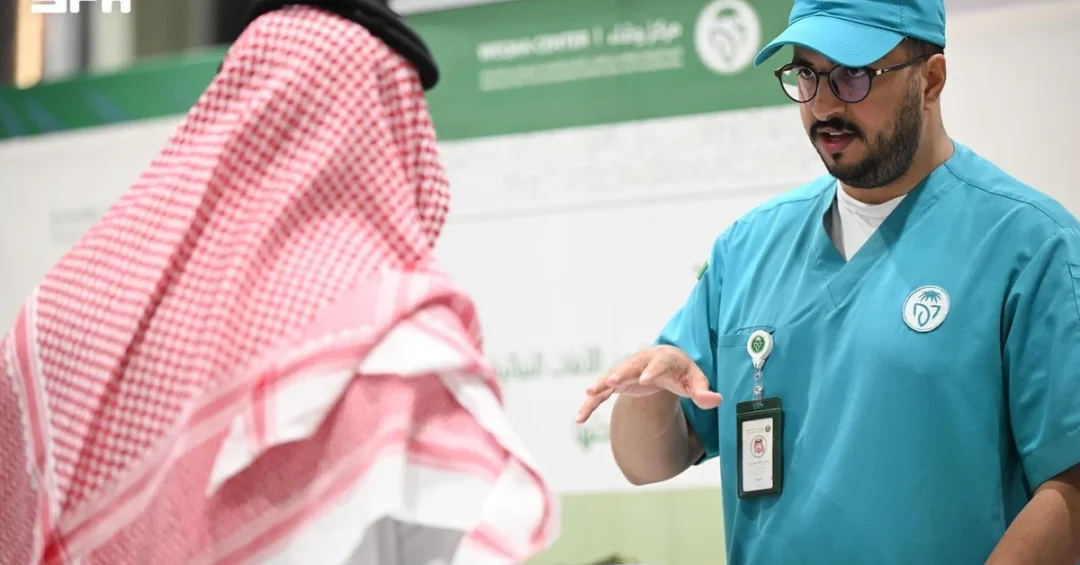
The National Center for the Prevention and Control of Plants Pests and Animal Diseases (Weqaa Center) participated in the Agricultural Products Festival in Tabuk, an event organized by the Tabuk branch of the Ministry of Environment, Water and Agriculture and held over three days in August 2026. The festival brought together farmers, government representatives, and nonprofit organizations from across the region, creating a platform for knowledge exchange and capacity building within the Kingdom’s agricultural sector. Weqaa Center’s involvement underscores its expanding role in safeguarding plant and animal health as part of Saudi Arabia’s broader food security strategy.
What does it take to protect a nation’s food supply in an era of climate uncertainty and evolving agricultural threats? For Saudi Arabia, the answer increasingly involves coordinated institutional action, scientific innovation, and close engagement with the farming communities that form the backbone of domestic production. The Tabuk festival offered precisely this kind of collaborative environment, allowing the Weqaa Center to present its services directly to the people who depend on them most. The event reflects a deliberate, long-term approach to agricultural resilience that aligns with the Kingdom’s Vision 2030 objectives and its commitment to sustainable development.
Context and Background
How did Weqaa Center become a central pillar of Saudi Arabia’s agricultural protection framework? Established as a specialized government entity, the National Center for the Prevention and Control of Plants Pests and Animal Diseases operates under the supervision of the Ministry of Environment, Water and Agriculture. Its mandate covers a wide spectrum of activities, from early detection of plant pests to the management of animal disease outbreaks, all aimed at preserving the health of the Kingdom’s agricultural resources and ensuring the continuity of food production. Over the years, the center has built a reputation for scientific rigor and rapid response, working closely with international partners and local stakeholders alike.
The Agricultural Products Festival in Tabuk, now in its latest edition, has become a significant annual fixture in the region’s calendar. Tabuk, located in northwestern Saudi Arabia, is known for its fertile agricultural lands and its strategic position near major trade routes. The festival serves as a showcase for local produce, a marketplace for farmers, and a forum for discussing the challenges and opportunities facing the sector. By participating in this event, Weqaa Center reinforces its commitment to being present where farmers are, rather than operating solely from central offices. This grassroots engagement model has proven effective in building trust and ensuring that best practices reach the field level.
Why does this matter now more than ever? Saudi Arabia has made food security a national priority, recognizing that reliance on imports carries inherent risks. The COVID-19 pandemic and subsequent global supply chain disruptions highlighted the vulnerability of food systems worldwide, prompting many countries, including the Kingdom, to strengthen domestic production capacities. In this context, the work of Weqaa Center takes on added significance. By preventing and controlling pests and diseases, the center helps protect the investments of farmers, reduces crop losses, and contributes to the stability of local food supplies. The Tabuk festival thus represents more than a local event; it is part of a national effort to build a resilient agricultural economy.
Key Details
What specific messages did Weqaa Center bring to the farmers of Tabuk? Nasser Alatawi, Director General of Weqaa Center’s Tabuk Branch, explained that the center’s participation was designed to raise farmers’ awareness and introduce the latest advanced methods for detecting and treating plant pests. He emphasized that these efforts help protect plant and animal resources, strengthen food security, and support the development of Saudi Arabia’s agricultural sector. Alatawi’s remarks reflect the center’s dual focus on education and practical intervention, ensuring that farmers have access to up-to-date information and tools.
The Weqaa Center pavilion at the festival highlighted its comprehensive services in preventing and controlling plant pests and animal diseases. Visitors received informational brochures and had the opportunity to speak with experts about specific challenges they face on their farms. This direct interaction is crucial, as it allows the center to gather feedback and tailor its programs to the real needs of the agricultural community. The pavilion also showcased the center’s surveillance and rapid response capabilities, demonstrating how technology and trained personnel are deployed to manage threats as they arise.
What are the latest methods that Weqaa Center is promoting? While the source material does not enumerate every technique, the center’s broader approach includes integrated pest management, biological control agents, and the use of digital tools for monitoring and early warning. These methods aim to reduce reliance on chemical pesticides, which can have adverse environmental and health effects, and to promote sustainable farming practices. By introducing farmers to these advanced approaches, Weqaa Center supports the transition toward more environmentally friendly and economically viable agriculture. The festival provided an ideal venue for this knowledge transfer, as farmers could see demonstrations and ask questions in real time.
International and Regional Impact
How does Saudi Arabia’s agricultural pest and disease control effort resonate beyond its borders? The Kingdom is a member of several international organizations dedicated to plant and animal health, including the World Organisation for Animal Health (WOAH) and the International Plant Protection Convention (IPPC). Weqaa Center’s work aligns with global standards and contributes to regional efforts to prevent the cross-border spread of pests and diseases. In the Middle East, where agricultural systems are often interconnected through trade and shared ecosystems, cooperation is essential. Saudi Arabia’s proactive stance serves as a model for neighboring countries seeking to enhance their own biosecurity frameworks.
Moreover, the Tabuk festival itself has a regional dimension. Tabuk’s proximity to Jordan and its role as a gateway for agricultural trade mean that the health of its crops and livestock has implications for broader regional food security. By strengthening local capacities, Weqaa Center helps mitigate risks that could disrupt supply chains affecting multiple countries. International partners and observers often look to Saudi Arabia’s initiatives as indicators of best practice, and the center’s participation in events like this reinforces the Kingdom’s reputation as a responsible and forward-looking actor in global agriculture.
Economic and Strategic Significance
What economic value is at stake in the fight against agricultural pests and diseases? The numbers are substantial. Crop losses due to pests can reach 20-40 percent of global production, according to the Food and Agriculture Organization of the United Nations. In Saudi Arabia, where water scarcity and climate conditions already pose challenges, preventing such losses is critical to the viability of the agricultural sector. Every riyal invested in pest and disease control yields returns in the form of preserved harvests, reduced import bills, and enhanced rural livelihoods. Weqaa Center’s work thus has a direct impact on the Kingdom’s economic resilience.
Strategically, the center’s activities contribute to the broader goal of diversifying the economy away from oil dependence. Agriculture, while a relatively small contributor to GDP, plays a vital role in rural development and food self-sufficiency. Vision 2030 emphasizes the need to develop non-oil sectors and create sustainable employment opportunities. By supporting farmers with knowledge and technology, Weqaa Center helps make agriculture more attractive and profitable, encouraging investment and innovation. The Tabuk festival, with its focus on agricultural products, is a microcosm of this economic transformation, showcasing the potential of the sector to generate value and improve quality of life.
Vision 2030 Alignment
How does Weqaa Center’s participation in the Tabuk festival reflect the aspirations of Vision 2030? The Vision, launched by Crown Prince Mohammed bin Salman in 2016, sets out a comprehensive roadmap for Saudi Arabia’s future, including goals related to food security, environmental sustainability, and economic diversification. The center’s mission aligns directly with these objectives by protecting agricultural resources, promoting sustainable practices, and enhancing the resilience of the food system. The festival itself embodies the Vision’s emphasis on community engagement and public-private cooperation, bringing together government agencies, farmers, and nonprofits in a shared endeavor.
Looking ahead, Weqaa Center is expected to continue expanding its outreach and leveraging new technologies to stay ahead of emerging threats. The participation in Tabuk is part of a sustained effort to be present in all regions of the Kingdom, ensuring that no farmer is left behind. As Saudi Arabia moves toward a more diversified and sustainable economy, the health of its agricultural sector will remain a cornerstone of national well-being. The Tabuk Agricultural Products Festival, with Weqaa Center’s active involvement, demonstrates the Kingdom’s commitment to a future where food security, environmental stewardship, and economic prosperity go hand in hand. The message is clear: by working together, Saudi Arabia can overcome challenges and build a resilient, prosperous agricultural sector for generations to come.
20 Questions
Q1. What is the Weqaa Center?
A1. The National Center for the Prevention and Control of Plants Pests and Animal Diseases (Weqaa Center) is a Saudi government entity under the Ministry of Environment, Water and Agriculture. It focuses on protecting plant and animal health through prevention, detection, and control of pests and diseases.
Q2. What event did Weqaa Center participate in?
A2. Weqaa Center participated in the Agricultural Products Festival in Tabuk, a three-day event organized by the Tabuk branch of the Ministry of Environment, Water and Agriculture, bringing together farmers and government and nonprofit representatives.
Q3. When and where was the festival held?
A3. The festival took place in Tabuk, Saudi Arabia, in August 2026, as reported by the Saudi Press Agency. It spanned three days and was held in the Tabuk region.
Q4. Who is Nasser Alatawi?
A4. Nasser Alatawi is the Director General of Weqaa Center’s Tabuk Branch. He stated that the center’s participation aimed to raise farmers’ awareness and introduce advanced methods for detecting and treating plant pests.
Q5. What was the purpose of Weqaa Center’s participation?
A5. The center aimed to raise farmers’ awareness, introduce the latest advanced methods for detecting and treating plant pests, and highlight its services in preventing and controlling plant pests and animal diseases.
Q6. What did Weqaa Center’s pavilion feature?
A6. The pavilion highlighted the center’s services in preventing and controlling plant pests and animal diseases. It also distributed informational brochures to visitors and provided opportunities for direct interaction with experts.
Q7. How does Weqaa Center’s work support food security?
A7. By preventing and controlling pests and diseases, Weqaa Center helps protect plant and animal resources, reduces crop losses, and ensures the stability of local food supplies, thereby strengthening national food security.
Q8. Why is Tabuk significant for agriculture?
A8. Tabuk is located in northwestern Saudi Arabia and is known for its fertile agricultural lands and strategic position near major trade routes, making it an important region for agricultural production and trade.
Q9. What are some advanced methods Weqaa Center promotes?
A9. The center promotes integrated pest management, biological control agents, and digital tools for monitoring and early warning, aiming to reduce chemical pesticide use and support sustainable farming practices.
Q10. How does Weqaa Center collaborate internationally?
A10. Weqaa Center aligns with global standards and collaborates with international organizations such as the World Organisation for Animal Health (WOAH) and the International Plant Protection Convention (IPPC) to prevent cross-border spread of pests and diseases.
Q11. What economic impact does pest control have?
A11. Effective pest control preserves harvests, reduces import bills, and enhances rural livelihoods. Globally, crop losses due to pests can reach 20-40 percent, so prevention yields significant economic returns.
Q12. How does the festival support farmers?
A12. The festival provides a platform for farmers to showcase products, learn about new methods, interact with government agencies, and access information and resources that can improve their productivity and profitability.
Q13. What is the role of the Ministry of Environment, Water and Agriculture?
A13. The ministry oversees agricultural policies, water resources, and environmental protection in Saudi Arabia. Its Tabuk branch organized the festival, demonstrating its commitment to regional agricultural development.
Q14. How does Weqaa Center’s work align with Vision 2030?
A14. Weqaa Center supports Vision 2030 goals of food security, environmental sustainability, and economic diversification by protecting agricultural resources and promoting sustainable practices.
Q15. What are informational brochures distributed by Weqaa Center?
A15. The brochures contain information on preventing and controlling plant pests and animal diseases, providing farmers with practical guidance and raising awareness about best practices.
Q16. How does Weqaa Center reach farmers in remote areas?
A16. The center participates in regional festivals and events, operates branch offices like the one in Tabuk, and uses digital tools to disseminate information, ensuring outreach across the Kingdom.
Q17. What is the significance of the three-day duration?
A17. The three-day festival allows ample time for farmers to visit exhibits, attend sessions, and engage with experts, maximizing the opportunity for knowledge exchange and networking.
Q18. How does Weqaa Center handle animal disease outbreaks?
A18. The center has rapid response capabilities, trained personnel, and surveillance systems to detect and manage animal disease outbreaks, working closely with local authorities and international partners.
Q19. What role do nonprofit organizations play in the festival?
A19. Nonprofit organizations participate by providing support, resources, and expertise, contributing to a collaborative environment that enhances the festival’s impact on agricultural development.
Q20. What is the future outlook for Weqaa Center’s engagement?
A20. Weqaa Center is expected to continue expanding its outreach, leveraging new technologies, and participating in events across the Kingdom to support farmers and protect agricultural resources in line with Vision 2030.
Reader Feedback
We value your thoughts. Please share your feedback on this article.
Your feedback helps us improve our coverage.