


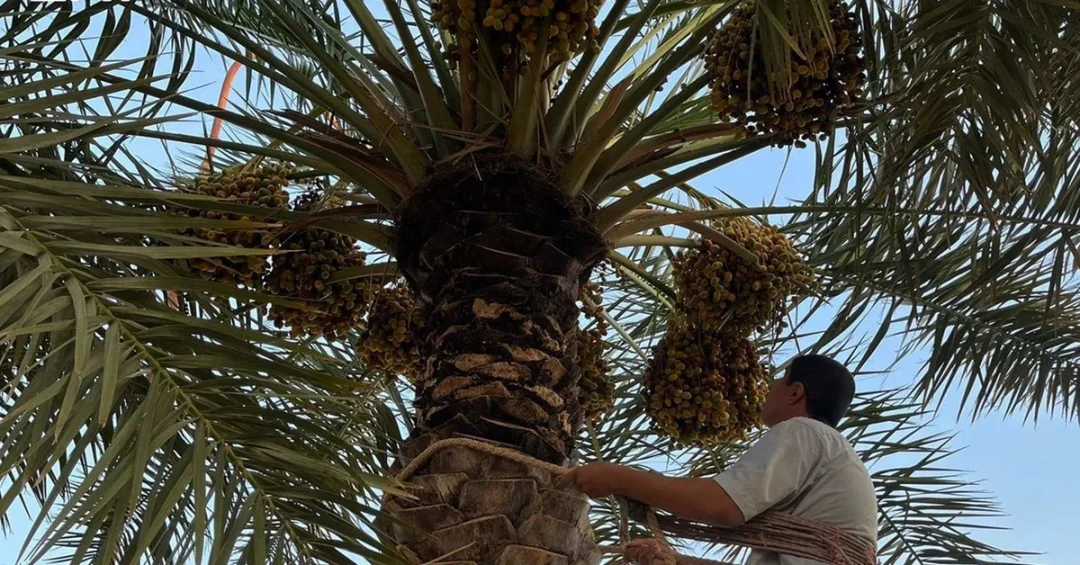
The Ministry of Environment, Water and Agriculture, through its office in Riyadh Al-Khabra Governorate in the Qassim Region, has launched a specialized date palm harvesting initiative that runs alongside the ongoing Al-Khabra and Riyadh Al-Khabra Dates Festival, according to an official announcement carried by the Saudi Press Agency. The program is designed to localize agricultural professions, equip local youth with practical job skills, and preserve the farming heritage that has defined Qassim for generations. Could any crop be more central to Saudi identity than the date palm?
The initiative combines theoretical instruction with supervised field practice, giving participants direct experience in modern harvesting and collection techniques used across the Kingdom’s palm sector. It reflects a wider national effort to strengthen the palm and date value chain, from cultivation and harvesting through processing and marketing. Qassim Region is widely recognized as one of the Kingdom’s most important agricultural heartlands, and its date festival draws producers, traders, and visitors from across Saudi Arabia and beyond. The program therefore arrives at a moment when demand for skilled agricultural labor is rising and when Saudi Arabia is investing heavily in food security, rural employment, and the modernization of farming. For young people in Riyadh Al-Khabra and surrounding communities, the initiative offers a structured pathway into a profession with deep roots and growing commercial relevance.
Context and Background
Why does a harvesting training program matter so much in a region synonymous with dates? Qassim has long been celebrated for the quality and variety of its dates, and the Al-Khabra and Riyadh Al-Khabra Dates Festival has become a flagship seasonal event that showcases local production and connects farmers with markets. The Ministry of Environment, Water and Agriculture has consistently supported such festivals as platforms for economic activity and cultural pride. The new harvesting initiative builds on that foundation by addressing a practical gap: ensuring that skilled workers are available to harvest crops efficiently, safely, and in line with modern standards. By tying training directly to the festival calendar, the program creates an immediate link between learning and real-world application, allowing participants to contribute during the very season when their skills are most needed.
The initiative also responds to a broader structural priority. Agriculture remains an important employer in rural Saudi Arabia, but it faces generational transitions as young people seek opportunities in cities and new sectors. Programs that localize agricultural professions aim to reverse that trend by demonstrating that farming careers can be modern, technical, and economically rewarding. The Ministry’s office in Riyadh Al-Khabra Governorate is positioned at the center of this effort, working with local stakeholders to design training that is relevant to the specific conditions of Qassim’s palm groves. This localized approach is significant because date cultivation varies by region, and effective training must account for local soil, climate, irrigation practices, and harvest timing. The result is a program that respects tradition while embracing improvement.
Key Details
What exactly does the training involve, and who benefits? According to the official announcement, the initiative delivers specialized training programs that blend theoretical instruction with field practice. Participants learn modern date harvesting and collection techniques, gaining hands-on experience under the guidance of qualified instructors and experienced farmers. The curriculum is designed to develop youth capabilities and qualify local cadres, meaning that the skills acquired are intended to remain in the community and support the sector over the long term. By focusing on the complete value chain, the program addresses not only the act of harvesting but also the handling and collection stages that determine final product quality. This holistic approach helps reduce post-harvest losses, improve efficiency, and raise the market value of Qassim’s date output.
The initiative is closely coordinated with the Al-Khabra and Riyadh Al-Khabra Dates Festival, which provides a live environment for applying newly acquired skills. Festival visitors and traders can see the results of the training in the quality of the dates on display, while participants gain visibility and connections that can lead to further employment or entrepreneurship. The program also supports the sustainability of the palm and date sector by encouraging practices that protect palm health and productivity. In a region where date palms are both an economic asset and a cultural symbol, such training carries significance beyond the immediate harvest. It reinforces the idea that agriculture is a knowledge-based profession worthy of investment, and it gives young Saudis a tangible stake in the future of their communities.
International and Regional Impact
How does a local training initiative in Qassim resonate beyond Saudi Arabia’s borders? Saudi Arabia is one of the world’s leading producers and exporters of dates, and the Kingdom’s palm sector is increasingly integrated into global food markets. Improvements in harvesting and collection techniques therefore contribute to the reliability and quality of Saudi dates available to international buyers. Regional neighbors and trading partners watch the Kingdom’s agricultural modernization closely, because it affects supply chains, pricing, and the competitiveness of dates from the Gulf and wider Middle East. By investing in local skills, the Ministry of Environment, Water and Agriculture strengthens the Kingdom’s position as a dependable source of high-quality agricultural products. The initiative also aligns with Saudi Arabia’s growing role in global food security discussions, where sustainable production and reduced waste are central themes.
Within the region, the program reinforces Qassim’s reputation as a center of agricultural excellence. The Al-Khabra and Riyadh Al-Khabra Dates Festival attracts participants and visitors from across the Kingdom and from neighboring countries, creating opportunities for knowledge exchange and commercial partnerships. When local youth are trained to international standards, the entire value chain becomes more attractive to investors and buyers. This, in turn, can stimulate related activities such as packaging, logistics, and date-based food processing. The initiative thus has a multiplier effect that extends well beyond the individuals who enroll in the training. It demonstrates how targeted human capital development can enhance a region’s economic standing and its cultural influence, both domestically and internationally.
Economic and Strategic Significance
Why is the date palm sector so important to Saudi Arabia’s economic strategy? Dates are a staple food, a cultural emblem, and a significant export commodity. The palm and date sector supports rural livelihoods, generates employment, and contributes to national food security objectives. By localizing agricultural professions, the Ministry’s initiative helps ensure that the workforce required to sustain and grow this sector is available within the Kingdom. This reduces reliance on imported labor over time and creates career paths for Saudi youth in a field that is both traditional and increasingly technology-driven. The training also supports the sustainability of the value chain by promoting practices that improve yields and product quality, which in turn raises incomes for farmers and strengthens the sector’s overall competitiveness.
Strategically, the initiative fits within a broader national push to diversify the economy and develop human capital. Agriculture is one of several sectors targeted for modernization under Saudi Arabia’s long-term development plans, and programs that combine education with practical experience are seen as effective tools for building a skilled workforce. The Ministry of Environment, Water and Agriculture has emphasized the importance of sustainable resource use, and training harvesters in modern techniques can contribute to water efficiency and reduced waste. For Qassim, the economic benefits are direct: better harvests, higher-quality products, and a more capable local workforce. For the Kingdom, the initiative represents another step toward a more resilient, self-reliant, and productive agricultural sector that can compete in global markets.
Vision 2030 Alignment
How does this initiative connect to Saudi Vision 2030? Vision 2030 seeks to diversify the Kingdom’s economy, empower its citizens, and enhance the quality of life across all regions. The date palm harvesting initiative directly supports these goals by investing in youth skills, promoting employment in rural areas, and strengthening a sector with deep cultural and economic value. It reflects the Vision’s emphasis on human capital development and on creating opportunities that allow Saudis to contribute to and benefit from national progress. By localizing agricultural professions, the program also supports the goal of a more diversified labor market and a more resilient economy. The Ministry of Environment, Water and Agriculture is translating Vision 2030’s ambitions into practical action at the community level, where the impact is felt most directly.
As the Al-Khabra and Riyadh Al-Khabra Dates Festival continues, the harvesting initiative stands as a clear example of how tradition and modernization can reinforce one another. The program preserves regional farming heritage while equipping a new generation with the skills to carry it forward. It enhances the sustainability and value chain of the palm and date sector, and it contributes to the social and economic vitality of Qassim. For international observers, it offers a window into how Saudi Arabia is building its future: by honoring its roots, investing in its people, and pursuing excellence in every sector. The Ministry’s work in Riyadh Al-Khabra Governorate is a small but meaningful part of a much larger national journey, and it underscores the Kingdom’s commitment to a prosperous and sustainable tomorrow.
20 Questions
Q1. What is the date palm harvesting initiative launched in Qassim?
A1. It is a training program by the Ministry of Environment, Water and Agriculture’s office in Riyadh Al-Khabra Governorate, designed to teach modern date harvesting and collection techniques while preserving local farming heritage.
Q2. When was the initiative launched?
A2. It was launched in August 2026, coinciding with the ongoing Al-Khabra and Riyadh Al-Khabra Dates Festival, according to the Saudi Press Agency announcement.
Q3. Which government body is responsible for the initiative?
A3. The Ministry of Environment, Water and Agriculture, through its office in Riyadh Al-Khabra Governorate in the Qassim Region, is responsible for launching and overseeing the program.
Q4. What are the main goals of the initiative?
A4. The initiative aims to localize agricultural professions, empower local youth with job skills, and preserve the regional farming heritage associated with date palm cultivation in Qassim.
Q5. How does the training program operate?
A5. It combines theoretical instruction with field practice, giving participants hands-on experience in modern date harvesting and collection techniques under qualified supervision.
Q6. Who can benefit from this initiative?
A6. Local youth in Riyadh Al-Khabra and surrounding areas are the primary beneficiaries, gaining skills that can lead to employment or entrepreneurship in the date sector.
Q7. Why is Qassim Region important for date production?
A7. Qassim is one of Saudi Arabia’s most important agricultural regions, known for high-quality dates and hosting the prominent Al-Khabra and Riyadh Al-Khabra Dates Festival.
Q8. What is the Al-Khabra and Riyadh Al-Khabra Dates Festival?
A8. It is a seasonal event that showcases local date production, connects farmers with markets, and attracts visitors and traders from across the Kingdom and beyond.
Q9. How does the initiative support the date value chain?
A9. By improving harvesting and collection techniques, it helps reduce post-harvest losses, enhance product quality, and increase the market value of Qassim’s date output.
Q10. What does ‘localizing agricultural professions’ mean?
A10. It means training and employing local residents, particularly Saudi youth, in agricultural roles that might otherwise rely on imported labor, thereby strengthening the local workforce.
Q11. How does the program preserve farming heritage?
A11. It passes traditional knowledge and skills to a new generation while integrating modern techniques, ensuring that Qassim’s date farming culture remains vibrant and relevant.
Q12. What economic benefits are expected?
A12. The initiative aims to boost rural employment, improve harvest quality and efficiency, and enhance the competitiveness of Saudi dates in domestic and international markets.
Q13. How does this initiative relate to food security?
A13. By strengthening the date sector’s workforce and sustainability, it contributes to national food security goals and reduces reliance on external labor for critical agricultural tasks.
Q14. Is the initiative linked to Saudi Vision 2030?
A14. Yes, it supports Vision 2030 by developing human capital, creating rural employment, and modernizing a sector with deep cultural and economic significance.
Q15. What techniques are taught in the training?
A15. Participants learn modern date harvesting and collection methods, including proper handling to maintain fruit quality and practices that support palm health and productivity.
Q16. How long does the training last?
A16. The official announcement does not specify the duration, but the program combines theoretical and practical components timed to coincide with the harvest season and festival.
Q17. Will participants receive certification?
A17. The announcement does not mention certification, but the training is designed to qualify local cadres, suggesting participants gain recognized skills for employment.
Q18. How does the initiative support rural communities?
A18. It creates opportunities for young people to build careers locally, strengthens the agricultural economy, and helps sustain the social fabric of Qassim’s farming communities.
Q19. What role does the Ministry of Environment, Water and Agriculture play?
A19. The Ministry oversees the initiative through its Riyadh Al-Khabra office, providing training, coordination with the festival, and support for the sector’s sustainability.
Q20. What is the expected long-term impact of this program?
A20. It is expected to build a skilled local workforce, enhance the date sector’s value chain, and contribute to the economic and social development of Qassim Region in line with national goals.
Reader Feedback
We value your thoughts. Please share your feedback on this article.
Your feedback helps us improve our coverage.