


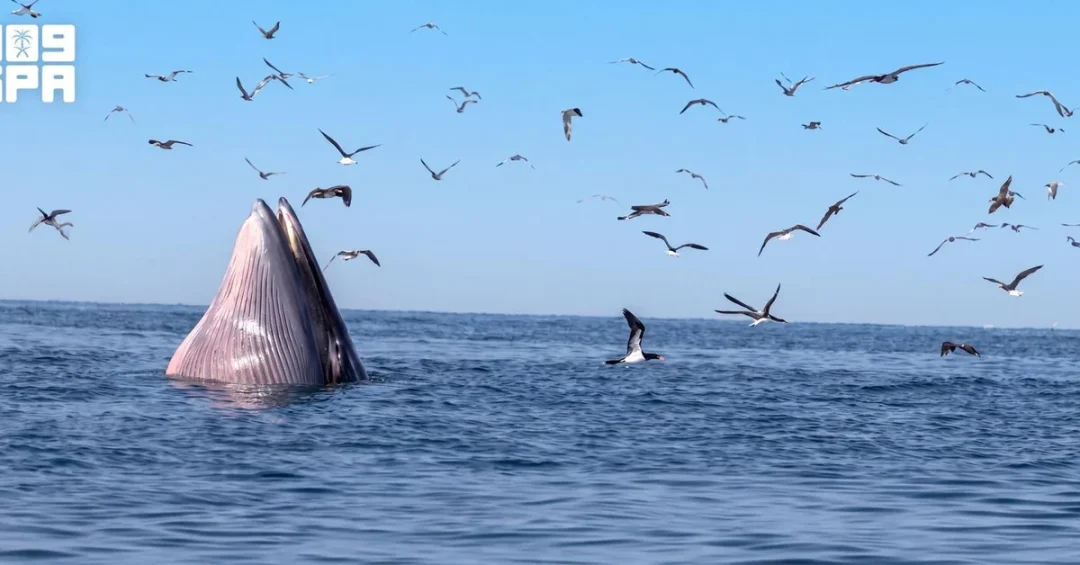
The National Center for Wildlife (NCW) has documented repeated sightings of Bryde’s whales in the Farasan Islands Reserve during its regular marine monitoring and survey patrols, with the most recent observation recorded on August 18, 2026, when a specialist team spotted a Bryde’s whale feeding off Khor Zufaf, west of the reserve. The announcement, released through the Saudi Press Agency (SPA), confirms a multi-year pattern of sightings between May 2023 and August 2026 and positions the Farasan Islands Reserve as one of the Kingdom’s most promising destinations for sustainable marine wildlife watching.
The findings arrive as Saudi Arabia accelerates its efforts to protect natural habitats, expand ecotourism, and diversify visitor experiences in line with Vision 2030. For international observers, the sightings offer a rare window into the health of Red Sea ecosystems and the scientific work being carried out by Saudi agencies to document them. Why does a single whale species matter so much to the Kingdom’s environmental and tourism agenda? Because the presence of large filter-feeding whales is widely regarded as an indicator of a functioning, nutrient-rich marine environment — and the Farasan Islands Reserve appears to be exactly that.
Context and Background
The Farasan Islands Reserve is one of Saudi Arabia’s most significant protected areas, an archipelago of more than 80 islands in the southern Red Sea administered under the national protected areas framework. It is known for its coral reefs, seagrass meadows, mangroves, and populations of the endangered Arabian gazelle, alongside a rich variety of seabirds and marine species. The reserve has been a focal point of the NCW’s conservation and monitoring programs for years, and its waters form part of the broader Red Sea marine corridor that connects Saudi Arabia to regional and global biodiversity networks.
Bryde’s whales (pronounced “broo-dus”) are large baleen whales found in warm and temperate waters worldwide. They can reach lengths of up to 15 meters and feed primarily on small schooling fish, krill, and plankton. Unlike many other large whale species, they do not undertake long polar migrations, which makes consistent sightings in a defined area especially valuable for scientists. The NCW’s cumulative data show that Bryde’s whales appeared repeatedly in the reserve during particular months — notably July, August, September, and October — with several sightings concentrated in areas south and west of the reserve.
Why does the timing of these sightings matter so much to researchers? Seasonal patterns help scientists distinguish between resident populations and transient visitors, and they inform how and when wildlife-watching activities can be conducted without disturbing the animals. According to the SPA report, the NCW’s monitoring efforts are designed precisely to expand this kind of scientific knowledge, documenting species, their locations, and their patterns of occurrence across the reserve.
Key Details of the Latest Sightings
The most recent sighting took place on August 18, 2026, when a specialist team observed a Bryde’s whale feeding off Khor Zufaf, west of the Farasan Islands Reserve, during a field survey. The observation was not an isolated event: it formed part of a series of sightings recorded at various locations across the reserve over the past several years. Cumulative monitoring data covering May 2023 to August 2026 reveal numerous encounters, with the species appearing repeatedly during certain periods of the year.
The NCW stated that the data underscore the importance of continued monitoring to better understand the timing and spatial distribution of the whales. The sightings also reflect the rich marine biodiversity of the reserve and its potential for wildlife watching in natural habitats. In practical terms, this means the reserve could support seasonal marine wildlife-watching experiences — one of its leading attractions — giving visitors the chance to observe whales, dolphins, and other marine life in their natural environment.
How does the NCW actually conduct this monitoring? The center carries out regular marine monitoring and survey patrols using specialist teams, recording species, locations, and occurrence patterns. These efforts are not simply about counting animals; they build a scientific baseline that can guide conservation measures, inform sustainable tourism planning, and support Saudi Arabia’s commitments under international biodiversity frameworks. The repeated presence of Bryde’s whales in the same general areas over multiple years suggests that the reserve’s waters provide reliable feeding opportunities — a sign of a healthy marine ecosystem.
International and Regional Impact
The Farasan Islands Reserve sits within the Red Sea, a marine environment of global ecological importance that is shared by several countries and connected to major shipping lanes. Saudi Arabia’s documentation of Bryde’s whale sightings contributes to the wider scientific understanding of cetacean distribution in the region, where data on large whales remain relatively limited compared with other parts of the world. For international researchers and conservation organizations, the NCW’s multi-year dataset is a valuable addition to the global picture of how these animals use warm-water habitats.
Could the Farasan Islands become a reference point for marine wildlife research in the Middle East? The evidence points in that direction. The reserve’s combination of protected status, rich biodiversity, and consistent monitoring makes it well suited to long-term study. The sightings also reinforce the Kingdom’s message that environmental protection and economic development can advance together — a theme that resonates with international audiences and with Saudi Arabia’s partners in global conservation efforts.
Regionally, the presence of whales in the southern Red Sea highlights the importance of transboundary cooperation on marine protection. Saudi Arabia has consistently emphasized responsible stewardship of the Red Sea’s ecosystems, and the NCW’s work reflects that commitment. The data gathered at Farasan can support dialogue with neighboring states and international bodies on issues such as shipping routes, fishing practices, and habitat conservation — all of which affect large marine species.
Economic and Strategic Significance
The economic dimension of the whale sightings lies in their potential to support sustainable tourism. Wildlife watching is a growing segment of the global travel market, and destinations that can offer reliable, responsibly managed encounters with marine megafauna attract high-value visitors. The NCW explicitly links its monitoring work to the development of distinctive and sustainable wildlife experiences that showcase Saudi Arabia’s natural richness and bring visitors closer to wildlife in its natural environment. The Farasan Islands Reserve, with its established infrastructure and protected status, is a natural candidate for such experiences.
For Saudi Arabia’s tourism sector, this aligns with broader efforts to expand the Kingdom’s offerings beyond traditional and religious tourism into nature, adventure, and heritage travel. The Red Sea coast already hosts major development projects, and the Farasan Islands represent a complementary, conservation-focused asset. Sustainable wildlife watching can generate local employment, support community businesses, and create incentives for protecting the very habitats that make the sightings possible.
What makes this strategically significant beyond tourism? Marine biodiversity is increasingly recognized as a national asset tied to food security, climate resilience, and international reputation. By investing in monitoring and documentation, the NCW is building the scientific foundation for informed decisions about marine spatial planning, fisheries management, and protected area design. The Bryde’s whale data are therefore part of a larger effort to understand and safeguard Saudi Arabia’s marine environment for future generations.
Vision 2030 Alignment
The documentation of Bryde’s whales in the Farasan Islands Reserve aligns directly with Vision 2030, Saudi Arabia’s national transformation plan, which emphasizes environmental sustainability, quality of life, and the diversification of the economy. The Vision’s environmental goals include protecting natural habitats, preserving biodiversity, and promoting sustainable use of natural resources. The NCW’s monitoring program embodies these objectives in practice, combining scientific research with the development of responsible tourism products.
Under Vision 2030, Saudi Arabia has committed to expanding protected areas, restoring ecosystems, and enhancing the Kingdom’s attractiveness as a destination for nature lovers. The Farasan Islands Reserve, with its whale sightings and rich marine life, is a compelling example of how these commitments translate into tangible assets. The NCW’s continued work will help ensure that any future wildlife-watching activities are based on sound science and designed to minimize disturbance to the animals.
As Saudi Arabia continues to position itself as a global leader in sustainable development, stories like the Bryde’s whale sightings serve as powerful evidence of progress. They show that the Kingdom’s natural heritage is not only being protected but also studied, valued, and shared with the world. For international audiences, the message is clear: the Farasan Islands Reserve is emerging as a key wildlife destination, and Saudi Arabia is committed to keeping it that way.
20 Questions
Q1. What species of whale was recently sighted in the Farasan Islands Reserve?
A1. The National Center for Wildlife documented repeated sightings of Bryde’s whales in the Farasan Islands Reserve during its regular marine monitoring patrols.
Q2. When was the most recent Bryde’s whale sighting recorded?
A2. The latest sighting was recorded on August 18, 2026, when a specialist team spotted a Bryde’s whale feeding off Khor Zufaf, west of the reserve.
Q3. Which Saudi agency is responsible for documenting these sightings?
A3. The National Center for Wildlife (NCW) is the Saudi agency responsible for monitoring and documenting the whale sightings in the reserve.
Q4. Over what period were the Bryde’s whale sightings recorded?
A4. Cumulative monitoring data show numerous sightings of Bryde’s whales between May 2023 and August 2026, indicating a multi-year pattern of presence.
Q5. During which months do Bryde’s whales appear most frequently in the reserve?
A5. The species appeared repeatedly during certain periods of the year, particularly in July, August, September, and October, according to the NCW data.
Q6. Where were several of the whale sightings concentrated?
A6. Several sightings were concentrated in nearby areas south and west of the Farasan Islands Reserve, according to the official monitoring data.
Q7. Why is continued monitoring of the whales important?
A7. Continued monitoring helps scientists better understand the timing and spatial distribution of the whales and supports conservation and sustainable tourism planning.
Q8. What does the presence of Bryde’s whales indicate about the reserve?
A8. Their presence reflects the rich marine biodiversity of the Farasan Islands Reserve and its potential for wildlife watching in natural habitats.
Q9. What kind of tourism could the sightings support?
A9. The sightings support the development of seasonal marine wildlife-watching experiences, which are described as one of the reserve’s leading attractions.
Q10. How does the NCW conduct its monitoring work?
A10. The NCW carries out regular marine monitoring and survey patrols using specialist teams that record species, locations, and patterns of occurrence.
Q11. What is the Farasan Islands Reserve known for?
A11. The reserve is known for its coral reefs, seagrass meadows, mangroves, Arabian gazelles, seabirds, and diverse marine life in the southern Red Sea.
Q12. What do Bryde’s whales typically feed on?
A12. Bryde’s whales feed primarily on small schooling fish, krill, and plankton, and can reach lengths of up to 15 meters.
Q13. How does this development align with Vision 2030?
A13. It aligns with Vision 2030’s goals for environmental sustainability, biodiversity protection, quality of life, and economic diversification through sustainable tourism.
Q14. What economic benefits could whale watching bring to the region?
A14. Sustainable wildlife watching can attract high-value visitors, generate local employment, support community businesses, and create incentives for habitat protection.
Q15. Why are the Red Sea’s marine ecosystems globally important?
A15. The Red Sea is a marine environment of global ecological importance, shared by several countries and connected to major international shipping lanes.
Q16. What makes Bryde’s whales different from many other large whales?
A16. Unlike many large whale species, Bryde’s whales do not undertake long polar migrations, making consistent sightings in a defined area especially valuable for scientists.
Q17. How does the NCW share its findings with the public?
A17. The NCW releases information through official Saudi channels, including the Saudi Press Agency, which published the recent announcement about the sightings.
Q18. What is the significance of the sightings for international research?
A18. They contribute to global understanding of cetacean distribution in warm-water habitats, where data on large whales remain relatively limited.
Q19. What role does the Farasan Islands Reserve play in Saudi conservation?
A19. It is one of Saudi Arabia’s most significant protected areas, serving as a focal point for conservation, monitoring, and biodiversity protection efforts.
Q20. What is the long-term outlook for wildlife tourism at the reserve?
A20. With continued scientific monitoring and sustainable planning, the reserve is positioned to become a key destination for responsible marine wildlife watching in Saudi Arabia.
Reader Feedback
We value your thoughts. Please share your feedback on this article.
Your feedback helps us improve our coverage.