


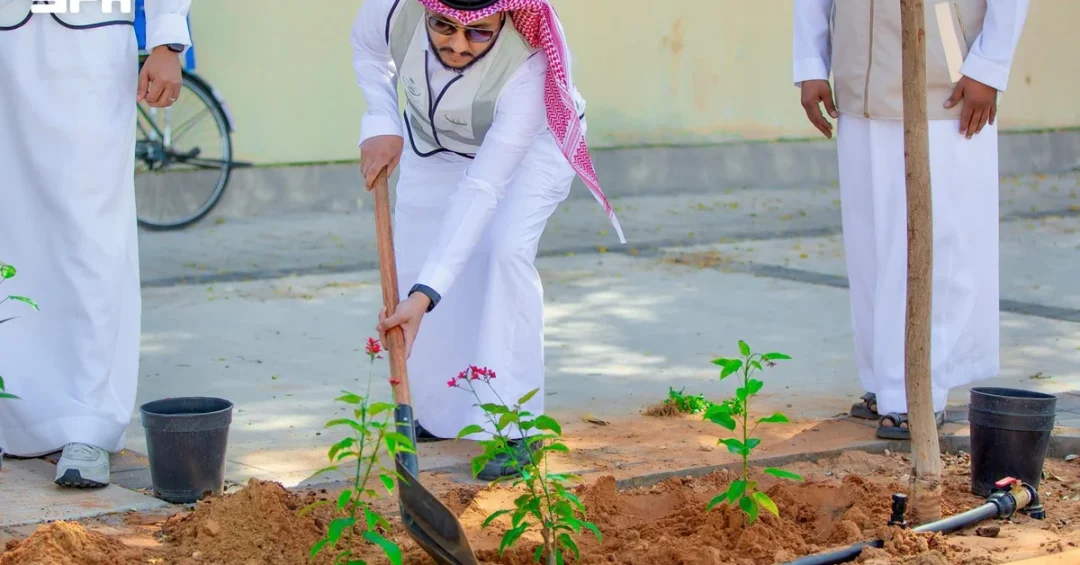
Tabuk Municipality planted 4,630 trees and 625,000 seasonal flowers across the city’s parks and public facilities during the first half of 2026, according to the Saudi Press Agency. The municipality’s projects agency also carried out maintenance and mowing operations across nearly 2.98 million square meters of green space during the same period, part of a sustained effort to expand vegetation cover, improve the appearance of public areas, and ensure the long-term readiness of municipal recreational facilities. The figures, released through official Saudi channels, offer a concrete measure of how one of the Kingdom’s northern gateway cities is translating national environmental ambitions into visible, everyday improvements for residents and visitors alike.
For an international audience, the scale of the campaign is notable not only for its numbers but for what it represents: a systematic, municipality-led approach to urban greening that is being replicated across Saudi Arabia. Tabuk, the capital of the Tabuk Province and a city of growing strategic importance near the Red Sea and the borders with Jordan and Egypt, has become a testing ground for the kind of integrated urban management that underpins the Kingdom’s broader quality-of-life agenda. The planting of thousands of trees and hundreds of thousands of seasonal flowers is not a one-off beautification drive; it is part of a long-term program of maintenance, irrigation, and landscape design that municipal officials describe as essential to sustainable urban development. Why does this matter beyond the city limits? Because in Saudi Arabia, municipal greening has become a measurable component of national transformation.
Context and Background
How did urban landscaping become a priority for Saudi municipalities? The answer lies in the Kingdom’s broader environmental and quality-of-life strategy, which has placed green space, clean air, and attractive public amenities at the center of its urban policy. Tabuk Municipality, through its projects agency, has been tasked with implementing this vision at the local level, managing parks, road medians, roundabouts, and public facilities as an interconnected green network. The first half of 2026 saw that mandate translated into 4,630 new trees and 625,000 seasonal flowers, alongside maintenance and mowing across approximately 2.98 million square meters of green space — an area equivalent to roughly 400 football pitches.
The effort reflects a deliberate shift in how Saudi cities approach public space. Rather than treating landscaping as a cosmetic afterthought, municipalities are now embedding it into planning, procurement, and maintenance cycles. Trees are selected for their suitability to the local climate, seasonal flowers are rotated to maintain visual appeal through the year, and irrigation systems are designed to conserve water — a critical consideration in a country that relies heavily on desalination and treated wastewater for its green spaces. Tabuk’s semi-arid climate, with hot summers and cool winters, makes careful species selection essential, and the municipality’s planting choices are aligned with national guidance on drought-tolerant and native vegetation.
The timing of the announcement is also significant. The first half of 2026 falls within a period of accelerated investment in Saudi cities, as the Kingdom prepares for major international events, expands tourism infrastructure, and continues to diversify its economy away from oil dependence. Urban greening supports several of these objectives simultaneously: it improves the visitor experience, enhances public health, and contributes to the environmental pillar of Saudi Vision 2030. For Tabuk, a city that serves as a gateway to the Red Sea coast and the historic region of AlUla, a greener urban environment is also a tourism asset, shaping first impressions for travelers arriving by road or air.
Key Details of the Tabuk Greening Campaign
What exactly did Tabuk Municipality accomplish in the first half of 2026? According to the Saudi Press Agency, the municipality planted 4,630 trees and 625,000 seasonal flowers across the city’s parks and public facilities. Its projects agency conducted maintenance and mowing operations across nearly 2.98 million square meters of green space. These activities were designed to expand vegetation cover, enhance the appearance of public areas, and ensure the long-term sustainability and readiness of municipal recreational facilities. The figures cover a six-month period, indicating a steady, continuous program rather than a short-term burst of activity.
The maintenance component is as important as the planting itself. Mowing, pruning, irrigation management, and the replacement of seasonal flowers require ongoing investment and coordination. By reporting both planting and maintenance figures together, Tabuk Municipality is signaling that its approach is holistic: new greenery is only valuable if it survives and thrives. The municipality’s projects agency oversees this work, coordinating contractors, scheduling operations, and monitoring outcomes across parks, streetscapes, and public buildings. The result is a municipal green estate that is actively managed rather than passively maintained.
The choice of 625,000 seasonal flowers is also revealing. Seasonal planting allows municipalities to refresh public spaces multiple times a year, creating changing visual displays that encourage residents to visit parks and public areas regularly. In Tabuk, these displays are concentrated in high-visibility locations such as city entrances, main roads, and family parks, maximizing the impact of the investment. Trees, by contrast, provide long-term benefits: shade, reduced urban heat, improved air quality, and habitat for birds and insects. Together, the two categories of planting represent a balanced strategy that addresses both immediate aesthetics and long-term environmental function.
International and Regional Impact
Why should observers outside Saudi Arabia pay attention to a municipal planting program in Tabuk? The answer lies in the broader trend it represents. Saudi Arabia is investing heavily in urban quality of life as part of its economic transformation, and municipal greening is one of the most visible expressions of that investment. International organizations, including the United Nations and the World Health Organization, have long emphasized the role of urban green space in public health, climate resilience, and social cohesion. Tabuk’s program aligns with these global priorities while reflecting local conditions and national objectives.
Regionally, the campaign contributes to the Kingdom’s environmental leadership in the Middle East. Saudi Arabia has launched a series of initiatives aimed at combating desertification, expanding vegetation cover, and reducing carbon emissions, including the Saudi Green Initiative and the Middle East Green Initiative. Municipal programs such as Tabuk’s provide the grassroots implementation that makes these national and regional goals tangible. For neighboring countries and international partners, the program offers a replicable model: clear targets, public reporting through official channels, and integration of planting with maintenance and water management. As cities across the region face similar challenges of heat, dust, and rapid urbanization, Tabuk’s experience is likely to attract interest from urban planners and environmental specialists.
Economic and Strategic Significance
How does urban greening connect to economic strategy? In Saudi Arabia, quality of life is increasingly recognized as a factor in attracting investment, talent, and tourism. Cities that offer attractive public spaces, clean environments, and recreational amenities are better positioned to compete in the global economy. Tabuk, with its strategic location on the route to NEOM and the Red Sea coast, benefits directly from improvements to its urban environment. A greener city supports the visitor economy, enhances property values, and contributes to the well-being of the local workforce.
The program also generates economic activity in the landscaping and horticulture sectors. Nurseries, irrigation specialists, maintenance contractors, and landscape designers all participate in the delivery of municipal greening projects. By sustaining demand through multi-year programs, municipalities help build local capacity and create jobs — a priority under Vision 2030. In addition, the use of treated wastewater for irrigation, where applicable, supports the circular economy and reduces pressure on freshwater resources. The strategic significance of these efforts extends beyond Tabuk: they demonstrate that environmental investment and economic development can reinforce one another.
Vision 2030 Alignment
How does a municipal tree-planting campaign connect to Saudi Vision 2030? The Vision’s quality-of-life program aims to increase green space per capita, encourage outdoor recreation, and make Saudi cities more livable. Tabuk Municipality’s achievements in the first half of 2026 — 4,630 trees, 625,000 flowers, and maintenance across nearly 2.98 million square meters — are direct contributions to these objectives. They also support the environmental sustainability pillar of the Vision, which calls for the protection of natural resources and the expansion of vegetation cover.
Looking ahead, the program is expected to continue, with further planting and maintenance cycles planned for the second half of 2026 and beyond. For the international reader, the story of Tabuk’s greening is a reminder that Saudi Arabia’s transformation is not limited to megaprojects and global summits; it is also taking place in neighborhoods, parks, and streets across the Kingdom. Through sustained municipal effort, official reporting, and alignment with national strategy, cities like Tabuk are helping to shape a greener, more attractive, and more sustainable Saudi Arabia — a goal that benefits residents, visitors, and the Kingdom’s global partners alike.
20 Questions
Q1. What did Tabuk Municipality achieve in the first half of 2026?
A1. Tabuk Municipality planted 4,630 trees and 625,000 seasonal flowers across the city’s parks and public facilities, and carried out maintenance and mowing across nearly 2.98 million square meters of green space, according to the Saudi Press Agency.
Q2. Which agency implemented the planting and maintenance work?
A2. The work was carried out through Tabuk Municipality’s projects agency, which oversees urban landscaping, maintenance operations, and the readiness of municipal recreational facilities across the city.
Q3. Why is urban greening important for Saudi cities?
A3. Urban greening expands vegetation cover, improves air quality, reduces urban heat, and enhances the appearance of public areas, all of which contribute to a higher quality of life for residents and a better experience for visitors.
Q4. How does this program support Saudi Vision 2030?
A4. It directly supports the Vision’s quality-of-life and environmental sustainability objectives, which aim to increase green space per capita, promote outdoor recreation, and expand vegetation cover across the Kingdom.
Q5. What is the significance of planting 625,000 seasonal flowers?
A5. Seasonal flowers refresh public spaces multiple times a year, creating changing visual displays that encourage residents and visitors to enjoy parks and public areas regularly throughout the year.
Q6. How much green space was maintained by the municipality?
A6. The municipality carried out maintenance and mowing operations across nearly 2.98 million square meters of green space, an area equivalent to roughly 400 football pitches.
Q7. Why is maintenance as important as new planting?
A7. Maintenance ensures that newly planted trees and flowers survive and thrive over the long term, protecting the municipality’s investment and ensuring that public spaces remain attractive and functional.
Q8. How does Tabuk’s climate affect landscaping choices?
A8. Tabuk’s semi-arid climate, with hot summers and cool winters, requires careful selection of drought-tolerant and native vegetation, along with efficient irrigation systems that conserve water.
Q9. What role does treated wastewater play in municipal irrigation?
A9. Where applicable, treated wastewater is used for irrigation, supporting the circular economy, reducing pressure on freshwater resources, and aligning with national water conservation policies.
Q10. How does urban greening benefit tourism in Tabuk?
A10. A greener urban environment improves first impressions for travelers, enhances the visitor experience, and supports Tabuk’s role as a gateway to the Red Sea coast and the historic region of AlUla.
Q11. What economic activities does municipal greening support?
A11. It supports nurseries, irrigation specialists, maintenance contractors, and landscape designers, helping build local capacity and create jobs in line with Vision 2030 economic diversification goals.
Q12. How does this program fit into Saudi Arabia’s regional environmental leadership?
A12. It contributes to national and regional initiatives such as the Saudi Green Initiative and the Middle East Green Initiative, providing grassroots implementation of broader goals to combat desertification and expand vegetation.
Q13. What are the long-term benefits of planting trees in cities?
A13. Trees provide shade, reduce urban heat, improve air quality, and create habitat for birds and insects, delivering environmental and public health benefits that grow over time.
Q14. How does the program reflect Saudi Arabia’s quality-of-life agenda?
A14. By expanding and maintaining green spaces, the program makes cities more livable, encourages outdoor recreation, and improves public health, all of which are central to the Kingdom’s quality-of-life objectives.
Q15. What area does Tabuk Province cover, and why is the city strategically important?
A15. Tabuk Province is one of Saudi Arabia’s largest regions, and the city of Tabuk serves as a northern gateway near the Red Sea and the borders with Jordan and Egypt, enhancing its strategic and economic importance.
Q16. How does the municipality ensure the sustainability of its green spaces?
A16. Sustainability is ensured through integrated planning, species selection suited to the local climate, efficient irrigation, and continuous maintenance programs that keep public facilities ready for community use.
Q17. What message does this program send to international observers?
A17. It demonstrates that Saudi Arabia’s transformation includes practical, day-to-day improvements in cities, reflecting a systematic approach to urban development that complements the Kingdom’s larger megaprojects and global initiatives.
Q18. How can other cities learn from Tabuk’s approach?
A18. Other cities can learn from Tabuk’s clear targets, public reporting through official channels, and integration of planting with maintenance and water management, offering a replicable model for sustainable urban greening.
Q19. What is expected for the second half of 2026?
A19. Further planting and maintenance cycles are expected to continue, building on the first-half achievements and supporting the municipality’s long-term strategy for expanding vegetation cover and enhancing public spaces.
Q20. Why is this story relevant to a global audience?
A20. It illustrates how Saudi Arabia is investing in urban quality of life and environmental sustainability, offering a concrete example of how national vision translates into visible improvements in cities and communities.
Reader Feedback
We value your thoughts. Please share your feedback on this article.
Your feedback helps us improve our coverage.