


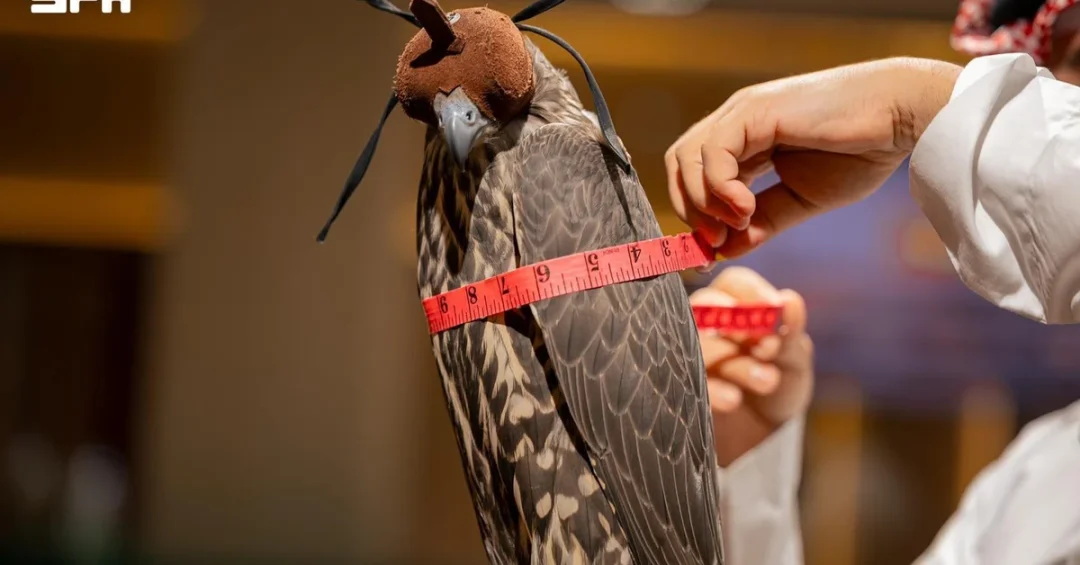
The International Falcon Breeding Farms Auction is bringing together elite breeding schools, bloodlines, and expertise from across the world to the National Falcon Center in Malham, north of Riyadh, in a landmark event that underscores Saudi Arabia’s central role in global falconry. Organized under the umbrella of the Saudi Falcons Club, the auction runs daily until August 25 and has drawn participation from Portugal, Canada, Finland, Scotland, and a range of European and international farms, alongside a growing number of Saudi producers. The event is not merely a marketplace for birds; it is a global meeting point for the science, heritage, and competitive culture that surround falconry, a pursuit deeply rooted in Arabian tradition and now firmly embedded in the Kingdom’s modern identity.
For visitors, the corridors between farm pavilions have become spaces for comparison and conversation, where breeders exchange notes on lineage, training methods, and selection criteria. The auction features gyrfalcons, peregrines, sakers, and various hybrids, each carrying the story of its farm and the expertise behind its production. As Saudi Arabia continues to invest in heritage sports through Vision 2030, the event illustrates how a centuries-old practice can serve as a platform for international cooperation, economic activity, and cultural diplomacy.
Context and Background
How did falconry, once a desert tradition passed between generations, become a global industry with auction floors in Riyadh? The answer lies in Saudi Arabia’s deliberate efforts to preserve and elevate its heritage. The Saudi Falcons Club, established under the patronage of the Kingdom’s leadership, has spent years building institutions that support falconers, breeders, and researchers. The National Falcon Center in Malham stands as a physical expression of that commitment, hosting exhibitions, auctions, and training programs throughout the year. The International Falcon Breeding Farms Auction is one of the centerpiece events on that calendar, timed to coincide with the peak season for falconry enthusiasts and breeders.
The auction’s international character reflects the global nature of modern falconry. Breeding farms from Europe and North America have developed specialized lines over decades, using selective breeding to enhance traits such as speed, endurance, and physical conformation. Saudi farms, meanwhile, have been building their own capabilities, learning from international partners while adapting methods to local conditions. The presence of Canadian, Finnish, and Scottish bloodlines alongside Portuguese and other European lines creates a unique opportunity for cross-cultural exchange. Breeders can observe how different schools approach the same challenges: how to produce a falcon that performs in competition, how to maintain health and fitness, and how to match a bird to its intended purpose.
Historically, falconry in the Arabian Peninsula was a practical pursuit as much as a sport, with Bedouin hunters relying on trained falcons for sustenance. Over time, it evolved into a competitive and cultural activity, with beauty contests and racing events becoming central to the falconry calendar. The Kingdom’s leadership has recognized the importance of preserving this heritage while opening it to the world. Events like the International Falcon Breeding Farms Auction serve that dual purpose: they honor tradition while creating a modern, globally connected marketplace.
Key Details and Breeding Schools
What distinguishes one breeding school from another, and why does it matter to falconers? The auction provides a living answer. Each farm presents its own bloodlines, breeding methods, and selection processes, turning the event into a comparative study of global falconry expertise. A Portuguese farm, for example, employs the ‘Wild Hacking’ method, releasing young falcons into the wild and windy highlands to build fitness before formal training. This approach emphasizes natural development, allowing birds to develop strength and hunting instincts in an environment that mimics their ancestral habitat. Other European farms focus on developing specialized racing lines, selecting birds based on the performance of parents and siblings. These farms maintain detailed records of lineage and achievement, treating falcon breeding as both a science and an art.
The traits sought by breeders and falconers differ depending on the intended use. Racing falcons are valued for their lineage, speed, fitness, and the achievements of their family. A bird with a proven racing pedigree can command significant attention and value. Beauty contest falcons, by contrast, are judged on size, color, head shape, wing structure, and chest symmetry, along with other qualities recognized by experienced handlers. These aesthetic standards have been refined over generations, and farms that specialize in show birds often focus on producing consistent, visually striking falcons. The auction allows buyers and enthusiasts to see these differences up close, comparing birds from different schools and understanding the trade-offs involved in breeding for specific traits.
Local Saudi farms are also working to produce competitive falcons, taking advantage of the presence of international breeders and falconers to compare birds and monitor market trends. This interaction is mutually beneficial: Saudi breeders gain access to global knowledge and bloodlines, while international farms gain insight into the Gulf market and the preferences of regional falconers. The auction thus functions as a two-way exchange, strengthening Saudi Arabia’s position as a hub for falconry while enriching the global community.
International and Regional Impact
Why does a falcon auction in Riyadh matter beyond the world of falconry? The event reflects Saudi Arabia’s broader strategy of using cultural heritage as a bridge to international engagement. By hosting breeders from Europe, North America, and beyond, the Kingdom positions itself as a convener of global expertise, a role that aligns with its diplomatic and economic objectives. The auction also supports regional tourism, drawing visitors from neighboring Gulf states and beyond who come to observe, bid, and network. Hotels, restaurants, and transport services in Riyadh benefit from the influx, while the National Falcon Center gains international visibility.
At the regional level, the auction reinforces the Gulf’s shared cultural heritage. Falconry is practiced across the Arabian Peninsula, and events like this create opportunities for cooperation among Gulf countries. Breeders from Saudi Arabia, the UAE, Qatar, and Kuwait can compare notes, share best practices, and build relationships that extend beyond the auction floor. This regional dimension complements Saudi Arabia’s global outreach, creating a network of falconry enthusiasts that spans continents. The presence of Canadian, Finnish, and Scottish bloodlines also highlights the truly international nature of the modern falconry community, where knowledge flows in multiple directions.
The auction’s timing, running until August 25, allows for extended engagement. Visitors can attend daily, observing the birds, speaking with breeders, and learning about the breeding process. This open-door approach democratizes access to expertise, making the event valuable not only for professional falconers but also for newcomers and enthusiasts. The Saudi Falcons Club has emphasized the educational value of the auction, encouraging younger generations to learn about falconry and its role in the Kingdom’s heritage.
Economic and Strategic Significance
What economic value does falconry generate, and how does the auction contribute? The falconry industry encompasses breeding, training, equipment, veterinary care, and tourism, creating a web of economic activity. High-quality falcons can command substantial prices, and the auction serves as a marketplace where value is determined by lineage, performance, and physical traits. For Saudi Arabia, the event supports the growth of a domestic industry that reduces reliance on imports while creating opportunities for local breeders and entrepreneurs. The knowledge exchanged at the auction helps Saudi farms improve their stock, ultimately enhancing the competitiveness of the Kingdom’s falconry sector.
Strategically, the auction reinforces Saudi Arabia’s soft power. By hosting an event that attracts international participation, the Kingdom demonstrates its commitment to preserving cultural heritage while embracing global engagement. This aligns with Vision 2030’s goals of diversifying the economy, promoting tourism, and enhancing international cooperation. The National Falcon Center in Malham, as the venue, showcases Saudi Arabia’s investment in world-class facilities and its ability to organize events that meet international standards. The auction also supports the Kingdom’s efforts to position Riyadh as a global hub for heritage sports, complementing other initiatives in areas such as camel racing, horse racing, and traditional arts.
The presence of diverse breeding schools at the auction also has implications for the future of falconry. As breeders share methods and compare results, the global community benefits from accelerated innovation. The ‘Wild Hacking’ method from Portugal, for instance, may inspire adaptations in other regions. Racing lines developed in Europe may be crossbred with Saudi bloodlines to produce birds suited to local conditions. This collaborative dynamic ensures that falconry remains a living tradition, evolving with each generation while honoring its roots.
Vision 2030 Alignment
How does a falcon auction connect to Saudi Arabia’s long-term vision for the future? Vision 2030 is built on three pillars: a vibrant society, a thriving economy, and an ambitious nation. The International Falcon Breeding Farms Auction contributes to all three. As a cultural event, it enriches Saudi society by celebrating a heritage that predates the modern state, fostering pride and continuity. As an economic activity, it supports entrepreneurship, tourism, and the growth of a specialized industry. As a global gathering, it enhances Saudi Arabia’s international standing and demonstrates the Kingdom’s ability to host events of significance.
The auction also reflects Vision 2030’s emphasis on quality of life and cultural enrichment. By providing a venue where families and enthusiasts can learn about falconry, the Saudi Falcons Club encourages public engagement with heritage in a modern, accessible way. The event’s daily schedule until August 25 allows for broad participation, ensuring that the benefits of the auction extend beyond a narrow circle of professionals. In this sense, the auction is not just about falcons; it is about building a society that values its past while looking confidently to the future. As Saudi Arabia continues to invest in heritage sports and international partnerships, events like this will remain central to the Kingdom’s identity and its role on the world stage.
20 Questions
Q1. What is the International Falcon Breeding Farms Auction?
A1. It is a major event organized by the Saudi Falcons Club at the National Falcon Center in Malham, north of Riyadh, bringing together breeding farms from around the world to display and sell falcons while sharing expertise.
Q2. Where is the National Falcon Center located?
A2. The National Falcon Center is located in Malham, north of Riyadh, Saudi Arabia. It serves as a hub for falconry events, exhibitions, and auctions throughout the year.
Q3. How long will the auction run?
A3. The auction is open to visitors daily until August 25, allowing ample time for breeders, falconers, and enthusiasts to attend and participate in the event.
Q4. Which countries are participating in the auction?
A4. Participants include farms from Portugal, Canada, Finland, Scotland, and various other European countries, alongside local Saudi farms, creating a diverse international gathering of breeding expertise.
Q5. What types of falcons are on display?
A5. The falcons on display include gyrfalcons, peregrines, sakers, and various hybrids, each representing different bloodlines and breeding traditions from around the world.
Q6. What is the ‘Wild Hacking’ method used by a Portuguese farm?
A6. It is a breeding approach where young falcons are released into wild, windy highlands to build fitness and natural hunting skills before undergoing formal training.
Q7. How are racing falcons evaluated?
A7. Racing falcons are valued for their lineage, speed, fitness, and the achievements of their family, with breeders focusing on performance records of parents and siblings.
Q8. What traits are judged in beauty contest falcons?
A8. Beauty contest falcons are judged on size, color, head shape, wing structure, chest symmetry, and other qualities recognized by experienced handlers and breeders.
Q9. What role do Saudi farms play in the auction?
A9. Local Saudi farms are working to produce competitive falcons, using the auction to compare birds, monitor market trends, and learn from international breeders and falconers.
Q10. Why is the auction important for international breeders?
A10. International breeders gain access to the Gulf market, connect with regional falconers, and exchange knowledge with Saudi farms, enhancing global cooperation in falconry.
Q11. How does the auction support Saudi Arabia’s tourism sector?
A11. The auction draws visitors from neighboring Gulf states and beyond, benefiting hotels, restaurants, and transport services in Riyadh while showcasing the Kingdom’s cultural heritage.
Q12. What is the significance of bloodlines in falconry?
A12. Bloodlines determine a falcon’s potential for racing or beauty contests, carrying the history of its farm, upbringing, and the traits for which it was selectively bred.
Q13. How does the auction align with Vision 2030?
A13. It supports Vision 2030 by promoting cultural heritage, diversifying the economy, boosting tourism, and enhancing Saudi Arabia’s international standing through global engagement.
Q14. What economic activities does falconry generate?
A14. Falconry generates economic activity in breeding, training, equipment, veterinary care, and tourism, creating opportunities for local entrepreneurs and specialized businesses.
Q15. Can visitors attend the auction without being professional falconers?
A15. Yes, the auction is open to all visitors daily until August 25, offering educational value and access to experts for newcomers and enthusiasts alike.
Q16. What is the role of the Saudi Falcons Club?
A16. The Saudi Falcons Club organizes and supports falconry events, preserves heritage, and promotes international cooperation, positioning Saudi Arabia as a global hub for falconry.
Q17. How do breeding methods differ between farms?
A17. Methods vary from ‘Wild Hacking’ in Portugal to selective breeding for racing lines in other European farms, each emphasizing different traits and development approaches.
Q18. What happens after a falcon leaves the auction?
A18. Falcons enter the field of competition, where their quality is tested in racing or beauty contests, proving the effectiveness of their breeding and training.
Q19. Why is the auction considered a meeting point for breeding schools?
A19. It brings together diverse farms, allowing breeders to compare bloodlines, methods, and selection processes, fostering exchange and innovation in global falconry.
Q20. What makes this auction unique in the world of falconry?
A20. Its combination of international participation, diverse bloodlines, and a world-class venue in Riyadh makes it a premier event for falconry enthusiasts and breeders globally.
Reader Feedback
We value your thoughts. Please share your feedback on this article.
Your feedback helps us improve our coverage.
Related articles
 Four Falcons Sell for SAR203,250 at Saudi Auction Night Four
 Madinah Lecture Explores Smart Tech for Heritage Preservation
 Four Falcons Sell for SAR 203,250 at Saudi Auction Night Four
 Global Falcon Lines Meet at Saudi International Auction
 Hail Arabian Horse Championship Upgraded to Category B
 Makkah Quran Competition Final Rounds Draw 42 Contestants