


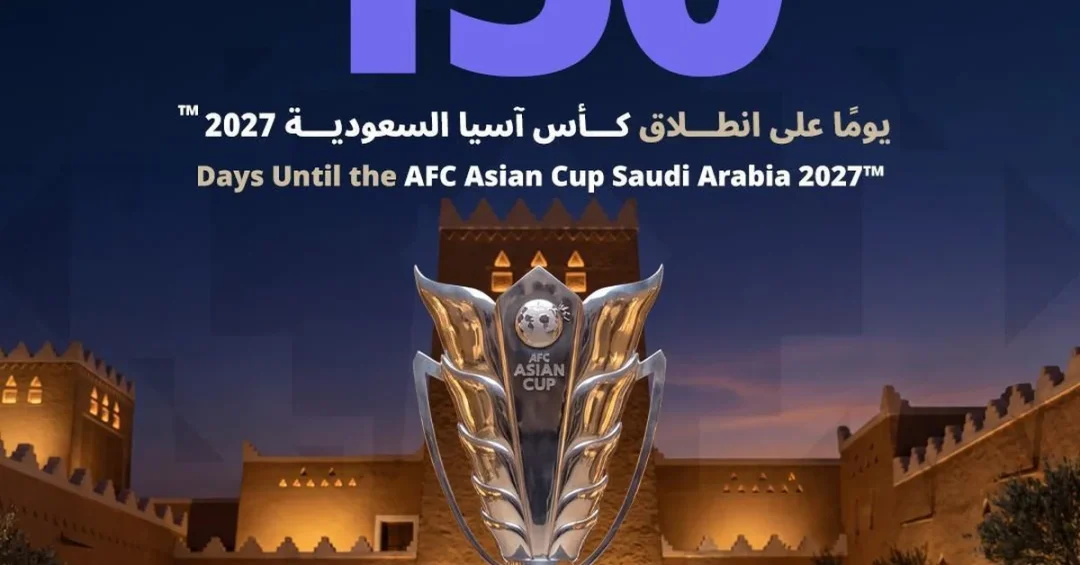
Saudi Arabia has entered the final 150-day countdown to the AFC Asian Cup Saudi Arabia 2027, with the Kingdom set to host Asia’s flagship national team football tournament for the first time from January 7 to February 5, 2027. The milestone, confirmed by the Saudi Press Agency, marks a decisive phase in preparations for the 19th edition of the continental championship, which will bring together 24 national teams across 30 days of competition in Riyadh, Jeddah, and Al-Khobar. With 51 matches scheduled and a field featuring several sides that appeared at the FIFA World Cup 2026, the tournament represents both a sporting landmark and a defining moment in Saudi Arabia’s emergence as a global events destination. Can a single tournament reshape how the world sees an entire region?
The countdown comes as operational preparations accelerate across multiple fronts. The final draw, held in May in the historic At-Turaif District in Diriyah, placed the Saudi national team in Group A alongside Kuwait, Oman, and Palestine, setting up an opening campaign that will begin in Riyadh. The Green Falcons, three-time Asian champions, will pursue a fourth continental title on home soil. Meanwhile, the first phase of personal interviews for applicants to the tournament’s volunteer program began last week in the Eastern Region, with more than 3,000 interviews under way in Al-Khobar and further rounds to follow in Riyadh and Jeddah. Together, these developments signal that Saudi Arabia is moving from planning into delivery.
Context and Background
How did Saudi Arabia arrive at this moment in its sporting history? The Kingdom has long been a central force in Asian football, both on the pitch and in the boardroom. The Saudi national team won the AFC Asian Cup in 1984, 1988, and 1996, and has been a regular presence at the FIFA World Cup, most memorably reaching the round of 16 in 1994 and defeating eventual champions Argentina in a famous group-stage victory in 2022. That competitive pedigree, combined with the Saudi Arabian Football Federation’s growing investment in youth development and elite coaching, has made the national team one of the most closely watched sides in the continental game.
Hosting the Asian Cup, however, represents a different kind of ambition. The tournament was awarded to Saudi Arabia by the Asian Football Confederation, and its delivery is being coordinated with the Ministry of Sport under the broader framework of Vision 2030, the national transformation strategy that seeks to diversify the economy, expand the sports and entertainment sector, and raise the Kingdom’s international profile. The 2027 edition follows a series of major events hosted in the Kingdom, including the 2023 FIFA Club World Cup, top-tier boxing and motorsport fixtures, and a growing calendar of international football friendlies and concerts. The Asian Cup is the largest football property the Kingdom has hosted to date, and its success will be measured not only in stadium attendance but in operational excellence, broadcast reach, and visitor experience.
The tournament also arrives at a moment of significant momentum for Asian football as a whole. The expansion of the FIFA World Cup to 48 teams has opened new pathways for Asian confederations, and several teams that competed at the 2026 World Cup will arrive in Saudi Arabia with fresh tournament experience. That competitive depth is expected to make the group stage unusually unpredictable, with traditional powers and emerging sides alike viewing the Asian Cup as a proving ground. For Saudi Arabia, hosting such a field elevates the stakes: the Green Falcons will be expected to contend for the title in front of home crowds, while the Kingdom’s organisers must deliver an event that meets the confederation’s technical and commercial standards.
Key Details
What exactly will the tournament look like on the ground? The AFC Asian Cup Saudi Arabia 2027 will run from January 7 to February 5, 2027, with 24 national teams competing in 51 matches across three host cities: Riyadh, Jeddah, and Al-Khobar. The 30-day format includes a group stage, knockout rounds, and a final that will crown the 19th continental champion. The choice of three cities reflects a deliberate strategy to spread the tournament’s benefits across the Kingdom, giving international visitors and Saudi residents in different regions direct access to matches while showcasing the country’s transport, hospitality, and stadium infrastructure.
The final draw, staged in May in the At-Turaif District of Diriyah, was itself a statement of intent. At-Turaif, a UNESCO World Heritage site and the birthplace of the first Saudi state, provided a setting that linked the tournament to the Kingdom’s deep historical identity. The draw placed Saudi Arabia in Group A with Kuwait, Oman, and Palestine. The Green Falcons will open their campaign against Palestine in Riyadh, a fixture that carries significant regional interest and is expected to draw a capacity crowd. Kuwait and Oman, both familiar Gulf rivals, complete a group that guarantees intense regional competition from the opening whistle. The Saudi team’s pursuit of a fourth Asian title will be one of the defining narratives of the tournament.
Alongside the sporting draw, the volunteer program is emerging as a major operational pillar. The first phase of personal interviews for applicants began last week in the Eastern Region, with more than 3,000 interviews being conducted in Al-Khobar. Similar interview rounds will follow in Riyadh and Jeddah, reflecting a nationwide recruitment effort designed to involve Saudi citizens and residents in the delivery of the event. Volunteers will be deployed across accreditation, media operations, spectator services, transportation, and venue support. The scale of the program, which is expected to number in the thousands, underscores the Kingdom’s emphasis on building local capacity and creating a lasting skills legacy beyond the final whistle.
Stadium readiness, training facilities, team hotels, and broadcast infrastructure are all part of the operational picture being finalised during the 150-day window. Saudi Arabia has invested heavily in modern football venues in recent years, and the tournament will utilise a mix of newly developed and upgraded stadiums. Each host city will also operate fan zones and cultural programming, giving visitors a chance to experience Saudi hospitality alongside the football. The combination of sporting infrastructure and destination experience is central to how the Kingdom intends to be judged as a host.
International and Regional Impact
Why does an Asian Cup hosted in Saudi Arabia matter beyond the region? The tournament will draw broadcast audiences across Asia, the Middle East, and beyond, with the AFC’s media rights reaching markets that span from Japan and South Korea to Australia, India, and the Gulf. For international audiences, the event offers a sustained, month-long window into Saudi Arabia that goes beyond headlines. Visitors, journalists, and broadcast crews will experience the Kingdom’s cities, transport networks, and hospitality sector directly, creating a narrative shaped by firsthand experience rather than distant commentary. That dynamic is increasingly important as Saudi Arabia positions itself as a global hub for sport, tourism, and business.
Regionally, the tournament reinforces the Gulf’s role as a centre of gravity for Asian football. With Kuwait and Oman drawn alongside Saudi Arabia in Group A, the opening phase will feature Gulf rivalries that resonate deeply with local audiences. The presence of teams that competed at the FIFA World Cup 2026 adds further credibility to the field and raises the competitive standard. For the Asian Football Confederation, a well-executed tournament in Saudi Arabia strengthens the case for hosting major global events in the region and supports the confederation’s commercial growth. For Saudi Arabia, it is an opportunity to demonstrate that its event-delivery capabilities match its ambitions, building confidence among international federations, sponsors, and fans ahead of future bids.
Economic and Strategic Significance
What does the tournament mean for Saudi Arabia’s economy and long-term strategy? Major sporting events are a core component of the Kingdom’s economic diversification agenda. The Asian Cup is expected to generate activity across hospitality, aviation, retail, food and beverage, and entertainment, with thousands of international visitors arriving over a 30-day period. The event will also create short-term employment and volunteer opportunities, while the global broadcast exposure provides a platform for Saudi brands, destinations, and investment opportunities. Tourism authorities have been positioning the Kingdom as a year-round destination, and the tournament’s winter timing aligns with peak travel season, when visitors from Asia and Europe seek warm-weather destinations.
Strategically, the Asian Cup supports the broader goal of making Saudi Arabia a regular host of world-class events. The Kingdom has already secured the right to host the 2034 FIFA World Cup, and the 2027 Asian Cup serves as a large-scale operational rehearsal for that larger undertaking. Lessons learned in crowd management, transport coordination, volunteer deployment, and international media operations will feed directly into World Cup planning. The tournament also strengthens the domestic football ecosystem, from youth academies to refereeing standards, by exposing Saudi clubs, players, and officials to elite continental competition. In that sense, the 150-day countdown is not only about one tournament; it is about building the institutional muscle for a generation of major events.
Vision 2030 Alignment
How does the AFC Asian Cup fit into Vision 2030? Sport is one of the central pillars of the Vision 2030 transformation, which aims to increase household spending on entertainment, expand participation in physical activity, and create a vibrant society with world-class amenities. Hosting the Asian Cup advances several of these objectives at once: it accelerates investment in sports infrastructure, expands the events calendar, boosts tourism receipts, and creates civic pride through volunteerism and national team support. The tournament also reinforces the Kingdom’s commitment to international engagement, welcoming visitors from across Asia and presenting Saudi culture, heritage, and modernity to a global audience.
With 150 days remaining, the focus now shifts to execution. The volunteer interviews in Al-Khobar, Riyadh, and Jeddah, the finalisation of venues and operational plans, and the steady build-up around the Green Falcons’ Group A campaign all point to a host nation preparing with purpose. For Saudi Arabia, the 2027 Asian Cup is an opportunity to write a new chapter in its football story and to demonstrate that its vision extends far beyond the pitch. As the countdown continues, the Kingdom is not simply preparing to host a tournament; it is preparing to welcome Asia and the world. Will the next 150 days define a new era for Saudi sport?
20 Questions
Q1. When will the AFC Asian Cup Saudi Arabia 2027 take place?
A1. The tournament will be held from January 7 to February 5, 2027, according to the Saudi Press Agency. It will be the 19th edition of the AFC Asian Cup and the first time Saudi Arabia has hosted the continental championship.
Q2. How many days remain until the tournament begins?
A2. As of the official update, 150 days remain until the start of the competition. This marks the beginning of the final operational phase of preparations across the Kingdom’s host cities.
Q3. How many teams will compete in the tournament?
A3. Twenty-four Asian national teams will compete in the tournament. The field includes several of the continent’s leading sides and teams that appeared at the FIFA World Cup 2026.
Q4. How many matches will be played?
A4. A total of 51 matches will be played over 30 days of competition. The schedule includes the group stage, knockout rounds, and the final that will crown the continental champion.
Q5. Which cities will host the matches?
A5. Riyadh, Jeddah, and Al-Khobar will host the tournament’s matches. The three cities reflect a strategy to spread the event’s benefits across different regions of the Kingdom.
Q6. Where was the final draw held?
A6. The final draw was held in May in the historic At-Turaif District in Diriyah. The venue is a UNESCO World Heritage site and the birthplace of the first Saudi state.
Q7. Which group is Saudi Arabia in?
A7. Saudi Arabia was placed in Group A alongside Kuwait, Oman, and Palestine. The Green Falcons will begin their campaign against Palestine in Riyadh.
Q8. How many Asian titles has Saudi Arabia won?
A8. Saudi Arabia has won the AFC Asian Cup three times, in 1984, 1988, and 1996. The team will be seeking a fourth title on home soil in 2027.
Q9. What is the volunteer program for the tournament?
A9. The volunteer program recruits and trains individuals to support tournament operations. Volunteers will assist with accreditation, media operations, spectator services, transportation, and venue support across the host cities.
Q10. Where are volunteer interviews taking place?
A10. The first phase of personal interviews began last week in the Eastern Region. More than 3,000 interviews are being conducted in Al-Khobar, with further rounds to follow in Riyadh and Jeddah.
Q11. Why is the tournament significant for Saudi Arabia?
A11. It is the largest football tournament the Kingdom has hosted and supports Vision 2030 goals. It showcases Saudi event-delivery capabilities, boosts tourism, and strengthens the domestic football ecosystem.
Q12. How does the tournament support Vision 2030?
A12. Sport is a key pillar of Vision 2030, which aims to expand entertainment, tourism, and youth participation. The Asian Cup advances these goals through infrastructure investment, visitor spending, and international engagement.
Q13. What role does the Ministry of Sport play?
A13. The Ministry of Sport coordinates national hosting efforts alongside the Saudi Arabian Football Federation. It works to ensure venues, operations, and fan experience meet international standards.
Q14. Will international visitors be able to attend?
A14. Yes, the tournament is designed to welcome international visitors. Saudi Arabia has expanded its tourism visa offerings in recent years to make attending major events easier for global fans.
Q15. What economic benefits are expected?
A15. The tournament is expected to generate activity in hospitality, aviation, retail, and entertainment. Thousands of visitors over 30 days will support local businesses and create short-term jobs.
Q16. How does this event relate to the 2034 FIFA World Cup?
A16. The 2027 Asian Cup serves as a large-scale operational rehearsal for the 2034 FIFA World Cup. Lessons in crowd management, transport, and media operations will inform World Cup planning.
Q17. Which teams are among the strongest in the field?
A17. The field includes several of Asia’s leading national teams and sides that appeared at the FIFA World Cup 2026. This depth is expected to make the group stage highly competitive.
Q18. What is the significance of the At-Turaif draw venue?
A18. At-Turaif is a UNESCO World Heritage site and a symbol of Saudi heritage. Hosting the draw there linked the tournament to the Kingdom’s history and cultural identity.
Q19. How can fans follow tournament preparations?
A19. Updates are being released through official Saudi channels, including the Saudi Press Agency and the Ministry of Sport. These sources provide verified information on venues, tickets, and schedules.
Q20. What is the expected legacy of the tournament?
A20. The legacy includes upgraded stadiums, trained volunteers, and expanded event expertise. It also aims to inspire youth participation in football and reinforce Saudi Arabia’s role as a global sports destination.
Reader Feedback
We value your thoughts. Please share your feedback on this article.
Your feedback helps us improve our coverage.
Related articles
 Nottingham Forest Signs Ivorian Defender Ousmane Diomande
 OpTic Gaming Wins Second Straight Call of Duty Title at Esports World Cup
 Esports World Cup 2026 Unveils Paris Collection and Players’ Jacket
 Esports World Cup 2026 Unveils Paris-Inspired Collection
 OpTic Gaming Retains Call of Duty Title at 2026 Esports World Cup
 Mahd Academy Players Complete Intensive Training Camp at Qatar’s Aspire Academy