


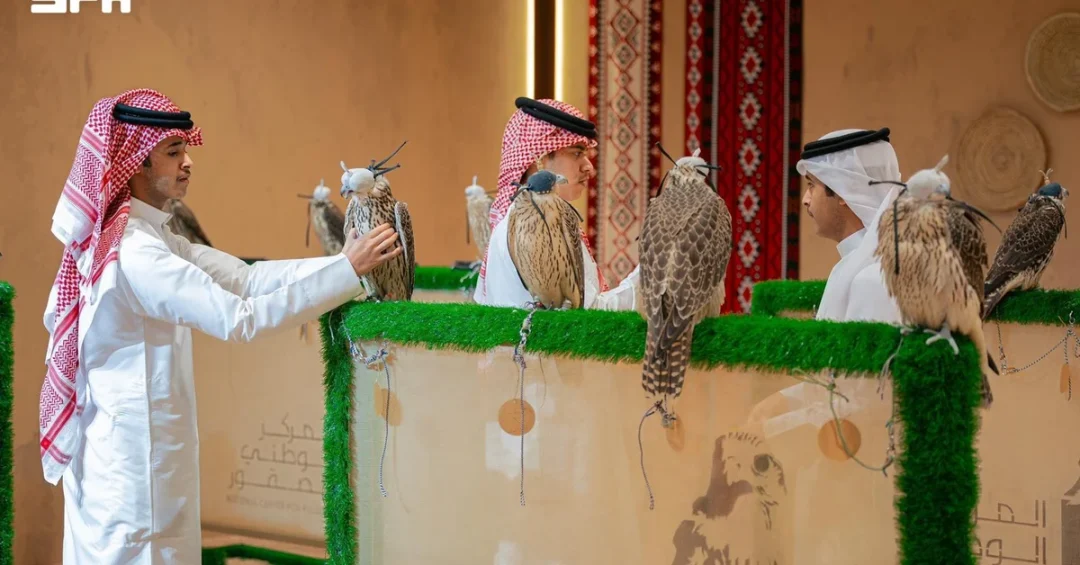
The International Falcon Breeders Auction, organized by the National Center for Falcons at its headquarters in Malham, north of Riyadh, has become a driving force behind the economic growth of Saudi Arabia’s falconry sector, according to an official announcement released through the Saudi Press Agency. The event, which brings together breeding farms, falconers, and investors from the Kingdom and beyond, is stimulating a broad range of economic activities and supporting services while creating fresh investment opportunities in a tradition deeply rooted in Saudi national heritage.
Held under the umbrella of the National Center for Falcons, the auction has evolved from a specialist gathering into a comprehensive commercial platform that connects supply with demand across the entire falconry value chain. From breeding and veterinary care to transportation, preparation, and marketing, the event illustrates how a cherished cultural practice can be transformed into a modern economic engine. Have you considered how a heritage pursuit can evolve into a sophisticated marketplace? The auction demonstrates precisely that, offering a structured environment where breeding farms can reach buyers and falconers from within and outside Saudi Arabia, and where the Kingdom’s Vision 2030 objectives for economic diversification find a tangible, on-the-ground expression.
Context and Background
Falconry has long been woven into the social fabric of the Arabian Peninsula, passed down through generations as a symbol of patience, skill, and connection to the desert. What was once primarily a means of hunting and a cherished pastime has, in recent years, undergone a remarkable transformation. The establishment of the National Center for Falcons, headquartered in Malham, provided the institutional framework needed to organize, regulate, and elevate the sector. The International Falcon Breeders Auction emerged as a flagship initiative under this framework, designed to bring order and opportunity to a market that had previously operated largely through informal networks. Is it any surprise that such a structured approach has unlocked new value? The auction now serves as a central meeting point for breeders, buyers, and investors, creating transparency and efficiency in a market that was once fragmented.
The growth of the auction reflects broader shifts in how falcons are perceived within Saudi society and among international enthusiasts. Historically viewed as a hobby or a cultural emblem, falcons have increasingly come to be recognized as investment assets with measurable economic value. This evolution has been supported by the creation of an organized market that brings breeders and buyers together, reducing uncertainty and enabling participants to plan with confidence. The National Center for Falcons has played a pivotal role in this transition, providing oversight, promoting best practices, and encouraging the expansion of breeding farms across the Kingdom. As a result, the sector now supports a growing number of specialized businesses, from feed suppliers and equipment manufacturers to veterinary clinics and logistics providers, each benefiting from the auction’s ability to concentrate demand and stimulate commercial activity.
Moreover, the auction’s timing and location are significant. Held in Malham, north of Riyadh, it draws participants from across Saudi Arabia and from international markets, reinforcing the Kingdom’s position as a global hub for falconry. The event aligns with a broader national effort to preserve and promote cultural heritage while simultaneously generating economic returns. This dual purpose is central to the auction’s appeal: it offers a space where tradition and commerce coexist, and where the values of the past inform the opportunities of the future. For international observers, the auction provides a window into how Saudi Arabia is leveraging its cultural assets to build a diversified and resilient economy, in line with the goals of Vision 2030.
Key Details
At the heart of the auction’s success are the breeding farms that participate, each bringing a selection of falcons that reflect the highest standards of breeding and training. Falcon breeding farm owner Ghazi Al-Otaibi said investment in the sector has been steadily growing, noting that perceptions of falcons have evolved in recent years. They are no longer viewed solely as a hobby or part of the national heritage, he explained, but have also become an investment asset with economic value, supported by an organized market that brings breeders and buyers together. Al-Otaibi’s observations underscore a fundamental shift in the sector’s trajectory, one that has been encouraged by the National Center for Falcons and its efforts to professionalize the industry. The result is a marketplace where quality is rewarded, and where breeders can invest in improving their stock with the expectation of strong returns.
For his part, Abdulaziz Al-Sulaiman from the sales department of a Saudi-Canadian breeding farm said the auction has expanded commercial opportunities in the sector. He explained that the farm is participating for the first time with 25 falcons and has recorded strong sales activity since the event began, while preparing to offer four distinguished falcons on the auction platform in the coming evenings. The presence of a Saudi-Canadian joint venture at the auction highlights the international dimension of the event, demonstrating that the Kingdom’s falconry market is open to global partnerships and expertise. Al-Sulaiman’s account also illustrates the auction’s role as a launchpad for new entrants, providing a credible venue where first-time participants can establish their reputation and connect with a diverse pool of buyers. How many other sectors offer such a direct route from heritage to high-value commerce? The falconry auction stands as a model of how tradition can be harnessed for modern economic gain.
Beyond breeding and sales, the falconry ecosystem’s economic impact is reinforced by the growing use of modern technologies to monitor breeding operations and enhance farm efficiency. These technologies, which include advanced tracking systems, health monitoring tools, and data-driven breeding programs, are improving the quality and competitiveness of falcons. The adoption of such innovations is not merely a technical upgrade; it represents a strategic investment in the sector’s long-term viability. By integrating technology into traditional practices, Saudi breeders are positioning themselves at the forefront of a global market that values precision, health, and performance. The National Center for Falcons has encouraged this trend, recognizing that a technologically advanced sector is better equipped to compete internationally and to attract further investment. As a result, the auction is not just a sales event but a showcase for the modernization of an ancient craft, signaling to the world that Saudi Arabia is serious about transforming its cultural heritage into a sustainable economic pillar.
The auction also serves as a platform for knowledge exchange, where breeders can learn from one another and from international experts about best practices in nutrition, genetics, and training. This collaborative dimension adds depth to the event’s economic significance, as improved knowledge leads to better outcomes and higher values. The National Center for Falcons facilitates these exchanges, further cementing its role as a catalyst for sector-wide growth. In this way, the auction contributes to the development of human capital alongside financial capital, ensuring that the benefits of the falconry economy are widely shared and durable.
International and Regional Impact
The International Falcon Breeders Auction has implications that extend well beyond Saudi Arabia’s borders. By attracting buyers and falconers from outside the Kingdom, the event reinforces the country’s position as a global center for falconry. International participants bring with them diverse perspectives, new demand, and opportunities for cross-border collaboration. This influx of foreign interest not only boosts sales but also enhances the Kingdom’s soft power, showcasing its ability to host world-class events that celebrate cultural heritage while adhering to the highest commercial standards. In a region where falconry is revered, Saudi Arabia’s leadership in organizing such a comprehensive auction sets a benchmark for others to follow. Could there be a more effective way to project cultural influence and economic openness simultaneously? The auction achieves both, presenting a modern, dynamic Saudi Arabia that honors its past while embracing global engagement.
Regionally, the auction strengthens ties with neighboring Gulf countries, where falconry is also a cherished tradition. Breeders and enthusiasts from across the Gulf Cooperation Council participate in the event, creating a shared marketplace that transcends national boundaries. This regional integration is consistent with Saudi Arabia’s broader efforts to foster cooperation and economic interdependence within the Gulf. By providing a neutral, well-regulated venue for trade, the auction reduces friction and builds trust among participants. It also allows smaller breeding operations from across the region to access a larger pool of buyers, thereby supporting the growth of the sector throughout the Gulf. In this sense, the auction is not just a Saudi success story but a regional asset, contributing to the vitality of a shared cultural and economic heritage.
Furthermore, the auction’s international reach aligns with Saudi Arabia’s Vision 2030 goal of increasing non-oil exports and attracting foreign investment. Falcons bred in the Kingdom are increasingly sought after in global markets, and the auction provides a credible platform for showcasing their quality. International buyers who attend the event also have the opportunity to explore other Saudi products and services, creating spillover effects for the wider economy. The event thus acts as a gateway, introducing foreign visitors to the Kingdom’s business environment and encouraging them to consider deeper engagements. As Saudi Arabia continues to open up to the world, the auction exemplifies how a niche cultural event can serve as a powerful instrument of economic diplomacy.
Economic and Strategic Significance
The economic significance of the International Falcon Breeders Auction lies in its ability to stimulate a wide range of supporting industries. Breeding farms require specialized feed, housing, and medical care, all of which generate demand for goods and services from other sectors. Transportation and logistics companies benefit from the need to move falcons safely and efficiently, while marketing and advertising firms are engaged to promote the auction and participating farms. The event also creates employment opportunities, from veterinarians and trainers to sales staff and event organizers. These multiplier effects are precisely what Vision 2030 seeks to achieve: a diversified economy where heritage sectors contribute meaningfully to growth and job creation. Is it any wonder that the National Center for Falcons has prioritized the auction as a key initiative? The evidence of its economic impact is becoming increasingly clear.
Strategically, the auction supports Saudi Arabia’s efforts to preserve its cultural identity while modernizing its economy. Falcons are a symbol of national pride, and their association with investment and commerce reinforces the idea that tradition and progress can go hand in hand. This narrative is central to the Kingdom’s Vision 2030 messaging, which emphasizes the importance of cultural heritage as a foundation for sustainable development. By turning falconry into a professionalized industry, Saudi Arabia is not only generating income but also safeguarding a practice that defines its national character. The auction thus serves a dual purpose: it is both an economic engine and a cultural custodian. For international audiences, this sends a powerful message about the Kingdom’s balanced approach to development, one that respects the past while embracing the future.
In addition, the auction’s success demonstrates the potential of niche markets to contribute to economic diversification. While falconry may appear specialized, its value chain is extensive and its global market is substantial. By organizing the sector and providing a platform for trade, Saudi Arabia has unlocked value that was previously untapped. This model could be replicated in other heritage-based industries, such as camel breeding, traditional crafts, and equestrian sports, further broadening the Kingdom’s economic base. The National Center for Falcons has shown that with the right institutional support, cultural pursuits can become serious economic contributors. As Vision 2030 progresses, such initiatives will be essential in building a resilient, diversified economy that draws on Saudi Arabia’s unique strengths.
Vision 2030 Alignment
The International Falcon Breeders Auction is a clear embodiment of Vision 2030’s objectives, particularly those related to economic diversification, cultural preservation, and international engagement. By transforming falconry into a structured, technology-enabled industry, the Kingdom is creating new sources of income and employment while celebrating a cherished heritage. The auction also supports the Vision’s goal of enhancing the quality of life for citizens, offering opportunities for breeders and enthusiasts to participate in a thriving market. Moreover, it contributes to the development of a vibrant private sector, as breeding farms and supporting businesses expand to meet growing demand. These outcomes align directly with the Vision’s emphasis on a diversified and sustainable economy, driven by innovation and entrepreneurship.
Looking ahead, the continued growth of the auction and the broader falconry sector will further reinforce Saudi Arabia’s role as a global leader in heritage-based commerce. The National Center for Falcons is expected to build on this momentum, introducing new initiatives to support breeders, attract international partners, and integrate cutting-edge technologies. As the Kingdom marches toward 2030, events like the International Falcon Breeders Auction will serve as proof that tradition and modernity are not mutually exclusive but can be powerful allies in achieving national ambitions. For the world, this is a story of a nation honoring its roots while reaching for the future, and of a heritage that continues to soar to new heights.
20 Questions
Q1. What is the International Falcon Breeders Auction?
A1. It is an event organized by the National Center for Falcons at its headquarters in Malham, north of Riyadh, bringing together breeding farms, falconers, and investors to trade falcons and stimulate economic activity in the sector.
Q2. Where is the auction held?
A2. The auction takes place at the headquarters of the National Center for Falcons in Malham, located north of Riyadh, Saudi Arabia.
Q3. Who organizes the auction?
A3. The event is organized by the National Center for Falcons, a Saudi institution dedicated to regulating and promoting the falconry sector.
Q4. What economic activities does the auction support?
A4. It supports breeding, veterinary services, transportation, preparation, marketing, and the supply of falcon-related equipment and feed, creating a broad economic ecosystem.
Q5. How has the perception of falcons changed in Saudi Arabia?
A5. Falcons are now seen not only as a hobby or heritage symbol but also as investment assets with economic value, supported by an organized market.
Q6. Who is Ghazi Al-Otaibi?
A6. Ghazi Al-Otaibi is a falcon breeding farm owner who noted that investment in the sector is growing steadily and that falcons have become valuable investment assets.
Q7. Who is Abdulaziz Al-Sulaiman?
A7. Abdulaziz Al-Sulaiman works in the sales department of a Saudi-Canadian breeding farm. He said the auction has expanded commercial opportunities and his farm is participating for the first time with 25 falcons.
Q8. How many falcons is the Saudi-Canadian farm offering?
A8. The farm is participating with 25 falcons and plans to offer four distinguished falcons on the auction platform in the coming evenings.
Q9. What role does technology play in the falconry sector?
A9. Modern technologies are used to monitor breeding operations, enhance farm efficiency, and improve the quality and competitiveness of falcons.
Q10. How does the auction benefit breeding farms?
A10. It provides a specialized marketplace where farms can reach buyers and falconers from within and outside Saudi Arabia, increasing sales and investment opportunities.
Q11. What is the significance of the auction for Saudi heritage?
A11. It preserves and promotes falconry, a traditional Saudi heritage activity, while transforming it into a modern economic sector that generates income and jobs.
Q12. Does the auction attract international participants?
A12. Yes, it draws buyers and falconers from outside Saudi Arabia, as well as joint ventures like the Saudi-Canadian farm, enhancing international engagement.
Q13. How does the auction align with Vision 2030?
A13. It supports economic diversification, cultural preservation, private sector growth, and international engagement, all core objectives of Vision 2030.
Q14. What supporting industries benefit from the auction?
A14. Industries such as veterinary services, transportation, logistics, marketing, feed supply, and equipment manufacturing all benefit from the increased activity.
Q15. Are there employment opportunities created by the auction?
A15. Yes, the event creates jobs in areas such as veterinary care, training, sales, event management, and logistics, contributing to local employment.
Q16. How does the auction help small breeding operations?
A16. It provides a centralized platform where smaller farms can access a larger pool of buyers, gain visibility, and compete on quality.
Q17. What is the National Center for Falcons?
A17. It is a Saudi government body responsible for organizing, regulating, and developing the falconry sector, including hosting the International Falcon Breeders Auction.
Q18. Can international buyers purchase falcons at the auction?
A18. Yes, the auction is open to buyers from within and outside Saudi Arabia, facilitating international trade in falcons.
Q19. How does the auction contribute to Saudi Arabia’s soft power?
A19. By hosting a world-class event that celebrates cultural heritage and commercial excellence, Saudi Arabia enhances its global image and influence.
Q20. What does the future hold for the falconry sector in Saudi Arabia?
A20. With continued support from the National Center for Falcons and alignment with Vision 2030, the sector is expected to grow, innovate, and attract further investment, reinforcing its economic and cultural importance.
Reader Feedback
We value your thoughts. Please share your feedback on this article.
Your feedback helps us improve our coverage.
Related articles
 Buraidah Carnival Logistics Drives Saudi Date Trade Globally
 Buraidah Dates Carnival Logistics Reach 70+ Countries
 Infath Records Over SAR10.7 Billion in H1 2026 Sales
 Al-Khabra Dates Festival Boosts Qassim Economy, Empowers Youth
 SDB, Namal Launch 10 Million Riyal Social Investment Portfolio
 Al-Khabra Dates Festival Powers Qassim Economy