


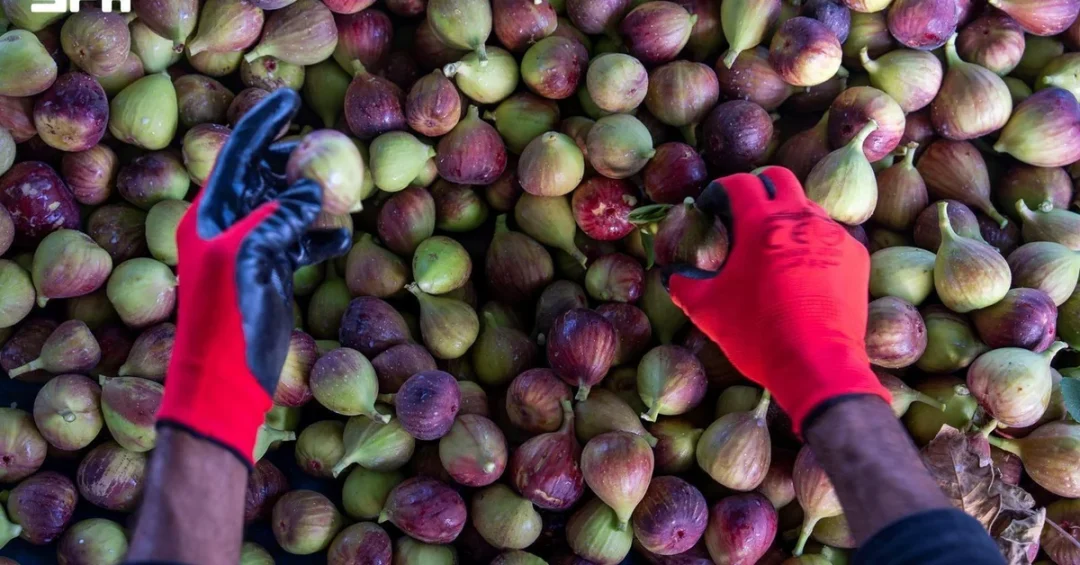
Jazan Region has established itself as Saudi Arabia’s leading hub for tropical fruit production, according to official figures released by the Saudi Press Agency (SPA), with more than one million mango trees yielding approximately 65,000 tons annually — nearly 60 percent of the Kingdom’s total national output. The southwestern region, which borders the Red Sea and shares a frontier with Yemen, has leveraged its distinctive climate, fertile soil, and sustained government backing to build an integrated agricultural ecosystem that now spans mangoes, papayas, bananas, guavas, and custard apples. The data, published on August 9, 2026, underscores how targeted investment and modern farming practices are transforming Jazan into a cornerstone of Saudi Arabia’s food security ambitions.
The figures reflect far more than favorable geography. They represent years of coordinated effort between the Ministry of Environment, Water and Agriculture, local farmers, and development agencies working to diversify the Kingdom’s agricultural base beyond traditional crops such as dates and wheat. Could any other region in Saudi Arabia match Jazan’s combination of tropical climate and agricultural infrastructure? For international observers, the answer lies in the region’s unique microclimate, which supports year-round cultivation of fruits typically associated with Southeast Asia and Latin America. This natural advantage, paired with Vision 2030’s push for sustainable food production, has positioned Jazan as a model for regional agricultural development.
Context and Background
What makes Jazan’s rise in tropical fruit production so significant for the Kingdom? The region’s agricultural transformation did not happen overnight. For decades, Jazan was known primarily for its rugged terrain, coastal fisheries, and traditional farming. However, a deliberate strategy to harness its tropical climate — characterized by high humidity, warm temperatures, and seasonal monsoon rains — has turned the region into a specialized production zone. According to the Saudi Press Agency, the region now hosts over 800,000 papaya trees producing more than 40,000 tons annually, over one million banana trees yielding around 15,000 tons per year, more than 6,000 guava trees producing nearly 60 tons, and over 4,200 custard apple trees yielding more than 42 tons annually.
This diversification is not accidental. It aligns with the National Agriculture Strategy, which seeks to improve domestic food production while conserving water and promoting sustainable practices. The Ministry of Environment, Water and Agriculture has provided technical support, improved irrigation methods, and facilitated access to markets. Local farmers, in turn, have adopted modern farming techniques, including greenhouse cultivation and precision agriculture. The result is an agricultural ecosystem that not only meets domestic demand but also holds potential for export to regional markets. How did a region once reliant on subsistence farming become a national leader in tropical fruits? The answer lies in a combination of natural endowment, policy support, and grassroots innovation.
The broader context is equally important. Saudi Arabia imports a significant portion of its fruit supply, and expanding domestic production of tropical varieties reduces reliance on foreign markets. Jazan’s success demonstrates that with the right investments, the Kingdom can achieve greater self-sufficiency in high-value crops. Moreover, the region’s agricultural growth creates jobs, supports rural communities, and enhances the Kingdom’s overall economic resilience — all core objectives of Vision 2030.
Key Details
What exactly does Jazan’s tropical fruit sector look like on the ground? The numbers provided by the Saudi Press Agency paint a detailed picture. Mangoes dominate the landscape, with over one million trees producing approximately 65,000 tons annually — a figure that represents nearly 60 percent of Saudi Arabia’s total mango output. This makes Jazan the undisputed center of the Kingdom’s mango industry. The region’s mango varieties are prized for their flavor and quality, and they are increasingly sought after in local markets and by food processing companies.
Papaya production follows closely, with more than 800,000 trees generating over 40,000 tons per year. Bananas, a staple fruit in many Saudi households, are cultivated on over one million trees, yielding around 15,000 tons annually. Guava and custard apple production, while smaller in volume, add to the region’s diversity and provide additional income streams for farmers. These crops are grown using modern irrigation systems and integrated pest management techniques, reflecting a commitment to sustainability and efficiency.
To further develop the sector, a tropical fruits and greenhouses project was launched in Jazan with investments exceeding SAR600 million across two million square meters. This initiative, which is explicitly aligned with Saudi Vision 2030, aims to boost production capacity and apply cutting-edge farming technologies. The project includes the construction of advanced greenhouses, the introduction of climate-resilient crop varieties, and training programs for local farmers. By expanding the use of controlled-environment agriculture, Jazan can extend growing seasons, reduce water consumption, and increase yields per hectare. What does this mean for the future of Saudi agriculture? It signals a shift toward high-tech, sustainable farming that can serve as a blueprint for other regions.
International and Regional Impact
How does Jazan’s tropical fruit production resonate beyond Saudi Arabia’s borders? The region’s growing output positions the Kingdom as a potential exporter of tropical fruits to neighboring Gulf states, the broader Middle East, and even European markets. Saudi Arabia already has a strong reputation for dates, and adding tropical fruits to its export portfolio could enhance its standing in global agricultural trade. The proximity of Jazan to Red Sea shipping lanes provides a logistical advantage for reaching markets in Africa, Asia, and Europe.
At the regional level, Jazan’s success story could inspire other areas within Saudi Arabia to specialize in crops suited to their own climates. The Asir region, for example, is known for its highland agriculture, while Al-Jouf excels in olives. This specialization can lead to a more efficient national agricultural system, where each region contributes according to its comparative advantage. For international investors and agribusinesses, Jazan represents an attractive destination for partnerships and technology transfer. The SAR600 million tropical fruits and greenhouses project is a clear signal that the Kingdom is open to collaboration in modern agriculture.
Moreover, the region’s agricultural development has implications for food security in the Gulf Cooperation Council (GCC) region. With global supply chains increasingly vulnerable to disruptions, domestic production of perishable goods like tropical fruits is a strategic asset. Saudi Arabia’s leadership in this area reinforces its role as a stabilizing force in regional food markets.
Economic and Strategic Significance
What economic value does Jazan’s tropical fruit sector bring to Saudi Arabia? The direct contribution is substantial: the production of tens of thousands of tons of fruit annually supports thousands of farming families and generates revenue through sales, processing, and related services. The sector also creates employment opportunities in agronomy, logistics, packaging, and marketing. As the sector grows, it can attract further investment in cold storage facilities, food processing plants, and export infrastructure.
Strategically, the development of Jazan’s agricultural capacity reduces the Kingdom’s import bill for tropical fruits. Saudi Arabia currently imports significant quantities of mangoes, papayas, and bananas from countries such as India, Brazil, and the Philippines. By increasing domestic production, the Kingdom can retain more capital within its economy and reduce exposure to currency fluctuations and supply chain risks. This aligns with the broader Vision 2030 goal of diversifying the economy away from oil dependence. Agriculture, particularly high-value crops, is a key pillar of that diversification.
Furthermore, the use of advanced technologies such as greenhouses and precision irrigation demonstrates how Saudi Arabia is integrating innovation into traditional sectors. The SAR600 million project is expected to serve as a catalyst for further research and development in agricultural sciences, potentially leading to the creation of new crop varieties and farming methods that can be applied across the Kingdom. How will this affect the lives of ordinary Saudis? It will create jobs, improve food quality, and contribute to a more sustainable future.
Vision 2030 Alignment
How does Jazan’s tropical fruit production connect to Saudi Vision 2030? The Vision, launched in 2016 by Crown Prince Mohammed bin Salman, aims to transform the Kingdom’s economy and society. Among its key objectives are achieving food security, diversifying income sources, and promoting sustainable development. Jazan’s agricultural achievements directly support these goals. The tropical fruits and greenhouses project, with its SAR600 million investment, exemplifies the Vision’s emphasis on private-sector participation and technological advancement.
Additionally, the sector’s growth contributes to the Vision’s quality-of-life goals by increasing the availability of fresh, locally grown fruits and supporting rural development. The Ministry of Environment, Water and Agriculture has been instrumental in providing the regulatory framework and support services needed for farmers to thrive. As Saudi Arabia continues its journey toward a diversified, knowledge-based economy, regions like Jazan will play an increasingly important role. The Kingdom’s ability to produce tropical fruits at scale is a testament to its agricultural potential and its commitment to innovation. In the years ahead, Jazan is poised to not only meet domestic demand but also to become a recognized exporter of premium tropical fruits, further enhancing Saudi Arabia’s global standing.
20 Questions
Q1. What is the main achievement highlighted in the SPA report about Jazan?
A1. The report highlights that Jazan Region has become Saudi Arabia’s primary hub for tropical fruit production, leading national output in mangoes and other tropical fruits through favorable climate and government support.
Q2. How many mango trees does Jazan have and what is their annual yield?
A2. Jazan has over one million mango trees that yield approximately 65,000 tons annually, representing nearly 60 percent of Saudi Arabia’s total mango output.
Q3. What other tropical fruits are grown in Jazan and in what quantities?
A3. Jazan grows over 800,000 papaya trees producing over 40,000 tons annually, over one million banana trees yielding around 15,000 tons, more than 6,000 guava trees producing nearly 60 tons, and over 4,200 custard apple trees yielding more than 42 tons annually.
Q4. What is the value of the new tropical fruits and greenhouses project in Jazan?
A4. The project has investments exceeding SAR600 million and spans two million square meters, aimed at boosting production capacity and applying modern farming technologies.
Q5. How does Jazan’s climate support tropical fruit production?
A5. Jazan’s high humidity, warm temperatures, and seasonal monsoon rains create a microclimate suitable for tropical fruits typically found in Southeast Asia and Latin America, allowing year-round cultivation.
Q6. What role does the Saudi government play in supporting Jazan’s agriculture?
A6. The Ministry of Environment, Water and Agriculture provides technical support, improved irrigation methods, and market access, while also facilitating investment in modern farming technologies.
Q7. How does Jazan’s production contribute to Saudi Arabia’s food security?
A7. By increasing domestic production of tropical fruits, Jazan reduces the Kingdom’s reliance on imports, enhances supply chain resilience, and supports the goal of greater self-sufficiency in high-value crops.
Q8. What is the significance of the SAR600 million project for Vision 2030?
A8. The project aligns with Vision 2030 by promoting economic diversification, sustainable agriculture, and technological innovation, while creating jobs and supporting rural development.
Q9. Which regions in Saudi Arabia might benefit from Jazan’s agricultural model?
A9. Other regions with suitable climates, such as Asir for highland crops and Al-Jouf for olives, could adopt similar specialization strategies to enhance national agricultural efficiency.
Q10. How does Jazan’s tropical fruit production impact the local economy?
A10. It supports thousands of farming families, generates revenue through sales and processing, and creates employment in agronomy, logistics, packaging, and marketing.
Q11. What modern farming practices are used in Jazan’s tropical fruit sector?
A11. Farmers use greenhouses, precision irrigation, integrated pest management, and climate-resilient crop varieties to improve yields and sustainability.
Q12. Could Jazan become an exporter of tropical fruits?
A12. Yes, Jazan’s proximity to Red Sea shipping lanes and growing production capacity position it as a potential exporter to Gulf states, the Middle East, and Europe.
Q13. How does the tropical fruit sector support rural communities in Jazan?
A13. It provides income and employment opportunities for local farmers and related businesses, helping to stabilize rural populations and improve living standards.
Q14. What challenges does Jazan face in expanding tropical fruit production?
A14. Challenges include water scarcity, which is addressed through modern irrigation and greenhouse technologies, as well as the need for continuous training and market development.
Q15. How does the Saudi Press Agency report reflect official transparency?
A15. The SPA report provides detailed, verifiable figures on tree counts and yields, demonstrating the Kingdom’s commitment to transparent reporting on agricultural progress.
Q16. What is the expected impact of the greenhouses project on production?
A16. The project is expected to boost production capacity, extend growing seasons, reduce water consumption, and increase yields per hectare through controlled-environment agriculture.
Q17. How does Jazan’s success compare to other Saudi agricultural regions?
A17. Jazan leads in tropical fruits, while other regions specialize in different crops, creating a diversified national agricultural system that leverages regional advantages.
Q18. What role do local farmers play in Jazan’s agricultural achievements?
A18. Local farmers have adopted modern techniques and invested in their orchards, driving the region’s growth through hard work and innovation in partnership with government initiatives.
Q19. How does tropical fruit production align with Saudi Arabia’s economic diversification goals?
A19. It reduces oil dependence by creating a sustainable, high-value agricultural sector that generates income, jobs, and export opportunities, contributing to a diversified economy.
Q20. What does the future hold for Jazan’s tropical fruit industry?
A20. With continued investment, technological adoption, and government support, Jazan is poised to expand production, meet domestic demand, and emerge as a recognized exporter of premium tropical fruits.
Reader Feedback
We value your thoughts. Please share your feedback on this article.
Your feedback helps us improve our coverage.
Related articles
 Buraidah Dates Carnival Highlights Qassim’s 50% Share of Saudi Date Production
 Saudi Ministry of Commerce Warns Against Data Sharing on Unverified Platforms
 South Korea’s App Industry Hits $69 Billion in 2025 Revenue
 Buraidah Date Carnival Highlights Qassim’s 50% Saudi Date Output
 SDB Backs 15 Cottage Industry Families at Rafha Festival
 TGA Issues Executive Regulations for Motorcycle Goods Delivery