


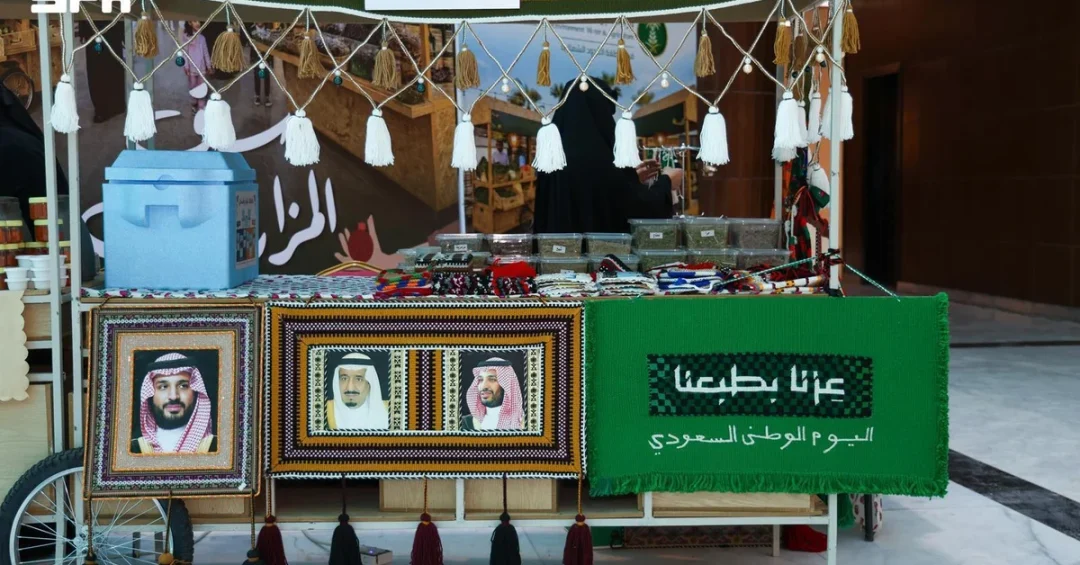
The Social Development Bank (SDB) has supported the participation of 15 families working in the cottage industry at the Farmers’ Market Festival in Rafha Governorate, an event organized by the Ministry of Environment, Water and Agriculture branch in the Northern Borders Region with the participation of several government and non-governmental entities. The initiative, announced via the Saudi Press Agency, forms part of the SDB’s continuing efforts to empower families engaged in cottage industries and to broaden their access to markets where their products can reach new customers.
The four-day festival brought together farmers, artisans, and home-based producers in a single commercial and cultural space designed to promote the marketing of local agricultural products, provide direct sales outlets that raise the economic value of national products, and showcase the quality of goods for which Rafha Governorate is known. For the participating families, the event offered something more valuable than a stall: a direct channel to consumers, retailers, and institutional buyers. But what does it mean when a national development bank steps in to connect small family enterprises with a regional festival in Saudi Arabia’s Northern Borders? The answer lies in the Kingdom’s broader strategy of turning local production into a durable pillar of economic diversification.
Context and Background
The Social Development Bank is one of Saudi Arabia’s principal development finance institutions, mandated to support small and micro enterprises, productive families, and the nonprofit sector. Its involvement in the Rafha festival is consistent with a long-standing institutional mission: moving families that produce goods at home from informal, subsistence-level activity into structured, market-facing enterprise. Cottage industries in Saudi Arabia — including date processing, honey production, traditional foods, handicrafts, and rural goods — have deep cultural roots, particularly in regions such as the Northern Borders, where agriculture and pastoral traditions remain central to local identity and livelihoods.
The festival itself was organized by the Ministry of Environment, Water and Agriculture branch in the Northern Borders Region, reflecting the ministry’s dual mandate of supporting agricultural production and strengthening rural economies. Rafha Governorate, located near the Kingdom’s northern frontier, is known for its dates, fresh fruits and vegetables, and honey, products that carry both commercial value and regional prestige. By convening government entities and non-governmental organizations in one venue, the event created an integrated platform where production, marketing, and awareness-raising could occur simultaneously.
Why does this matter now? Saudi Arabia’s rural and semi-rural economies are being deliberately integrated into national development planning rather than left to develop in isolation. Festivals of this kind are no longer simply seasonal markets; they are instruments of economic policy, designed to shorten the distance between producer and consumer, reduce dependence on intermediaries, and give small family businesses the visibility they need to grow. The SDB’s sponsorship of 15 families is therefore a small but telling example of how national institutions translate strategic objectives into local action.
Key Details of the Rafha Farmers’ Market Festival
The four-day festival featured pavilions showcasing dates, fresh fruits and vegetables, honey, and a range of rural and food products. These categories reflect the agricultural profile of the Northern Borders Region, where date palms, vegetable cultivation, and beekeeping are established activities. For visitors, the festival offered an opportunity to purchase directly from producers; for the families involved, it provided a direct sales outlet that increases the economic value of national products by capturing margins that would otherwise be lost in longer supply chains.
Beyond commerce, the event included awareness and guidance programs highlighting sustainable agricultural practices and the importance of supporting local production. These sessions contribute to agricultural development and food security goals, two priorities that have become increasingly prominent in Saudi policy. Water-efficient irrigation, soil management, and responsible use of agricultural inputs are not abstract concerns in a region with scarce water resources; they are practical requirements for the long-term viability of farming communities.
The SDB’s participation was framed explicitly as part of its efforts to support entrepreneurs and families working in the cottage industry, enable them to access markets, and enhance their contribution to economic development. The bank’s role is not merely financial. By underwriting participation costs and facilitating access to a high-traffic public event, the SDB reduces barriers that typically prevent home-based producers from reaching customers beyond their immediate neighborhoods. How many small producers never scale because they cannot afford the first step into a formal market? The Rafha initiative is designed to remove precisely that obstacle.
International and Regional Impact
For international observers, the Rafha festival illustrates how Saudi Arabia is operationalizing rural development within its wider economic transformation. The Kingdom’s approach combines agricultural support, enterprise finance, and market creation — a triad that development economists frequently identify as essential for sustainable rural livelihoods. Regional bodies and international organizations tracking food security and rural employment have noted the importance of direct market access for smallholders, and the SDB’s intervention aligns with those globally recognized principles.
Within the Gulf region, cottage industry products carry cultural as well as commercial significance. Dates, honey, and traditional foods are exportable commodities with growing demand in regional and international markets, particularly among consumers seeking authentic, high-quality products with a clear provenance. By strengthening the capacity of families in the Northern Borders to produce and market at scale, Saudi Arabia is building a broader base of suppliers that can eventually serve markets beyond the Kingdom. Regional trade in agricultural and food products benefits when producing communities are organized, quality-conscious, and connected to buyers — outcomes that festivals like this one are designed to encourage.
Economic and Strategic Significance
The economic logic behind supporting cottage industries is straightforward. Microenterprises and productive families generate income, create employment — particularly for women and youth in rural areas — and diversify local economies that might otherwise depend on a narrow range of activities. When the Social Development Bank enables 15 families to participate in a festival, the immediate benefit is sales revenue; the longer-term benefit is the development of business skills, customer relationships, and product feedback that can lead to repeat transactions and expansion.
Strategically, the initiative supports food security objectives by encouraging local production and reducing reliance on imports for certain categories of goods. It also strengthens the resilience of border regions, where economic opportunity is a foundation for stable, thriving communities. The Ministry of Environment, Water and Agriculture’s involvement ensures that agricultural best practices are embedded in the event, while the participation of non-governmental entities broadens the support network available to producers. What distinguishes this model is its integration: finance, agriculture, marketing, and community development are treated as connected parts of a single system rather than separate programs.
Vision 2030 Alignment
The SDB’s support for families in the cottage industry is directly aligned with the objectives of Saudi Vision 2030, which calls for supporting microenterprises and productive families and for developing the nonprofit sector as a partner in national progress. Vision 2030 envisions an economy in which opportunity is not concentrated in a few cities or sectors but distributed across regions and communities, and in which citizens can convert skills and traditions into sustainable livelihoods. The Rafha festival embodies that vision at the local level, turning national policy into tangible market access for 15 families and, by extension, demonstrating a replicable model for other governorates.
As Saudi Arabia continues to expand its agricultural, tourism, and cultural sectors, the role of institutions like the Social Development Bank will remain central. The Kingdom’s long-term vision rests on the idea that economic strength and social development reinforce one another — that enabling a family to sell its honey or dates at a regional festival is not a minor gesture but a building block of a diversified, inclusive economy. The farmers and cottage industry producers of Rafha are not simply participants in a four-day event; they are contributors to a national project whose horizon extends well beyond the Northern Borders, and their success will be measured in the markets they reach and the enterprises they build in the years ahead.
20 Questions
Q1. What did the Social Development Bank support in Rafha Governorate?
A1. The Social Development Bank supported the participation of 15 families working in the cottage industry at the Farmers’ Market Festival in Rafha Governorate, helping them access direct sales outlets and market their products to a wider audience.
Q2. Which authority organized the Farmers’ Market Festival in Rafha?
A2. The festival was organized by the Ministry of Environment, Water and Agriculture branch in the Northern Borders Region, with the participation of several government and non-governmental entities working together to support local producers.
Q3. How long did the festival last?
A3. The festival ran for four days, providing an extended window for farmers and cottage industry families to sell products, engage with customers, and participate in awareness and guidance programs.
Q4. What kinds of products were showcased at the festival?
A4. Pavilions showcased dates, fresh fruits and vegetables, honey, and a variety of rural and food products, highlighting the quality of agricultural goods for which Rafha Governorate is known.
Q5. What is the main goal of the festival?
A5. The festival aims to support farmers and cottage industry families, promote marketing of local agricultural products, provide direct sales outlets that increase economic value, and highlight the quality of Rafha’s agricultural output.
Q6. Why is direct market access important for cottage industry families?
A6. Direct market access allows families to sell to consumers without intermediaries, increasing their income, building customer relationships, and giving them feedback that helps improve and expand their products over time.
Q7. What role does the Social Development Bank play in Saudi Arabia?
A7. The Social Development Bank supports small and micro enterprises, productive families, and the nonprofit sector, providing finance and market access to help them contribute to economic development and national growth.
Q8. How does the initiative relate to Saudi Vision 2030?
A8. It aligns with Vision 2030 objectives to support microenterprises and families working in the cottage industry and to develop the nonprofit sector, advancing a diversified and inclusive national economy.
Q9. What awareness programs were included in the festival?
A9. The festival featured awareness and guidance programs highlighting sustainable agricultural practices and the importance of supporting local production, contributing to agricultural development and food security goals.
Q10. Which region hosted the festival?
A10. The festival was held in Rafha Governorate, located in the Northern Borders Region of Saudi Arabia, an area known for its dates, fresh produce, and honey production.
Q11. How many families benefited from the SDB’s support?
A11. Fifteen families working in the cottage industry received support from the Social Development Bank to participate in the festival, gaining access to sales outlets and marketing opportunities.
Q12. What government entities participated in the festival?
A12. The Ministry of Environment, Water and Agriculture branch in the Northern Borders Region organized the event, with several government and non-governmental entities participating alongside the Social Development Bank.
Q13. Why are cottage industries significant to Saudi Arabia’s economy?
A13. Cottage industries generate income, create employment, particularly for women and youth in rural areas, and diversify local economies while preserving traditional skills and cultural heritage.
Q14. How does the festival support food security?
A14. By promoting local agricultural production and sustainable practices, the festival helps strengthen domestic supply, reduce reliance on imports in certain categories, and support the Kingdom’s food security objectives.
Q15. What economic value do national products gain from such festivals?
A15. Direct sales outlets increase the economic value of national products by capturing margins otherwise lost in longer supply chains, while raising consumer awareness of locally produced goods.
Q16. What is the significance of Rafha Governorate’s agricultural output?
A16. Rafha is known for dates, fresh fruits and vegetables, and honey, products that carry commercial value and regional prestige and reflect the agricultural potential of the Northern Borders Region.
Q17. How does the SDB help families beyond providing funding?
A17. The bank facilitates access to markets, supports entrepreneurs, and enables families to showcase products at public events, building business skills and customer relationships that support long-term growth.
Q18. What does the initiative demonstrate about Saudi rural development?
A18. It demonstrates an integrated approach combining finance, agriculture, marketing, and community development, turning national policy into tangible local opportunities for producers in border regions.
Q19. How can other governorates benefit from this model?
A19. Other governorates can replicate the model by connecting development finance institutions with regional festivals, giving local producers direct market access and supporting microenterprises across the Kingdom.
Q20. What is the long-term outlook for cottage industry families in Saudi Arabia?
A20. With continued support from institutions like the Social Development Bank and alignment with Vision 2030, cottage industry families are positioned to grow into sustainable enterprises serving markets beyond their local communities.
Reader Feedback
We value your thoughts. Please share your feedback on this article.
Your feedback helps us improve our coverage.
Related articles
 TGA Issues Executive Regulations for Motorcycle Goods Delivery
 Russian Central Bank Raises Dollar, Euro, Yuan Rates
 European Stocks Rise on Healthcare Sector Boost
 Asian Stocks Mixed as Wall Street Retreats, Oil Rises 1%
 Finland’s Trade Surplus Jumps to 9.1B Euros in June
 Eurostat: Slight Drop in European Retail Sales in June