


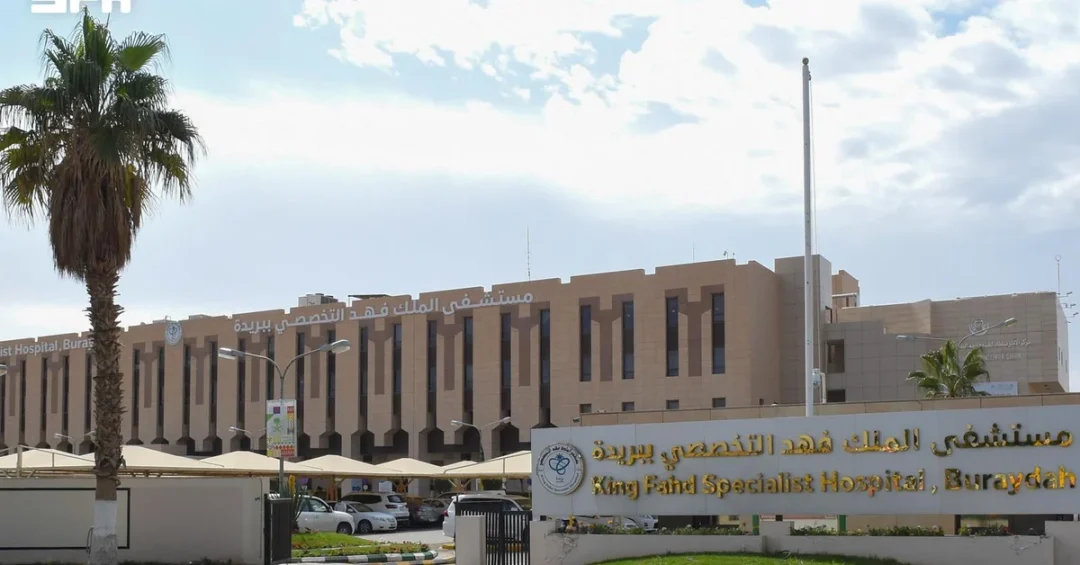
Qassim Health Cluster has introduced an advanced treatment service for pneumothorax using Thopaz digital chest drainage technology at King Fahd Specialist Hospital in Buraidah, marking a significant step forward in specialized respiratory care within Saudi Arabia’s public health system. The announcement, released through official Saudi channels, confirms that the new system replaces conventional chest drainage methods with an intelligent digital suction platform capable of continuous, real-time monitoring of patients recovering from collapsed lung conditions. The service is now operational at one of the region’s leading specialist hospitals, reinforcing the Kingdom’s commitment to adopting modern medical technologies that enhance patient safety and treatment accuracy.
The introduction of this technology reflects a broader pattern of healthcare modernization taking place across Saudi Arabia, where hospitals and health clusters are increasingly integrating digital tools into everyday clinical practice. For patients in the Qassim region, the immediate benefit is access to more precise monitoring and faster clinical decision-making. For the national health system, the development signals how regional clusters can serve as testing grounds for innovations that may later be scaled to other parts of the Kingdom. The move also underscores the role of Saudi Arabia’s health clusters in translating national healthcare transformation goals into tangible improvements at the bedside.
Context and Background
Why does a single hospital’s adoption of a new drainage system matter beyond the Qassim region? To understand its significance, it helps to consider how chest drainage has traditionally been managed and why digital alternatives represent a meaningful advance. Pneumothorax, a condition in which air accumulates in the space between the lung and the chest wall, can compress the lung and impair breathing. Standard treatment involves inserting a chest tube to evacuate trapped air or fluid. Conventional drainage systems rely on manual observation, visual inspection of bubbling, and periodic clinical assessment, which can make it difficult to detect subtle changes in air leakage or pressure over time.
Qassim Health Cluster indicated that the Thopaz technology addresses these limitations through an advanced digital system that drains air and fluid surrounding the lungs using an intelligent suction mechanism. The system provides real-time monitoring and accurate readings of air leakage levels and pressure, alongside smart alerts and audible and visual notifications. These features support treatment decisions based on the patient’s clinical indicators rather than intermittent manual checks. King Fahd Specialist Hospital in Buraidah, where the service has been introduced, is a major referral center in the region, making it a logical site for deploying technology that demands clinical expertise and supportive infrastructure.
The development also fits within a wider regional health strategy in which Qassim Health Cluster has consistently pursued service expansion and modernization. By adopting digital chest drainage, the cluster is not merely purchasing equipment but integrating a new clinical workflow that changes how respiratory teams monitor patients, document progress, and coordinate care. This kind of operational change often has ripple effects, influencing training priorities, nursing protocols, and even how outcomes are measured across departments.
How the Digital Chest Drainage System Works
What exactly does an intelligent digital suction system do that a traditional chest drain cannot? According to Qassim Health Cluster, the Thopaz platform uses an advanced digital mechanism to drain air and fluid from around the lungs while continuously measuring air leakage and pressure. Instead of relying on a clinician to observe bubbling in a water seal chamber, the system generates precise digital readings that reflect the patient’s evolving condition. Real-time data allows medical teams to see whether an air leak is resolving, persisting, or worsening, which directly informs decisions about when to adjust suction, when to remove a chest tube, or when to escalate care.
The system’s smart alerts and audible and visual notifications add another layer of safety. In a busy hospital environment, patients with chest tubes require regular monitoring, and subtle changes can be missed between rounds. By providing automated notifications when readings fall outside expected parameters, the technology helps clinical staff respond more quickly. The cluster emphasized that these features support treatment decisions based on the patient’s clinical indicators, meaning the technology is designed to complement, not replace, professional medical judgment.
The introduction of this service also reflects careful attention to patient comfort and mobility. Modern digital drainage units are typically lightweight and portable, allowing patients to move more freely than older systems that rely on bulky water-seal chambers. While the official announcement focused on monitoring accuracy and safety, the practical effect for patients can include greater ease during recovery and potentially shorter hospital stays when leaks resolve faster and more predictably.
International and Regional Impact
How does a regional hospital’s adoption of digital drainage technology fit into Saudi Arabia’s broader international health profile? The Kingdom has increasingly positioned itself as a hub for advanced medical care, attracting patients from across the region and partnering with global institutions on research, training, and technology transfer. When a specialist hospital in Buraidah introduces a sophisticated monitoring platform, it contributes to that reputation by demonstrating that high-quality, technology-enabled care is not limited to major metropolitan centers. This supports the goal of equitable access to modern medicine across all regions of the Kingdom.
Regionally, the move may encourage other health clusters and hospitals in the Gulf to evaluate similar systems. Saudi Arabia’s health sector has become a reference point for large-scale transformation, and clinical innovations adopted here are often watched closely by peers in neighboring countries. The Thopaz service at King Fahd Specialist Hospital adds to a growing portfolio of digital health initiatives that include telemedicine, electronic health records, and AI-assisted diagnostics. Together, these developments signal a health system that is modernizing comprehensively rather than in isolated pockets.
Economic and Strategic Significance
Does investing in specialized medical technology deliver economic value beyond immediate patient care? For Saudi Arabia, healthcare modernization is closely tied to strategic objectives that include improving quality of life, reducing the need for citizens to travel abroad for treatment, and building a knowledge-intensive economy. Advanced clinical services can reduce long-term costs by shortening hospital stays, preventing complications, and optimizing the use of intensive care resources. They also create demand for specialized training and technical skills, contributing to workforce development in the health sector.
The adoption of digital chest drainage technology also aligns with the broader push to localize advanced healthcare capabilities. As Saudi hospitals adopt and master sophisticated platforms, they build institutional expertise that can be shared through training programs and clinical partnerships. This supports the emergence of centers of excellence within the Kingdom, which in turn can attract medical tourism and collaboration with international device manufacturers, research institutions, and professional societies. The economic significance, therefore, lies not only in the equipment itself but in the capabilities and reputation it helps cultivate.
Vision 2030 Alignment
How does a single clinical service connect to Saudi Arabia’s long-term national vision? Vision 2030 places health and quality of life among its central pillars, with the Health Sector Transformation Program aiming to improve access, quality, and efficiency across the system. The introduction of Thopaz technology at King Fahd Specialist Hospital exemplifies this transformation at the operational level: a regional health cluster adopting modern medical technology to enhance accuracy, safety, and patient outcomes. It reflects the vision’s emphasis on innovation, digital enablement, and continuous improvement in public services.
For international observers, developments like this illustrate how Vision 2030 is being implemented through concrete, measurable changes in daily life. The Qassim Health Cluster’s initiative is part of a sustained effort to develop specialized services and adopt modern medical technologies, as the cluster itself stated. As Saudi Arabia continues to invest in healthcare infrastructure, digital systems, and clinical excellence, such steps will collectively strengthen the Kingdom’s position as a regional leader in health innovation and a model for patient-centered modernization. The service now available in Buraidah is a small but telling example of how the vision translates into better care for individuals and communities.
20 Questions
Q1. What technology has Qassim Health Cluster introduced?
A1. Qassim Health Cluster has introduced a treatment service for pneumothorax using Thopaz digital chest drainage technology at King Fahd Specialist Hospital in Buraidah, according to an official announcement released through Saudi channels.
Q2. Where is the new service located?
A2. The service is located at King Fahd Specialist Hospital in Buraidah, a major referral hospital in the Qassim region of Saudi Arabia, where the technology is now operational for patients requiring chest drainage.
Q3. What condition does the technology treat?
A3. The technology treats pneumothorax, a condition in which air accumulates in the space around the lung and can cause the lung to collapse, requiring drainage to restore normal breathing and lung function.
Q4. How does the digital system differ from traditional chest drainage?
A4. Unlike traditional systems that rely on manual observation, the digital system provides continuous real-time monitoring and accurate readings of air leakage levels and pressure, along with smart alerts and notifications to support clinical decisions.
Q5. What are the main features of the Thopaz technology?
A5. The main features include an intelligent digital suction system, real-time monitoring, precise air leakage and pressure readings, smart alerts, and audible and visual notifications that help medical teams track patient progress continuously.
Q6. Who benefits from this new service?
A6. Patients in the Qassim region and beyond who require chest drainage for pneumothorax or related conditions benefit, along with clinical teams who gain more accurate data to guide treatment decisions and improve safety.
Q7. Why is real-time monitoring important in chest drainage?
A7. Real-time monitoring allows clinicians to detect changes in air leakage and pressure immediately, supporting timely adjustments to treatment, potentially reducing complications and helping determine when a chest tube can be safely removed.
Q8. What did Qassim Health Cluster say about the technology’s purpose?
A8. The cluster stated that the technology supports treatment decisions based on the patient’s clinical indicators and forms part of its ongoing efforts to develop specialized services and adopt modern medical technologies to enhance quality and safety.
Q9. How does this service enhance patient safety?
A9. The service enhances safety through accurate digital readings, continuous monitoring, and automated alerts that notify staff of changes, reducing the risk of delayed responses and supporting more consistent, evidence-based care throughout treatment.
Q10. What is the role of smart alerts in the system?
A10. Smart alerts provide audible and visual notifications when readings fall outside expected parameters, prompting clinical staff to review the patient’s condition promptly and adjust treatment as needed without relying solely on periodic manual checks.
Q11. Is this technology new to Saudi Arabia?
A11. Digital chest drainage systems are part of a broader wave of medical technology adoption across Saudi Arabia, and the Qassim Health Cluster’s introduction of Thopaz represents the expansion of such advanced services into the region’s specialist hospitals.
Q12. How does this development reflect Saudi healthcare modernization?
A12. It reflects modernization by integrating digital monitoring into specialized care, aligning with national efforts to adopt innovative medical technologies, improve clinical accuracy, and raise the standard of healthcare services across the Kingdom’s health clusters.
Q13. What is pneumothorax and why does it require prompt treatment?
A13. Pneumothorax is the presence of air in the chest cavity outside the lung, which can cause lung collapse and breathing difficulty. Prompt drainage is often needed to relieve pressure and allow the lung to re-expand safely.
Q14. How might this technology affect hospital stays?
A14. By providing accurate, continuous data on air leaks and pressure, the technology may help clinicians make faster, more informed decisions about treatment and tube removal, potentially contributing to more efficient recovery and shorter hospital stays.
Q15. Does the system replace doctors and nurses?
A15. No. The system is designed to support clinical decision-making by providing precise data and alerts. Medical professionals remain responsible for interpreting the information and determining the appropriate course of treatment for each patient.
Q16. What does Qassim Health Cluster oversee?
A16. Qassim Health Cluster oversees public health services in the Qassim region, including hospitals and primary care facilities, and is responsible for developing specialized services and improving healthcare quality for residents in line with national health goals.
Q17. How does this initiative align with Vision 2030?
A17. It aligns with Vision 2030 through the Health Sector Transformation Program, which emphasizes quality, innovation, and patient-centered care. Adopting advanced medical technology supports these goals at the regional and hospital levels.
Q18. Will the technology be expanded to other hospitals?
A18. The official announcement focused on King Fahd Specialist Hospital in Buraidah. Expansion to other facilities would depend on clinical needs and health cluster planning, consistent with the pattern of scaling successful services across the system.
Q19. What makes King Fahd Specialist Hospital suitable for this service?
A19. King Fahd Specialist Hospital is a major specialist referral center in Buraidah with the clinical expertise and infrastructure needed to adopt advanced digital monitoring technology and manage patients requiring specialized respiratory and chest care.
Q20. What is the broader significance of this announcement?
A20. The announcement demonstrates Saudi Arabia’s ongoing commitment to modernizing healthcare through digital innovation, improving specialized services in regional hospitals, and translating Vision 2030 health goals into tangible benefits for patients and communities.
Reader Feedback
We value your thoughts. Please share your feedback on this article.
Your feedback helps us improve our coverage.