


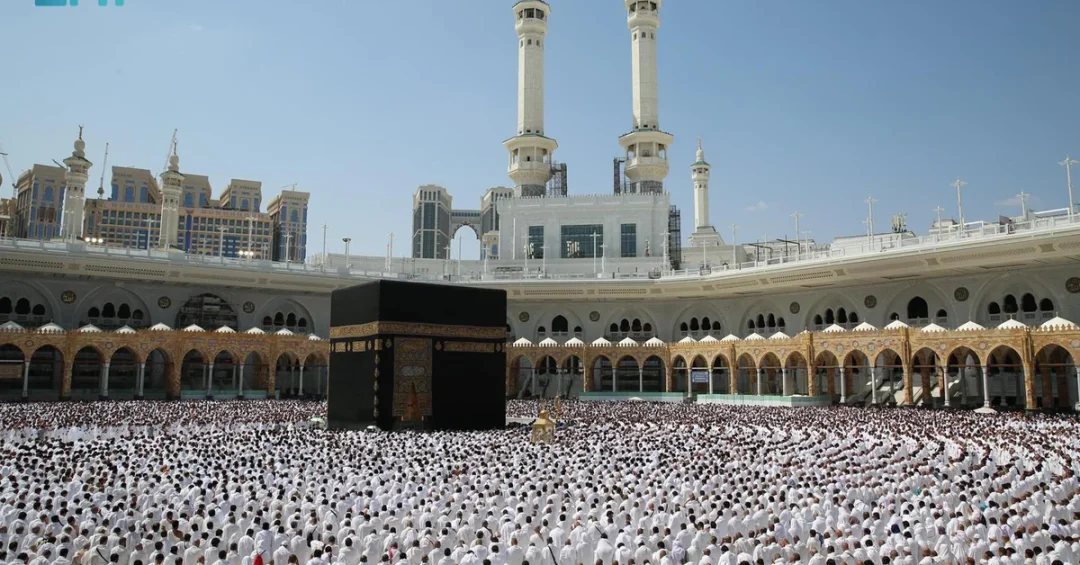
Saudi Arabia has launched an AI-operated Quranic education platform at the Grand Mosque in Makkah, offering structured study in 10 languages to Muslims worldwide. The Al-Maqraa project was inaugurated by Sheikh Dr. Abdulrahman Al-Sudais, President of Religious Affairs at the Grand Mosque and the Prophet’s Mosque, according to the Saudi Press Agency (SPA). The platform combines traditional Quranic scholarship with modern artificial intelligence tools, providing courses in recitation, tajweed, and memorization under the supervision of qualified teachers. The launch, announced during the holy month of Ramadan, positions the Kingdom as a global hub for digital Islamic education and reflects its wider commitment to serving the world’s Muslim communities through technology and institutional excellence.
Could this initiative reshape how millions of Muslims access Quranic learning across continents? For international observers, the significance extends beyond religious education. Al-Maqraa represents a strategic enrichment project of the Presidency of Religious Affairs, designed to serve pilgrims, residents, and remote learners with equal quality. It offers a robust Sharia administrative system for monitoring performance in Quranic study circles, detailed analytical reports for students and instructors, and an integrated system of accredited Quran recitation certificates. By launching during Ramadan — a period of heightened spiritual engagement for Muslims globally — Saudi Arabia has framed the platform as a gift from the Kingdom to the Islamic world, reinforcing Makkah’s centrality as a destination for faith, learning, and pilgrimage.
Context and Background
How did this project emerge from Saudi Arabia’s broader strategy for religious affairs? The Presidency of Religious Affairs at the Grand Mosque and the Prophet’s Mosque has long managed Quranic study circles, known as halaqat, within the two holy mosques. These circles have historically served pilgrims and local students through in-person instruction, but capacity constraints and language barriers limited their reach. Al-Maqraa addresses those limitations directly. Sheikh Dr. Al-Sudais described the platform as an international Quranic education project that combines authenticity, modern methods, rigorous methodology, and AI technology — a formulation that signals continuity with tradition rather than a departure from it. The project builds on the Presidency’s accumulated expertise in managing large-scale religious education and applies digital tools to extend that expertise beyond physical boundaries.
The timing of the launch during Ramadan is deliberate. Ramadan brings millions of worshippers to the Grand Mosque, and the Presidency has consistently used the month to introduce initiatives that enhance the pilgrim experience. Al-Maqraa allows learners who cannot travel to Makkah to participate in structured Quranic study from their home countries. It also supports those already in the Kingdom by offering flexible study circle enrollment alongside traditional attendance. The platform therefore serves a dual purpose: it expands access while preserving the pedagogical rigor and teacher oversight that have defined Quranic education at the Grand Mosque for generations. For the Presidency, the project represents one of its most significant strategic enrichment initiatives, aligning religious service with the Kingdom’s technological modernization agenda.
Key Details
What exactly does Al-Maqraa offer to learners? According to official information released through SPA, the platform provides comprehensive content for recitation, tajweed, and memorization. Courses are supervised by qualified teachers, ensuring that students receive guidance grounded in established Quranic scholarship. The platform operates in 10 languages, a feature that makes it accessible to non-Arabic speakers across Asia, Africa, Europe, and the Americas. A robust Sharia administrative system monitors performance in Quranic study circles, allowing instructors and administrators to track student progress and maintain quality standards. Detailed analytical reports give learners and teachers clear visibility into strengths and areas needing improvement, creating a feedback loop that supports steady advancement.
The platform also includes a stimulating educational environment designed to sustain student engagement over time. Flexible study circle enrollment means learners can join sessions that fit their schedules, a practical consideration for working adults and students in different time zones. Perhaps most significantly, Al-Maqraa offers an integrated system of accredited Quran recitation certificates. These certificates carry institutional recognition, giving learners a verifiable credential that reflects their achievement. For international students, this accreditation pathway adds tangible value to their study. The combination of AI technology with human instruction positions Al-Maqraa as a hybrid model — one that leverages automation for administration and analysis while keeping qualified teachers at the center of the learning process.
Sheikh Dr. Al-Sudais emphasized that the project embodies the Prophet’s teaching: “The best among you (Muslims) are those who learn the Quran and teach it.” This reference anchors the platform in Islamic tradition while justifying its modern delivery. The Presidency has framed Al-Maqraa as an international Quranic education platform that serves Muslims regardless of location, and the 10-language capability reflects that global ambition. The project aims to enhance Islamic values for Quran memorization students at the Grand Mosque and to create a flexible learning environment that accommodates diverse needs. By launching during Ramadan, the Presidency has presented the platform as a gift from the Kingdom of Saudi Arabia to all Muslims and visitors to the Grand Mosque of Makkah.
International and Regional Impact
How will Al-Maqraa affect Muslim communities outside Saudi Arabia? The platform’s 10-language offering means that learners in Indonesia, Pakistan, Nigeria, Turkey, and other countries with large Muslim populations can access structured Quranic education without traveling to Makkah. This reduces barriers related to cost, distance, and visa requirements. Regional Islamic institutions may also benefit, as the platform’s accredited certificates could complement local educational programs. The Presidency’s decision to supervise instruction with qualified teachers addresses a common concern about online religious education: the risk of inaccurate or unauthorized teaching. By maintaining Sharia administrative oversight, Al-Maqraa sets a quality benchmark that other digital Quranic platforms may seek to match.
Within the Middle East, the initiative reinforces Saudi Arabia’s role as a custodian of Islamic heritage and a leader in religious technology. The Kingdom already hosts the two holiest sites in Islam and manages the annual Hajj and Umrah seasons, which bring millions of pilgrims to Makkah and Madinah. Al-Maqraa extends that custodianship into the digital realm, allowing the Presidency to serve Muslims year-round rather than only during pilgrimage periods. For regional governments and Islamic organizations, the platform offers a potential model for combining tradition with technology. The AI component — used for performance monitoring, analytical reporting, and administrative efficiency — demonstrates how artificial intelligence can support religious education without replacing human scholarship. This balance is likely to be studied by other institutions seeking similar solutions.
Economic and Strategic Significance
What does Al-Maqraa mean for Saudi Arabia’s broader economic and strategic goals? While the platform is primarily a religious and educational initiative, it contributes to the Kingdom’s digital economy and knowledge sector. The development and operation of an AI-driven platform require technical expertise, data management, and ongoing innovation — capabilities that Saudi Arabia has prioritized under Vision 2030. The project also supports the growth of the Kingdom’s technology ecosystem by demonstrating practical applications of AI in specialized fields. For international audiences, Al-Maqraa reinforces Saudi Arabia’s image as a modernizing nation that invests in both tradition and technology, a narrative that supports tourism, investment, and diplomatic objectives.
The platform’s accreditation system could also have long-term strategic value. By issuing recognized Quran recitation certificates, the Presidency establishes a global standard for Quranic education that originates in Makkah. This standard-setting role enhances the Kingdom’s soft power and strengthens its position as a reference point for Islamic scholarship. The economic impact may be indirect but meaningful: increased engagement with Saudi religious institutions can translate into greater interest in pilgrimage, cultural exchange, and educational partnerships. For businesses and investors, the initiative signals that Saudi Arabia is serious about applying advanced technology to sectors beyond oil and finance, including education and religious services. The platform’s success could encourage further investment in edtech and AI solutions tailored to Islamic markets.
Vision 2030 Alignment
How does Al-Maqraa fit into Saudi Arabia’s Vision 2030 framework? Vision 2030 seeks to diversify the economy, modernize public services, and enhance the Kingdom’s global role. Al-Maqraa advances all three goals. It diversifies the economy by supporting digital innovation and knowledge-based services. It modernizes public services by applying AI to religious education, improving efficiency and accessibility. And it enhances Saudi Arabia’s global role by serving Muslims worldwide through a platform that originates in the Grand Mosque. The initiative also aligns with Vision 2030’s emphasis on quality of life and lifelong learning, offering flexible educational opportunities that accommodate diverse schedules and learning styles.
For the Presidency of Religious Affairs, Al-Maqraa represents a strategic enrichment initiative that extends its mission beyond physical spaces. The platform’s launch during Ramadan underscores the Kingdom’s commitment to serving Islam and Muslims, a commitment that Vision 2030 frames as both a religious duty and a source of national pride. As the project develops, it may expand its language offerings, course catalog, and certificate programs, further integrating AI into Quranic education. For international observers, Al-Maqraa offers a clear example of how Saudi Arabia is balancing tradition with transformation — preserving the authenticity of Quranic scholarship while embracing the tools of the digital age. The Kingdom’s ability to deliver such a platform at scale reflects the institutional capacity and strategic direction that define its contemporary global engagement.
20 Questions
Q1. What is Al-Maqraa?
A1. Al-Maqraa is an AI-operated Quranic education platform launched at the Grand Mosque in Makkah. It offers courses in recitation, tajweed, and memorization in 10 languages, supervised by qualified teachers and supported by a Sharia administrative system.
Q2. Who inaugurated the Al-Maqraa project?
A2. Sheikh Dr. Abdulrahman Al-Sudais, President of Religious Affairs at the Grand Mosque and the Prophet’s Mosque, inaugurated the project, according to the Saudi Press Agency.
Q3. How many languages does Al-Maqraa support?
A3. The platform offers Quranic education in 10 languages, making it accessible to non-Arabic speakers across different regions and communities worldwide.
Q4. What subjects does Al-Maqraa cover?
A4. Al-Maqraa provides comprehensive content for Quran recitation, tajweed, and memorization, with instruction supervised by qualified teachers and supported by analytical reporting tools.
Q5. How does AI feature in the platform?
A5. AI supports performance monitoring, detailed analytical reports, and administrative efficiency within Quranic study circles, while qualified teachers remain central to instruction and guidance.
Q6. When was the platform launched?
A6. The platform was inaugurated during Ramadan in March 2025, a timing chosen to enhance spiritual engagement and present the project as a gift to Muslims worldwide.
Q7. Where is Al-Maqraa based?
A7. The platform operates under the Presidency of Religious Affairs at the Grand Mosque and the Prophet’s Mosque, based in Makkah, Saudi Arabia.
Q8. Does Al-Maqraa issue certificates?
A8. Yes, the platform includes an integrated system of accredited Quran recitation certificates, providing learners with verifiable credentials that reflect their achievement and study progress.
Q9. Who can enroll in Al-Maqraa?
A9. Muslims worldwide can enroll, including pilgrims, residents, and remote learners. Flexible study circle enrollment allows participants to join sessions that fit their schedules and time zones.
Q10. Is Al-Maqraa free to use?
A10. Official information describes Al-Maqraa as a gift from the Kingdom of Saudi Arabia to all Muslims and visitors to the Grand Mosque, indicating it is offered as a service rather than a commercial product.
Q11. What is the Sharia administrative system?
A11. It is a robust oversight framework that monitors performance in Quranic study circles, ensuring quality, authenticity, and adherence to established methodologies in Quranic education.
Q12. How does Al-Maqraa differ from other online Quran platforms?
A12. Al-Maqraa combines AI technology with supervision by qualified teachers and institutional backing from the Presidency of Religious Affairs, offering accredited certificates and Sharia oversight.
Q13. What is the significance of the Ramadan launch?
A13. Ramadan is a period of heightened spiritual engagement for Muslims. Launching during this month underscores the platform’s purpose as a service to the global Muslim community.
Q14. Which Quranic verse or teaching inspired the project?
A14. Sheikh Dr. Al-Sudais referenced the Prophet’s teaching: “The best among you (Muslims) are those who learn the Quran and teach it,” which anchors the platform in Islamic tradition.
Q15. Can non-Arabic speakers use Al-Maqraa?
A15. Yes, the platform’s 10-language capability is specifically designed to serve non-Arabic speakers, making Quranic education accessible to diverse global communities.
Q16. What are analytical reports in Al-Maqraa?
A16. Analytical reports provide detailed insights into student progress and performance, helping learners and teachers identify strengths and areas for improvement in Quranic study.
Q17. How does Al-Maqraa support Vision 2030?
A17. It advances Vision 2030 by modernizing religious education, supporting digital innovation, enhancing quality of life, and strengthening Saudi Arabia’s global role in serving Muslims.
Q18. Is Al-Maqraa available outside Saudi Arabia?
A18. Yes, the platform is designed as an international Quranic education service, accessible to Muslims worldwide through its multilingual digital interface and flexible enrollment options.
Q19. What is the Presidency of Religious Affairs?
A19. It is the Saudi government body responsible for managing religious affairs at the Grand Mosque in Makkah and the Prophet’s Mosque in Madinah, including Quranic education and pilgrim services.
Q20. What does Al-Maqraa aim to achieve long-term?
A20. The platform aims to enhance Islamic values, expand access to Quranic education globally, and establish a recognized standard for Quran recitation certificates originating from Makkah.
Reader Feedback
We value your thoughts. Please share your feedback on this article.
Your feedback helps us improve our coverage.
Related articles
 Lebanese President Concludes Riyadh Visit
 Madinah Municipality Ensures Quality and Safety During Ramadan
 Saudi Board of Grievances Launches Chinese Legal Resources
 Saudi Arabia Gifts 25 Tons of Dates to Bosnia and Herzegovina
 Saudi FM Leads Delegation at Cairo Arab Summit
 Saudi Arabia Distributes Dates in Russia, Egypt for Ramadan