


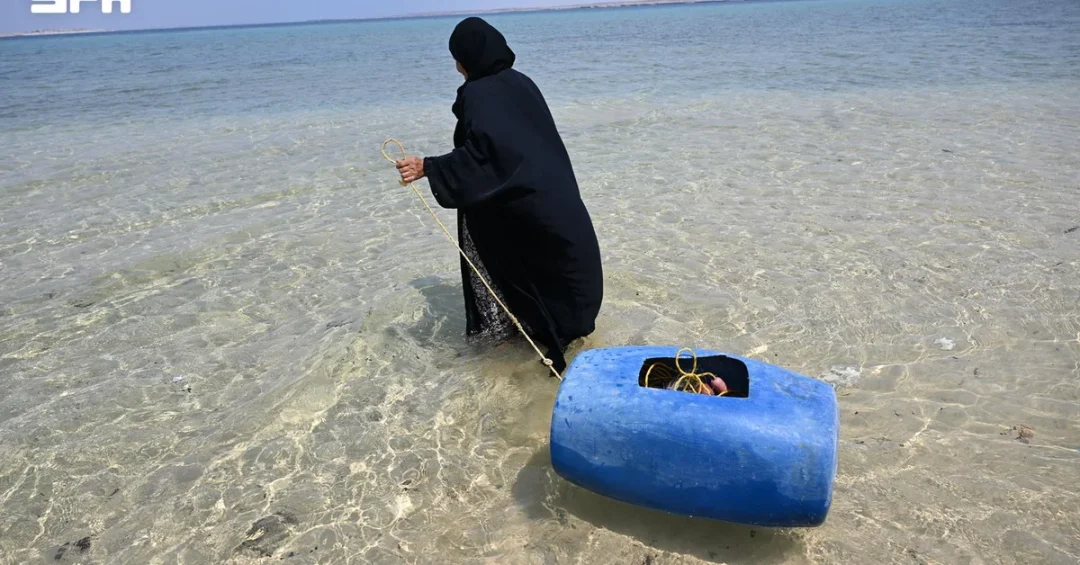
The Food and Agriculture Organization of the United Nations (FAO) has featured women fishers from the Farasan Islands in the Jazan Region of Saudi Arabia in a global cookbook published to mark the International Year of the Woman Farmer 2026, recognizing their contribution to food production, the preservation of traditional knowledge, and the support of community livelihoods. The publication, released through official channels and reported by the Saudi Press Agency (SPA), places Saudi Arabia’s Red Sea coastal heritage alongside culinary and agricultural traditions from around the world, offering international audiences a rare and detailed window into a fishing culture that has sustained Farasan communities for generations.
The cookbook profiles Anbra Qasim, a Farasan fisherwoman who began working at sea more than 40 years ago alongside her grandmother and experienced fishers in the archipelago. She now passes on fishing and food preparation skills to young women seeking to learn the trade, embodying a chain of knowledge transfer that stretches across generations. The FAO publication also presents a Saudi recipe for salted and dried fish served with a salad, reflecting the culinary heritage of Farasan Governorate and the wider Jazan Region, and documents a traditional preservation method passed down within families. Could there be a more fitting tribute to the women who have quietly fed their communities for decades?
Context and Background
How did a remote Red Sea archipelago come to be represented in a United Nations publication celebrating women farmers worldwide? The answer lies in the Farasan Islands’ distinctive geography and history. Located in the Red Sea off the coast of Jazan Region in southwestern Saudi Arabia, the archipelago comprises dozens of islands known for their coral reefs, mangroves, and rich marine biodiversity. Fishing has long been the backbone of local life, and women have played an integral but often underrecognized role in processing, preserving, and preparing the catch that sustains households and generates income.
The International Year of the Woman Farmer 2026, declared by the United Nations, provides the framework for the FAO cookbook. The initiative aims to highlight the contributions of women in agriculture, fisheries, and food systems globally, and to advocate for policies that support their economic empowerment. By including Farasan women fishers, the FAO acknowledges that Saudi Arabia’s food heritage is not confined to date palms and desert agriculture but extends to the sea, where generations of women have mastered the art of salting, drying, and preparing fish. The recognition arrives as Saudi Arabia continues to document and celebrate its regional cultural diversity under the umbrella of Vision 2030.
For international readers, the inclusion of a Saudi recipe in a FAO publication may come as a surprise, given that global perceptions of the Kingdom often focus on oil, deserts, and rapid modernization. Yet the Farasan Islands have been inhabited for centuries, and their traditions reflect a maritime culture that predates the modern state. The cookbook’s documentation of these practices serves as a reminder that Saudi Arabia’s cultural landscape is plural, with coastal communities contributing distinct flavors and skills to the national identity. Isn’t it remarkable how a simple recipe can carry so much history?
Key Details
The FAO cookbook profiles Anbra Qasim, whose four decades at sea began in her youth alongside her grandmother and other experienced fishers in Farasan. Her story illustrates a lifelong dedication to a trade that requires physical endurance, knowledge of tides and marine life, and skill in handling and preserving fish. Today, she teaches young women the techniques she inherited, ensuring that the knowledge does not disappear as modernization reshapes traditional livelihoods. Her profile in the cookbook is accompanied by the Saudi recipe for salted and dried fish served with a salad, a dish that reflects the culinary heritage of Farasan Governorate and the wider Jazan Region.
The recipe describes a traditional preservation method that has been passed down within families. Salting and drying fish is a practical response to the need to store protein in a hot, humid coastal climate, but it is also a culinary art that produces distinctive flavors and textures. The accompanying salad, likely made with locally available ingredients, complements the preserved fish and reflects the balance of flavors typical of the region. By documenting this recipe, the FAO cookbook ensures that it is recorded for future generations and introduced to a global audience that may never have encountered Farasan cuisine.
The publication is part of the FAO’s broader efforts to celebrate the International Year of the Woman Farmer 2026, which recognizes the critical roles women play in food production, processing, and marketing. The Farasan women fishers are presented not as curiosities but as professionals whose knowledge contributes to food security and cultural continuity. Their inclusion alongside women from other countries underscores a universal theme: women’s work in food systems is often essential yet undervalued. How many other untold stories of women fishers remain to be documented?
International and Regional Impact
The FAO cookbook’s feature on Farasan women fishers carries significance beyond the archipelago. For Saudi Arabia, it represents international recognition of the Kingdom’s cultural and culinary diversity, reinforcing the nation’s commitment to preserving heritage while engaging with global institutions. The United Nations’ acknowledgment aligns with Saudi Arabia’s efforts to promote sustainable fisheries and food security, areas where the Kingdom has been investing through agencies such as the Ministry of Environment, Water and Agriculture. The publication also strengthens Saudi Arabia’s soft power by presenting a human, relatable dimension of the country that goes beyond economic and geopolitical headlines.
Regionally, the feature highlights the shared maritime heritage of the Red Sea, a body of water bordered by several nations with long fishing traditions. By focusing on Farasan, the FAO draws attention to the Red Sea’s ecological and cultural importance, potentially encouraging further research and conservation efforts. For Jazan Region, the recognition could boost local pride and tourism interest, as visitors may seek to learn more about the islands and their traditions. The cookbook also provides a model for other communities in the region to document their own food heritage, fostering a sense of shared identity across the Red Sea corridor. Could this be the beginning of a broader movement to celebrate Red Sea culinary traditions?
Economic and Strategic Significance
From an economic perspective, the FAO feature on Farasan women fishers supports Saudi Arabia’s efforts to diversify local economies and promote sustainable livelihoods. The Farasan Islands are part of the Kingdom’s growing tourism sector, with their natural beauty and cultural heritage attracting visitors. The cookbook’s documentation of traditional fishing and preservation methods can be leveraged to develop culinary tourism experiences, such as cooking demonstrations, tastings, and guided tours that explain the salting and drying process. Such initiatives create income opportunities for local women and families while preserving traditions.
Strategically, the recognition reinforces Saudi Arabia’s commitment to food security and sustainable development. The Kingdom has been investing in fisheries and aquaculture as part of its Vision 2030 goals to diversify the economy and reduce reliance on oil. By highlighting women’s roles in these sectors, the FAO publication supports the argument that empowering women in food production is both a cultural and economic imperative. It also aligns with the Saudi Green Initiative and other environmental programs that aim to protect marine ecosystems and ensure the long-term viability of fishing communities. Isn’t it encouraging to see tradition and modernization reinforcing each other?
Vision 2030 Alignment
The FAO cookbook’s recognition of Farasan women fishers aligns closely with Saudi Arabia’s Vision 2030, which seeks to diversify the economy, empower women, and celebrate national heritage. Vision 2030 places a strong emphasis on increasing women’s participation in the workforce and supporting their entrepreneurial activities. Anbra Qasim’s role as a mentor to young women in Farasan exemplifies this empowerment at the community level, showing how traditional skills can be a source of economic independence and pride. The documentation of the salted and dried fish recipe also supports the Vision’s cultural goals, which include preserving and promoting Saudi heritage as part of a vibrant national identity.
Furthermore, the FAO feature contributes to the Vision’s objective of enhancing Saudi Arabia’s international image as a modern, open, and culturally rich nation. By participating in a United Nations initiative and sharing its culinary heritage, the Kingdom demonstrates its engagement with global efforts to promote food security and gender equality. The Farasan Islands, with their unique environment and traditions, become ambassadors for a Saudi Arabia that values both its past and its future. As the International Year of the Woman Farmer 2026 unfolds, the stories of women like Anbra Qasim will inspire others and remind the world that Saudi Arabia’s contributions to global food systems are as diverse as its landscapes. What better way to honor the women who have sustained their communities for generations than by sharing their knowledge with the world?
20 Questions
Q1. What is the FAO cookbook that features Farasan women fishers?
A1. It is a global cookbook published by the Food and Agriculture Organization of the United Nations to mark the International Year of the Woman Farmer 2026, documenting women’s roles in food production and traditional knowledge.
Q2. Who is Anbra Qasim?
A2. Anbra Qasim is a woman fisher from the Farasan Islands who began working at sea more than 40 years ago alongside her grandmother and now teaches fishing and food preparation skills to young women.
Q3. Where are the Farasan Islands located?
A3. The Farasan Islands are an archipelago in the Red Sea off the coast of Jazan Region in southwestern Saudi Arabia, known for their coral reefs, mangroves, and rich marine biodiversity.
Q4. What Saudi recipe is included in the FAO cookbook?
A4. The cookbook presents a Saudi recipe for salted and dried fish served with a salad, reflecting the culinary heritage of Farasan Governorate and the wider Jazan Region.
Q5. What traditional method does the recipe describe?
A5. It describes a traditional preservation method for fish that has been passed down within families in the Farasan Islands, involving salting and drying to preserve the catch.
Q6. Why is the FAO cookbook significant for Saudi Arabia?
A6. It provides international recognition of Saudi Arabia’s cultural and culinary diversity, highlighting the role of women in food production and supporting the Kingdom’s heritage preservation efforts.
Q7. What is the International Year of the Woman Farmer 2026?
A7. It is a United Nations designation for 2026 aimed at recognizing and supporting the contributions of women in agriculture, fisheries, and food systems worldwide.
Q8. How does the cookbook support women’s empowerment?
A8. By profiling women like Anbra Qasim and documenting their skills, the cookbook validates women’s work in food production and encourages policies that support their economic empowerment.
Q9. What role do women play in Farasan’s fishing industry?
A9. Women in Farasan have long been involved in processing, preserving, and preparing fish, as well as passing on traditional knowledge to younger generations.
Q10. How does this feature align with Vision 2030?
A10. It aligns with Vision 2030’s goals of empowering women, diversifying the economy, and celebrating Saudi heritage, while enhancing the Kingdom’s international image.
Q11. What is the economic significance of the Farasan Islands’ fishing heritage?
A11. The heritage supports local livelihoods and can be leveraged for culinary tourism, creating income opportunities while preserving traditional practices.
Q12. How might the FAO feature impact tourism in Jazan Region?
A12. It could boost tourism interest by drawing attention to Farasan’s unique culture and natural beauty, encouraging visitors to explore the islands and their traditions.
Q13. What is the significance of the salted and dried fish recipe?
A13. It represents a practical preservation method adapted to the local climate and a culinary art that reflects the region’s food heritage and family traditions.
Q14. How does the cookbook preserve traditional knowledge?
A14. By documenting recipes and practices like those of Farasan women fishers, the cookbook ensures that traditional knowledge is recorded and shared with future generations and global audiences.
Q15. What international organization published the cookbook?
A15. The Food and Agriculture Organization of the United Nations (FAO) published the cookbook as part of its activities for the International Year of the Woman Farmer 2026.
Q16. How does the feature reflect Saudi Arabia’s cultural diversity?
A16. It showcases the maritime heritage of the Red Sea coast, demonstrating that Saudi culture includes diverse regional traditions beyond desert and urban life.
Q17. What can other communities learn from the Farasan example?
A17. They can learn the value of documenting and sharing traditional food practices, and the importance of recognizing women’s contributions to local food systems and economies.
Q18. How does the FAO feature support food security?
A18. By highlighting sustainable fishing and preservation methods, it promotes practices that help communities maintain food supplies and livelihoods over the long term.
Q19. What is the role of the Saudi Press Agency in this story?
A19. The Saudi Press Agency reported on the FAO cookbook’s feature, providing official confirmation and details about the Farasan women fishers and the recipe.
Q20. What does the future hold for Farasan women fishers?
A20. With continued recognition and support, they can pass on their skills, contribute to sustainable fisheries, and benefit from opportunities in tourism and cultural preservation.
Reader Feedback
We value your thoughts. Please share your feedback on this article.
Your feedback helps us improve our coverage.