


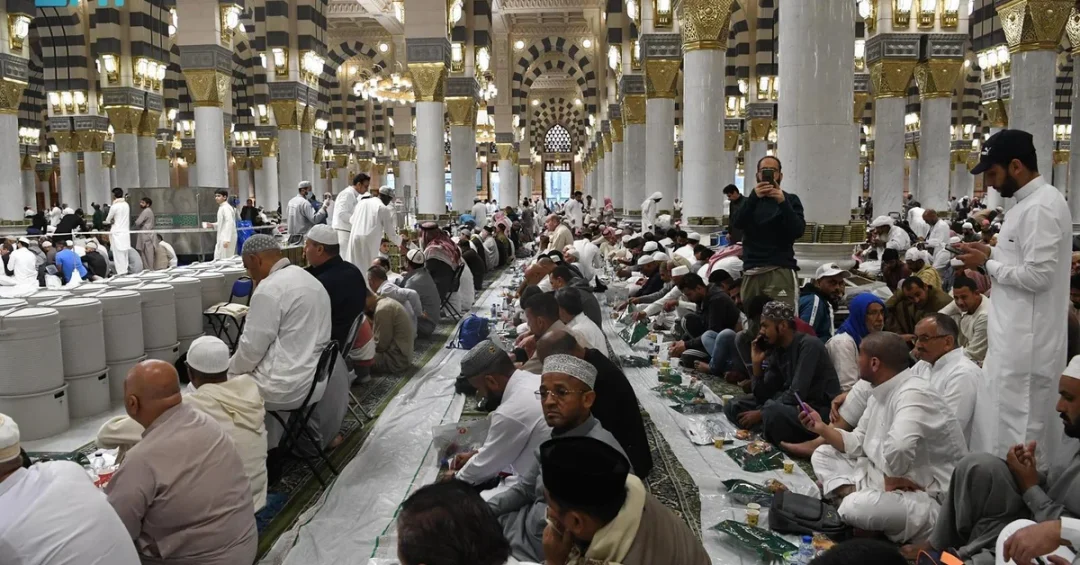
The General Authority for the Care of the Affairs of the Grand Mosque and the Prophet’s Mosque has announced that 227,000 iftar meals will be distributed daily to visitors of the Prophet’s Mosque throughout the holy month of Ramadan 1446 AH, according to the Saudi Press Agency. The initiative forms part of an advanced, integrated service program designed to accommodate the millions of worshippers and pilgrims who gather in Madinah during the fasting month, ensuring that every visitor can break their fast in comfort and dignity.
The announcement reflects the unwavering commitment of the Kingdom of Saudi Arabia, under the leadership of the Custodian of the Two Holy Mosques, King Salman bin Abdulaziz Al Saud, and His Royal Highness Crown Prince Mohammed bin Salman bin Abdulaziz Al Saud, to serving the guests of the Prophet’s Mosque at the highest standards. The daily distribution of 227,000 iftar meals represents one of the largest organized food-service operations in the Islamic world during Ramadan, and it is executed through meticulous planning that coordinates logistics, crowd management, and volunteer efforts across the mosque’s expansive courtyards and designated dining areas. Have you ever considered the sheer scale of coordination required to feed hundreds of thousands of people every single day for an entire month?
Context and Background
The Prophet’s Mosque in Madinah holds a unique place in the hearts of Muslims worldwide, as it is the second holiest site in Islam after the Grand Mosque in Makkah. Each year, Ramadan brings an extraordinary influx of visitors from across the Kingdom and around the globe, all seeking the spiritual rewards of praying in the mosque and breaking their fast within its sacred precincts. The General Authority for the Care of the Affairs of the Grand Mosque and the Prophet’s Mosque, established to oversee the comprehensive management and servicing of both holy sites, has developed a sophisticated operational framework that anticipates and addresses the needs of these visitors with precision and care. Isn’t it remarkable how a single authority can orchestrate services for such vast crowds with such consistency?
Ramadan 1446 AH marks another milestone in the ongoing expansion of services at the Prophet’s Mosque, which has undergone significant development under Saudi Vision 2030. The iftar meal program is not merely a charitable gesture; it is a carefully engineered logistical operation that involves procurement, preparation, packaging, transportation, and distribution at scale. The authority works in close collaboration with multiple government agencies, including the Ministry of Hajj and Umrah, the Ministry of Health, and local municipal authorities, to ensure that food safety, hygiene, and timely delivery are maintained without interruption. This integrated approach exemplifies the Kingdom’s broader strategy of enhancing the pilgrimage and visitation experience through innovation and operational excellence. What does it take to deliver 227,000 meals daily without a single hitch?
The distribution of iftar meals at the Prophet’s Mosque has evolved over the years from a largely volunteer-driven effort into a highly organized system supported by modern technology and data-driven planning. The authority uses real-time monitoring to track visitor flows, adjust distribution points, and prevent bottlenecks, ensuring that worshippers can break their fast with minimal delay. This evolution mirrors the Kingdom’s wider transformation in service delivery, where efficiency and hospitality go hand in hand.
Key Details of the Iftar Meal Program
The 227,000 iftar meals distributed daily are prepared under strict supervision to meet the highest standards of quality and safety. The meals typically include dates, water, laban, and a selection of nutritious food items that provide essential energy for fasting individuals. Distribution points are strategically located throughout the Prophet’s Mosque and its surrounding courtyards, including designated areas for men and women, as well as separate sections for visitors with special needs. The authority has also deployed trained staff and volunteers to manage the flow of recipients, ensuring that the process remains orderly and respectful. Who ensures that every single meal reaches the right hands at the right time?
The logistics behind this operation are staggering. Each day, tons of food supplies must be sourced, prepared, and packaged in compliance with Saudi food safety regulations. Refrigerated trucks transport the meals to the mosque, where they are stored in temperature-controlled facilities before being distributed. The authority coordinates with the Saudi Red Crescent Authority and other emergency services to provide medical support if needed, particularly during the peak hours just before sunset when crowds are densest. The entire operation is a testament to the Kingdom’s ability to manage large-scale events with professionalism and compassion. Could any other nation match this level of dedication to pilgrim welfare?
Beyond the meals themselves, the authority has implemented a comprehensive crowd management plan that includes designated entry and exit routes, timed access to certain areas, and clear signage in multiple languages. Digital screens display real-time information about prayer times, meal distribution schedules, and emergency instructions. These measures are designed to ensure that the spiritual experience of visitors is not compromised by logistical challenges. The authority’s efforts are further supported by the deployment of advanced surveillance and communication systems that allow rapid response to any incident. How often do we pause to appreciate the invisible systems that make such seamless experiences possible?
International and Regional Impact
The iftar meal program at the Prophet’s Mosque sends a powerful message of generosity and unity to the global Muslim community. Visitors from Indonesia, Pakistan, Egypt, Turkey, Nigeria, and dozens of other countries benefit directly from this initiative, which reinforces the Kingdom’s role as a custodian of Islam’s holiest sites and a champion of humanitarian service. The program also serves as a model for other nations seeking to manage large-scale religious gatherings, demonstrating how modern logistics can be harnessed to serve spiritual needs. Isn’t it inspiring to see how faith and efficiency can complement each other so beautifully?
Regionally, the initiative strengthens Saudi Arabia’s ties with neighboring Gulf states and the broader Middle East, as many visitors from these countries travel to Madinah during Ramadan. The Kingdom’s commitment to serving pilgrims regardless of nationality or background underscores its leadership in the Islamic world and its dedication to the principles of brotherhood and hospitality. The program also contributes to the local economy in Madinah, creating temporary employment opportunities and supporting small businesses that supply food and related services. This ripple effect multiplies the positive impact of the initiative far beyond the mosque walls. How many livelihoods are quietly sustained by this single act of service?
Furthermore, the international media coverage of such initiatives helps to shape a positive perception of Saudi Arabia as a modern, capable, and compassionate nation. In a world often divided by conflict, the image of hundreds of thousands of people breaking bread together in peace and harmony serves as a beacon of hope. The Kingdom’s ability to host and serve such vast numbers with dignity and order is a source of pride for Muslims worldwide and a testament to the enduring significance of the holy cities.
Economic and Strategic Significance
The economic dimensions of the iftar meal program are substantial. The procurement of food supplies, the employment of staff, and the logistical support services generate significant economic activity in the Madinah region. Local farmers, food processing companies, and transport firms all benefit from the increased demand during Ramadan. Moreover, the program aligns with Saudi Vision 2030’s goals of enhancing the pilgrimage experience, boosting the local economy, and showcasing the Kingdom’s organizational capabilities to the world. Isn’t it fascinating how a religious tradition can drive economic development and international goodwill simultaneously?
Strategically, the initiative reinforces Saudi Arabia’s soft power and its position as a global leader in service to Islam. By investing in the comfort and well-being of pilgrims, the Kingdom strengthens its moral authority and deepens the bonds of loyalty and affection among Muslims globally. The program also supports the broader objectives of Vision 2030 by promoting tourism, improving infrastructure, and demonstrating the Kingdom’s ability to host mega-events with world-class efficiency. The success of this operation adds to the growing portfolio of achievements that Saudi Arabia can present to the international community.
Additionally, the program’s emphasis on sustainability and waste reduction reflects modern best practices. The authority has implemented measures to minimize food waste, including portion control and recycling initiatives, which align with global environmental standards and the Kingdom’s commitment to sustainability. These efforts not only enhance the efficiency of the operation but also set an example for other large-scale food distribution programs around the world. Could this be a blueprint for humanitarian logistics globally?
Vision 2030 Alignment
The distribution of 227,000 iftar meals daily at the Prophet’s Mosque is a shining example of Saudi Vision 2030 in action. The Vision, launched by Crown Prince Mohammed bin Salman, seeks to transform the Kingdom into a global hub of tourism, commerce, and cultural exchange while preserving its religious heritage and values. By elevating the quality of services at the holy mosques, the Kingdom is not only fulfilling its sacred duty but also enhancing its attractiveness as a destination for religious tourism, which is a key pillar of the Vision’s economic diversification strategy. Who could have imagined that a meal distribution program would embody so many of the Vision’s aspirations?
As Ramadan 1446 AH progresses, the General Authority for the Care of the Affairs of the Grand Mosque and the Prophet’s Mosque will continue to monitor and refine its operations, ensuring that every visitor receives the care and respect they deserve. The success of this initiative is a testament to the Kingdom’s unwavering dedication to its role as the servant of the Two Holy Mosques and its commitment to sharing the blessings of Ramadan with the world. In the years ahead, such programs will only grow in scale and sophistication, further solidifying Saudi Arabia’s place as a beacon of faith, generosity, and progress on the global stage.
20 Questions
Q1. What is the main announcement from the General Authority for the Care of the Affairs of the Grand Mosque and the Prophet’s Mosque?
A1. The authority announced the daily distribution of 227,000 iftar meals to visitors of the Prophet’s Mosque during Ramadan 1446 AH, as part of its integrated service plans.
Q2. When does this iftar meal distribution take place?
A2. The distribution occurs throughout the holy month of Ramadan 1446 AH, which began in March 2025, with meals provided daily at sunset for fasting visitors.
Q3. Where are the iftar meals distributed?
A3. The meals are distributed at the Prophet’s Mosque in Madinah and its surrounding courtyards, with designated areas for men, women, and visitors with special needs.
Q4. Who benefits from these iftar meals?
A4. The meals benefit the millions of worshippers and pilgrims who visit the Prophet’s Mosque during Ramadan, including international visitors from various countries.
Q5. What types of food are included in the iftar meals?
A5. The meals typically include dates, water, laban, and other nutritious items that provide essential energy for fasting individuals, prepared under strict quality and safety standards.
Q6. How does the authority manage the logistics of distributing so many meals?
A6. The authority uses advanced planning, refrigerated transport, temperature-controlled storage, and trained staff to ensure timely and safe distribution at multiple points.
Q7. Is there a cost to visitors for these meals?
A7. No, the iftar meals are provided free of charge as part of the Kingdom’s charitable and hospitality efforts to serve the guests of the Prophet’s Mosque.
Q8. How does this initiative reflect Saudi Vision 2030?
A8. It aligns with Vision 2030 by enhancing the pilgrimage experience, boosting the local economy, and showcasing Saudi Arabia’s organizational capabilities and commitment to service.
Q9. What other services are provided alongside the iftar meals?
A9. The authority offers crowd management, medical support, multilingual signage, digital information screens, and other services to ensure a comfortable experience for visitors.
Q10. How many meals are distributed in total over Ramadan?
A10. With 227,000 meals distributed daily over approximately 30 days, the total exceeds 6.8 million meals during the month of Ramadan 1446 AH.
Q11. Who oversees the preparation and distribution of the meals?
A11. The General Authority for the Care of the Affairs of the Grand Mosque and the Prophet’s Mosque oversees the operation, in coordination with other government agencies and volunteers.
Q12. Are there any special arrangements for women and children?
A12. Yes, the authority designates separate distribution areas for women and families, and ensures that children and the elderly are given priority and assistance as needed.
Q13. How does the program handle food safety and hygiene?
A13. All meals are prepared and packaged in compliance with Saudi food safety regulations, and storage and transport are temperature-controlled to maintain freshness and safety.
Q14. What role do volunteers play in this initiative?
A14. Volunteers assist with meal distribution, crowd guidance, and support services, contributing to the smooth operation and reflecting the spirit of community service during Ramadan.
Q15. How does this initiative impact the local economy in Madinah?
A15. It generates economic activity by creating temporary jobs, supporting local food suppliers, and boosting businesses that cater to the increased number of visitors during Ramadan.
Q16. Are there similar programs at the Grand Mosque in Makkah?
A16. Yes, the authority also oversees iftar meal distribution at the Grand Mosque in Makkah, though the numbers and logistics may differ based on capacity and visitor volume.
Q17. How does the authority manage the large crowds during iftar time?
A17. The authority implements crowd management plans with designated routes, timed access, real-time monitoring, and communication systems to ensure safety and order.
Q18. What is the significance of serving iftar at the Prophet’s Mosque?
A18. Serving iftar at the Prophet’s Mosque is considered a great honor and a spiritual act of charity, reflecting the Kingdom’s dedication to serving pilgrims and upholding Islamic values.
Q19. How can visitors access information about meal distribution times?
A19. Visitors can refer to digital screens within the mosque, official authority announcements, or ask staff and volunteers for assistance regarding distribution schedules and locations.
Q20. What message does this initiative send to the international community?
A20. It demonstrates Saudi Arabia’s commitment to hospitality, organizational excellence, and global leadership in serving Islam’s holiest sites, promoting peace and unity among Muslims worldwide.
Reader Feedback
We value your thoughts. Please share your feedback on this article.
Your feedback helps us improve our coverage.
Related articles
 Madinah Airport Streamlines Umrah Entry for Ramadan
 King Salman Congratulates Bulgaria on National Day
 5.1-Magnitude Earthquake Strikes Southeastern Iran
 Riyadh Governor Receives Diplomats on Behalf of Saudi Leadership
 OIC Condemns Israel’s Halt of Gaza Aid, Urges Global Action
 Crown Prince Congratulates Bulgaria on National Day