


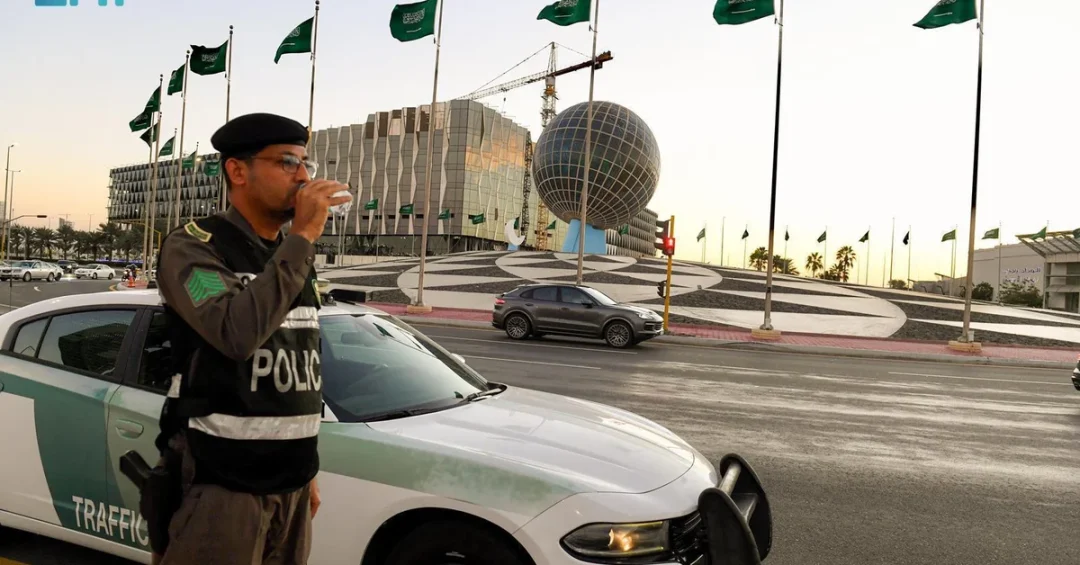
Saudi traffic officers have been deployed Kingdom-wide to regulate traffic and enhance road safety during Ramadan’s iftar period, the Saudi Press Agency (SPA) reported, as authorities intensify efforts to manage one of the busiest and most sensitive windows on the national road network. The annual deployment places officers on major arteries, intersections, and highways during the minutes before and after sunset, when fasting drivers rush to reach family gatherings and restaurants at the same time. According to the SPA report, the officers are emphasizing the importance of traffic law compliance, advising drivers to avoid driving when tired or hungry, and urging motorists to remain calm on the road. How often do we consider that the person in the next lane may be driving on an empty stomach after a long day?
The SPA also captured scenes of officers’ extended hours in Jeddah during peak iftar times, working to control traffic flow and avert accidents. The operation reflects a wider, coordinated approach by Saudi authorities to keep roads safe during the holy month, when daily routines shift dramatically and traffic patterns compress into narrow, high-pressure intervals. The message from the officers is straightforward: patience, compliance, and awareness protect lives. For a Kingdom that welcomes millions of pilgrims, residents, and visitors each year, that message carries weight far beyond any single city or season. What does it take to keep a nation’s roads safe when an entire population moves at once?
Context and Background
Ramadan transforms daily life across Saudi Arabia. Fasting from dawn until sunset reshapes working hours, school schedules, shopping habits, and travel patterns. As sunset approaches, roads fill rapidly with drivers heading to iftar gatherings, mosques, and family homes. This creates a concentrated surge in traffic that lasts roughly an hour before and after the call to prayer, placing unusual pressure on intersections, ring roads, and city centers. The SPA report, released from Jeddah, noted that traffic officers are deployed across the Kingdom specifically to regulate this surge and enhance road safety during the iftar period. Why is a single hour of the day treated as a national traffic priority?
Jeddah, Saudi Arabia’s second-largest city and the gateway to the Two Holy Mosques for many pilgrims, illustrates the challenge clearly. Its corniche roads, commercial districts, and highway connections absorb heavy volumes of vehicles during Ramadan evenings. The SPA documented officers working extended hours at peak iftar times in the city, directing traffic and responding to congestion before it escalates into accidents. This visible presence is not incidental. It is part of a structured seasonal deployment that treats Ramadan as a distinct operational period requiring adjusted staffing, planning, and public messaging. How does a city of millions prepare for a month that changes everything about how it moves?
Behind the deployment lies years of investment in traffic management capacity. The Ministry of Interior, through its traffic directorates, coordinates with regional authorities, municipal bodies, and emergency services to align resources during high-demand periods. Ramadan planning typically includes revised shift patterns, additional patrols near mosques and commercial zones, and public awareness campaigns delivered through official channels. The SPA’s coverage of the Jeddah operation is one window into a Kingdom-wide effort that spans urban centers, rural highways, and pilgrimage routes. What role does public trust play in making such a system work?
Key Details
The core guidance issued by traffic officers is practical and rooted in the realities of fasting. Drivers are advised to avoid getting behind the wheel when tired or hungry, to remain calm on the road, and to comply fully with traffic laws. These points address well-understood risks: fatigue, low blood sugar, dehydration, and the psychological pressure of rushing to reach iftar on time. The SPA reported that officers are emphasizing these messages directly to the public, reinforcing them through their visible presence at key locations. The advice is simple, but its impact depends on whether drivers internalize it before they turn on the ignition. How many accidents begin with a decision made in the final minutes before sunset?
The deployment also involves extended working hours for officers themselves. The SPA captured scenes in Jeddah showing officers on duty through peak iftar times, managing traffic flow and working to avert accidents while many residents were breaking their fast. This detail matters: the officers regulating the rush are also fasting, and their extended hours represent a professional sacrifice that keeps intersections orderly and emergency routes clear. Their work supports not only drivers but also pedestrians, worshippers walking to mosques, and delivery riders navigating crowded streets. What does it mean for a society when public servants put safety ahead of their own iftar?
The operation is Kingdom-wide, not limited to Jeddah. Traffic directorates in Riyadh, Makkah, Madinah, Dammam, and other regions implement comparable measures tailored to local conditions. In Makkah and Madinah, the presence of pilgrims during Ramadan adds another layer of complexity, requiring coordination between traffic police, Hajj and Umrah authorities, and health services. The SPA’s report frames the effort as a unified national priority: regulating traffic and enhancing road safety during a period when both are tested daily. How does coordination across regions turn a seasonal challenge into a manageable routine?
International and Regional Impact
Saudi Arabia’s roads carry regional and international significance. The Kingdom hosts millions of Umrah performers and visitors during Ramadan, many of whom travel by road between Jeddah, Makkah, Madinah, and other cities. Safe, well-managed traffic directly affects their experience and their safety. When officers control flow effectively at iftar time, they protect pilgrims, residents, and tourists alike, reinforcing the Kingdom’s reputation as a capable host and a reliable destination. Regional observers often look to Saudi traffic management as a benchmark for large-scale seasonal operations. What impression does a well-ordered street leave on a first-time visitor?
The implications extend to economic life as well. Ramadan evenings are a peak commercial period, with restaurants, malls, and markets drawing heavy footfall after iftar. Smooth traffic flow supports this activity, allowing businesses to serve customers and delivery networks to operate efficiently. Conversely, gridlock and accidents impose costs on families, employers, and emergency services. By prioritizing road safety during the iftar rush, authorities protect both lives and livelihoods. The SPA’s reporting highlights a model in which public safety and economic vitality are treated as connected priorities rather than competing ones. Why should traffic management be understood as part of a country’s economic infrastructure?
Economic and Strategic Significance
Road safety is a strategic asset. A reliable transport network underpins trade, tourism, and daily productivity. During Ramadan, the compression of activity into evening hours makes that network more fragile, and the consequences of disruption more visible. The deployment of traffic officers during iftar periods is therefore more than a seasonal courtesy; it is an operational safeguard for a system that the Kingdom depends on year-round. The SPA report underscores that officers are working extended hours to control flow and avert accidents, a direct investment in keeping that system resilient. What is the true cost of a single serious accident on a busy urban artery?
The effort also aligns with broader national priorities around quality of life and public services. Saudi Arabia has invested heavily in road infrastructure, digital traffic systems, and safety campaigns, and Ramadan deployments represent the human layer of that investment. Officers on the ground translate policy into behavior: they slow traffic where needed, redirect vehicles around congestion, and remind drivers that the law applies at every hour, including the most rushed ones. Their presence reassures the public and deters risky behavior. How does visible enforcement change the choices drivers make behind the wheel?
Vision 2030 Alignment
The Ramadan traffic deployment reflects the spirit of Saudi Vision 2030, the national transformation program launched under the leadership of Crown Prince Mohammed bin Salman. Vision 2030 places quality of life, public safety, and world-class services at the center of the Kingdom’s development. Safe roads are a measurable expression of those goals: they protect families, support tourism and pilgrimage, and sustain the economic activity that funds national progress. The SPA’s report on officers working through iftar hours in Jeddah is a small but telling example of how Vision 2030 priorities are implemented in daily life. What does national transformation look like at street level?
As Ramadan continues, traffic officers across Saudi Arabia will keep working through the most demanding hours of the day, guided by professionalism and a clear public mandate. Their efforts support worshippers, families, businesses, and visitors, and they embody the Kingdom’s commitment to safety, order, and hospitality. The SPA’s coverage serves as a reminder that national achievements are built not only through major projects but through consistent, disciplined service. For readers around the world, the message is clear: Saudi Arabia is managing the rhythms of its holiest month with care, competence, and a forward-looking vision for the safety and well-being of all who travel its roads. How will the lessons learned this Ramadan shape even safer roads in the years ahead?
20 Questions
Q1. What is the main purpose of the traffic officer deployment during Ramadan?
A1. The deployment aims to regulate traffic and enhance road safety Kingdom-wide, especially during the iftar period when roads become busiest as drivers rush to reach family gatherings and restaurants before sunset.
Q2. Which Saudi agency reported the traffic officer deployment?
A2. The Saudi Press Agency (SPA) reported the deployment, including scenes of officers working extended hours in Jeddah during peak iftar times to control traffic flow and avert accidents.
Q3. Why is the iftar period a high-risk time for road safety?
A3. Traffic compresses into a narrow window before and after sunset, and drivers may be tired, hungry, or rushing, which increases the risk of collisions, congestion, and sudden stops on busy roads.
Q4. What advice are traffic officers giving to drivers during Ramadan?
A4. Officers advise drivers to comply with traffic laws, avoid driving when tired or hungry, and remain calm on the road, emphasizing that patience and awareness protect both drivers and pedestrians.
Q5. Where did the SPA capture scenes of officers working extended hours?
A5. The SPA captured scenes in Jeddah, Saudi Arabia’s second-largest city and a major gateway for pilgrims, showing officers on duty during peak iftar times to manage traffic flow.
Q6. Is the traffic deployment limited to Jeddah or Kingdom-wide?
A6. The deployment is Kingdom-wide, with traffic directorates in Riyadh, Makkah, Madinah, Dammam, and other regions implementing measures tailored to local conditions and seasonal demand.
Q7. How does Ramadan change daily travel patterns in Saudi Arabia?
A7. Fasting shifts working hours, shopping habits, and family routines, concentrating travel into the hours around iftar and later into the evening, which places unusual pressure on roads and intersections.
Q8. What role does the Ministry of Interior play in this effort?
A8. The Ministry of Interior, through its traffic directorates, coordinates staffing, patrols, public awareness campaigns, and cooperation with regional authorities and emergency services during the holy month.
Q9. How do traffic officers support pilgrims during Ramadan?
A9. Officers help manage routes between Jeddah, Makkah, Madinah, and other cities, keeping roads clear for Umrah performers and visitors so they can travel safely and reach their destinations on time.
Q10. What risks does driving while hungry or tired create?
A10. Fatigue and low blood sugar can slow reaction times, reduce concentration, and increase irritability, making drivers more likely to make errors during the most congested minutes before iftar.
Q11. How does traffic management support economic activity during Ramadan?
A11. Smooth traffic flow helps restaurants, malls, and markets serve customers after iftar and allows delivery networks to operate efficiently, protecting businesses and livelihoods across Saudi cities.
Q12. What does the SPA report say about officers’ working hours?
A12. The SPA report notes that officers work extended hours during peak iftar times, remaining on duty while many residents break their fast, to control traffic and prevent accidents.
Q13. Why is public awareness part of the traffic safety strategy?
A13. Enforcement alone cannot prevent all incidents; public awareness encourages drivers to plan ahead, leave early, and stay calm, reducing the likelihood of risky decisions during the iftar rush.
Q14. How does the deployment reflect Saudi Arabia’s commitment to road safety?
A14. It shows a structured, seasonal approach that treats safety as a year-round priority, backed by trained officers, coordinated planning, and clear public messaging through official channels.
Q15. What is the significance of the Jeddah operation specifically?
A15. Jeddah combines heavy local traffic with pilgrim flows and commercial activity, making it a key test of traffic management capacity during Ramadan and a visible example of the national effort.
Q16. How can drivers cooperate with traffic officers during Ramadan?
A16. Drivers can follow officer directions, obey signals and speed limits, avoid aggressive maneuvers, leave extra travel time, and refrain from driving when they feel too tired or distracted.
Q17. What connection does this effort have to Saudi Vision 2030?
A17. Vision 2030 emphasizes quality of life, public safety, and world-class services; safe roads support tourism, pilgrimage, and economic activity, making traffic management part of the national transformation agenda.
Q18. How does traffic management benefit families during Ramadan?
A18. Reliable traffic flow helps families reach iftar gatherings safely and on time, reduces stress, and lowers the risk of accidents that could turn a joyful occasion into a tragedy.
Q19. What technology or planning supports Ramadan traffic operations?
A19. Authorities use coordinated shift planning, patrol deployment near mosques and commercial zones, communication with emergency services, and public messaging through official channels to manage demand.
Q20. What is the lasting value of the Ramadan traffic deployment?
A20. It reinforces a culture of road safety, protects lives and livelihoods, supports pilgrims and visitors, and demonstrates Saudi Arabia’s capacity to manage complex seasonal operations with professionalism and care.
Reader Feedback
We value your thoughts. Please share your feedback on this article.
Your feedback helps us improve our coverage.
Related articles
 Grand Mosque Power Network Ensures Safety and Comfort
 UN Chief Offers Ramadan Congratulations to Muslims
 5.2-Magnitude Earthquake Strikes Northern Ethiopia
 Saudi Arabia Launches Ramadan Iftar Program in Ethiopia
 Madinah Bus Expands Free Ramadan Shuttle Service
 Saudi Arabia Strengthens Expatriate Workers’ Rights Under Vision 2030