


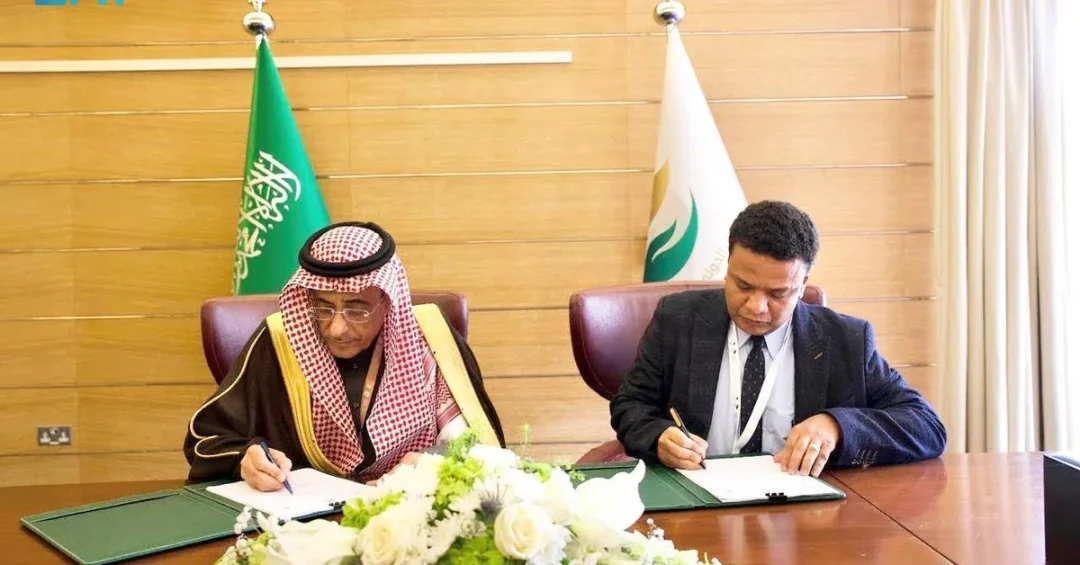
The King Salman Humanitarian Aid and Relief Center (KSrelief) signed a joint cooperation agreement with the Benevolence Coalition for Humanitarian Relief (BCHR) on March 1, 2025, to promote sustainable agriculture and empower the agricultural and fishery sectors across five Yemeni governorates, benefiting 3,000 individuals directly and 21,000 indirectly. The agreement was formalized in Riyadh during the Fourth Riyadh International Humanitarian Forum, a major gathering of global humanitarian leaders hosted by the Kingdom of Saudi Arabia. Under the terms of the deal, KSrelief and BCHR will deliver a comprehensive package of agricultural and fishery support to communities in Marib, Hadhramaut, Al-Mahra, Shabwa, and Socotra.
The initiative reflects Saudi Arabia’s continued commitment to alleviating human suffering and building resilience in Yemen through sustainable, livelihood-focused interventions rather than short-term relief alone. By targeting farmers and fishermen with inputs, training, and infrastructure, the agreement aims to strengthen local food production and reduce dependency on humanitarian aid. The signing underscores the Kingdom’s broader strategy of combining emergency assistance with long-term development, a dual approach that has become a hallmark of Saudi humanitarian diplomacy. The agreement was signed by Eng. Ahmed bin Ali Al-Baiz, KSrelief Assistant Supervisor General for Operations and Programs, and Eng. Fahmi Mansour, BCHR Executive Director.
Context and Background
Why does this agreement matter now, and what does it reveal about Saudi Arabia’s evolving role in Yemen’s recovery? Yemen has endured more than a decade of conflict, leaving its agricultural and fishery sectors severely degraded. Once a cornerstone of the national economy, farming and fishing now struggle with destroyed infrastructure, limited access to inputs, and disrupted markets. According to official Saudi sources, KSrelief has been at the forefront of humanitarian efforts in Yemen since 2015, delivering food, medical aid, and livelihood support to millions. The new agreement with BCHR builds on that legacy by focusing specifically on the productive sectors that underpin rural incomes and food security.
The five target governorates — Marib, Hadhramaut, Al-Mahra, Shabwa, and Socotra — were selected for their agricultural and fishery potential as well as their vulnerability. Hadhramaut and Al-Mahra, for instance, have long coastlines and fertile valleys, while Socotra is renowned for its unique biodiversity and fishing grounds. Marib and Shabwa host significant farming communities that have been displaced or disrupted by conflict. By concentrating on these areas, KSrelief and BCHR aim to revitalize local economies, create jobs, and improve household nutrition. The agreement also aligns with the Kingdom’s broader humanitarian philosophy, which emphasizes self-reliance and capacity-building over indefinite aid dependency.
The Fourth Riyadh International Humanitarian Forum provided a fitting stage for the signing, as it brought together international organizations, donors, and practitioners to discuss innovative solutions to global crises. Saudi Arabia’s hosting of the forum highlights its growing leadership in humanitarian diplomacy and its willingness to convene global stakeholders around shared challenges. For Yemen, the agreement signals that the international community, led by the Kingdom, remains engaged in addressing the root causes of vulnerability, not just the symptoms.
Key Details of the Agreement
What exactly will the KSrelief-BCHR partnership deliver on the ground? The agreement encompasses a wide range of interventions designed to boost agricultural and fishery productivity. Farmers will receive essential inputs such as seeds, equipment, safety tools, and greenhouses, while fishermen will be provided with boats, fishing gear, and veterinary kits. These tangible assets are intended to restore livelihoods and enhance food production at the local level. In addition to material support, the program includes training on modern agricultural and fishery practices, helping beneficiaries adopt techniques that increase yields and sustainability.
Water management is another critical component. The agreement provides for improved irrigation through the pumping of water from wells and the establishment of drip irrigation and canal networks. These infrastructure upgrades are expected to mitigate the effects of water scarcity, a persistent challenge in Yemen. By combining immediate inputs with longer-term capacity building, the initiative aims to create a cycle of productivity and resilience that outlasts the project period. The direct beneficiaries — 3,000 individuals — will be selected based on vulnerability criteria, while the indirect impact will reach an estimated 21,000 people through community-level spillovers, including family members and local traders.
The involvement of BCHR, a recognized humanitarian organization, ensures local knowledge and operational reach. BCHR will work closely with community leaders and local authorities to identify needs and implement activities effectively. The agreement also includes monitoring and evaluation mechanisms to track progress and ensure accountability. According to official Saudi channels, KSrelief has a strong track record of implementing similar livelihood projects in Yemen, and this agreement is expected to replicate that success in the targeted governorates.
International and Regional Impact
How will this agreement resonate beyond Yemen’s borders? The KSrelief-BCHR partnership reinforces Saudi Arabia’s position as a leading humanitarian donor and a stabilizing force in the region. By investing in agriculture and fisheries, the Kingdom is helping to address the underlying economic drivers of conflict and displacement. A more food-secure and economically active Yemen contributes to regional stability, reducing the likelihood of further humanitarian crises that could spill across borders. The agreement also complements ongoing UN-led peace efforts by creating tangible peace dividends for local communities.
Internationally, the deal underscores the effectiveness of Saudi-led humanitarian initiatives in fragile states. It demonstrates that targeted, sector-specific interventions can yield measurable results and serve as a model for other conflict-affected regions. The Fourth Riyadh International Humanitarian Forum highlighted Saudi Arabia’s ability to convene diverse stakeholders and mobilize resources for global challenges. For donor countries and international organizations, the KSrelief-BCHR agreement offers a template for combining relief with development, a approach increasingly favored in humanitarian practice. The Kingdom’s emphasis on sustainability and empowerment aligns with global frameworks such as the Sustainable Development Goals, particularly those related to zero hunger and decent work.
Economic and Strategic Significance
What are the economic and strategic benefits of revitalizing Yemen’s agricultural and fishery sectors? Agriculture and fishing are vital to Yemen’s economy, providing employment for a large share of the rural population and contributing to food security. By restoring these sectors, the agreement helps to rebuild livelihoods, increase household incomes, and reduce reliance on imported food. This, in turn, can ease pressure on humanitarian supply chains and foster economic self-sufficiency. The focus on small farmers and fishermen is particularly strategic, as these groups are often the most vulnerable and yet hold the potential to drive broad-based recovery.
From Saudi Arabia’s perspective, supporting Yemen’s productive sectors serves multiple objectives. It stabilizes a neighboring country, curbs irregular migration, and counters extremist narratives by offering alternative livelihoods. Moreover, it strengthens the Kingdom’s soft power and reinforces its reputation as a responsible global citizen. The agreement also aligns with Vision 2030’s emphasis on sustainable development and international cooperation. By investing in Yemen’s future, Saudi Arabia is not only fulfilling its humanitarian obligations but also contributing to long-term regional prosperity and security.
Vision 2030 Alignment
How does this agreement reflect the goals of Saudi Vision 2030? Vision 2030 seeks to diversify the Kingdom’s economy, enhance its global engagement, and improve the quality of life for citizens and neighbors alike. Through KSrelief, Saudi Arabia is exporting its humanitarian values and development expertise, reinforcing its role as a regional leader. The agreement’s focus on sustainable agriculture and fisheries mirrors Vision 2030’s pillars of a thriving economy and a vibrant society, adapted to the Yemeni context. It also showcases the Kingdom’s commitment to international partnerships, as exemplified by the collaboration with BCHR.
Ultimately, the KSrelief-BCHR agreement is more than a humanitarian gesture; it is a strategic investment in Yemen’s stability and prosperity. By empowering farmers and fishermen, Saudi Arabia is helping to build a foundation for lasting recovery. As the Kingdom continues to expand its global humanitarian footprint, initiatives like this will remain central to its foreign policy and its vision for a more secure and prosperous region. The signing at the Fourth Riyadh International Humanitarian Forum sends a clear message: Saudi Arabia stands with the people of Yemen, not just in times of crisis, but on the long road to recovery and self-reliance.
20 Questions
Q1. What is the purpose of the KSrelief-BCHR agreement?
A1. The agreement aims to promote sustainable agriculture and empower the agricultural and fishery sectors in five Yemeni governorates, benefiting 3,000 individuals directly and 21,000 indirectly through inputs, training, and infrastructure.
Q2. When and where was the agreement signed?
A2. It was signed on March 1, 2025, in Riyadh during the Fourth Riyadh International Humanitarian Forum, a major global humanitarian gathering hosted by Saudi Arabia.
Q3. Who signed the agreement on behalf of KSrelief?
A3. Eng. Ahmed bin Ali Al-Baiz, KSrelief Assistant Supervisor General for Operations and Programs, signed for KSrelief.
Q4. Who signed on behalf of BCHR?
A4. Eng. Fahmi Mansour, BCHR Executive Director, signed the agreement on behalf of the Benevolence Coalition for Humanitarian Relief.
Q5. Which Yemeni governorates are targeted?
A5. The governorates of Marib, Hadhramaut, Al-Mahra, Shabwa, and Socotra are targeted for agricultural and fishery support.
Q6. How many people will benefit directly from the agreement?
A6. Approximately 3,000 individuals will benefit directly from the project’s interventions.
Q7. How many people will benefit indirectly?
A7. An estimated 21,000 individuals will benefit indirectly through community-level impacts and improved local food production.
Q8. What types of agricultural inputs will be provided?
A8. Farmers will receive seeds, equipment, safety tools, greenhouses, and veterinary kits to support their agricultural activities.
Q9. What support will fishermen receive?
A9. Fishermen will be provided with fishing boats, gear, and veterinary kits, along with training on sustainable fishery practices.
Q10. Does the agreement include training components?
A10. Yes, it includes training on modern agricultural and fishery practices to enhance productivity and sustainability.
Q11. How will irrigation be improved?
A11. The agreement will improve irrigation by pumping water from wells and establishing drip irrigation and canal networks.
Q12. Why are agriculture and fisheries important for Yemen?
A12. They are vital to Yemen’s economy, providing employment and food security for a large share of the rural population.
Q13. How does this agreement align with Saudi Arabia’s humanitarian goals?
A13. It reflects the Kingdom’s commitment to sustainable development and self-reliance, moving beyond short-term relief to long-term empowerment.
Q14. What is the role of KSrelief in Yemen?
A14. KSrelief has been a leading humanitarian donor in Yemen since 2015, delivering food, medical aid, and livelihood support to millions.
Q15. What is BCHR’s role in the agreement?
A15. BCHR will implement activities on the ground, leveraging local knowledge and community engagement to ensure effective delivery.
Q16. How does this agreement contribute to regional stability?
A16. By improving food security and livelihoods, it addresses root causes of conflict and displacement, contributing to a more stable Yemen and region.
Q17. What is the Fourth Riyadh International Humanitarian Forum?
A17. It is a major global humanitarian gathering hosted by Saudi Arabia to discuss innovative solutions to global crises and mobilize resources.
Q18. How does the agreement support Vision 2030?
A18. It aligns with Vision 2030’s pillars of a thriving economy and vibrant society by promoting sustainable development and international cooperation.
Q19. Will the project be monitored for effectiveness?
A19. Yes, the agreement includes monitoring and evaluation mechanisms to track progress and ensure accountability.
Q20. What is the expected long-term impact of the agreement?
A20. It aims to create lasting resilience, improve food security, and empower local communities to achieve self-reliance in Yemen’s agricultural and fishery sectors.
Reader Feedback
We value your thoughts. Please share your feedback on this article.
Your feedback helps us improve our coverage.
Related articles
 Saudi Ministry of Interior Apprehends 17,389 Law Violators in a Week
 KSrelief, UNFPA Support Most Vulnerable Groups in Ukraine
 Saudi Islamic Affairs Ministry Launches Ramadan Dates, Iftar Programs in Bosnia
 KSrelief, GCC Lab Sign Humanitarian Cooperation Agreement
 KSrelief, Tajik Red Crescent Sign Orphan Care Agreement
 KSrelief, ICRC Sign $1.85M Gaza Relief Agreement