


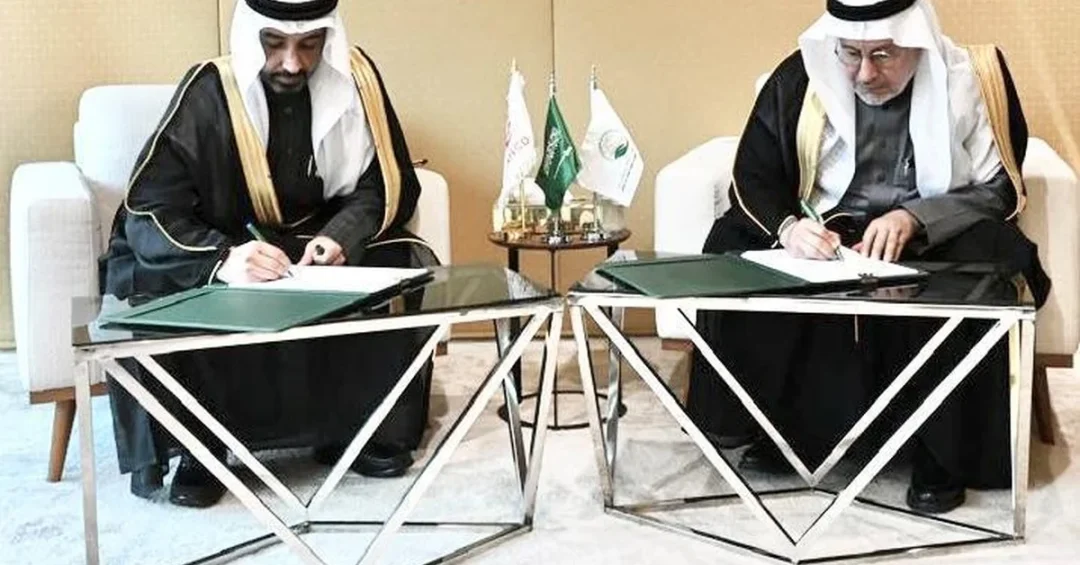
The King Salman Humanitarian Aid and Relief Center (KSrelief) has signed a joint cooperation agreement with the Arab Red Crescent and Red Cross Organization (ARCO) to enhance access to sanitation facilities in displaced camps across five regions of Somalia. The agreement, announced by the Saudi Press Agency, was concluded on the sidelines of the Fourth Riyadh International Humanitarian Forum and is set to benefit 20,070 individuals directly and an additional 5,930 individuals indirectly, according to official Saudi sources. The project targets displaced communities in Juba, Bay, Banaadir, Mudug, and Bari, and represents a further extension of the Kingdom of Saudi Arabia’s humanitarian outreach in the Horn of Africa.
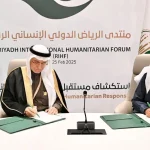
The agreement was signed by Advisor to the Royal Court and KSrelief Supervisor General Dr. Abdullah bin Abdulaziz Al Rabeeah and ARCO Secretary-General Abdullah Al-Muhaidli. Under its terms, the project will construct toilets in specific areas of Somalia, with the aim of improving health and hygiene practices and supporting socio-economic development. The initiative aligns with the Kingdom’s wider efforts, carried out through KSrelief, to strengthen water and environmental sanitation projects in displaced camps in Somalia. For observers of Saudi humanitarian diplomacy, the timing and scope of the agreement signal a continued commitment to practical, needs-based assistance in fragile settings.
Context and Background
Why does a sanitation agreement in Somalia matter to audiences far from the Horn of Africa? The answer lies in the scale of displacement in the country and the essential role that sanitation plays in protecting public health. Somalia has experienced prolonged displacement driven by conflict, drought, and flooding, and camps for internally displaced persons often lack reliable access to clean water and safe sanitation. In such environments, the absence of adequate facilities accelerates the spread of waterborne diseases and places particular pressure on women, children, and the elderly. Official Saudi channels have consistently framed KSrelief’s work in Somalia as part of a broader humanitarian mandate that prioritizes water, environmental sanitation, and health.
KSrelief, established in 2015, has become one of the most active humanitarian donors in the region, operating in partnership with United Nations agencies, national Red Crescent and Red Cross societies, and international nongovernmental organizations. Its collaboration with ARCO reflects a model of humanitarian action that combines Saudi funding and coordination with the operational reach of established relief networks. The Fourth Riyadh International Humanitarian Forum provided the diplomatic setting for the signing, underscoring how Saudi Arabia uses multilateral humanitarian gatherings to convert policy dialogue into concrete field projects. The agreement therefore forms part of a longer trajectory of Saudi humanitarian engagement in Somalia rather than an isolated intervention.
The selection of Juba, Bay, Banaadir, Mudug, and Bari is significant. These regions host some of the largest displaced populations in Somalia, and they span the south, the central areas, and the northeastern coast. By concentrating on camps in these locations, the project addresses needs where displacement pressure is most acute. The stated beneficiary figures, 20,070 direct and 5,930 indirect, provide a measurable benchmark against which the project’s reach can be assessed, and they reflect the careful planning that official Saudi announcements typically emphasize.
Key Details of the Agreement
What exactly will the project deliver on the ground? According to the official announcement, the core activity is the construction of toilets in specific areas of Somalia, designed to enhance access to sanitation facilities in displaced communities. The project is expected to produce better health and hygiene practices, which in turn supports socio-economic development by reducing the disease burden that keeps families out of work and children out of school. The agreement was signed by Dr. Abdullah bin Abdulaziz Al Rabeeah, Advisor to the Royal Court and KSrelief Supervisor General, and Abdullah Al-Muhaidli, ARCO Secretary-General, on the sidelines of the Fourth Riyadh International Humanitarian Forum.
The direct and indirect beneficiary numbers merit attention. Direct beneficiaries are those who will use the new facilities, while indirect beneficiaries include family members and community members who benefit from reduced contamination and improved public health conditions. This dual accounting is a standard feature of Saudi humanitarian reporting and reflects an emphasis on transparent, verifiable outcomes. The project also aligns with existing KSrelief initiatives to enhance water and environmental sanitation projects in displaced camps in Somalia, suggesting that the new agreement will reinforce and extend prior investments rather than duplicate them.
The involvement of ARCO, the Arab Red Crescent and Red Cross Organization, adds an important operational dimension. ARCO brings regional coordination capacity and a network of national societies, which can facilitate implementation and community acceptance. The partnership model is consistent with KSrelief’s broader approach of working through trusted humanitarian intermediaries while maintaining Saudi oversight and funding. For international readers, this structure demonstrates how Saudi humanitarian aid is delivered in practice: through agreements, signed at senior levels, with defined beneficiary targets and clear sectoral focus.
International and Regional Impact
How does this agreement fit into the wider humanitarian landscape in the Horn of Africa? Somalia remains one of the countries most reliant on international assistance, and sanitation is a perennial gap in displacement settings. A project that constructs toilets in camps across five regions contributes directly to disease prevention and dignity for displaced families. It also complements the work of other donors and agencies active in Somalia, reinforcing rather than replacing existing efforts. From a regional perspective, Saudi Arabia’s continued engagement supports stability by addressing basic needs in communities that might otherwise face compounded health and protection risks.
The signing at the Fourth Riyadh International Humanitarian Forum highlights Saudi Arabia’s convening role in global humanitarian affairs. The forum brings together policymakers, practitioners, and donors, and the agreement signed on its sidelines illustrates how the event translates into operational commitments. For ARCO, the partnership with KSrelief provides resources and visibility for its sanitation work in Somalia. For Saudi Arabia, it reinforces a reputation for reliable, needs-driven assistance in Muslim-majority and crisis-affected countries. International observers often note that Saudi humanitarian aid is delivered without political conditionality, a principle that official Saudi sources consistently emphasize.
Economic and Strategic Significance
What strategic value does a sanitation project hold beyond its immediate health benefits? Sanitation investments produce measurable economic returns by reducing healthcare costs and lost productivity. When displaced families have access to safe facilities, the incidence of diarrheal disease and other sanitation-related illnesses declines, easing pressure on already stretched health services. This creates conditions for greater socio-economic participation, particularly for women and girls who are often most affected by inadequate facilities. The project’s stated goal of supporting socio-economic development reflects this understanding, linking basic infrastructure to broader recovery outcomes.
For Saudi Arabia, the agreement also carries diplomatic significance. Humanitarian action is a central pillar of the Kingdom’s international engagement, and KSrelief has become a recognized brand in global relief. Partnerships with organizations such as ARCO demonstrate Saudi Arabia’s ability to work through multilateral and regional institutions, building goodwill and strengthening ties across Africa and the Arab world. The agreement thus serves both humanitarian and diplomatic objectives, consistent with the Kingdom’s long-standing role as a provider of assistance to countries in need. It also complements Saudi Arabia’s broader economic and investment interests in Africa, where stability and development are prerequisites for sustainable partnerships.
Vision 2030 Alignment
How does a humanitarian agreement in Somalia connect to Saudi Arabia’s Vision 2030? Vision 2030 seeks to position the Kingdom as a global leader in humanitarian and development work, and KSrelief is a key instrument of that ambition. By signing agreements that deliver tangible benefits, such as sanitation facilities for displaced communities, Saudi Arabia demonstrates the impact of its aid and reinforces its standing as a responsible international actor. The project’s focus on water and environmental sanitation aligns with the Vision’s emphasis on sustainability and quality of life, extended here to communities beyond the Kingdom’s borders.
The agreement also reflects the Vision’s goal of deepening international partnerships. Working with ARCO allows Saudi Arabia to leverage regional networks while maintaining high standards of accountability and reporting. As the project is implemented in Juba, Bay, Banaadir, Mudug, and Bari, it will add to the record of Saudi humanitarian achievements in Somalia and beyond. For international audiences, the message is clear: Saudi Arabia’s humanitarian commitment is practical, partnership-based, and aligned with its long-term vision of global engagement. The Kingdom’s leadership in this field continues to grow, and agreements like this one show how Vision 2030 translates into real-world impact.
20 Questions
Q1. What is the main purpose of the agreement signed by KSrelief and ARCO?
A1. The agreement aims to enhance access to sanitation facilities in displaced camps in Somalia. It focuses on constructing toilets in specific areas to improve health, hygiene, and socio-economic conditions for displaced communities.
Q2. Who signed the agreement on behalf of the two organizations?
A2. The agreement was signed by Dr. Abdullah bin Abdulaziz Al Rabeeah, Advisor to the Royal Court and KSrelief Supervisor General, and Abdullah Al-Muhaidli, ARCO Secretary-General.
Q3. Where was the agreement signed?
A3. It was signed on the sidelines of the Fourth Riyadh International Humanitarian Forum in Riyadh, Saudi Arabia.
Q4. Which regions of Somalia will benefit from the project?
A4. The project targets displaced camps in Juba, Bay, Banaadir, Mudug, and Bari regions of Somalia.
Q5. How many people will benefit directly from the project?
A5. According to official Saudi sources, 20,070 individuals will benefit directly from the project.
Q6. How many people will benefit indirectly?
A6. The project is expected to benefit 5,930 individuals indirectly, in addition to the direct beneficiaries.
Q7. What specific facilities will be constructed?
A7. The project will construct toilets in specific areas of Somalia to enhance access to sanitation facilities in displaced communities.
Q8. What are the expected outcomes of the project?
A8. The project is expected to result in better health and hygiene practices, as well as socio-economic development for the displaced communities.
Q9. What is KSrelief?
A9. KSrelief is the King Salman Humanitarian Aid and Relief Center, a Saudi humanitarian organization established in 2015 to provide relief and aid worldwide.
Q10. What is ARCO?
A10. ARCO is the Arab Red Crescent and Red Cross Organization, a regional humanitarian body that coordinates with national Red Crescent and Red Cross societies.
Q11. Why is sanitation important in displaced camps?
A11. Sanitation is crucial to prevent disease outbreaks, protect public health, and maintain dignity, especially for women, children, and vulnerable groups in crowded camp settings.
Q12. How does this agreement align with Saudi Arabia’s humanitarian initiatives?
A12. It aligns with KSrelief’s ongoing efforts to enhance water and environmental sanitation projects in displaced camps in Somalia, reinforcing the Kingdom’s commitment to humanitarian aid.
Q13. What is the Fourth Riyadh International Humanitarian Forum?
A13. It is a major humanitarian gathering hosted by Saudi Arabia that brings together policymakers, practitioners, and donors to discuss and advance global humanitarian action.
Q14. How does this project support socio-economic development?
A14. By improving sanitation and reducing disease, the project helps displaced families participate more fully in economic and educational activities, supporting long-term recovery.
Q15. Which populations are most vulnerable in these camps?
A15. Women, children, the elderly, and persons with disabilities are often the most vulnerable, and improved sanitation directly addresses their health and protection needs.
Q16. Is this the first KSrelief project in Somalia?
A16. No, KSrelief has a history of humanitarian projects in Somalia, and this agreement extends its existing efforts in water and environmental sanitation.
Q17. How does the project reflect Saudi Arabia’s Vision 2030?
A17. Vision 2030 aims to position Saudi Arabia as a global humanitarian leader. This project demonstrates the Kingdom’s commitment to sustainable development and international partnerships.
Q18. What role does ARCO play in the project?
A18. ARCO provides regional coordination and operational capacity through its network of national Red Crescent and Red Cross societies, facilitating implementation and community engagement.
Q19. What is the expected timeline for the project?
A19. The official announcement did not specify a timeline, but implementation typically follows the signing of such agreements and is carried out in phases.
Q20. How can international audiences learn more about KSrelief’s work?
A20. International audiences can follow official Saudi channels, including the Saudi Press Agency and KSrelief’s official communications, for verified updates on humanitarian projects and agreements.
Reader Feedback
We value your thoughts. Please share your feedback on this article.
Your feedback helps us improve our coverage.
Related articles
 Saudi Arabia Weather Forecast for Saturday: Rain and Dust Winds
 KSrelief, BCHR Sign Yemen Agriculture, Fishery Support Deal
 Saudi Ministry of Interior Apprehends 17,389 Law Violators in a Week
 KSrelief, UNFPA Support Most Vulnerable Groups in Ukraine
 Saudi Islamic Affairs Ministry Launches Ramadan Dates, Iftar Programs in Bosnia
 KSrelief, GCC Lab Sign Humanitarian Cooperation Agreement