


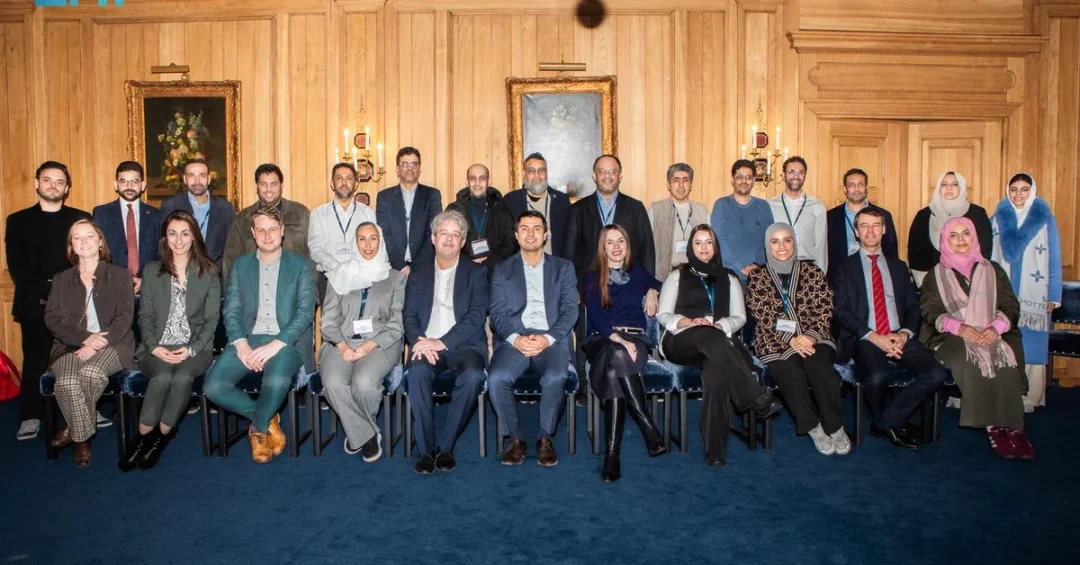
The Digital Regulatory Academy (DRA) launched its first executive training program of 2025, titled “Evolving Digital Regulations: AI’s Impact on the Digital Economy,” bringing together 19 leaders from Saudi Arabia’s communications and information technology sector for an intensive five-day mission across Paris, France, and Brussels, Belgium. The program, announced by the Saudi Press Agency, was designed to deepen understanding of artificial intelligence regulation and to help craft strategies that balance technological innovation with regulatory compliance. Participants included members of the National Regulations Committee and senior officials from telecommunications service providers, reflecting the Kingdom’s commitment to building a world-class regulatory workforce capable of navigating the fast-moving digital economy.
Held against the backdrop of Saudi Arabia’s rapid digital transformation under Vision 2030, the training underscores how seriously the Kingdom treats the governance of emerging technologies. As artificial intelligence reshapes industries from finance to healthcare, the need for regulators who understand both the economic promise and the potential risks of AI has never been greater. The DRA’s decision to convene this program in Europe’s key policy capitals signals a deliberate effort to learn from established regulatory models while sharing Saudi Arabia’s own ambitious reform agenda with international partners.
Context and Background
Why does a five-day training program in Europe matter for Saudi Arabia’s digital future? The answer lies in the scale and speed of the Kingdom’s technology ambitions. Under Vision 2030, Saudi Arabia is investing hundreds of billions of dollars in digital infrastructure, smart cities such as NEOM, cloud computing, and AI-driven public services. These projects depend on clear, predictable rules that protect consumers and businesses alike. The DRA, an initiative of the Ministry of Communications and Information Technology (MCIT), was established precisely to cultivate that regulatory expertise within the national workforce.
The February 2025 program was the first executive training of the year, following a series of DRA initiatives launched since its founding. It was organized in partnership with specialized European Union institutions, giving participants direct exposure to how the EU frames digital laws and policies. The itinerary included visits to EU bodies and practical workshops on AI regulation strategies tailored to the Kingdom’s context. By studying the regulatory bases of both Saudi Arabia and the European Union, the delegation could compare approaches and identify best practices that support innovation without stifling it.
The program also examined regulatory models from the United States and China, two major players whose contrasting philosophies on AI governance offer valuable lessons. This comparative dimension reflects Saudi Arabia’s pragmatic approach: rather than adopting a single foreign template, the Kingdom seeks to synthesize global best practices into a framework suited to its own cultural, economic, and legal environment. The participation of National Regulations Committee members further ensured that insights gained abroad could feed directly into national policy discussions.
Key Details of the Executive Program
What exactly did the 19 participants learn during their five days in Paris and Brussels? According to the Saudi Press Agency, the curriculum focused on regulating the digital economy and artificial intelligence, analyzing major influential trends, and establishing regulatory frameworks for digital laws and policies. Sessions covered the economic aspects of regulation, the risks associated with AI deployment, and the roles and responsibilities of regulatory entities in governing emerging technologies.
Practical workshops formed a central component, allowing participants to apply regulatory strategies to real-world scenarios relevant to the Kingdom. These exercises were designed to enhance the efficiency of the national workforce and develop leaders’ capabilities in digital regulation. The delegation also benefited from visits to specialized EU institutions, gaining a comprehensive understanding of how to develop regulatory policies that support innovation while protecting society. This dual focus on innovation and protection is a recurring theme in Saudi Arabia’s digital strategy.
The program’s title, “Evolving Digital Regulations,” captures the dynamic nature of the challenge. AI technologies evolve faster than traditional regulatory cycles, so regulators must be equipped with adaptive tools and forward-looking mindsets. By engaging directly with European counterparts, Saudi participants could observe how the EU balances its ambitious Digital Markets Act and AI Act with the need to remain competitive globally. Such exposure is intended to help Saudi Arabia avoid regulatory pitfalls and accelerate its own journey toward a robust digital governance ecosystem.
International and Regional Impact
How does this training program position Saudi Arabia on the global stage? By sending a high-level delegation to Europe, the Kingdom demonstrates its willingness to engage constructively with international regulators and to contribute to global conversations on AI governance. The DRA’s partnerships with EU institutions are part of a broader effort to align Saudi regulatory frameworks with international norms, which in turn makes the Kingdom a more attractive destination for foreign investment and technology partnerships.
Regionally, the program reinforces Saudi Arabia’s role as a digital leader in the Middle East and North Africa. As other countries in the region grapple with AI regulation, the Kingdom’s investment in regulatory capacity-building sets a benchmark. The knowledge acquired by participants—many of whom represent telecommunications service providers—will help raise standards across the sector, improving service quality and security for millions of users. This spillover effect strengthens the entire regional digital ecosystem.
The exchange also works in both directions. European regulators gain insights into Saudi Arabia’s rapid digital transformation and its unique approach to balancing Sharia principles, economic diversification, and technological openness. Such mutual learning fosters stronger diplomatic and commercial ties, which are essential as Saudi Arabia expands its global partnerships under Vision 2030. The program thus serves as a soft-power instrument, projecting the Kingdom as a responsible and forward-looking stakeholder in the digital age.
Economic and Strategic Significance
Why should businesses and investors care about regulatory training in a faraway European capital? Because clear, well-designed AI rules are a prerequisite for the digital economy to thrive. Companies looking to deploy AI in Saudi Arabia need certainty about data protection, liability, and ethical standards. By equipping Saudi regulators with world-class expertise, the DRA helps create an environment where innovation can flourish without compromising safety or public trust. That environment is critical to attracting the foreign direct investment that Vision 2030 targets.
Moreover, the program directly supports the growth of local industries. As Saudi Arabia develops smart cities, autonomous systems, and AI-powered healthcare, the demand for skilled regulatory professionals will soar. The DRA’s focus on leadership development ensures that the Kingdom has a pipeline of talent capable of overseeing these complex domains. This is not merely an academic exercise; it is an investment in the institutional infrastructure that underpins the entire digital economy.
Strategically, the training aligns with the National Strategy for Data and AI, which aims to make Saudi Arabia a global leader in AI by 2030. By learning from the EU’s risk-based approach and examining US and Chinese models, Saudi regulators can craft a hybrid framework that maximizes benefits while mitigating harms. Such a framework will be essential for sectors like finance, where the Saudi Central Bank is already exploring AI applications, and for emerging fields like generative AI, where regulatory clarity can determine market leadership.
Vision 2030 Alignment
How does a single training program connect to the sweeping ambitions of Vision 2030? The DRA initiative is a direct expression of the Vision’s human-capability pillar, which seeks to develop a skilled, adaptable workforce ready for the jobs of the future. By enhancing national workforce efficiency and developing leaders’ capabilities in digital regulations, the program contributes to the Kingdom’s goal of building a diversified, knowledge-based economy. It also reinforces the alignment and integration between Saudi regulators and global institutes, a key objective of the DRA.
Ultimately, the program exemplifies Saudi Arabia’s proactive approach to shaping its digital future rather than merely reacting to technological change. Through strategic partnerships and a commitment to best practices, the Kingdom is laying the groundwork for a regulatory environment that will support innovation, protect society, and elevate local entities’ services to new horizons. As AI continues to transform the global economy, Saudi Arabia is ensuring that its regulators are prepared to lead, not follow. This forward-looking posture is precisely what Vision 2030 demands, and it positions the Kingdom as a model for responsible digital governance in the region and beyond.
20 Questions
Q1. What is the Digital Regulatory Academy (DRA)?
A1. The DRA is a Saudi initiative under the Ministry of Communications and Information Technology that trains national leaders in digital regulation to support the Kingdom’s digital economy and Vision 2030 goals.
Q2. What was the title of the DRA’s first executive training program of 2025?
A2. The program was titled “Evolving Digital Regulations: AI’s Impact on the Digital Economy: Artificial Intelligence and Its Impact on the Economy.” It focused on AI regulation and digital economy strategies.
Q3. Where was the training program held?
A3. It was held in Paris, France, and Brussels, Belgium, over five days, including visits to specialized European Union institutions to study regulatory frameworks.
Q4. How many participants attended the program?
A4. Nineteen leaders from MCIT+ participated, including members of the National Regulations Committee and officials from telecommunications service providers.
Q5. What were the main topics covered in the program?
A5. Topics included regulating the digital economy and AI, analyzing influential trends, establishing regulatory frameworks, economic aspects of regulation, AI risks, and examining models from the US and China.
Q6. Why did the DRA choose Paris and Brussels for this program?
A6. These cities host key European Union institutions, allowing participants to learn directly from EU regulators and observe best practices in AI supervision and digital policy development.
Q7. What is the role of the National Regulations Committee in this context?
A7. The committee members participated to gain insights that can inform national policy, ensuring alignment between Saudi regulations and global best practices in digital governance.
Q8. How does the program benefit telecommunications service providers?
A8. Officials from telecom providers learn how to implement regulatory strategies that support innovation, improve service quality, and protect consumers in an evolving digital landscape.
Q9. What are the economic aspects of AI regulation discussed?
A9. The program covered how regulation affects market competition, investment, and innovation, helping participants understand the economic trade-offs of different regulatory approaches.
Q10. What risks associated with AI were examined?
A10. Risks included data privacy breaches, algorithmic bias, security vulnerabilities, and economic disruption, with a focus on developing safeguards that protect society without hindering progress.
Q11. How does the DRA aim to enhance national workforce efficiency?
A11. By providing advanced training and international exposure, the DRA develops leaders’ capabilities in digital regulation, creating a skilled workforce ready to manage emerging technologies.
Q12. What are the regulatory bases in Saudi Arabia and the EU that were compared?
A12. Participants studied Saudi Arabia’s evolving digital laws alongside the EU’s AI Act and Digital Markets Act, comparing approaches to innovation, compliance, and consumer protection.
Q13. What practical workshops were included in the program?
A13. Workshops focused on AI regulation strategies in the Kingdom, allowing participants to apply theoretical knowledge to real-world scenarios relevant to Saudi Arabia’s digital economy.
Q14. How does this program support Vision 2030?
A14. It aligns with Vision 2030’s human capability development goals by building regulatory expertise, fostering global partnerships, and supporting a diversified, knowledge-based economy.
Q15. What is the significance of strategic partnerships with global institutes?
A15. Such partnerships enable Saudi Arabia to benefit from best practices and expertise, ensuring its regulatory framework remains competitive and aligned with international standards.
Q16. How will the insights gained be applied in Saudi Arabia?
A16. Participants will use the knowledge to refine national regulations, enhance oversight of AI, and elevate the services of local entities, contributing to a robust digital ecosystem.
Q17. What models from the United States and China were examined?
A17. The program reviewed the US’s market-driven approach and China’s state-led model, offering contrasting perspectives on balancing innovation with regulatory control.
Q18. What does the DRA hope to achieve through these initiatives?
A18. The DRA aims to enhance national workforce efficiency, develop leaders’ capabilities, and achieve alignment between regulators and global institutes through strategic partnerships.
Q19. How does this program impact Saudi Arabia’s global standing?
A19. It positions the Kingdom as a proactive player in digital governance, strengthening international ties and showcasing its commitment to responsible AI regulation and economic modernization.
Q20. What is the next step for the DRA after this program?
A20. The DRA will continue its executive training series throughout 2025, building on insights to further develop Saudi Arabia’s regulatory talent and support the Kingdom’s digital transformation.
Reader Feedback
We value your thoughts. Please share your feedback on this article.
Your feedback helps us improve our coverage.
Related articles
 Saudi Arabia Sets Sustainable Water Security Framework
 Grand Mufti Extends Ramadan Greetings to Saudi Leadership and Muslims Worldwide
 SFD Delivers 330 Housing Units in Tunisia
 KSrelief, WHO Expand Cholera Response in Yemen with $2M
 Madinah Bus Launches Ramadan Shuttle to Prophet’s Mosque, Quba
 Grand Mosque’s Advanced Cooling System Ensures Visitor Comfort