


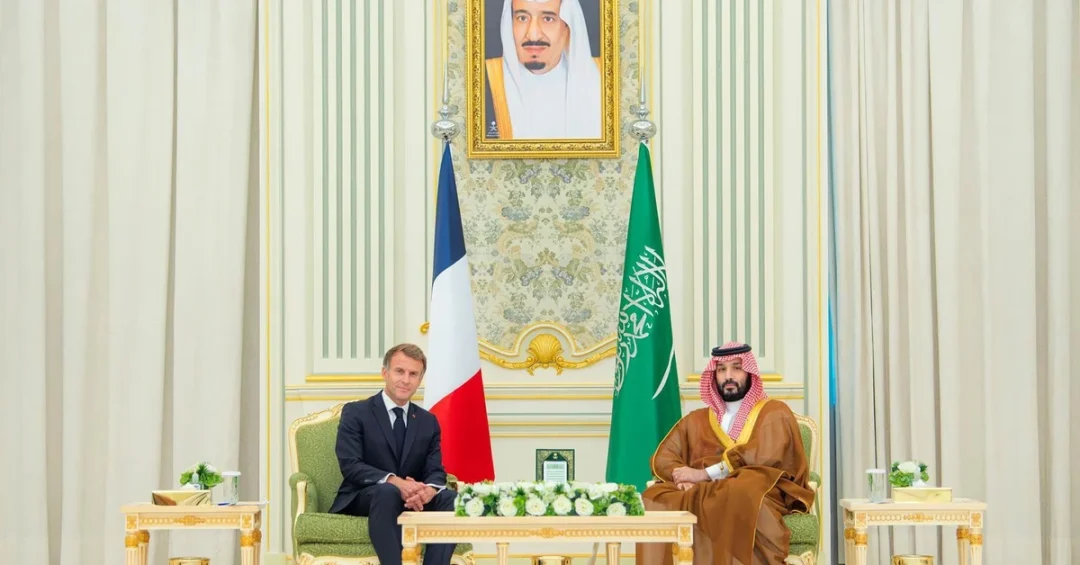
His Royal Highness Prince Mohammed bin Salman bin Abdulaziz Al Saud, Crown Prince and Prime Minister, received President Emmanuel Macron of the French Republic at Al-Yamamah Palace in Riyadh on Wednesday, where the two leaders reviewed the historical and strategic relations between the Kingdom of Saudi Arabia and France and explored ways to deepen cooperation across multiple sectors. The meeting, announced by the Saudi Press Agency, underscored the enduring partnership between Riyadh and Paris and reflected the Kingdom’s expanding role as a convening power for international diplomacy. How does a single meeting in Riyadh shape the future of relations between two nations on opposite shores of the Mediterranean?
The encounter at Al-Yamamah Palace brought together a high-level delegation from both countries, signaling the breadth and seriousness of the agenda. For Saudi Arabia, the talks represented another milestone in its active diplomatic calendar under the leadership of the Crown Prince, whose engagement with global powers continues to advance the Kingdom’s strategic interests. For France, the visit highlighted Paris’s recognition of Saudi Arabia’s growing influence in regional security, energy markets, and economic transformation. The discussions covered not only bilateral ties but also the wider geopolitical landscape, including efforts to strengthen security and stability in the region and beyond.
Context and Background
Why has the Saudi-French relationship become one of the most consequential partnerships in the Middle East? The answer lies in decades of sustained engagement that have evolved far beyond traditional diplomatic exchanges. France has long been a key partner for the Kingdom in areas ranging from defense procurement to cultural exchange, and in recent years that relationship has broadened to encompass renewable energy, technology, tourism, and entertainment. The meeting at Al-Yamamah Palace built on this foundation, with both sides reaffirming their commitment to a partnership that serves mutual interests and contributes to regional stability.
The timing of the visit is significant. As the global energy landscape shifts and new security challenges emerge, Saudi Arabia and France have found common ground in their pursuit of diversified, resilient economies and their shared interest in combating extremism and promoting moderate values. The Crown Prince’s vision for a modernized Kingdom, anchored in Vision 2030, has created new avenues for French companies and investors, while France’s expertise in aerospace, luxury goods, and renewable technologies aligns with Saudi Arabia’s development priorities. This convergence of interests has made the relationship increasingly multidimensional.
Moreover, the meeting took place against a backdrop of intensifying regional diplomacy. Saudi Arabia has positioned itself as a bridge-builder, hosting dialogues and summits that bring together diverse stakeholders. France, as a permanent member of the United Nations Security Council and a leading European power, shares an interest in supporting these efforts. The presence of senior officials from both governments at the Riyadh meeting demonstrated the seriousness with which both capitals approach the partnership and their desire to coordinate closely on matters of shared concern.
Key Details of the Riyadh Meeting
What exactly was discussed behind the doors of Al-Yamamah Palace? According to the official statement carried by the Saudi Press Agency, the Crown Prince and President Macron reviewed the historical and strategic relations between their countries and examined existing areas of cooperation, with a focus on ways to strengthen them across various sectors in their mutual interests. The conversation also covered regional and international developments, with both leaders exchanging views on how to coordinate efforts to enhance security and stability. The breadth of the agenda reflected the depth of the bilateral relationship and the shared recognition that many of today’s challenges require collective action.
The Saudi side was represented by a distinguished group of ministers and senior officials, including Prince Abdulaziz bin Salman bin Abdulaziz, Minister of Energy and Minister of Industry and Mineral Resources; Prince Mohammed bin Abdulrahman bin Abdulaziz, Deputy Governor of Riyadh Region; Prince Faisal bin Farhan bin Abdullah, Minister of Foreign Affairs; Dr. Musaed Al-Aiban, Minister of State, Member of the Cabinet, and National Security Advisor; Dr. Majid Al-Kassabi, Minister of Commerce; Khalid Al-Humaidan, Chief of General Intelligence; and Dr. Khalid Al-Biyari, Assistant Minister of Defense for Executive Affairs. Their presence underscored the comprehensive nature of the discussions, spanning energy, trade, security, and defense.
The French delegation was equally high-ranking, featuring Jean-Noël Barrot, Minister for Europe and Foreign Affairs; Catherine Vautrin, Minister of the Armed Forces and Veterans; Alice Rufo, Minister Delegate for the Armed Forces; Nicolas Forissier, Minister Delegate for Foreign Trade and Attractiveness; Emmanuel Bonne, Diplomatic Advisor to the President; General Vincent Giraud, Chief of the President’s Military Staff; and Patrick Maisonnave, Ambassador of France to Saudi Arabia. The composition of the French delegation signaled Paris’s intent to deepen engagement across defense, trade, and diplomatic channels, mirroring the multifaceted nature of the relationship.
International and Regional Impact
How will this meeting resonate beyond the walls of Al-Yamamah Palace? The Saudi-French dialogue carries implications that extend well beyond bilateral ties. In a region marked by complex challenges, the coordination between Riyadh and Paris on security and stability sends a reassuring message to international markets and allies alike. Both countries have a vested interest in preserving freedom of navigation, combating terrorism, and supporting peaceful resolutions to conflicts. By aligning their positions, they amplify their collective influence and contribute to a more predictable regional environment.
For Europe, Saudi Arabia’s role as a reliable energy supplier and a growing investment partner is increasingly vital. France, as a leading voice in the European Union, can serve as a bridge between the Kingdom and European institutions, facilitating dialogue on trade, climate, and energy transition. The meeting in Riyadh thus represents not only a bilateral exchange but also a step toward deeper interregional cooperation. In a world of shifting alliances and emerging multipolarity, such partnerships are essential for maintaining stability and fostering prosperity.
Economic and Strategic Significance
What economic opportunities flow from closer Saudi-French ties? The relationship between Riyadh and Paris has long been underpinned by robust trade and investment flows, and the discussions at Al-Yamamah Palace are expected to catalyze further collaboration. French companies are active in Saudi Arabia across sectors including energy, infrastructure, healthcare, and retail, while Saudi investment in France spans real estate, technology, and financial services. The presence of the Minister of Commerce and the Minister Delegate for Foreign Trade and Attractiveness at the meeting highlighted the commercial dimension of the partnership and the shared desire to remove barriers and unlock new opportunities.
Strategically, the meeting reinforced the alignment of Saudi and French interests in an era of rapid change. The Kingdom’s Vision 2030 agenda, with its emphasis on economic diversification, sustainability, and quality of life, offers a natural framework for French expertise in renewable energy, smart cities, and cultural industries. Conversely, Saudi Arabia’s strategic location, energy resources, and growing capital markets make it an attractive partner for France as it seeks to strengthen its ties with the Gulf and the broader Middle East. The dialogue at Al-Yamamah Palace thus served as a platform for translating shared ambitions into concrete cooperation.
Vision 2030 Alignment
How does this meeting advance Saudi Arabia’s long-term vision? The Crown Prince’s Vision 2030 is fundamentally about transformation—diversifying the economy, empowering citizens, and positioning the Kingdom as a global leader. International partnerships are central to this endeavor, and France has proven to be a willing and valuable partner. From joint ventures in renewable energy to cultural exchanges that enrich both societies, the Saudi-French relationship exemplifies the kind of mutually beneficial collaboration that Vision 2030 seeks to foster. The Riyadh meeting added momentum to these efforts, setting the stage for new initiatives that will benefit both nations.
As Saudi Arabia continues its journey toward a diversified, knowledge-based economy, engagements like the one at Al-Yamamah Palace will remain essential. They demonstrate the Kingdom’s openness to the world, its commitment to stability, and its determination to shape a prosperous future for its people and the region. The Crown Prince’s leadership in hosting President Macron reflects a broader strategy of active diplomacy and strategic partnership-building that is already yielding tangible results. In the years ahead, the Saudi-French alliance is poised to grow even stronger, contributing to a more secure and prosperous world.
20 Questions
Q1. Who received French President Emmanuel Macron in Riyadh?
A1. His Royal Highness Prince Mohammed bin Salman bin Abdulaziz Al Saud, Crown Prince and Prime Minister, received President Macron at Al-Yamamah Palace in Riyadh on Wednesday.
Q2. Where did the meeting take place?
A2. The meeting took place at Al-Yamamah Palace in Riyadh, the official residence and office of the Crown Prince.
Q3. What was the main purpose of the meeting?
A3. The two leaders reviewed historical and strategic relations, explored ways to strengthen cooperation across various sectors, and exchanged views on regional and international developments.
Q4. Which Saudi officials attended the meeting?
A4. Saudi attendees included Prince Abdulaziz bin Salman, Prince Mohammed bin Abdulrahman, Prince Faisal bin Farhan, Dr. Musaed Al-Aiban, Dr. Majid Al-Kassabi, Khalid Al-Humaidan, and Dr. Khalid Al-Biyari.
Q5. Which French officials accompanied President Macron?
A5. The French delegation included Jean-Noël Barrot, Catherine Vautrin, Alice Rufo, Nicolas Forissier, Emmanuel Bonne, General Vincent Giraud, and Ambassador Patrick Maisonnave.
Q6. What does the meeting say about Saudi-French relations?
A6. It reflects the depth and strength of the historical and strategic partnership between the two countries, and their shared commitment to deepening cooperation.
Q7. How does this meeting relate to Saudi Arabia’s Vision 2030?
A7. The meeting supports Vision 2030 by advancing international partnerships that drive economic diversification, investment, and knowledge exchange.
Q8. What regional issues were discussed?
A8. The leaders exchanged views on regional and international developments and discussed coordinating efforts to strengthen security and stability.
Q9. Why is France an important partner for Saudi Arabia?
A9. France is a key partner in defense, energy, trade, and culture, and shares Saudi Arabia’s interest in regional stability and economic modernization.
Q10. What economic sectors were highlighted?
A10. Energy, industry, commerce, defense, and investment were among the sectors discussed, reflecting the broad economic ties between the two nations.
Q11. How does this meeting affect regional security?
A11. By coordinating efforts, Saudi Arabia and France aim to enhance security and stability, contributing to a more peaceful and predictable region.
Q12. What is the significance of the high-level delegations?
A12. The presence of senior ministers and officials from both sides underscores the seriousness and breadth of the partnership, spanning multiple strategic areas.
Q13. Will this meeting lead to new agreements?
A13. While no specific agreements were announced, the discussions set the stage for enhanced cooperation and potential future initiatives across various sectors.
Q14. How does Saudi Arabia benefit from French expertise?
A14. French expertise in renewable energy, technology, aerospace, and cultural industries aligns with Saudi Arabia’s development goals under Vision 2030.
Q15. What role does Saudi Arabia play in regional diplomacy?
A15. Saudi Arabia is a bridge-builder, hosting dialogues and summits that bring together diverse stakeholders to address regional challenges and promote stability.
Q16. How does France view Saudi Arabia’s Vision 2030?
A16. France recognizes Vision 2030 as a transformative agenda that creates opportunities for partnership in investment, trade, and sustainable development.
Q17. What message does this meeting send to the international community?
A17. It signals the strength of Saudi-French ties and their shared commitment to stability, prosperity, and multilateral cooperation.
Q18. How often do Saudi and French leaders meet?
A18. Saudi and French leaders maintain regular high-level exchanges, reflecting the enduring and strategic nature of their relationship.
Q19. What are the next steps for Saudi-French cooperation?
A19. Both sides are expected to follow up on the discussions with concrete initiatives in energy, trade, defense, and cultural exchange.
Q20. How does this meeting reflect Saudi Arabia’s global role?
A20. It demonstrates the Kingdom’s active diplomacy, its ability to convene world leaders, and its commitment to shaping a stable and prosperous international order.
Reader Feedback
We value your thoughts. Please share your feedback on this article.
Your feedback helps us improve our coverage.