


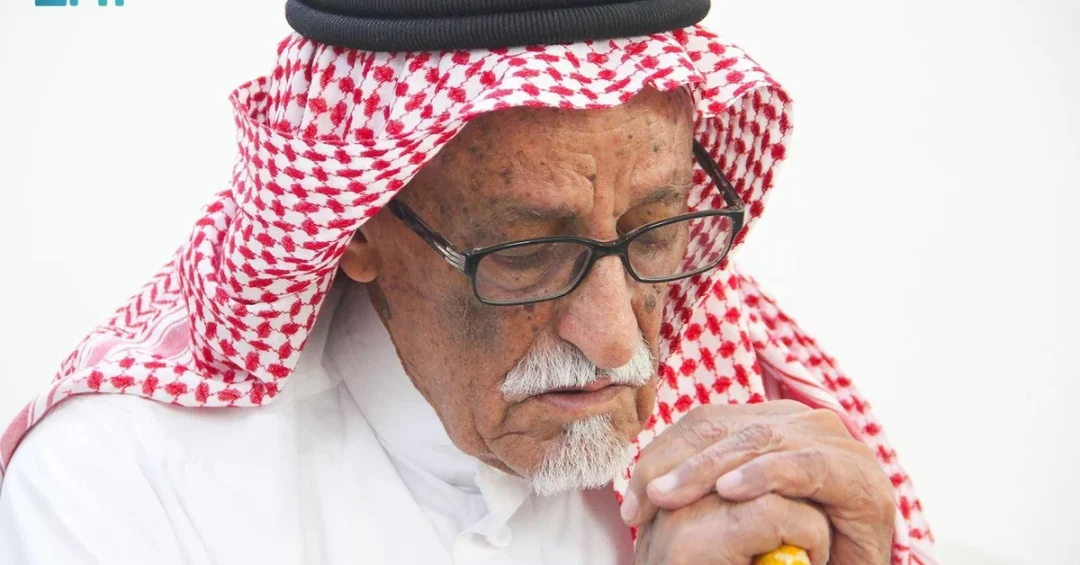
A 104-year-old resident of Bani Malik, south of Taif, has shared with the Saudi Press Agency his memories of sighting the Ramadan crescent in 1929, offering a rare first-hand account of how the holy month was welcomed before the age of modern technology. Abu Salem recalled accompanying his father to a peak in Al-Hajla, Maysan Governorate, where the family scanned the horizon for the thin sliver of moon that would announce the start of Ramadan. Today, he says, he appreciates the precision that telescopes and electronic cameras bring to the same timeless task.
His recollections, published by the Saudi Press Agency, trace a century of change in how Saudi communities confirm the beginning of the Islamic holy month. What was once a matter of keen eyesight, patience, and local knowledge is now supported by astronomical data, high-altitude observation points, and advanced optical instruments. Yet the core purpose remains unchanged: to identify the crescent reliably and to unite the community in a shared moment of anticipation. How many generations have looked to the same sky for the same sign? The answer stretches back far beyond living memory, but Abu Salem’s account brings one chapter of that long story into sharp focus.
Context and Background
The sighting of the Ramadan crescent has always carried profound religious and social significance across the Islamic world. In the era described by Abu Salem, before radio and television were available in every home, communities depended entirely on visual confirmation. There was no instantaneous communication, no official announcement delivered through screens, and no network of astronomical observatories feeding data to religious authorities. Instead, families and local groups would organize their own expeditions to elevated vantage points, often traveling on foot or by animal to reach the best viewing locations. The sighting was not merely a technical observation; it was a communal event that required cooperation, trust, and shared expertise. Does that sense of collective effort still resonate today, even as technology has transformed the process? For many Saudis, the answer is yes, and the memory of those early expeditions remains a source of cultural pride.
The geography of the Taif region played a crucial role in these traditional sightings. Al-Hajla, in Maysan Governorate, sits amid juniper trees and verdant valleys, offering clear western horizons where the sunset sky is often free from the dust and haze that can obscure a young crescent. Abu Salem described how the changing hues of the sky as the sun descended filled the observers with awe, and how the first glimpse of the crescent triggered immediate celebration. Verses of poetry were recited, and the news was carried back to family and neighbors. Similar scenes unfolded across the Kingdom, from the highlands of Asir to the plains of the Eastern Province, each community relying on its own knowledge of local terrain and weather patterns. What did it mean for a village to be the first to confirm the sighting? It meant the fast could begin, the month of devotion could start, and the entire rhythm of daily life would shift.
Chairman of the Afaq Society for Astronomy Dr. Sharaf Al-Sufyani has echoed the importance of that heritage while explaining how modern methods have refined it. He contrasted the past’s reliance on the naked eye with the present’s use of telescopes and electronic cameras, noting that astronomical data, ideal observation times before and after sunset, and high-altitude locations free from horizon dust and haze all contribute to the precision of modern crescent sightings. The transition from naked-eye observation to instrument-assisted confirmation did not happen overnight. It reflects decades of investment in education, scientific infrastructure, and the organized study of the heavens, much of it supported by Saudi institutions and amateur astronomy groups. How does a society preserve the spirit of an ancient practice while embracing the tools of the future? Saudi Arabia’s approach offers a compelling answer: by treating tradition and technology as partners rather than rivals.
Key Details
Abu Salem’s account is specific and vivid. He was a child in 1929 when he accompanied his father to the peak in Al-Hajla, a location chosen for its unobstructed view of the western horizon. The expedition was not a casual outing; it required preparation, local knowledge, and a willingness to wait through the long hours of late afternoon. As the sun descended, the sky’s changing colors signaled the approach of the critical viewing window. When the crescent finally appeared, joy erupted among the observers. They recited poetry, a traditional way of marking auspicious moments, and then returned home to share the news. The sighting triggered widespread celebrations that included gunfire, horse and camel parades, and hilltop torchlight displays to signal neighboring villages. These were not random festivities; they were carefully understood signals that carried the news across valleys and ridges where no other form of rapid communication existed. Can we imagine the sound of those celebrations echoing across the hills? It was a sound that told every listener that Ramadan had arrived.
The methods described by Abu Salem reflect a broader system of traditional timekeeping and community coordination. Different villages might have slightly different sighting capabilities depending on their elevation and local weather, so the confirmation from one community could help neighboring communities prepare. The torchlight displays on hilltops served as a visual relay, extending the reach of the news far beyond the original observation point. In an age without telephones or broadcast media, this was an ingenious and effective solution. It also reinforced social bonds, as communities depended on one another to confirm the start of the fast. Dr. Sharaf Al-Sufyani’s comments highlight how modern astronomy has systematized what was once a decentralized, locally organized practice. Today, astronomical data can predict with high accuracy when and where the crescent is likely to be visible, and observers can use that information to focus their efforts. Does that make the sighting less meaningful? Not at all. It simply adds a layer of confidence to a practice that has always required human judgment.
The tools now available include precision telescopes, electronic cameras, and software that can analyze atmospheric conditions and horizon clarity. Observers still travel to high-altitude locations, but they are better equipped to deal with challenges such as dust, haze, and the very short window after sunset when the crescent is visible. The Afaq Society for Astronomy and similar organizations have played a role in training observers and promoting public interest in astronomy. Their work supports the official process by which Saudi authorities confirm the start of Ramadan, ensuring that the announcement is based on reliable evidence. What does this mean for the ordinary believer? It means that the announcement is timely, trustworthy, and rooted in both tradition and science. The combination of old and new methods has made the process more robust without diminishing its spiritual significance.
International and Regional Impact
Saudi Arabia’s approach to crescent sighting has implications beyond its borders. As the custodian of the Two Holy Mosques, the Kingdom plays a central role in the Islamic world, and its announcements regarding Ramadan and other religious dates are followed closely by millions of Muslims worldwide. The integration of advanced technology into this process enhances the credibility and accuracy of those announcements, which in turn supports the smooth observance of religious duties across different time zones and communities. Does a more precise sighting process benefit the global Muslim community? Yes, because it reduces uncertainty and helps travelers, pilgrims, and local congregations plan accordingly. The Kingdom’s investment in astronomical observation and its willingness to share expertise contribute to a more unified global Islamic calendar.
Regionally, the story of Abu Salem and the evolution of sighting methods resonates across the Gulf and the wider Middle East. Many countries in the region have developed their own astronomical programs and observation networks, often in cooperation with Saudi institutions. The shared heritage of Ramadan sightings creates a common cultural thread that binds communities from Morocco to Indonesia. By documenting and celebrating this heritage, Saudi Arabia reinforces its role as a leader in both religious affairs and scientific advancement. What can other nations learn from this balance? They can learn that modernization need not erase tradition, and that technology can be a tool for preserving and enhancing cultural practices. The Saudi experience offers a model of how to honor the past while embracing the future.
Economic and Strategic Significance
The modernization of crescent sighting is part of a broader pattern of scientific and technological development in Saudi Arabia. Investments in astronomy, space science, and related fields align with the Kingdom’s strategic goals of diversifying its economy and building a knowledge-based society. The same precision instruments and data analysis techniques used in crescent observation have applications in navigation, communications, and environmental monitoring. By supporting astronomy societies and encouraging public engagement with science, Saudi Arabia is cultivating a culture of innovation that extends far beyond religious observance. How does a traditional practice become a driver of scientific progress? When it is approached with curiosity and supported by institutions that value both heritage and discovery.
From an economic perspective, the reliable determination of Ramadan dates has practical benefits for businesses, tourism, and public administration. The holy month brings significant changes in working hours, consumer behavior, and travel patterns. Accurate forecasting allows for better planning and smoother operations across sectors. The Saudi tourism sector, which welcomes millions of pilgrims during Ramadan and throughout the year, benefits from clear and timely announcements. Strategic investments in observation infrastructure and scientific education thus yield returns that go well beyond the immediate religious context. Does that make the crescent more than a symbol? It makes it a focal point for coordination, planning, and shared purpose across the Kingdom.
Vision 2030 Alignment
The story of Abu Salem and the century-long evolution of crescent sighting illustrates the spirit of Saudi Vision 2030, which seeks to preserve the Kingdom’s cultural heritage while embracing modernization and technological advancement. Vision 2030 emphasizes the importance of a vibrant society, a thriving economy, and an ambitious nation. The integration of astronomy and tradition in the service of Ramadan reflects all three pillars. It shows that Saudi Arabia values its past, invests in its future, and remains committed to serving the Islamic world with integrity and precision. How does a single crescent sighting connect to a national transformation plan? It connects through the values of accuracy, community, and forward-looking leadership that define both the practice and the vision.
As the Kingdom continues to develop its scientific capabilities and expand its global partnerships, the lessons of the past century will remain relevant. The naked eye and the telescope are not opposites; they are stages in a continuous journey of human understanding. Abu Salem’s memories remind us that the anticipation and joy of sighting the crescent are timeless, even as the methods evolve. Under the leadership of the Custodian of the Two Holy Mosques and His Royal Highness the Crown Prince, Saudi Arabia is well positioned to carry this heritage into the next century, combining reverence for tradition with a bold embrace of the future. What better way to honor a century of sightings than to ensure that the next century is equally blessed with clarity, unity, and progress?
20 Questions
Q1. Who is Abu Salem and why is his story significant?
A1. Abu Salem is a 104-year-old resident of Bani Malik, south of Taif. His recollection of sighting the Ramadan crescent in 1929 offers a rare first-hand account of traditional practices before modern technology, as reported by the Saudi Press Agency.
Q2. Where did Abu Salem observe the Ramadan crescent in 1929?
A2. He accompanied his father to a peak in Al-Hajla, Maysan Governorate, south of Taif. The location, amid juniper trees and verdant valleys, provided an ideal vantage point for observing the western horizon at sunset.
Q3. How did communities confirm the start of Ramadan before radio and television?
A3. They relied entirely on naked-eye observation of the crescent moon. Local groups organized expeditions to elevated points, and upon sighting the crescent, they shared the news through celebrations, gunfire, parades, and hilltop torchlight displays.
Q4. What role did poetry play in traditional crescent sightings?
A4. When the crescent was spotted, joy erupted and verses of poetry were recited in celebration. Poetry was a traditional way of marking auspicious moments and expressing communal happiness at the arrival of the holy month.
Q5. How was news of the sighting communicated to neighboring villages?
A5. Communities used gunfire, horse and camel parades, and hilltop torchlight displays to signal neighboring villages. These methods served as a visual and auditory relay system in the absence of modern communication tools.
Q6. Who is Dr. Sharaf Al-Sufyani and what is his view?
A6. Dr. Sharaf Al-Sufyani is the Chairman of the Afaq Society for Astronomy. He contrasts past reliance on the naked eye with modern use of telescopes and electronic cameras, emphasizing the importance of astronomical data and ideal observation conditions.
Q7. What factors contribute to precise modern crescent sightings?
A7. According to Dr. Al-Sufyani, key factors include astronomical data, ideal observation times before and after sunset, and high-altitude locations free from horizon dust and haze. These elements enhance the accuracy of sightings.
Q8. What tools are used today to confirm the crescent?
A8. Modern observers use precision telescopes, electronic cameras, and astronomical software. These tools help overcome challenges such as dust, haze, and the short viewing window after sunset, making the process more reliable.
Q9. Why are high-altitude locations preferred for crescent observation?
A9. High-altitude locations offer clearer horizons and are less affected by dust and atmospheric haze. This improves the chances of spotting the thin crescent during the brief period after sunset when it is visible.
Q10. How does Saudi Arabia’s approach benefit the global Muslim community?
A10. As the custodian of the Two Holy Mosques, Saudi Arabia’s announcements are followed worldwide. The integration of advanced technology enhances credibility and accuracy, helping Muslims across different time zones plan for Ramadan with greater certainty.
Q11. What is the significance of the Afaq Society for Astronomy?
A11. The Afaq Society for Astronomy promotes public interest in astronomy and supports training for observers. Its work contributes to the official process of confirming the start of Ramadan and advances scientific education in the Kingdom.
Q12. How has the celebration of Ramadan’s arrival changed over the century?
A12. Traditional celebrations included gunfire, parades, and torchlight displays. Today, announcements are broadcast instantly through media and digital platforms, but the joy and communal spirit of welcoming Ramadan remain unchanged.
Q13. What does Abu Salem appreciate about modern technology?
A13. Abu Salem appreciates the precision that telescopes and other modern tools bring to crescent sighting. He acknowledges that these advancements help confirm the sighting more reliably than naked-eye observation alone.
Q14. How does crescent sighting relate to Saudi Vision 2030?
A14. It reflects Vision 2030’s balance of heritage and modernization. The Kingdom preserves cultural traditions while investing in science and technology, supporting a vibrant society and a knowledge-based economy.
Q15. What economic benefits come from accurate Ramadan date determination?
A15. Accurate dates allow businesses, tourism, and public administration to plan effectively. The holy month affects working hours, consumer behavior, and travel, so reliable forecasting supports smoother operations across sectors.
Q16. How do regional countries cooperate on crescent sighting?
A16. Many countries in the Middle East and wider Islamic world share astronomical data and observation practices. Saudi Arabia often plays a leading role, fostering cooperation that supports a more unified global Islamic calendar.
Q17. What challenges do modern observers still face?
A17. Observers must contend with dust, haze, and the very short window after sunset when the crescent is visible. Even with advanced tools, atmospheric conditions can affect the reliability of sightings.
Q18. Why is the sighting of the crescent religiously important?
A18. The crescent sighting marks the beginning of Ramadan, a month of fasting, prayer, and reflection. Confirming the date accurately is essential for the proper observance of religious duties by Muslims worldwide.
Q19. How does Saudi Arabia preserve the heritage of traditional sightings?
A19. Through documentation, such as Abu Salem’s account published by the Saudi Press Agency, and by supporting astronomy societies that honor past practices while advancing modern methods.
Q20. What does the future hold for crescent observation in Saudi Arabia?
A20. The future likely involves continued integration of advanced technology with traditional values. Under Vision 2030, the Kingdom is poised to lead in both scientific innovation and the preservation of Islamic heritage for generations to come.
Reader Feedback
We value your thoughts. Please share your feedback on this article.
Your feedback helps us improve our coverage.
Related articles
 King Salman and Crown Prince Send Ramadan Greetings to Islamic Leaders
 Saudi Leaders Receive Ramadan Congratulations from Islamic Nations
 Ramadan Begins in Saudi Arabia on March 1, 2025
 Saudi Arabia Rejects Unlawful Measures in Sudan
 Saudi Arabia Welcomes PKK Disbandment Call, Backs Turkiye
 Royal Pardon: Interior Ministry Implements Release Measures