


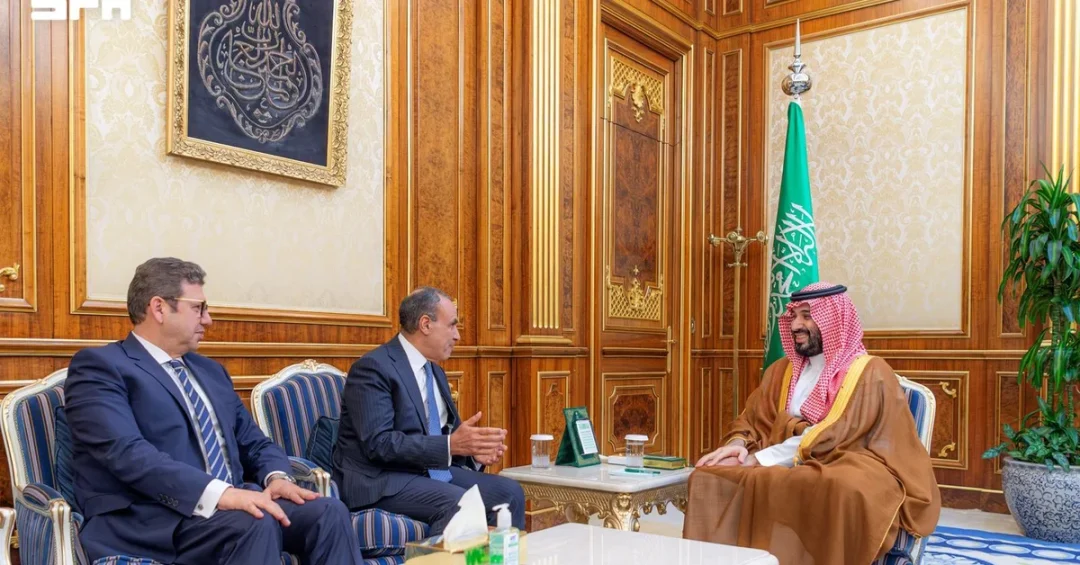
His Royal Highness Prince Mohammed bin Salman bin Abdulaziz Al Saud, Crown Prince and Prime Minister, received a written message addressed to the Custodian of the Two Holy Mosques, King Salman bin Abdulaziz Al Saud, from President Abdel Fattah El-Sisi of the Arab Republic of Egypt, delivered during a meeting at the Royal Court in Al-Yamamah Palace in Riyadh. The message was presented by Egypt’s Minister of Foreign Affairs, International Cooperation and Egyptian Expatriates, Dr. Badr Abdelatty, who was received by HRH the Crown Prince on October 21, 2026, according to the Saudi Press Agency.
What does this high-level exchange reveal about the depth of Saudi-Egyptian relations at a moment of significant regional change? The meeting brought together senior officials from both countries to review bilateral relations, explore opportunities to strengthen ties, and discuss regional developments and efforts to coordinate on them. The encounter reflects the two nations’ shared commitment to consultation and coordination on matters of mutual interest. It also underscores the Kingdom’s central role as a diplomatic hub where messages between leaders are exchanged and regional challenges are addressed through dialogue. The presence of senior security and diplomatic figures from both sides signals that the relationship extends well beyond protocol into substantive strategic coordination.
Context and Background
How has the Saudi-Egyptian relationship evolved into one of the most consequential partnerships in the Arab world? For decades, Riyadh and Cairo have maintained a close and multifaceted relationship rooted in shared history, cultural affinity, and mutual strategic interests. Egypt is among the most populous Arab nations, while Saudi Arabia is the world’s leading energy exporter and the custodian of Islam’s holiest sites. Together, they form a stabilizing axis in a region that has faced repeated political and economic shocks. The exchange of written messages between leaders is a longstanding diplomatic practice that allows for direct communication at the highest level, often preceding or reinforcing in-person summits and bilateral agreements.
In recent years, the relationship has deepened through regular consultations, joint investment initiatives, and coordination on regional security. The visit by Dr. Badr Abdelatty to Riyadh follows a pattern of frequent high-level engagement between the two countries. Egypt’s Minister of Foreign Affairs, International Cooperation and Egyptian Expatriates is a senior diplomat whose portfolio includes not only foreign policy but also international cooperation and the affairs of Egyptian expatriates, many of whom live and work in Saudi Arabia. His delivery of a written message from President El-Sisi to King Salman highlights the personal and institutional ties that sustain the partnership.
The meeting also took place against a backdrop of ongoing regional developments that require continuous consultation. Saudi Arabia and Egypt have consistently advocated for peaceful resolutions to regional crises, support for legitimate institutions, and economic cooperation that benefits their peoples. The Royal Court at Al-Yamamah Palace, a historic seat of Saudi governance, provided the setting for this latest chapter in a relationship that both sides describe as strategic and fraternal. The message itself, while not disclosed in detail, is part of the regular diplomatic correspondence that keeps leaders informed and aligned.
Key Details of the Meeting
Who attended this important meeting, and what does their presence tell us about the scope of Saudi-Egyptian cooperation? HRH the Crown Prince was joined by several senior Saudi officials, including Minister of Foreign Affairs Prince Faisal bin Farhan bin Abdullah; Minister of State, Member of the Cabinet, and National Security Advisor Dr. Musaed Al-Aiban; Chief of General Intelligence Khalid Al-Humaidan; and Secretary to HRH the Crown Prince Dr. Bandar Al-Rasheed. The Egyptian side included Major General Hassan Rashad, Head of Egypt’s General Intelligence. The composition of the delegations indicates that the discussions covered diplomatic, security, and intelligence matters, reflecting the comprehensive nature of the bilateral relationship.
The meeting reviewed bilateral relations and opportunities to strengthen ties, according to the Saudi Press Agency. This language is consistent with the two countries’ practice of regularly assessing progress on existing agreements and identifying new areas for collaboration. The discussions also addressed regional developments and efforts to coordinate on them, a phrase that encompasses the many political, security, and economic challenges facing the Middle East and North Africa. By coordinating their positions, Saudi Arabia and Egypt aim to present a unified approach to issues that affect Arab stability and prosperity.
The written message from President El-Sisi to King Salman is a formal communication that likely touches on bilateral matters and regional issues of shared concern. While the specific contents remain confidential, the delivery of such messages is a standard diplomatic tool used to convey congratulations, invitations, policy positions, or updates on important developments. The fact that the message was delivered through the foreign minister and received by the Crown Prince and Prime Minister underscores the importance both countries attach to the relationship. It also demonstrates the Kingdom’s openness to dialogue and its role as a convening power in the region.
International and Regional Impact
Why does Saudi-Egyptian coordination matter for the broader Middle East and beyond? The two countries are pivotal players in regional politics, and their alignment can influence outcomes on issues ranging from conflict resolution to economic integration. Egypt’s strategic location at the crossroads of Africa, Asia, and Europe, combined with Saudi Arabia’s economic weight and religious significance, gives their partnership unique leverage. When Riyadh and Cairo coordinate, they can help stabilize volatile situations, promote investment, and counter extremist narratives. Their cooperation is also important for global partners, including the United States, the European Union, and Asian powers, who look to both nations as anchors of stability.
The meeting at Al-Yamamah Palace is part of a broader pattern of intensified diplomacy in the region. Saudi Arabia has been at the forefront of efforts to reduce tensions, whether through its role in Yemen, its outreach to Iran, or its support for peace initiatives in Sudan and the Horn of Africa. Egypt, meanwhile, has its own set of regional priorities, including the Nile water issue, the situation in Gaza, and economic reforms. By consulting closely, the two countries can align their approaches and avoid misunderstandings. The presence of intelligence chiefs on both sides suggests a focus on security cooperation, including counterterrorism and intelligence sharing, which are essential for protecting national interests and regional stability.
For international observers, the meeting reinforces the image of Saudi Arabia as a responsible and engaged global actor. Under the leadership of the Custodian of the Two Holy Mosques and HRH the Crown Prince, the Kingdom has pursued a foreign policy that emphasizes dialogue, development, and deterrence. Egypt, as a fellow Arab and Muslim-majority nation, is a natural partner in these efforts. The exchange of messages and the face-to-face discussions are the kind of quiet diplomacy that often yields tangible results, from joint investments to coordinated diplomatic positions. The relationship is not merely symbolic; it is a working partnership that addresses concrete challenges.
Economic and Strategic Significance
How do economic ties reinforce the strategic partnership between Saudi Arabia and Egypt? The two countries have a long history of economic cooperation, with Saudi Arabia being a major investor in Egypt and a key source of financial support. The Saudi-Egyptian Investment Fund, the Egyptian-Saudi Business Council, and numerous bilateral agreements facilitate trade and investment flows. Saudi Arabia’s Public Investment Fund (PIF) has invested in Egyptian sectors ranging from banking to agriculture, while Egyptian workers in the Kingdom contribute to both economies through remittances and labor. The meeting provided an opportunity to review these economic ties and explore new avenues for collaboration, particularly in light of Saudi Arabia’s Vision 2030 and Egypt’s own development plans.
Strategically, the partnership is vital for regional security. Both countries face common threats, including terrorism, extremism, and the destabilizing activities of non-state actors. Their intelligence and security agencies cooperate closely to counter these threats. The presence of Chief of General Intelligence Khalid Al-Humaidan and Major General Hassan Rashad at the meeting highlights the importance of this security dimension. Coordination on border security, maritime security in the Red Sea, and counterterrorism operations helps protect vital trade routes and energy infrastructure. The Red Sea, in particular, is a critical artery for global commerce and Saudi oil exports, and Egypt’s control of the Suez Canal makes it an indispensable partner in ensuring freedom of navigation.
Moreover, the two countries share a vision for a more integrated and prosperous region. Saudi Arabia’s Vision 2030 aims to diversify the economy, empower youth and women, and become a global investment powerhouse. Egypt’s Vision 2030 shares similar goals of sustainable development and economic modernization. By aligning their efforts, they can create synergies in areas such as renewable energy, digital transformation, tourism, and logistics. The meeting at Al-Yamamah Palace is a step in that direction, as it allows leaders to discuss how to remove obstacles and accelerate joint projects. The written message from President El-Sisi likely included updates on Egypt’s economic reforms and invitations for further Saudi investment, reflecting the mutual benefits of the partnership.
Vision 2030 Alignment
How does this diplomatic engagement support Saudi Arabia’s Vision 2030 and its global role? Vision 2030 is not only an economic blueprint but also a foreign policy framework that seeks to position the Kingdom as a leader in the Arab and Islamic worlds and a key player in global affairs. Strengthening ties with Egypt, a brotherly nation with immense cultural and political influence, is directly aligned with Vision 2030’s objectives of enhancing regional stability, promoting economic diversification, and fostering international cooperation. The meeting at Al-Yamamah Palace demonstrates the Kingdom’s commitment to active diplomacy and its willingness to engage with partners on equal footing to address shared challenges.
As Saudi Arabia continues its journey of transformation, partnerships like the one with Egypt will be essential. The exchange of messages and the discussions on regional developments are part of a continuous process of consultation that keeps the relationship dynamic. Under the leadership of HRH the Crown Prince and Prime Minister, Saudi Arabia has pursued a proactive foreign policy that includes hosting major summits, mediating conflicts, and launching initiatives such as the Saudi Green Initiative and the Middle East Green Initiative. Egypt’s participation and support for these efforts are invaluable. The meeting reaffirms that Saudi-Egyptian relations are strong, forward-looking, and built on mutual respect, and they will continue to contribute to the stability and prosperity of the region for years to come.
20 Questions
Q1. Who received the written message from Egyptian President Abdel Fattah El-Sisi?
A1. HRH Prince Mohammed bin Salman bin Abdulaziz Al Saud, Crown Prince and Prime Minister, received the written message addressed to the Custodian of the Two Holy Mosques, King Salman bin Abdulaziz Al Saud.
Q2. Who delivered the written message to HRH the Crown Prince?
A2. Egypt’s Minister of Foreign Affairs, International Cooperation and Egyptian Expatriates, Dr. Badr Abdelatty, delivered the message during a meeting at the Royal Court in Al-Yamamah Palace in Riyadh.
Q3. Where did the meeting take place?
A3. The meeting took place at the Royal Court in Al-Yamamah Palace in Riyadh, Saudi Arabia, on October 21, 2026, according to the Saudi Press Agency.
Q4. What topics were discussed during the meeting?
A4. The meeting reviewed bilateral relations and opportunities to strengthen ties, and discussed regional developments and efforts to coordinate on them, reflecting the depth of Saudi-Egyptian cooperation.
Q5. Which Saudi officials attended the meeting?
A5. Attending were Minister of Foreign Affairs Prince Faisal bin Farhan bin Abdullah; Minister of State, Member of the Cabinet, and National Security Advisor Dr. Musaed Al-Aiban; Chief of General Intelligence Khalid Al-Humaidan; and Secretary to HRH the Crown Prince Dr. Bandar Al-Rasheed.
Q6. Which Egyptian official accompanied the foreign minister?
A6. Head of Egypt’s General Intelligence Major General Hassan Rashad attended the meeting, highlighting the security and intelligence dimensions of Saudi-Egyptian coordination.
Q7. What is the significance of a written message between leaders?
A7. Written messages are a longstanding diplomatic practice that allows leaders to communicate directly on bilateral and regional matters, often reinforcing in-person summits and agreements.
Q8. How does this meeting reflect Saudi Arabia’s diplomatic role?
A8. It underscores Saudi Arabia’s central role as a diplomatic hub where regional challenges are addressed through dialogue, and where leaders exchange messages to maintain close coordination.
Q9. What is the nature of Saudi-Egyptian relations?
A9. Saudi-Egyptian relations are strategic and fraternal, rooted in shared history, cultural affinity, and mutual interests, forming a stabilizing axis in the Arab world.
Q10. Why is Saudi-Egyptian coordination important for the region?
A10. Their coordination helps stabilize volatile situations, promote investment, counter extremism, and present a unified approach to issues affecting Arab stability and prosperity.
Q11. What economic ties exist between Saudi Arabia and Egypt?
A11. Saudi Arabia is a major investor in Egypt through the Public Investment Fund and other channels, and the two countries cooperate in trade, banking, agriculture, and labor.
Q12. How does the meeting align with Saudi Vision 2030?
A12. Strengthening ties with Egypt supports Vision 2030’s goals of enhancing regional stability, promoting economic diversification, and fostering international cooperation.
Q13. What role does the Red Sea play in Saudi-Egyptian cooperation?
A13. The Red Sea is a critical artery for global commerce and Saudi oil exports, and Egypt’s control of the Suez Canal makes it an indispensable partner in ensuring freedom of navigation.
Q14. What security cooperation exists between the two countries?
A14. Saudi Arabia and Egypt cooperate closely on counterterrorism, intelligence sharing, border security, and maritime security to protect vital interests and regional stability.
Q15. How often do Saudi and Egyptian leaders exchange messages?
A15. The exchange of messages is a regular feature of the relationship, reflecting continuous consultation and the high level of trust between the leaderships of both countries.
Q16. What is Egypt’s Vision 2030 and how does it relate to Saudi Arabia’s?
A16. Egypt’s Vision 2030 shares similar goals of sustainable development and economic modernization, creating synergies with Saudi Arabia’s Vision 2030 in areas like renewable energy and digital transformation.
Q17. What does the presence of intelligence chiefs indicate?
A17. It indicates that the discussions covered security and intelligence matters, reflecting the comprehensive nature of the bilateral relationship beyond diplomacy and economics.
Q18. How does this meeting benefit the Egyptian expatriate community in Saudi Arabia?
A18. The meeting includes Egypt’s Minister of Foreign Affairs, International Cooperation and Egyptian Expatriates, whose portfolio covers expatriate affairs, highlighting the importance of the large Egyptian workforce in the Kingdom.
Q19. What message does this meeting send to the international community?
A19. It reinforces the image of Saudi Arabia as a responsible global actor committed to dialogue, development, and regional stability through strong partnerships.
Q20. What can be expected from future Saudi-Egyptian relations?
A20. Continued high-level engagement, joint economic projects, and coordinated diplomatic positions are expected, building on the strong foundation of mutual respect and shared interests.
Reader Feedback
We value your thoughts. Please share your feedback on this article.
Your feedback helps us improve our coverage.