


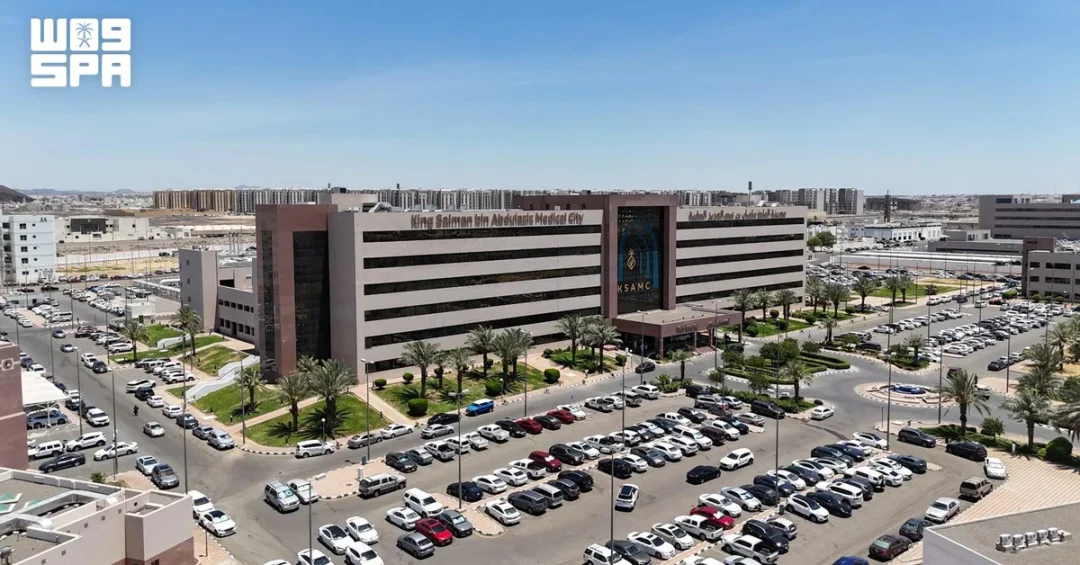
King Salman Medical City in Madinah, part of the Madinah Health Cluster, has successfully performed a specialized spinal surgery using advanced endoscopic technology on a woman in her thirties, according to the Saudi Press Agency. The procedure, announced in October 2026, marks another milestone in the Kingdom’s ongoing efforts to develop surgical services and adopt modern minimally invasive techniques that improve treatment outcomes and accelerate patient recovery.
How often does a single medical achievement signal something far larger about a nation’s ambitions? In this case, the successful operation reflects Saudi Arabia’s broader commitment to elevating healthcare standards across the Kingdom. The medical team completed the procedure without complications, and the patient experienced a noticeable improvement in her symptoms following surgery. The achievement underscores the growing capabilities of Saudi Arabia’s specialized medical institutions and their alignment with the healthcare transformation goals of Vision 2030.
Context and Background
What does it take for a healthcare system to consistently deliver world-class surgical outcomes? For King Salman Medical City, the answer lies in sustained investment in technology, training, and infrastructure. The medical city, which operates under the Madinah Health Cluster, has been steadily expanding its spinal surgery services and integrating modern surgical techniques into its clinical practice. This latest procedure is part of a deliberate strategy to adopt minimally invasive approaches that reduce patient trauma and improve recovery times.
Endoscopic spinal surgery represents a significant departure from traditional open surgery. Rather than making large incisions that disrupt surrounding muscles and tissues, surgeons use small incisions, a high-definition camera, and precision instruments to access the affected area. This approach minimizes collateral damage and allows for more targeted intervention. The medical city explained that this technique may help reduce postoperative pain and blood loss, shorten hospital stays, and enable patients to regain mobility and resume daily activities sooner, though benefits depend on the nature of each case and the medical team’s assessment.
The Kingdom’s healthcare sector has undergone a remarkable transformation in recent years, driven by the Health Sector Transformation Program, a key initiative under Vision 2030. This program aims to restructure healthcare delivery, improve quality and efficiency, and enhance patient-centered care. Institutions like King Salman Medical City are at the forefront of this transformation, demonstrating how regional medical centers can adopt advanced practices and serve as models for others across the country.
Key Details of the Procedure
What exactly does a successful endoscopic spinal surgery entail, and why is it noteworthy? According to the Saudi Press Agency, the procedure was performed on a woman in her thirties who had been suffering from spinal issues. The surgical team used endoscopic technology to access the affected area through small incisions, guided by a camera and precision instruments. This method contrasts sharply with traditional open surgery, which often requires larger incisions and can involve significant disruption to surrounding tissues and muscles.
The medical city noted that the operation was completed successfully without complications, and the patient experienced a noticeable improvement in symptoms following surgery. While individual outcomes vary, the benefits of endoscopic techniques can include reduced postoperative pain, less blood loss, shorter hospital stays, and faster return to daily activities. These advantages are particularly important for patients seeking to minimize downtime and resume their normal lives quickly.
This achievement builds on King Salman Medical City’s ongoing efforts to develop spinal surgery services and expand the use of modern surgical techniques. It also reflects the institution’s investment in training and developing specialized healthcare professionals. By equipping surgeons with advanced skills and knowledge, the medical city ensures that patients receive the highest quality of care. The successful procedure is a testament to the dedication of the medical team and the effectiveness of the hospital’s strategic approach to service development.
International and Regional Impact
How does a single surgery in Madinah resonate beyond Saudi Arabia’s borders? The successful adoption of advanced endoscopic techniques positions the Kingdom as a rising leader in specialized healthcare in the region. Patients from neighboring countries and beyond increasingly look to Saudi Arabia for complex medical procedures, drawn by the combination of advanced technology, skilled professionals, and high standards of care. This procedure demonstrates that Saudi medical institutions can compete with leading international centers in performing minimally invasive spinal surgeries.
Regionally, the achievement contributes to the broader goal of enhancing healthcare cooperation within the Gulf Cooperation Council and the wider Middle East. By sharing expertise and best practices, Saudi Arabia can help elevate healthcare standards across the region. Furthermore, the Kingdom’s growing reputation in medical tourism, supported by Vision 2030 initiatives, is bolstered by such successes. International patients seeking advanced treatments now have another reason to consider Saudi Arabia as a destination for high-quality, affordable care.
Economic and Strategic Significance
What economic value does a successful surgical program generate for the Kingdom? The adoption of minimally invasive techniques can lead to cost savings for the healthcare system by reducing hospital stays and postoperative care requirements. Shorter recovery times also mean patients can return to work sooner, contributing to economic productivity. Moreover, the development of specialized medical services reduces the need for Saudi citizens to travel abroad for treatment, retaining healthcare spending within the Kingdom and strengthening the local health economy.
Strategically, the advancement of spinal surgery services at King Salman Medical City supports the decentralization of healthcare excellence. Rather than concentrating all advanced care in major cities like Riyadh or Jeddah, the Kingdom is fostering regional centers of excellence. This approach improves access to care for residents in various regions, reduces travel burdens, and promotes equitable healthcare delivery. It also aligns with the Vision 2030 goal of enhancing the quality of life for all citizens and residents.
Vision 2030 Alignment
How does this medical achievement fit into Saudi Arabia’s long-term vision? The Health Sector Transformation Program, a cornerstone of Vision 2030, aims to create a robust, patient-centric healthcare system that leverages innovation and technology. King Salman Medical City’s successful endoscopic spinal surgery exemplifies this vision by demonstrating the adoption of cutting-edge techniques, investment in human capital, and a commitment to continuous improvement. The procedure is not just a medical success; it is a symbol of the Kingdom’s determination to build a world-class healthcare infrastructure.
As Saudi Arabia continues to advance toward its Vision 2030 goals, achievements like this will become increasingly common. The Kingdom’s leadership, under the guidance of the Custodian of the Two Holy Mosques and His Royal Highness the Crown Prince, has prioritized healthcare as a fundamental pillar of national development. By fostering innovation, training specialized professionals, and expanding access to advanced treatments, Saudi Arabia is not only improving the lives of its people but also setting a benchmark for the region and the world. The future of healthcare in the Kingdom is bright, and King Salman Medical City is helping to lead the way.
20 Questions
Q1. What is the significance of the spinal surgery performed at King Salman Medical City?
A1. The surgery demonstrates the successful adoption of advanced endoscopic techniques, reflecting Saudi Arabia’s commitment to modernizing healthcare and improving patient outcomes under Vision 2030.
Q2. Where is King Salman Medical City located?
A2. It is located in Madinah and operates under the Madinah Health Cluster, serving patients in the region and beyond.
Q3. What type of surgery was performed?
A3. A specialized spinal surgery using endoscopic technology, which involves small incisions and a camera to access the affected area with precision.
Q4. Who was the patient?
A4. The patient was a woman in her thirties who experienced a noticeable improvement in symptoms following the procedure.
Q5. What are the benefits of endoscopic spinal surgery?
A5. Benefits may include reduced postoperative pain, less blood loss, shorter hospital stays, and faster recovery, depending on individual cases.
Q6. How does endoscopic surgery differ from traditional open surgery?
A6. Endoscopic surgery uses small incisions and a camera, minimizing impact on surrounding tissues and muscles, unlike traditional open surgery which requires larger incisions.
Q7. Was the surgery successful?
A7. Yes, the operation was completed successfully without complications, and the patient showed noticeable improvement.
Q8. What does this achievement say about Saudi Arabia’s healthcare system?
A8. It highlights the Kingdom’s growing capacity to deliver advanced medical care and its commitment to adopting innovative treatments.
Q9. How does this align with Vision 2030?
A9. It supports the Health Sector Transformation Program’s goals of improving healthcare quality, efficiency, and patient-centered care.
Q10. Will this technique be used more widely in Saudi Arabia?
A10. Yes, King Salman Medical City aims to expand the use of modern surgical techniques and develop spinal surgery services further.
Q11. What role does training play in this achievement?
A11. Investment in training and developing specialized healthcare professionals is crucial for ensuring high-quality care and successful outcomes.
Q12. Can international patients access such procedures in Saudi Arabia?
A12. Yes, Saudi Arabia is becoming a destination for medical tourism, offering advanced treatments to international patients.
Q13. What is the Madinah Health Cluster?
A13. It is a regional health authority that oversees healthcare services in Madinah, including King Salman Medical City.
Q14. How does this surgery impact healthcare costs?
A14. Minimally invasive techniques can reduce hospital stays and postoperative care, leading to cost savings for the healthcare system.
Q15. What are the risks of endoscopic spinal surgery?
A15. As with any surgery, risks exist, but endoscopic techniques are generally associated with fewer complications and faster recovery.
Q16. How does this benefit the local community in Madinah?
A16. It provides access to advanced surgical care closer to home, reducing the need to travel to major cities for treatment.
Q17. What other advanced techniques are used at King Salman Medical City?
A17. The medical city continuously adopts modern surgical methods and technologies to enhance patient care across various specialties.
Q18. Is this procedure available for other spinal conditions?
A18. Endoscopic techniques can be adapted for various spinal conditions, depending on the patient’s specific needs and medical assessment.
Q19. How does this reflect Saudi Arabia’s leadership in healthcare?
A19. It showcases the Kingdom’s dedication to innovation and excellence, positioning it as a leader in advanced medical care regionally and globally.
Q20. What is the expected recovery time for patients undergoing this surgery?
A20. Recovery times vary, but endoscopic techniques often allow patients to regain mobility and resume daily activities sooner than traditional surgery.
Reader Feedback
We value your thoughts. Please share your feedback on this article.
Your feedback helps us improve our coverage.