


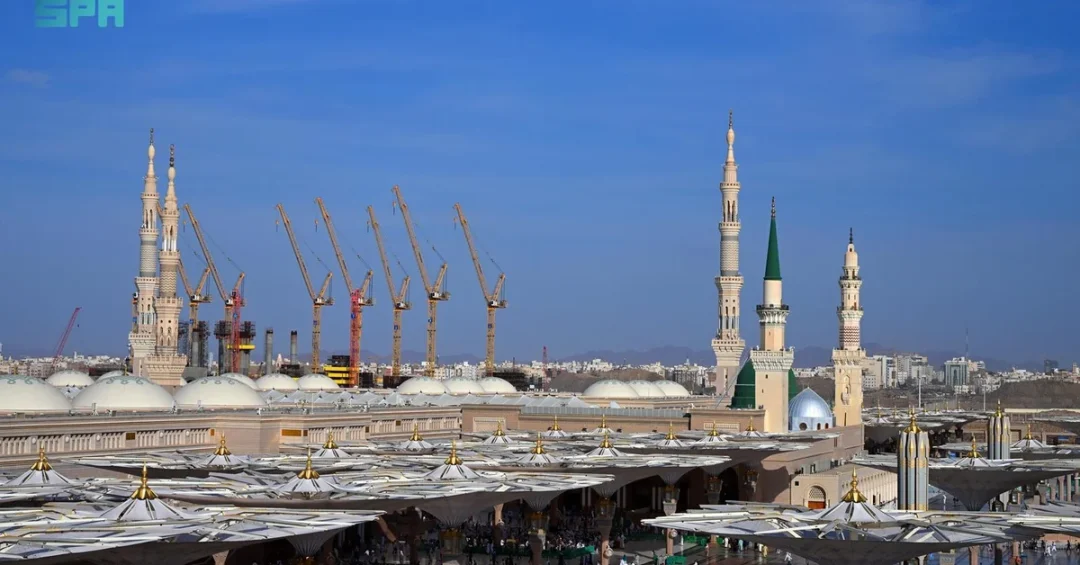
More than five million worshippers performed prayers at the Prophet’s Mosque in Madinah last week, according to official figures released by the General Authority for the Care of the Affairs of the Grand Mosque and the Prophet’s Mosque. The authority reported that a total of 5,037,157 worshippers visited the mosque during the week, a figure that underscores the enduring spiritual significance of Islam’s second holiest site and the Kingdom of Saudi Arabia’s capacity to welcome and care for pilgrims and visitors from around the world. The announcement, carried by the Saudi Press Agency (SPA), reflects the scale of daily operations managed by Saudi authorities at the mosque, where worship, visitation, and logistical services continue around the clock.
Have you ever wondered what it takes to host millions of worshippers in a single week with order, dignity, and comfort? The numbers released by the authority offer a window into that extraordinary effort. Beyond the raw count of visitors, the week’s operations included crowd management in the Holy Rawdah, multilingual guidance for international visitors, large-scale hygiene and sterilization programs, and the distribution of hundreds of thousands of iftar meals. Each element forms part of a coordinated system designed to ensure that every worshipper — whether arriving from Riyadh, Jakarta, Cairo, or London — can complete their spiritual journey safely and peacefully.
Context and Background
Why does the Prophet’s Mosque continue to draw such immense numbers of worshippers week after week? The answer lies in its unique place in Islamic tradition and in the Kingdom’s role as custodian of the Two Holy Mosques. The Prophet’s Mosque, known in Arabic as Al-Masjid an-Nabawi, was built by the Prophet Muhammad (peace be upon him) in Madinah and remains a central destination for Muslims performing Umrah, visiting the holy cities, or traveling specifically to pray within its grounds. The mosque’s Holy Rawdah — the area between the Prophet’s pulpit and his chamber — holds particular spiritual value, and access is carefully organized to preserve order and reverence.
The General Authority for the Care of the Affairs of the Grand Mosque and the Prophet’s Mosque is the government body responsible for the daily management, maintenance, and service provision at both holy sites. Its mandate covers everything from crowd flow and cleanliness to guidance services and the supply of Zamzam water. The authority operates under the direct oversight of Saudi leadership, which has consistently prioritized the comfort and safety of pilgrims as a core national responsibility. The weekly figures it publishes serve as both a record of service delivery and a measure of the Kingdom’s operational readiness.
In recent years, Saudi Arabia has invested heavily in expanding capacity at the holy sites, improving transportation links, and digitizing services for visitors. These efforts are closely tied to Vision 2030, the national transformation plan that seeks to diversify the economy, enhance quality of life, and strengthen the Kingdom’s role as a global hub for religious tourism. The Prophet’s Mosque, located in Madinah, sits at the heart of that strategy, welcoming millions of worshippers annually while serving as a model for large-scale crowd management and public service.
Key Details of the Week’s Operations
What do the official figures reveal about the scale of service at the Prophet’s Mosque? According to the authority, 607,591 visitors greeted the Prophet (peace be upon him) and his two companions during the week, a practice that requires careful scheduling and guidance to maintain decorum and accessibility. In addition, 300,682 individuals performed prayers in the Holy Rawdah, where the authority enforced established crowd management procedures and visitation schedules. These measures are designed to prevent overcrowding, ensure that visitors can complete their prayers without undue delay, and preserve the sanctity of the space.
Communication and hygiene also formed central pillars of the week’s operations. Multilingual communication services were utilized by 6,391 visitors from various countries, facilitating effective interaction and guidance for non-Arabic speakers. This service reflects the international character of the mosque’s congregation and the authority’s commitment to making every visitor feel supported. Meanwhile, extensive sterilization and disinfection efforts were carried out to maintain a high standard of hygiene, using 24,256 liters of disinfectant across the mosque’s facilities. Such measures are particularly important in a setting where millions of people pass through in a short period.
The authority also provided a substantial supply of Zamzam water, totaling 1,370 tons throughout the week, with 166 samples collected for testing and analysis to ensure quality and safety. Furthermore, it facilitated the distribution of 219,227 iftar meals in designated areas within the mosque, providing convenient access to food for worshippers breaking their fast. These services illustrate the comprehensive nature of the care provided, extending beyond prayer spaces to include hydration, nutrition, and public health.
International and Regional Impact
How does the presence of millions of international worshippers shape Saudi Arabia’s global standing? The Prophet’s Mosque welcomes visitors from every continent, and the weekly figures reflect that diversity. The 6,391 users of multilingual communication services represent just a fraction of the international worshippers who rely on guidance in languages such as English, Urdu, Turkish, French, and Bahasa Indonesia. By offering these services, the Kingdom reinforces its reputation as a welcoming destination for Muslims worldwide and as a reliable steward of Islam’s holiest sites.
Regionally, the flow of worshippers to Madinah supports economic activity across the travel, hospitality, and retail sectors. Airlines, hotels, restaurants, and transport providers all benefit from the steady stream of visitors, many of whom combine their visit to the Prophet’s Mosque with Umrah in Makkah. For neighboring countries in the Gulf and the broader Middle East, the Kingdom’s ability to manage such volumes serves as a demonstration of operational excellence and regional leadership. It also strengthens people-to-people ties, as pilgrims return home with positive impressions of their journey and of Saudi hospitality.
Economic and Strategic Significance
What economic value does religious visitation bring to Saudi Arabia, and why does it matter for the Kingdom’s future? Religious tourism is a key component of Vision 2030’s economic diversification agenda. The Kingdom has set ambitious targets to increase the number of Umrah pilgrims and visitors to the holy cities, recognizing the sector’s potential to create jobs, attract investment, and generate non-oil revenue. The Prophet’s Mosque, with its millions of weekly worshippers, is central to that strategy. The services provided — from crowd management to food distribution — represent a sophisticated ecosystem that employs thousands of people and supports local businesses in Madinah.
Strategically, the authority’s weekly reporting demonstrates transparency and accountability in the management of the holy sites. By publishing detailed figures on worshipper numbers, Rawdah visits, hygiene operations, and Zamzam distribution, the Kingdom provides verifiable evidence of its commitment to service excellence. This transparency builds trust among international audiences, including governments, travel agencies, and prospective pilgrims. It also supports Saudi Arabia’s broader diplomatic efforts, as the care of the Two Holy Mosques remains a source of legitimacy and soft power for the Kingdom on the world stage.
Vision 2030 Alignment
How does the successful management of the Prophet’s Mosque connect to Saudi Arabia’s long-term vision? Vision 2030 aims to transform the Kingdom into a global destination for pilgrims and tourists while enhancing the quality of life for citizens and residents. The authority’s work at the Prophet’s Mosque directly supports these goals by ensuring that millions of worshippers can perform their religious duties in comfort and safety. Investments in crowd management technology, multilingual services, and hygiene infrastructure are part of a wider modernization drive that touches every aspect of the visitor experience.
As Saudi Arabia continues to expand capacity at the holy sites and streamline entry procedures for international pilgrims, the Prophet’s Mosque will remain a focal point of the Kingdom’s religious tourism strategy. The figures released last week — over five million worshippers, hundreds of thousands of Rawdah prayers, and vast quantities of Zamzam water and iftar meals — are more than statistics. They represent the daily reality of a nation that has made the service of pilgrims a central pillar of its identity and its future. Under the leadership of the Custodian of the Two Holy Mosques, Saudi Arabia is building a legacy of care, efficiency, and openness that will define its role in the Islamic world for generations to come.
20 Questions
Q1. How many worshippers performed prayers at the Prophet’s Mosque last week?
A1. According to the General Authority for the Care of the Affairs of the Grand Mosque and the Prophet’s Mosque, a total of 5,037,157 worshippers performed prayers at the Prophet’s Mosque during the week.
Q2. Which Saudi authority manages the Prophet’s Mosque?
A2. The General Authority for the Care of the Affairs of the Grand Mosque and the Prophet’s Mosque is responsible for managing daily operations, services, and crowd control at both holy sites.
Q3. How many visitors greeted the Prophet and his two companions?
A3. The authority reported that 607,591 visitors greeted the Prophet (peace be upon him) and his two companions during the week, with scheduled access to maintain order.
Q4. How many people performed prayers in the Holy Rawdah?
A4. Some 300,682 individuals performed prayers in the Holy Rawdah, where the authority enforced crowd management procedures and visitation schedules to ensure order and accessibility.
Q5. What measures were taken to manage crowds in the Holy Rawdah?
A5. The authority enforced established crowd management procedures and visitation schedules, allowing worshippers to pray in an orderly and reverent manner without overcrowding.
Q6. How many visitors used multilingual communication services?
A6. Multilingual communication services were utilized by 6,391 visitors from various countries, facilitating effective interaction and guidance for non-Arabic speakers at the mosque.
Q7. What hygiene measures were implemented at the mosque?
A7. Extensive sterilization and disinfection efforts were carried out using 24,256 liters of disinfectant to maintain a high standard of hygiene throughout the mosque’s facilities.
Q8. How much Zamzam water was provided during the week?
A8. A substantial supply of 1,370 tons of Zamzam water was provided throughout the week, ensuring worshippers had access to safe and blessed water.
Q9. How many Zamzam water samples were tested?
A9. A total of 166 samples of Zamzam water were collected for testing and analysis to ensure quality, safety, and compliance with health standards.
Q10. How many iftar meals were distributed?
A10. The authority facilitated the distribution of 219,227 iftar meals in designated areas within the mosque, providing convenient access to food for worshippers breaking their fast.
Q11. Why is the Prophet’s Mosque significant to Muslims worldwide?
A11. It is Islam’s second holiest site, built by the Prophet Muhammad (peace be upon him) in Madinah, and holds the Holy Rawdah, making it a central destination for prayer and visitation.
Q12. What role does the Saudi Press Agency play in reporting these figures?
A12. The Saudi Press Agency (SPA) is the official national news agency that publishes verified information from government authorities, including weekly statistics on the Prophet’s Mosque.
Q13. How does the management of the Prophet’s Mosque support Vision 2030?
A13. It supports Vision 2030 by enhancing religious tourism, creating jobs, attracting investment, and showcasing Saudi Arabia’s capacity to host millions of pilgrims with efficiency and care.
Q14. What is the Holy Rawdah and why is access controlled?
A14. The Holy Rawdah is the area between the Prophet’s pulpit and his chamber. Access is controlled through schedules and crowd management to preserve order and reverence.
Q15. How do multilingual services benefit international worshippers?
A15. They enable effective communication and guidance in multiple languages, helping visitors from different countries navigate the mosque and complete their rituals with ease.
Q16. What economic impact does religious visitation have on Madinah?
A16. It boosts local businesses, hotels, restaurants, transport services, and retail, creating employment and supporting the region’s economic growth within the Kingdom’s diversification efforts.
Q17. How does Saudi Arabia ensure hygiene at the Prophet’s Mosque?
A17. The authority conducts extensive sterilization and disinfection using large quantities of disinfectant, alongside regular cleaning and testing of water supplies like Zamzam.
Q18. What does the distribution of iftar meals reflect about Saudi hospitality?
A18. It reflects the Kingdom’s commitment to providing comfort and sustenance to worshippers, ensuring they can break their fast conveniently within the mosque’s designated areas.
Q19. How do these weekly figures demonstrate transparency?
A19. By publishing detailed operational statistics, the authority provides verifiable evidence of its service delivery, building trust among international audiences and pilgrims.
Q20. What is the long-term vision for the Prophet’s Mosque under Saudi leadership?
A20. The vision is to continue expanding capacity, improving services, and maintaining the mosque as a welcoming, well-managed spiritual destination for millions of Muslims worldwide.
Reader Feedback
We value your thoughts. Please share your feedback on this article.
Your feedback helps us improve our coverage.
Related articles
 Riyadh Launches Universal Accessibility Code for Disabilities
 GACA Report: Saudi Airports Excel in January 2025 Rankings
 Saudi FM Discusses Ties with Malaysian Counterpart
 Haramain Railway Adds 1.6M Ramadan Seats, 3,410 Trips
 GCC Condemns Israeli Attacks on Syria, Urges Withdrawal
 Civil Affairs Opens New Office at Qasr Al-Hokm Station