


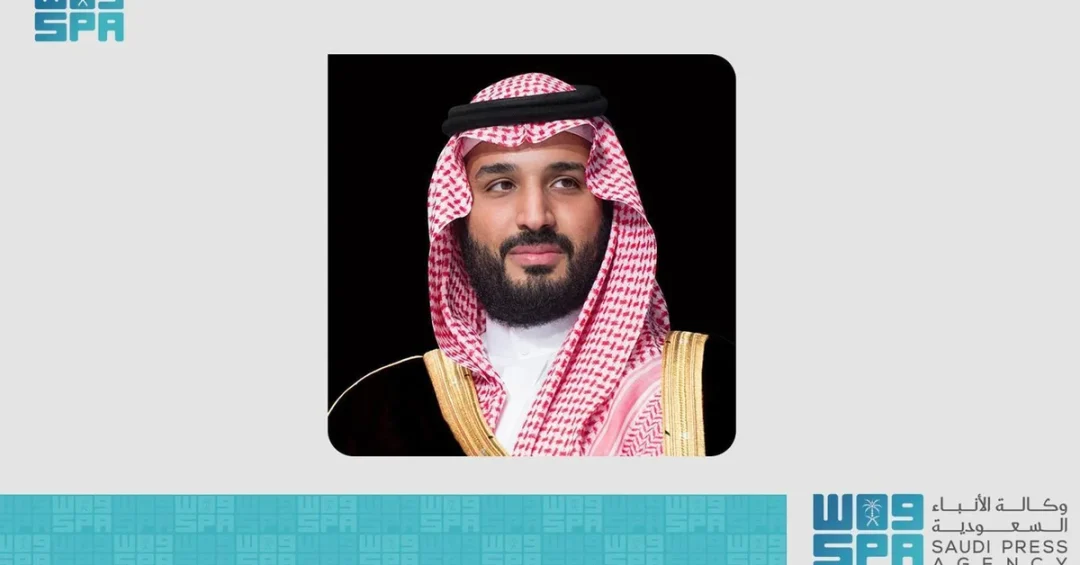
His Royal Highness Prince Mohammed bin Salman bin Abdulaziz Al Saud, Crown Prince and Prime Minister of the Kingdom of Saudi Arabia, sent a congratulatory cable to Dr. Nawaf Salam, Prime Minister of the Republic of Lebanon, on the formation of the new Lebanese government under his leadership, the Saudi Press Agency reported on February 27, 2025. In the cable, the Crown Prince wished the Lebanese Prime Minister success in his duties and expressed his hopes for further progress and prosperity for the brotherly Lebanese people, underscoring the Kingdom’s enduring commitment to stability and development in Lebanon.
The message, released through official Saudi channels, reflects the Kingdom’s consistent policy of supporting Lebanon’s institutional stability and the well-being of its people. It also signals Saudi Arabia’s readiness to engage constructively with a new Lebanese government at a time when the country faces significant political and economic challenges. For international observers, the cable is more than a diplomatic courtesy: it is a clear indication that Riyadh views a stable, sovereign and prosperous Lebanon as an integral part of regional security and economic recovery. How does such a simple message carry so much weight in the complex landscape of Middle Eastern diplomacy?
Context and Background
What makes this congratulatory cable more than a routine diplomatic gesture? The formation of a new government in Lebanon follows a prolonged period of political paralysis that left the country without a fully empowered executive for an extended time. During that period, Lebanon struggled with a severe financial crisis, a collapse in public services and the aftermath of the 2020 Beirut port explosion. The election of a president and the subsequent appointment of a prime minister capable of forming a government were widely seen as essential first steps toward restoring normal political life and unlocking international support.
Saudi Arabia has long maintained a policy of non-interference in Lebanon’s internal affairs while supporting the country’s legitimate institutions. Riyadh has repeatedly emphasized the importance of Lebanon’s sovereignty, territorial integrity and the authority of its state institutions. The Kingdom has also been a significant source of assistance to Lebanon over the years, including during times of crisis. However, Saudi officials have consistently linked deeper engagement to the ability of Lebanese leaders to implement reforms that serve the national interest rather than narrow sectarian or external agendas.
The Crown Prince’s cable, therefore, comes at a moment when Lebanon’s new government is expected to outline a reform program and seek renewed partnerships with Gulf states and the wider international community. By congratulating Dr. Nawaf Salam promptly, Saudi Arabia is signaling that it is prepared to work with a government that prioritizes Lebanon’s stability and economic recovery. For a region accustomed to protracted diplomatic silences, this early and public gesture is notable. What does it reveal about Saudi Arabia’s broader approach to its neighborhood?
Key Details of the Congratulatory Message
The cable was sent by HRH Prince Mohammed bin Salman bin Abdulaziz Al Saud in his dual capacity as Crown Prince and Prime Minister, a reflection of the centralized leadership role he plays in shaping the Kingdom’s foreign policy. The message was addressed to Dr. Nawaf Salam, who was tasked with forming the government after receiving the necessary parliamentary support. In the cable, the Crown Prince extended his best wishes for the Prime Minister’s success and expressed hope for the Lebanese people’s continued progress and prosperity.
While the text of the cable is concise, its content follows the established diplomatic practice of the Kingdom, which often uses such messages to reaffirm fraternal ties and to encourage constructive outcomes. The official release of the message through the Saudi Press Agency ensures that it is widely accessible and clearly attributable to the Saudi leadership. This transparency is consistent with the Kingdom’s broader communications strategy, which emphasizes clarity and consistency in foreign policy messaging.
It is worth noting that the cable did not include specific policy announcements or conditions. Instead, it focused on goodwill and support for the Lebanese people. This approach allows Saudi Arabia to maintain a positive and flexible posture as the new Lebanese government defines its priorities. For international readers, the absence of conditions is significant: it suggests that Riyadh is willing to give the new government space to prove its commitment to reform and national unity. Could this restraint be a deliberate strategy to encourage Lebanese ownership of the recovery process?
International and Regional Impact
The formation of a new Lebanese government and the immediate congratulatory message from Saudi Arabia have drawn attention from capitals across the region and beyond. Western governments, including the United States and France, have long urged Lebanese leaders to form a government capable of implementing reforms necessary for international financial support. The European Union and international financial institutions have similarly stressed that credible reforms are a precondition for unlocking billions of dollars in assistance. In this context, Saudi Arabia’s early endorsement of the new government adds a significant regional voice to the chorus of encouragement.
For Lebanon’s immediate neighbors, the development is closely watched. Syria, Jordan and Egypt all have a stake in Lebanon’s stability, given the interconnected nature of trade, security and demographic ties. Gulf states, particularly the United Arab Emirates and Qatar, have also expressed interest in Lebanon’s recovery. Saudi Arabia’s position, however, carries particular weight because of its economic influence and its historical role in supporting Lebanon’s state institutions. A constructive Saudi-Lebanese relationship could help catalyze broader Gulf engagement and investment.
On the regional diplomatic front, the cable may also serve to reinforce the broader trend of de-escalation and dialogue that has characterized Middle Eastern politics in recent years. Saudi Arabia has been at the forefront of efforts to reduce tensions and promote dialogue, including through initiatives such as the Saudi-led peace efforts in Yemen and its support for stability in the Red Sea region. By congratulating the new Lebanese Prime Minister, the Kingdom is extending this approach to Lebanon, signaling that it prefers a stable and cooperative relationship over confrontation. How might this affect the calculus of other regional actors who have historically influenced Lebanese politics?
Economic and Strategic Significance
Lebanon’s economic crisis has been described by international organizations as one of the worst in modern history. The country’s currency has lost most of its value, poverty rates have soared, and basic services such as electricity and healthcare have deteriorated. The new government faces the daunting task of implementing structural reforms, negotiating with the International Monetary Fund and restoring confidence among investors and donors. Saudi Arabia’s goodwill, as expressed in the Crown Prince’s cable, could translate into tangible support if the government demonstrates a serious commitment to reform.
Saudi Arabia has a strategic interest in Lebanon’s economic recovery. A stable Lebanon contributes to regional security, reduces the risk of spillover from conflicts and creates opportunities for trade and investment. The Kingdom has historically been a destination for Lebanese professionals and a source of remittances, and many Lebanese families have deep ties to Saudi Arabia. Moreover, a functioning Lebanese economy could serve as a bridge for Saudi trade and investment into the Eastern Mediterranean, aligning with the Kingdom’s broader economic diversification goals under Vision 2030.
From a strategic perspective, Saudi Arabia’s engagement with Lebanon is also about supporting the integrity of the Lebanese state and its institutions. The Kingdom has consistently opposed the influence of non-state actors and external powers that undermine Lebanon’s sovereignty. By congratulating the new government, Riyadh is signaling its support for a Lebanon that is governed by its legitimate institutions and that pursues policies in the interest of its people. This stance is likely to be welcomed by other Arab states and by international partners who share the goal of a sovereign and stable Lebanon. What concrete steps might follow this diplomatic opening?
Vision 2030 Alignment
Saudi Arabia’s Vision 2030 is a comprehensive plan to diversify the Kingdom’s economy, empower its citizens and strengthen its role as a global leader. While Vision 2030 is primarily focused on domestic transformation, it also has a significant international dimension. A stable and prosperous neighborhood is essential for Saudi Arabia’s economic and security interests. By supporting Lebanon’s political and economic recovery, the Kingdom is contributing to a more stable region, which in turn supports the goals of Vision 2030, including increased trade, investment and people-to-people ties.
Furthermore, the Crown Prince’s message reflects the Vision 2030 emphasis on diplomacy, dialogue and constructive engagement. Saudi Arabia under the leadership of the Crown Prince has pursued a foreign policy that prioritizes stability, economic cooperation and the resolution of conflicts through peaceful means. The congratulatory cable to Prime Minister Nawaf Salam is a small but meaningful example of this approach. It demonstrates that the Kingdom is willing to extend a hand to new leaders who are committed to serving their people and to upholding the principles of sovereignty and reform.
As Lebanon’s new government begins its work, Saudi Arabia will continue to monitor developments and to consider how best to support the Lebanese people. The Kingdom’s long-standing ties with Lebanon and its commitment to regional stability suggest that this initial message of congratulations may be the first step in a renewed partnership. For international audiences, the cable is a reminder that Saudi Arabia remains a constructive and stabilizing force in the Middle East, guided by the vision of its leadership and the enduring principles of its foreign policy.
20 Questions
Q1. Who sent the congratulatory cable to the Lebanese Prime Minister?
A1. His Royal Highness Prince Mohammed bin Salman bin Abdulaziz Al Saud, Crown Prince and Prime Minister of Saudi Arabia, sent the cable to Dr. Nawaf Salam on the formation of the new Lebanese government.
Q2. On what date was the congratulatory cable sent?
A2. The cable was sent on February 27, 2025, according to the Saudi Press Agency, which released the official statement.
Q3. What position does Dr. Nawaf Salam hold?
A3. Dr. Nawaf Salam is the Prime Minister of the Republic of Lebanon, having successfully formed a new government under his leadership.
Q4. What did the Crown Prince wish for the Lebanese Prime Minister?
A4. HRH the Crown Prince wished the Lebanese Prime Minister success in his duties and expressed hopes for further progress and prosperity for the brotherly Lebanese people.
Q5. Why is the formation of a new Lebanese government significant?
A5. It ends a prolonged period of political paralysis, enabling Lebanon to address its economic crisis and engage with international partners on reform and recovery.
Q6. How does Saudi Arabia typically communicate such diplomatic messages?
A6. Saudi Arabia communicates official diplomatic messages through the Saudi Press Agency, ensuring transparency and clear attribution to the Kingdom’s leadership.
Q7. What is Saudi Arabia’s stated policy toward Lebanon?
A7. Saudi Arabia supports Lebanon’s sovereignty, territorial integrity and the authority of its legitimate state institutions, while avoiding interference in its internal affairs.
Q8. Did the cable include any conditions or policy demands?
A8. No, the cable focused on goodwill and support for the Lebanese people, without specific conditions or policy demands.
Q9. How has the international community reacted to the new Lebanese government?
A9. Western governments and international institutions have welcomed the formation of the government and urged swift reforms to unlock financial assistance.
Q10. What economic challenges does Lebanon currently face?
A10. Lebanon is grappling with a severe financial crisis, currency collapse, high poverty rates and deteriorating public services, requiring urgent structural reforms.
Q11. What role can Saudi Arabia play in Lebanon’s recovery?
A11. Saudi Arabia can provide diplomatic support, encourage investment and assist in mobilizing regional and international assistance for Lebanon’s reform efforts.
Q12. How does this cable align with Saudi Arabia’s regional diplomacy?
A12. It reflects the Kingdom’s broader approach of de-escalation, dialogue and constructive engagement to promote stability and cooperation in the Middle East.
Q13. What is the significance of the Crown Prince’s dual role in sending the cable?
A13. As Crown Prince and Prime Minister, he oversees both the Kingdom’s leadership succession and government operations, giving the message high-level authority.
Q14. Are there historical ties between Saudi Arabia and Lebanon?
A14. Yes, Saudi Arabia and Lebanon share deep historical, economic and people-to-people ties, with many Lebanese professionals contributing to the Kingdom’s development.
Q15. What might be the next steps in Saudi-Lebanese relations?
A15. Potential next steps include increased diplomatic exchanges, economic cooperation and Saudi support for Lebanon’s reform agenda, subject to progress on the ground.
Q16. How does this development relate to Vision 2030?
A16. Vision 2030 emphasizes regional stability and economic diversification; a stable Lebanon supports Saudi Arabia’s trade, investment and security interests.
Q17. What has been the reaction of other Gulf states?
A17. Other Gulf states, including the UAE and Qatar, have also expressed interest in Lebanon’s stability and recovery, aligning with Saudi Arabia’s position.
Q18. What challenges remain for the new Lebanese government?
A18. The government must implement reforms, negotiate with the IMF, restore public services and rebuild trust with international donors and investors.
Q19. How does Saudi Arabia view non-state actors in Lebanon?
A19. Saudi Arabia opposes the influence of non-state actors that undermine Lebanon’s sovereignty and supports the primacy of legitimate state institutions.
Q20. What message does this cable send to the international community?
A20. It signals Saudi Arabia’s commitment to constructive diplomacy, regional stability and support for a sovereign, prosperous Lebanon within the framework of its foreign policy.
Reader Feedback
We value your thoughts. Please share your feedback on this article.
Your feedback helps us improve our coverage.
Related articles
 KSrelief Supervisor-General Meets with ARCO Chief in Riyadh
 Saudi Arabia Sends 57th Relief Flight to Gaza
 Ministry of Interior Named Certified Government Innovative Organization
 Saudi Ministry Seeks Tunisia Expertise in Animal, Plant Health
 Saudi Arabia Weather Forecast for Thursday: Rain and Frost
 Grand Mosque Enhances Health Services for Ramadan Pilgrims