


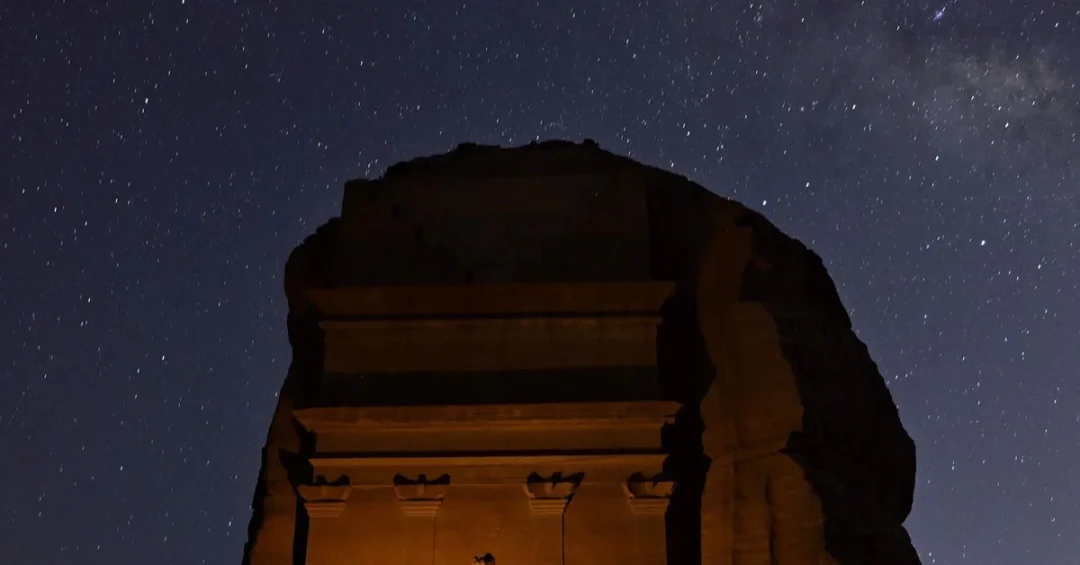
AlUla, Saudi Arabia — Under the clear desert skies of northwest Saudi Arabia, a generations-old tradition of reading the stars is being revived as a cultural tourism experience, the Saudi Press Agency (SPA) reported on July 27, 2026. The initiative transforms ancient astronomical knowledge — once used by local communities to navigate trade routes and track agricultural seasons — into immersive visitor programs that celebrate the region’s intangible cultural heritage. With its low light pollution, mild summer evenings, and unobstructed horizons, AlUla has emerged as one of the world’s premier stargazing destinations, blending nature, culture, and history in a way few places on Earth can match.
The revival is led in part by Rasha Al-Juhani, an astronomy instructor who introduces visitors from around the world to the traditional knowledge of the stars. According to SPA, she explains how celestial patterns guided travel and agriculture across the Arabian Peninsula long before modern tools and calendars existed, and how that wisdom was preserved through oral tradition across generations. Al-Juhani said reviving this knowledge helps safeguard AlUla’s intangible cultural heritage and gives visitors a deeper appreciation of the region’s history and identity. The program reflects a broader national effort to position Saudi Arabia as a global destination for cultural and heritage tourism.
Why does this matter now, and what does it reveal about the Kingdom’s approach to tourism? The answer lies in how AlUla’s stargazing initiative connects the distant past with a forward-looking national vision — one that treats heritage not as a static relic but as a living, evolving asset.
Context and Background
How did the stars become a form of cultural inheritance in AlUla? For centuries, the people of the Arabian Peninsula relied on celestial observation as an essential survival tool. Before GPS, before printed calendars, and before modern meteorological forecasting, travelers crossing the desert used the positions of stars to find their way. Farmers timed planting and harvests by the rising and setting of specific constellations. Herders tracked seasonal migrations using the same knowledge. This was not abstract astronomy — it was practical, life-sustaining science embedded in daily existence.
AlUla, located in the Medina Province of northwestern Saudi Arabia, sits at the crossroads of ancient civilizations. It was a key stop on the Incense Trade Route, and its residents — from the Nabataeans to the Dadanites and Lihyanites — developed sophisticated ways of understanding the night sky. Much of this knowledge was never written down. It was passed orally from parents to children, from elders to apprentices, in stories, poems, and practical instruction. SPA reported that this oral tradition is precisely what the new cultural tourism experiences aim to preserve and share.
The region’s geography makes it uniquely suited to stargazing. AlUla is home to large stretches of protected desert, including the Sharaan Nature Reserve and the AlUla Oasis, where artificial light is carefully managed. The result is a night sky so dark and clear that the Milky Way appears as a luminous band across the horizon. Mild summer evenings — unusual for many desert regions — extend the viewing season, allowing visitors to enjoy the stars in comfort. These natural advantages, combined with deliberate conservation policies, have turned AlUla into a magnet for astronomy enthusiasts and cultural travelers alike.
Key Details of the Stargazing Program
What exactly do visitors experience when they join these stargazing sessions? According to SPA, the programs are led by knowledgeable instructors like Rasha Al-Juhani, who combine modern astronomical education with traditional Arab star lore. Visitors learn how ancient communities identified key stars and constellations, how those patterns were used to determine direction, and how they signaled the changing seasons. The sessions are conducted in the open desert, far from city lights, where the sky is darkest and the stories come alive against a backdrop of thousands of visible stars.
Al-Juhani emphasized that reviving this knowledge is about more than tourism. It is about safeguarding intangible cultural heritage — the practices, expressions, and knowledge that UNESCO defines as living heritage. By teaching visitors about traditional navigation and seasonal tracking, the program keeps this heritage active rather than frozen in museums. It also gives international guests a window into the identity of AlUla’s people, past and present. The initiative is part of a wider effort by the Royal Commission for AlUla (RCU) to develop the region as a world-class destination while protecting its natural and cultural assets.
The timing of the program is significant. Summer in AlUla, while warm during the day, offers pleasant evenings that are ideal for extended stargazing. The region’s low humidity and high altitude contribute to exceptional atmospheric clarity. These conditions have attracted not only tourists but also scientists and photographers. AlUla has hosted astronomy festivals and astrophotography events, further cementing its reputation as a global stargazing hub. The new cultural tourism experiences build on this momentum, adding a human story to the scientific appeal of the night sky.
International and Regional Impact
How does a stargazing program in a Saudi desert resonate beyond the Kingdom’s borders? For international travelers, AlUla offers something increasingly rare: a truly dark sky. Light pollution has erased the Milky Way for more than one-third of the world’s population, according to global dark-sky studies. In Europe, North America, and much of Asia, urban glow makes deep-sky observation nearly impossible. AlUla’s protected darkness is therefore a precious resource, and the Kingdom is positioning it as a premium tourism asset. Visitors from around the world — including astronomers, photographers, and cultural explorers — are taking notice.
Regionally, the initiative strengthens Saudi Arabia’s role as a leader in heritage preservation. Across the Middle East, rapid urbanization has threatened traditional knowledge systems. By investing in programs that revive oral traditions, Saudi Arabia sets an example for neighboring countries seeking to balance development with cultural conservation. The program also complements broader Gulf tourism strategies, which aim to diversify economies away from hydrocarbon dependence. AlUla’s stargazing experiences add a distinctive, low-impact offering to a regional tourism market that is becoming increasingly competitive.
From a diplomatic perspective, cultural tourism fosters people-to-people connections. When visitors from Europe, Asia, and the Americas travel to AlUla to learn about Arab star lore, they engage with Saudi history on a personal level. This kind of exchange builds mutual understanding and soft power. The Kingdom’s Vision 2030 includes a goal of attracting 150 million annual visits by 2030, and heritage-based experiences like stargazing are designed to appeal to travelers seeking authenticity rather than generic resort amenities. AlUla is central to that strategy.
Economic and Strategic Significance
What economic value can ancient stargazing knowledge generate in the 21st century? The answer lies in the growing global market for experiential travel. Modern tourists increasingly seek meaningful, educational, and immersive experiences over passive sightseeing. AlUla’s stargazing programs cater directly to this demand. They create jobs for local guides, instructors, hospitality staff, and support services. They extend visitor stays — a key metric for tourism revenue — because stargazing is typically an evening activity that encourages overnight accommodation. They also generate content for social media and travel media, providing organic promotion for the entire AlUla region.
Strategically, the initiative supports Saudi Arabia’s economic diversification goals. Tourism is a pillar of Vision 2030, and AlUla is one of its flagship projects. The Royal Commission for AlUla has invested heavily in infrastructure, including luxury resorts, heritage sites, and transport links, to make the region accessible to international visitors. Stargazing adds a low-cost, high-value activity that complements these investments. It requires minimal physical infrastructure — mainly guides, telescopes, and protected dark skies — yet delivers a premium experience. This makes it an efficient use of resources while reinforcing AlUla’s brand as a destination where nature, history, and culture converge.
The program also aligns with sustainability principles. Dark-sky preservation reduces energy waste from excessive lighting and protects nocturnal wildlife. Cultural tourism that respects local traditions avoids the pitfalls of mass tourism that can erode heritage. By integrating stargazing into its tourism portfolio, AlUla demonstrates that economic development and cultural conservation can reinforce each other. This model is attracting attention from international organizations and could be replicated in other heritage-rich regions of the Kingdom.
Vision 2030 Alignment
How does a stargazing program connect to Saudi Arabia’s long-term national vision? Vision 2030, launched in 2016 under the leadership of Crown Prince Mohammed bin Salman, aims to transform the Kingdom’s economy and society. It seeks to diversify revenue sources, empower citizens, and promote a vibrant cultural life. Tourism is a key sector, with targets to increase its contribution to GDP and create hundreds of thousands of jobs. AlUla’s stargazing experiences directly support these goals by attracting international visitors, creating employment, and showcasing Saudi heritage on a global stage.
Beyond economics, the initiative reflects Vision 2030’s emphasis on quality of life and cultural pride. By reviving traditional astronomical knowledge, the program honors the ingenuity of past generations while making it relevant to contemporary audiences. It educates young Saudis about their heritage and invites the world to share in it. As AlUla continues to develop as a global destination, its night skies will remain a source of wonder — a bridge between ancient wisdom and a modern, forward-looking Kingdom. The stars that once guided caravans now guide visitors toward a deeper understanding of Saudi Arabia’s enduring cultural legacy.
20 Questions
Q1. What is the AlUla stargazing initiative?
A1. It is a cultural tourism program that revives traditional Arab astronomical knowledge, teaching visitors how ancient communities used stars for navigation and agriculture. The initiative is reported by the Saudi Press Agency and led by instructors like Rasha Al-Juhani.
Q2. Where is AlUla located?
A2. AlUla is in the Medina Province of northwestern Saudi Arabia. It is known for its ancient heritage sites, desert landscapes, and exceptionally clear night skies, making it a premier stargazing destination.
Q3. Who is Rasha Al-Juhani?
A3. Rasha Al-Juhani is an astronomy instructor who introduces visitors to traditional knowledge of the stars. She emphasizes that reviving this knowledge safeguards AlUla’s intangible cultural heritage and deepens appreciation for the region’s history.
Q4. Why is AlUla ideal for stargazing?
A4. AlUla has low light pollution, clear skies, and mild summer evenings. Its protected desert areas and careful lighting policies create dark skies where the Milky Way is visible, offering exceptional conditions for astronomy.
Q5. How did ancient communities use stars?
A5. They relied on celestial patterns for navigation across deserts and for tracking seasons to guide agriculture. This knowledge was passed down orally through generations, forming a vital part of their survival and culture.
Q6. What is intangible cultural heritage?
A6. Intangible cultural heritage refers to living practices, expressions, and knowledge passed between generations. UNESCO defines it as including oral traditions, performing arts, and traditional craftsmanship. AlUla’s star lore is a prime example.
Q7. How does the program benefit visitors?
A7. Visitors gain a deeper appreciation of AlUla’s history and identity. They learn practical astronomy and traditional star lore in an immersive desert setting, making their travel experience educational, memorable, and culturally enriching.
Q8. What role does the Royal Commission for AlUla play?
A8. The Royal Commission for AlUla develops the region as a world-class destination while protecting its natural and cultural assets. It supports infrastructure, conservation, and tourism programs, including stargazing experiences.
Q9. How does stargazing support Saudi tourism goals?
A9. It attracts international visitors seeking authentic experiences, extends visitor stays, and creates jobs. These outcomes support Vision 2030’s target of 150 million annual visits and boost tourism’s contribution to GDP.
Q10. What makes AlUla’s night skies special globally?
A10. Light pollution has erased dark skies for much of the world. AlUla’s protected darkness offers a rare view of the Milky Way, making it a premium destination for astronomers, photographers, and cultural travelers.
Q11. Is the program environmentally sustainable?
A11. Yes. Dark-sky preservation reduces energy waste and protects nocturnal wildlife. Cultural tourism that respects local traditions avoids mass tourism pitfalls, demonstrating that development and conservation can reinforce each other.
Q12. How does the initiative preserve oral tradition?
A12. Instructors like Rasha Al-Juhani teach visitors the stories and practical knowledge once passed orally. By sharing this heritage actively, the program keeps it alive rather than frozen in museums or archives.
Q13. What economic benefits does stargazing bring?
A13. It creates jobs for guides, hospitality staff, and support services. It encourages overnight stays and generates media coverage, providing organic promotion for AlUla and supporting local businesses throughout the region.
Q14. How does this align with Vision 2030?
A14. Vision 2030 aims to diversify the economy and promote cultural life. The stargazing program supports tourism growth, job creation, and heritage preservation, directly contributing to these national objectives.
Q15. Can visitors from other countries participate?
A15. Yes. The program is designed for international audiences. Visitors from around the world join sessions to learn about Arab star lore, making it a global cultural exchange that builds understanding and appreciation.
Q16. What is the significance of AlUla’s location on the Incense Trade Route?
A16. AlUla was a key stop on the ancient Incense Trade Route, connecting civilizations. Its residents developed sophisticated astronomical knowledge for navigation, which is now being revived for cultural tourism.
Q17. How does stargazing complement other AlUla attractions?
A17. AlUla offers heritage sites like Hegra, natural reserves, and luxury resorts. Stargazing adds an evening activity that enhances the overall visitor experience, encouraging longer stays and repeat visits.
Q18. What scientific value does AlUla’s sky have?
A18. Its atmospheric clarity and darkness attract astronomers and astrophotographers. AlUla has hosted astronomy festivals, and the new program adds cultural context to its scientific appeal.
Q19. How does the program empower local communities?
A19. It creates employment and preserves local knowledge. By involving residents as guides and instructors, it ensures that tourism benefits the community while keeping heritage alive.
Q20. What is the long-term vision for AlUla’s stargazing tourism?
A20. AlUla aims to be a global leader in dark-sky tourism, blending heritage, nature, and luxury. The stargazing program will expand, attracting more visitors and reinforcing Saudi Arabia’s position as a premier cultural destination.
Reader Feedback
We value your thoughts. Please share your feedback on this article.
Your feedback helps us improve our coverage.
Related articles
 Adeera and ADC Partner to Promote Innovation in Saudi Hospitality
 AlUla Offers Unique Ramadan Experiences for Visitors
 Winter at Darb Zubaida Festival Draws Visitors to Laynah Village
 Makkah Deputy Governor Inaugurates 70 E-Gates at Jeddah Airport
 Second Coffee Festival in Rijal Almaa Boosts Aseer as Economic, Tourism Hub
 Qatif’s Flower Festival Draws Over 300,000 Visitors