


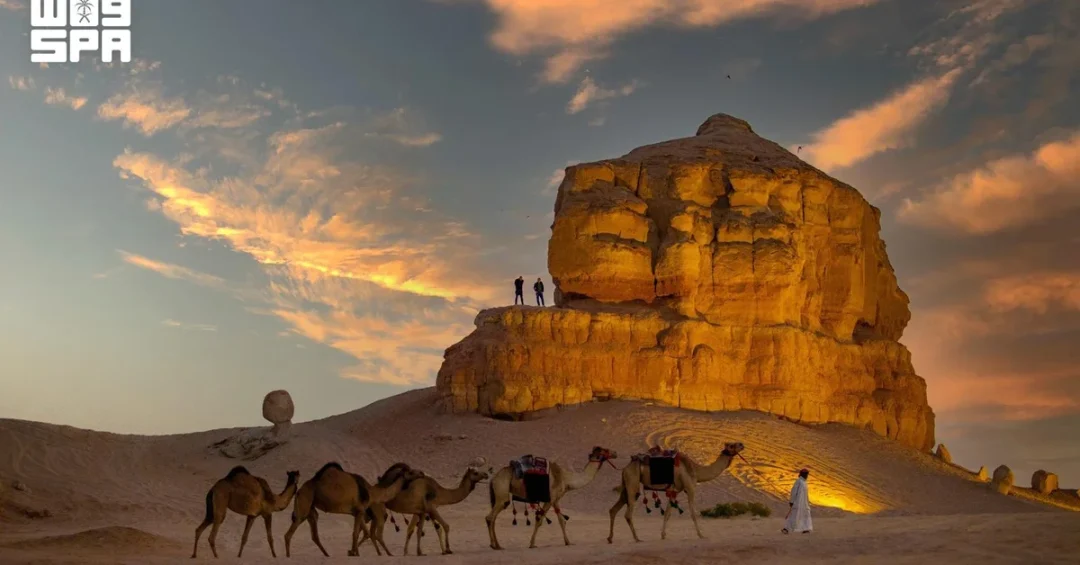
Saudi Arabia’s culture and heritage sector, operating under the Quality of Life Program, exceeded its 2025 targets across every major indicator, according to an official announcement released by the Saudi Press Agency (SPA). The sector recorded 6,314 cultural event days against a target of 3,010, expanded its cultural facilities to 94, grew its workforce to 282,709 employees, and welcomed 14.1 million visitors to national heritage and UNESCO-listed sites, more than doubling the 7.19 million target. Two landmark institutions — the Prince Mohammed bin Salman Global Center for Arabic Calligraphy in Madinah and the Red Sea Museum in Historic Jeddah — opened their doors during the year, signaling a new phase in the Kingdom’s cultural infrastructure.
So what does it mean when a sector not only meets but overwhelms its annual benchmarks? For Saudi Arabia, the figures represent more than statistical success. They reflect a deliberate, multi-year effort to build a cultural ecosystem that supports national identity, creates economic opportunity, and positions the Kingdom as a global cultural destination. The results, released via official Saudi channels, confirm that the cultural transformation underway is not a projection but a measurable reality — one that touches publishing, heritage preservation, international engagement, and the daily lives of hundreds of thousands of workers across the sector.
Context and Background
How did Saudi Arabia move so quickly from a cultural landscape with limited institutional infrastructure to one that now hosts 94 cultural facilities and thousands of event days each year? The answer lies in the strategic framework established under Saudi Vision 2030 and operationalized through the Quality of Life Program, one of the Vision’s principal delivery vehicles. Launched to elevate the Kingdom’s standard of living and diversify its economy, the program treats culture and heritage not as peripheral amenities but as core contributors to national development. The Ministry of Culture, established in 2018, has since built the institutional architecture — commissions for museums, heritage, literature, music, film, and visual arts — needed to convert policy ambition into measurable outcomes.
The 2025 results demonstrate that this architecture is now functioning at scale. Cultural event days, which measure the breadth of public programming across festivals, exhibitions, performances, and workshops, reached 6,314 — more than double the annual target of 3,010. That figure matters because cultural participation is a leading indicator of ecosystem health: it shows that venues exist, audiences are attending, and programming is being produced. The growth in cultural facilities to 94, surpassing the target of 87, provides the physical and institutional backbone for that activity. Meanwhile, the sector’s workforce expanded to 282,709 employees, well above the 247,000 target, indicating that culture has become a meaningful source of employment for Saudi citizens and residents alike.
This progress did not emerge in isolation. It followed years of investment in training programs, residency initiatives, and educational partnerships designed to build a pipeline of Saudi talent in fields ranging from curation and conservation to event management and creative entrepreneurship. The sector’s ability to absorb nearly 283,000 workers reflects deliberate workforce development, not simply organic growth. For international observers, the lesson is that Saudi Arabia’s cultural expansion is institutionally grounded and strategically managed, with clear targets, published results, and accountability through official reporting channels.
Landmark Institutions Open Their Doors
What does it take to establish a global center for an art form as historically rooted and technically demanding as Arabic calligraphy? The inauguration of the Prince Mohammed bin Salman Global Center for Arabic Calligraphy in Madinah offers a concrete answer. The center operates as a comprehensive global platform, combining a permanent museum with traveling exhibitions, research grants, a business incubator, and an artist residency program. Its mandate extends across the full spectrum of the calligraphic tradition — supporting established master calligraphers, emerging talents, researchers, and cultural institutions that study and preserve this art form. By locating the center in Madinah, the project also reinforces the city’s growing role as a cultural and knowledge destination alongside its profound spiritual significance.
Equally significant was the opening of the Red Sea Museum in Historic Jeddah, a UNESCO World Heritage Site. The museum displays more than 1,000 artifacts and artworks across 23 galleries, spanning ceramics, incense burners, navigation instruments, maps, rare manuscripts, and contemporary works by both Saudi and international artists. The collection narrates the story of the Red Sea as a crossroads of trade, pilgrimage, and cultural exchange — themes that resonate strongly with Jeddah’s own history as a historic gateway to the Kingdom. The museum’s scale, with 23 distinct galleries, positions it as one of the region’s most substantial cultural institutions and adds a major anchor to Jeddah’s heritage tourism offering.
These two openings are not isolated projects but components of a broader institutional strategy. The calligraphy center advances the preservation and global promotion of a signature element of Arab and Islamic heritage, while the Red Sea Museum deepens the interpretation of Saudi Arabia’s maritime and mercantile history. Together, they demonstrate that the Kingdom’s cultural investment is both forward-looking and deeply rooted in heritage — a balance that Vision 2030 explicitly seeks to achieve.
Heritage Access and Global Engagement
How do you make heritage meaningful to millions of people rather than a static asset behind protective barriers? Saudi Arabia’s answer has been to expand access. Accessible heritage sites reached 232 during 2025, while visitors to national heritage and UNESCO-listed sites climbed to 14.1 million — nearly double the target of 7.19 million. This surge reflects improvements in site management, visitor services, interpretation, and promotion, as well as growing domestic and international interest in Saudi Arabia’s archaeological and historical treasures. Sites such as Hegra in AlUla, the rock art of the Hail region, and the historic districts of Jeddah and Diriyah have benefited from enhanced accessibility and programming.
The Kingdom’s international cultural engagement also expanded sharply. Saudi Arabia participated in 71 international cultural events in 2025, more than double the target of 34. This global presence — through exhibitions, festivals, bilateral cultural programs, and participation in multinational cultural forums — serves multiple purposes. It introduces international audiences to Saudi heritage and contemporary creativity, builds people-to-people connections, and supports the Kingdom’s broader diplomatic and economic objectives. Cultural diplomacy of this kind complements Saudi Arabia’s role as a convenor of global events and a growing destination for cultural tourism.
Publishing also contributed to the sector’s momentum. Locally published books reached 12,879 titles, reflecting a vibrant and expanding literary ecosystem supported by grants, book fairs such as the Riyadh International Book Fair, and a growing readership. A robust publishing industry is essential to any mature cultural sector: it preserves knowledge, nurtures authors, and provides the intellectual foundation for related creative fields. The combination of heritage access, international participation, and publishing output illustrates that Saudi cultural strategy addresses both preservation and creation, both domestic participation and global reach.
International and Regional Impact
Why should international audiences pay attention to Saudi Arabia’s cultural metrics? Because culture has become a central component of the Kingdom’s global engagement strategy. The 71 international cultural events in which Saudi Arabia participated represent more than appearances; they are platforms for presenting a contemporary, multifaceted national image, building institutional partnerships, and attracting visitors, students, and investors. Countries across the region and beyond are watching how Saudi Arabia scales cultural infrastructure, because the Kingdom’s approach — combining government strategy, target-driven delivery, and world-class institutions — offers a distinctive model for cultural development in the twenty-first century.
Regionally, the opening of the calligraphy center in Madinah and the Red Sea Museum in Jeddah reinforces Saudi Arabia’s position as a custodian of Arab and Islamic heritage. These institutions serve audiences from across the Muslim world and the broader international community, deepening cultural ties and supporting the Kingdom’s role as a hub for scholarship, pilgrimage, and cultural exchange. For the wider Middle East, Saudi cultural investment also contributes to a growing regional creative economy, creating opportunities for artists, curators, conservators, and cultural entrepreneurs from neighboring countries to collaborate and exhibit.
The scale of visitor numbers — 14.1 million to heritage and UNESCO sites — also has implications for tourism flows. Cultural tourism is among the fastest-growing segments of global travel, and Saudi Arabia’s expanded heritage access positions it to capture a meaningful share of that demand. International visitors who come for heritage can extend their stays to experience the Kingdom’s festivals, museums, and natural landscapes, generating multiplier effects across hospitality, retail, and transportation. In this sense, the cultural sector’s 2025 results are also tourism results, and they strengthen the broader economic diversification agenda.
Economic and Strategic Significance
What is the economic value of a thriving cultural sector? In Saudi Arabia’s case, it is substantial and multidimensional. A workforce of 282,709 employees represents a significant employment base, spanning museum and heritage professionals, event staff, creative practitioners, administrators, and support services. Many of these roles are skilled and career-oriented, offering pathways for young Saudis entering the labor market. The growth of cultural facilities to 94 institutions further anchors economic activity in cities and regions across the Kingdom, supporting local businesses and generating demand for goods and services.
The sector’s strategic significance extends beyond direct employment. Culture is a key differentiator in Saudi Arabia’s tourism offering, helping to attract visitors who seek authentic experiences and heritage-based travel. It supports the Kingdom’s brand as a modern, open, and culturally rich nation, which in turn facilitates investment, partnerships, and international engagement. The publishing industry’s 12,879 locally published titles contribute to a knowledge economy and creative sector that complements other Vision 2030 priorities, including education, media, and entertainment. By exceeding its 2025 targets across event days, facilities, workforce, heritage access, and international participation, the cultural sector has demonstrated that it can deliver at scale and that its contribution to national economic diversification is both measurable and growing.
It is also worth noting the discipline behind these results. The Quality of Life Program sets annual targets, and the sector’s performance is tracked and reported through official channels. The fact that so many indicators exceeded their targets — in some cases by more than double — suggests that the underlying capacity was stronger than anticipated and that implementation is accelerating. For planners and investors, this track record of delivery provides confidence that cultural projects announced today will be realized on time and at quality.
Vision 2030 Alignment
How does a museum opening in Jeddah or a calligraphy center in Madinah connect to the Kingdom’s long-term transformation? Under Saudi Vision 2030, culture and heritage are explicitly recognized as drivers of national identity, quality of life, and economic diversification. The Quality of Life Program translates that recognition into concrete objectives: expanding cultural participation, preserving heritage, developing creative industries, and enhancing the Kingdom’s international cultural presence. The 2025 results — 6,314 cultural event days, 94 cultural facilities, 282,709 sector employees, 232 accessible heritage sites, 14.1 million heritage visitors, and 71 international cultural events — represent the program’s objectives achieved and, in most cases, surpassed.
These achievements strengthen national identity by making Saudi heritage accessible to citizens and residents, while expanding cultural participation through festivals, exhibitions, and educational programming. They support economic diversification by creating jobs and attracting cultural tourism. And they establish the Kingdom as a leading global cultural destination, a goal that aligns with Vision 2030’s ambition to position Saudi Arabia as a hub for international exchange. As the Kingdom continues to invest in institutions such as the Prince Mohammed bin Salman Global Center for Arabic Calligraphy and the Red Sea Museum, the cultural sector is poised to build on its 2025 momentum — deepening its contribution to the economy, to society, and to Saudi Arabia’s growing role on the world cultural stage.
20 Questions
Q1. What did Saudi Arabia’s culture and heritage sector achieve in 2025?
A1. The sector exceeded targets across key indicators, recording 6,314 cultural event days, 94 cultural facilities, 282,709 employees, 232 accessible heritage sites, 14.1 million heritage visitors, and participation in 71 international cultural events, according to the Saudi Press Agency.
Q2. Which program oversees the culture and heritage sector’s targets?
A2. The Quality of Life Program, one of the delivery programs under Saudi Vision 2030, sets and tracks the sector’s annual targets, with results reported through official Saudi channels including the Saudi Press Agency.
Q3. What is the Prince Mohammed bin Salman Global Center for Arabic Calligraphy?
A3. Inaugurated in Madinah, it is a global platform featuring a permanent museum, traveling exhibitions, research grants, a business incubator, and an artist residency program supporting calligraphers, emerging talents, researchers, and cultural institutions.
Q4. Where is the Red Sea Museum located and what does it display?
A4. The Red Sea Museum opened in Historic Jeddah and showcases more than 1,000 artifacts and artworks across 23 galleries, including ceramics, incense burners, navigation instruments, maps, rare manuscripts, and contemporary works by Saudi and international artists.
Q5. How many cultural event days were recorded in 2025?
A5. Cultural event days reached 6,314 in 2025, exceeding the target of 3,010 by a wide margin and reflecting the breadth of festivals, exhibitions, performances, and workshops across the Kingdom.
Q6. How many cultural facilities does Saudi Arabia now have?
A6. Cultural facilities increased to 94, surpassing the target of 87. These facilities provide the physical and institutional infrastructure for the sector’s expanding programming and public participation.
Q7. How large is the cultural sector’s workforce?
A7. The sector’s workforce grew to 282,709 employees, above the target of 247,000, indicating that culture has become a significant source of skilled employment across the Kingdom.
Q8. How many locally published books were produced in 2025?
A8. Locally published books reached 12,879 titles, reflecting a vibrant and expanding literary ecosystem supported by grants, book fairs, and growing readership in Saudi Arabia.
Q9. How many accessible heritage sites exist in Saudi Arabia?
A9. Accessible heritage sites reached 232 in 2025, part of a broader effort to improve visitor services, interpretation, and promotion at archaeological and historical locations across the Kingdom.
Q10. How many visitors went to national heritage and UNESCO-listed sites?
A10. Visitors rose to 14.1 million, exceeding the target of 7.19 million and demonstrating strong domestic and international interest in Saudi Arabia’s heritage attractions.
Q11. How many international cultural events did Saudi Arabia participate in?
A11. Saudi Arabia participated in 71 international cultural events, surpassing the target of 34 and reflecting the growing global reach of Saudi culture through exhibitions, festivals, and bilateral programs.
Q12. Why is the calligraphy center significant for Madinah?
A12. It reinforces Madinah’s role as a cultural and knowledge destination alongside its spiritual significance, and it advances the global preservation and promotion of Arabic calligraphy as a signature art form.
Q13. What makes the Red Sea Museum important for Jeddah?
A13. Located in Historic Jeddah, a UNESCO World Heritage Site, the museum narrates the Red Sea’s history as a crossroads of trade, pilgrimage, and cultural exchange, adding a major anchor to Jeddah’s heritage tourism offering.
Q14. How does the cultural sector support Vision 2030?
A14. It strengthens national identity, expands cultural participation, creates employment, supports economic diversification, and establishes the Kingdom as a leading global cultural destination, all core Vision 2030 objectives.
Q15. What economic benefits does the cultural sector generate?
A15. It provides skilled employment for 282,709 workers, anchors activity in cities across the Kingdom, attracts cultural tourism, and supports related sectors such as hospitality, retail, and transportation.
Q16. How does cultural tourism relate to these achievements?
A16. Expanded heritage access and world-class museums attract visitors who extend stays to experience festivals and cultural sites, generating multiplier effects across the tourism economy and supporting diversification goals.
Q17. What role does publishing play in the cultural sector?
A17. With 12,879 locally published titles, publishing preserves knowledge, nurtures authors, and provides the intellectual foundation for related creative fields, contributing to a knowledge economy.
Q18. How does Saudi cultural diplomacy benefit international relations?
A18. Participation in 71 international cultural events introduces global audiences to Saudi heritage and creativity, builds people-to-people connections, and complements the Kingdom’s diplomatic and economic engagement worldwide.
Q19. What do the 2025 results indicate about implementation capacity?
A19. Exceeding targets across nearly every indicator — often by more than double — suggests strong implementation capacity and accelerating delivery, giving planners and investors confidence in future cultural projects.
Q20. What comes next for Saudi Arabia’s cultural sector?
A20. Building on 2025 momentum, the Kingdom is expected to deepen investment in cultural institutions, heritage access, creative industries, and international engagement, further advancing Vision 2030’s cultural and economic objectives.
Reader Feedback
We value your thoughts. Please share your feedback on this article.
Your feedback helps us improve our coverage.
Related articles
 King Abdulaziz Library Restores 10,800+ Heritage Items
 Tuwaiq Sculpture 2025 Concludes with Global Artistic Showcase
 KSGAAL and RGA Launch Road Terminology Dictionary in Arabic
 Art of the Kingdom Exhibition Showcases Saudi Contemporary Art
 Over 80,000 Attend Founding Day Celebrations at Ithra
 Wrth and Riyadh Metro Celebrate Saudi Founding Day with Traditional Arts Showcase