


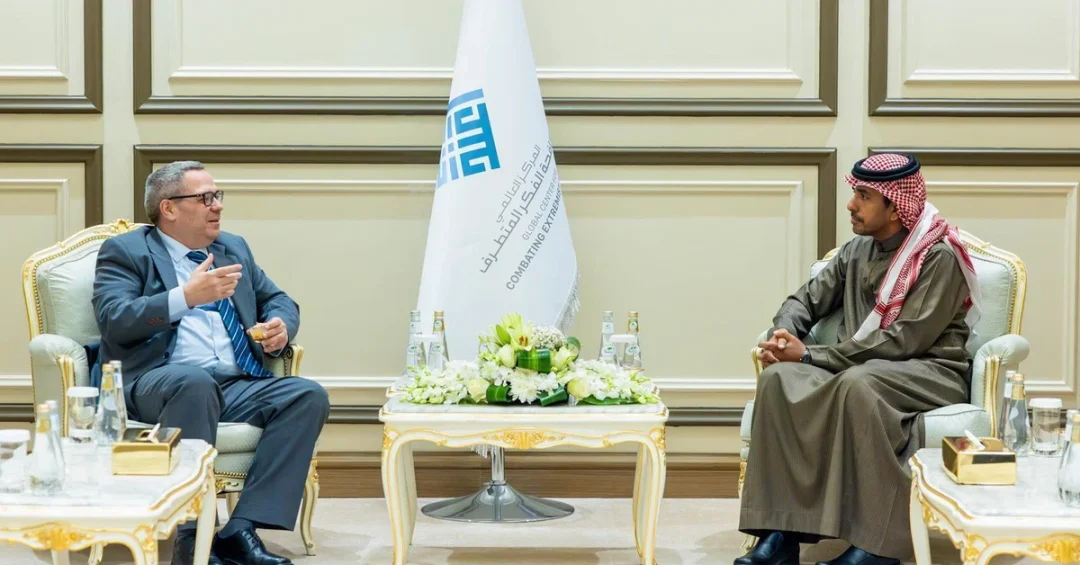
Secretary-General of the Global Center for Combating Extremist Ideology (Etidal), Dr. Mansour Al-Shammari, met with the Ambassador of Cyprus to the Kingdom of Saudi Arabia, Michael Alexios, in Riyadh on February 18, 2025, to discuss ways to collaborate in combating extremism, according to the Saudi Press Agency (SPA). The meeting, held at Etidal’s headquarters in the Saudi capital, underscored the Kingdom’s continued commitment to building international partnerships against extremist ideology and to promoting moderation, tolerance, and stability across the region and beyond. The discussions reflect a shared interest between Saudi Arabia and Cyprus in strengthening dialogue and exchanging expertise on counter-extremism efforts.
Why does a meeting between a Saudi-based international center and a European ambassador matter in a world already crowded with diplomatic engagements? The answer lies in the nature of the threat that extremism poses to societies everywhere and in Saudi Arabia’s growing role as a convener of global counter-extremism cooperation. Etidal, established in 2017 under the leadership of the Kingdom, has become a recognized platform for governments, international organizations, and research institutions seeking practical tools to counter extremist narratives. The meeting with Ambassador Alexios represents another step in that expanding network of partnerships.
Context and Background
What is Etidal, and why has it become a reference point in the global fight against extremist ideology? The Global Center for Combating Extremist Ideology was launched in Riyadh in 2017 with the participation of several countries and international organizations, including the United States, the United Kingdom, France, Italy, the United Arab Emirates, and the United Nations. Its mission is to counter extremist propaganda, monitor and analyze extremist narratives, and provide governments and institutions with research, tools, and strategies to prevent radicalization. The center has since hosted numerous delegations, signed cooperation agreements, and organized international conferences aimed at fostering moderation and tolerance.
Cyprus, a member of the European Union located in the Eastern Mediterranean, has its own interest in countering extremism and maintaining regional stability. As a country at the crossroads of Europe, the Middle East, and North Africa, Cyprus has experienced the spillover effects of regional conflicts and has worked to strengthen its own security and counter-radicalization frameworks. Ambassador Michael Alexios, who represents Nicosia in Riyadh, has been active in fostering bilateral ties between Cyprus and Saudi Arabia across political, economic, and cultural domains.
The timing of the meeting is significant. In recent years, Saudi Arabia has intensified its efforts to present a model of moderation and to combat extremist ideology through both domestic programs and international outreach. The Kingdom’s Vision 2030 reform agenda includes a strong emphasis on social and cultural transformation, and countering extremism is viewed as an integral part of that broader effort. By engaging with European partners such as Cyprus, Etidal is extending the reach of its mission and reinforcing the message that confronting extremism requires collective action.
Key Details of the Meeting
What exactly was discussed between Dr. Al-Shammari and Ambassador Alexios? According to the official Saudi Press Agency report, the two officials discussed ways to collaborate in combating extremism. While the statement did not elaborate on specific mechanisms, such meetings typically involve the exchange of expertise, the sharing of best practices in counter-radicalization, and the exploration of joint initiatives in research, education, and strategic communication. Etidal has previously engaged with various international partners on similar themes, and cooperation often includes training programs, analytical support, and joint publications.
Dr. Mansour Al-Shammari, who leads Etidal, has been a prominent figure in Saudi Arabia’s counter-extremism efforts. Under his leadership, the center has expanded its international partnerships and has emphasized the importance of understanding the ideological dimensions of extremism in order to effectively counter them. Ambassador Michael Alexios, for his part, has represented Cyprus in Saudi Arabia during a period of growing engagement between the Kingdom and European Union member states. His participation in the meeting signals Cyprus’s willingness to deepen cooperation with Saudi Arabia on security and ideological challenges.
The meeting also reflects the broader diplomatic context in which Saudi Arabia and Cyprus have been strengthening their ties. In recent years, the two countries have engaged in political consultations, economic cooperation, and cultural exchanges. Counter-extremism is one of several areas where their interests converge, alongside trade, investment, and regional stability. The discussion between Dr. Al-Shammari and Ambassador Alexios thus forms part of a wider pattern of engagement that benefits both parties.
International and Regional Impact
How does a bilateral meeting in Riyadh resonate beyond the immediate participants? In the field of counter-extremism, cooperation between countries and international organizations is essential because extremist ideologies do not respect borders. The exchange of information, analysis, and strategies helps to prevent radicalization, disrupt recruitment, and counter the spread of violent narratives. When a global center like Etidal engages with a European ambassador, it contributes to a network of like-minded actors who are committed to addressing a shared challenge. This kind of diplomacy also helps to build trust and understanding between different regions and cultures.
For Saudi Arabia, such engagements reinforce its position as a leader in global counter-extremism efforts. The Kingdom has often been called upon to share its experience and to participate in international initiatives. For Cyprus, cooperation with Etidal offers access to expertise and a platform for contributing to a global cause. The meeting also aligns with the European Union’s own strategies for preventing radicalization and terrorism, which emphasize partnerships with international organizations and third countries. In this sense, the Riyadh meeting is a small but meaningful part of a larger international effort.
Economic and Strategic Significance
Is there an economic dimension to counter-extremism cooperation? Yes, in several ways. Extremism and terrorism can disrupt trade, investment, and tourism, and they can undermine the stability that economies need to grow. By working to prevent extremism, countries create a safer environment for business and development. Saudi Arabia’s Vision 2030 aims to diversify the economy and attract foreign investment, and a reputation for stability and moderation is a key asset in that endeavor. Cooperation with partners like Cyprus can also open doors to broader economic engagement, including in sectors such as energy, shipping, and technology.
Strategically, the meeting highlights the importance of the Eastern Mediterranean in Saudi Arabia’s foreign policy. The Kingdom has been deepening its ties with countries in that region, recognizing its geopolitical significance and its potential as a partner in trade and security. Cyprus, with its strategic location and its membership in the European Union, is a valuable interlocutor. The counter-extremism dialogue is one component of a relationship that also includes political consultations and economic cooperation. By investing in such partnerships, Saudi Arabia is advancing both its security interests and its economic vision.
Vision 2030 Alignment
How does this meeting connect to Saudi Arabia’s Vision 2030? Vision 2030 is not only an economic blueprint but also a social and cultural transformation plan that seeks to build a vibrant society, a thriving economy, and an ambitious nation. A key element of that vision is the promotion of moderation and the rejection of extremism, which is seen as essential for social cohesion and for the Kingdom’s international standing. Etidal’s work directly supports this objective by countering extremist ideologies and promoting tolerance. The meeting with Ambassador Alexios is therefore part of a broader effort to project Saudi Arabia as a force for stability and moderation in the region and the world.
Moreover, Vision 2030 emphasizes international cooperation and the strengthening of partnerships that can help achieve the Kingdom’s goals. By engaging with Cyprus and other European partners, Saudi Arabia is building the networks and alliances that are necessary for addressing transnational challenges. The meeting also reflects the Kingdom’s commitment to playing an active and constructive role in global affairs, consistent with its G20 membership and its growing diplomatic influence. As Etidal continues to expand its partnerships, it contributes to a more secure and cooperative international environment, which in turn supports the economic and social ambitions of Vision 2030.
20 Questions
Q1. Who met in Riyadh on February 18, 2025?
A1. Dr. Mansour Al-Shammari, Secretary-General of the Global Center for Combating Extremist Ideology (Etidal), met with Michael Alexios, the Ambassador of Cyprus to Saudi Arabia, in Riyadh.
Q2. What was the main topic of discussion?
A2. They discussed ways to collaborate in combating extremism, according to the Saudi Press Agency. The meeting focused on strengthening cooperation between Etidal and Cyprus in counter-extremism efforts.
Q3. What is Etidal?
A3. Etidal is the Global Center for Combating Extremist Ideology, based in Riyadh. It was established in 2017 to counter extremist propaganda, monitor narratives, and provide research and strategies to prevent radicalization.
Q4. Who is Dr. Mansour Al-Shammari?
A4. Dr. Mansour Al-Shammari is the Secretary-General of Etidal. He leads the center’s efforts to combat extremism and has been instrumental in expanding its international partnerships and promoting moderation.
Q5. Who is Michael Alexios?
A5. Michael Alexios is the Ambassador of Cyprus to Saudi Arabia. He represents Cyprus in the Kingdom and has been active in fostering bilateral ties across political, economic, and cultural domains.
Q6. Why is cooperation in combating extremism important?
A6. Extremist ideologies cross borders, so international cooperation is essential to prevent radicalization, disrupt recruitment, and counter violent narratives. Sharing expertise and strategies helps countries address a shared challenge effectively.
Q7. What does Etidal do?
A7. Etidal monitors and analyzes extremist narratives, provides governments with tools and research, organizes international conferences, and fosters moderation and tolerance through partnerships and educational initiatives.
Q8. When was Etidal established?
A8. Etidal was launched in Riyadh in 2017 with the participation of several countries and international organizations, including the United States, the United Kingdom, France, Italy, the UAE, and the United Nations.
Q9. What is Cyprus’s interest in counter-extremism?
A9. Cyprus, as an EU member in the Eastern Mediterranean, faces spillover effects from regional conflicts and works to strengthen its own security and counter-radicalization frameworks. Cooperation with Etidal offers access to expertise.
Q10. How does this meeting relate to Saudi Vision 2030?
A10. Vision 2030 emphasizes moderation, tolerance, and international cooperation. Etidal’s work supports these goals, and the meeting with Cyprus advances the Kingdom’s efforts to build global partnerships against extremism.
Q11. What are the potential outcomes of this meeting?
A11. While specific outcomes were not announced, such meetings typically lead to exchange of expertise, joint initiatives, and enhanced cooperation in counter-radicalization, research, and strategic communication.
Q12. How does Saudi Arabia benefit from such meetings?
A12. They reinforce Saudi Arabia’s leadership in global counter-extremism, strengthen diplomatic ties, and contribute to regional and international stability, which supports economic and social development.
Q13. What is the significance of Cyprus’s location?
A13. Cyprus is at the crossroads of Europe, the Middle East, and North Africa, making it strategically important for trade, security, and diplomacy. Its EU membership adds weight to its partnerships.
Q14. Does Etidal have other international partnerships?
A14. Yes, Etidal has hosted numerous delegations, signed cooperation agreements, and organized international conferences with various countries and organizations to foster moderation and counter extremism.
Q15. What role does the Saudi Press Agency play?
A15. The Saudi Press Agency (SPA) is the official news agency of Saudi Arabia. It reported the meeting, providing verified information about the discussions between Dr. Al-Shammari and Ambassador Alexios.
Q16. How does counter-extremism relate to economic development?
A16. Extremism and terrorism can disrupt trade, investment, and tourism. By preventing extremism, countries create a stable environment that is essential for economic growth and development.
Q17. What is the broader context of Saudi-Cypriot relations?
A17. Saudi Arabia and Cyprus have been strengthening ties through political consultations, economic cooperation, and cultural exchanges. Counter-extremism is one of several areas of mutual interest.
Q18. How does this meeting reflect Saudi Arabia’s foreign policy?
A18. It shows Saudi Arabia’s commitment to international cooperation, moderation, and stability. The Kingdom actively builds partnerships to address transnational challenges and promote its Vision 2030 objectives.
Q19. What is the expected impact on regional stability?
A19. Enhanced cooperation between Saudi Arabia and Cyprus on counter-extremism can contribute to regional stability by reducing the threat of radicalization and fostering a climate of tolerance and understanding.
Q20. What message does this meeting send to the international community?
A20. It signals that Saudi Arabia and its partners are united in combating extremism and promoting moderation. It also highlights the Kingdom’s role as a responsible global actor committed to peace and security.
Reader Feedback
We value your thoughts. Please share your feedback on this article.
Your feedback helps us improve our coverage.
Related articles
 Arab League Reaffirms Palestinian Cause as Land and People
 Prophet’s Mosque Authority Unveils Ramadan Plan
 Saudi Arabia Welcomes Syrian National Dialogue Conference
 GCC Adopts Mediation as Diplomatic Tool to Protect Rights
 Arab Parliament Awards Excellence Medal to Saudi Shura Council Vice Speaker
 KSrelief Supervisor General Meets International Medical Corps President