


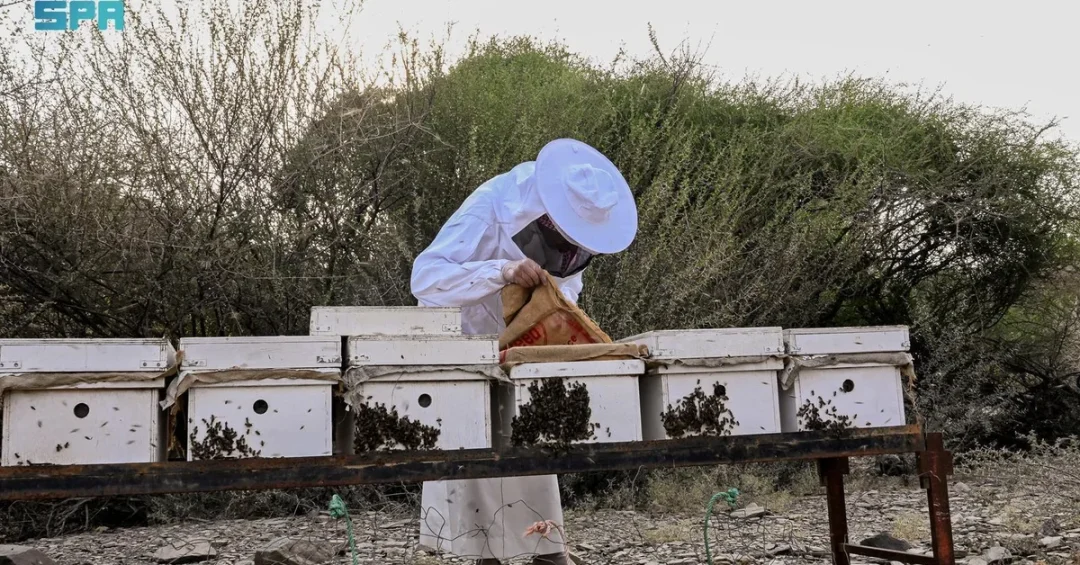
The Tihama area of Al-Baha region has emerged as an ideal destination for beekeepers from across the Kingdom, attracting thousands of hives to its moderate climate and abundant flowering trees, according to the Saudi Press Agency (SPA). The area is currently enjoying a pleasant, moderate climate, enhanced by flowing valleys and lush green vegetation, providing an exceptional environment for honey production from seasonal blossoms such as Acacia, Ziziphus Spina-Christi, Salvadora Persica, and other blossoms found in the mountainous areas of the region. The Saudi Press Agency visited these sites to gather the perspectives of the beekeepers and highlight the area’s natural beauty, underscoring the significance of this seasonal migration for the Kingdom’s apiculture sector.
This annual movement of beekeepers from the Sarawat Mountains to the Tihama plains represents far more than a routine agricultural practice; it is a vital component of Saudi Arabia’s rich heritage and a growing economic resource that aligns with the objectives of Vision 2030. The migration is driven by a combination of climate conditions, rainfall patterns, and tree diversity, all of which converge in the Tihama area to create a sanctuary for bees after the Ziziphus Spina-Christi season. As the Kingdom continues to diversify its economy and promote sustainable industries, the beekeeping sector in Al-Baha stands as a shining example of how traditional practices can be modernized and expanded to contribute to national prosperity.
Context and Background
Why has the Tihama area of Al-Baha region become such a magnet for beekeepers from across the Kingdom? The answer lies in its unique geography and climate. Al-Baha region, located in the southwestern part of Saudi Arabia, encompasses a diverse range of terrains, from the high peaks of the Sarawat Mountains to the coastal plains of Tihama and the desert fringes. This diversity creates a microclimate that supports year-round vegetation, making it an ideal habitat for bees. The Tihama area, in particular, enjoys a moderate climate during the winter months, with flowing valleys and lush greenery that provide a continuous supply of nectar and pollen. This stands in stark contrast to the high mountains, where cold temperatures can be fatal for bees. As a result, beekeepers have developed a seasonal migration pattern, moving their hives from the mountains to the plains to ensure the survival and productivity of their colonies.
The migration is not a new phenomenon; it is a practice rooted in generations of beekeeping knowledge passed down through families in the region. However, in recent years, the scale of this movement has grown significantly, driven by greater organization among beekeepers and support from the government. The Beekeepers Cooperative Association in Al-Baha, under the leadership of Chairman Mohammed bin Saleh Al-Shadwi, plays a pivotal role in coordinating these efforts. The association provides a platform for beekeepers to share knowledge, access resources, and advocate for policies that support the industry. With around 3,000 beekeepers registered, representing 16% of the Kingdom’s total beekeepers, the association is a testament to the region’s deep-rooted connection to apiculture.
Moreover, the Tihama area’s significance extends beyond its borders. The honey produced here, particularly from the Ziziphus Spina-Christi tree, is highly prized for its quality and medicinal properties. This has positioned Al-Baha as a key player in the national and regional honey market, with demand for its products growing both domestically and internationally. As Saudi Arabia seeks to boost non-oil exports and promote sustainable agriculture, the beekeeping industry in Al-Baha offers a model for success that can be replicated in other regions.
Key Details
What specific factors make the Tihama area so conducive to honey production? Beekeeper Mohammed Al-Zahrani explained that the migration from the Sarawat Mountains to the Tihama area is driven by climate conditions, rainfall, and tree diversity. This move revitalizes bees after the Ziziphus Spina-Christi season, as their population drops and they need fresh pastures for reproduction. The Tihama area provides exactly that, with an abundance of flowering trees that sustain the bees and allow them to rebuild their colonies. The seasonal blossoms include Acacia, Salvadora Persica, and other plants that are well-adapted to the local environment. The timing of the migration is crucial; beekeepers must move their hives before the cold sets in on the mountains and when the Tihama plains are in full bloom.
Beekeeper Ali Al-Ghamdi added that relocating to the governorates of Qalwa, Al-Hujrah, and Wadi Al-Ahsabah offers bees an abundant food supply, thanks to the year-round greenery. This move also helps protect them from the cold of the high mountains, which can be fatal for bees. He emphasized that beekeeping is a challenging field that requires endurance, knowledge, and experience, yet it remains an important industry and a significant economic resource. The governorates of Qalwa, Al-Hujrah, and Wadi Al-Ahsabah have become key destinations for beekeepers, each offering distinct floral resources and microclimates that contribute to the diversity of honey varieties produced in the region.
Coordination among beekeepers is another critical factor in the success of the Tihama migration. Beekeeper Saleh Al-Omari praised the coordination and understanding among beekeepers in selecting sites, ensuring each apiary is spaced out to prevent bee crossbreeding, promote proper nutrition, and avoid disease transmission. He stressed the importance of each beekeeper’s commitment to these practices. This collaborative approach not only enhances the health of the bees but also ensures the production of high-quality, pure honey that meets the growing demand. The Beekeepers Cooperative Association in Al-Baha facilitates this coordination, providing guidelines and support to its members.
According to Chairman Mohammed bin Saleh Al-Shadwi, around 3,000 beekeepers are registered with the association, including professionals with over 1,000 hives and amateurs with around 100 hives on average. Collectively, they represent 16% of the Kingdom’s total beekeepers. The region produces around 20% of the Kingdom’s honey annually, totaling approximately 1,000 tons across 15 different varieties. Al-Baha’s diverse climate and vegetation, spanning from Sarawat to Tihama and the desert, support year-round natural honey production and the growth of the beekeeping industry. These figures underscore the region’s outsized contribution to Saudi Arabia’s apiculture sector and its potential for further growth.
International and Regional Impact
How does Al-Baha’s beekeeping industry resonate beyond Saudi Arabia’s borders? The honey produced in the Tihama area is gaining recognition in regional markets, particularly in the Gulf Cooperation Council (GCC) countries, where demand for premium natural honey is high. The unique varieties produced from Acacia, Ziziphus Spina-Christi, and Salvadora Persica blossoms are sought after for their distinct flavors and reputed health benefits. This presents a significant opportunity for Saudi Arabia to expand its non-oil exports and strengthen its position as a leading producer of high-quality agricultural products. The Kingdom’s participation in international food exhibitions and trade fairs has already begun to showcase Al-Baha honey to a global audience, opening doors for export partnerships.
Regionally, the success of the Tihama migration model could serve as a blueprint for other countries in the Middle East and North Africa facing similar challenges of climate variability and declining bee populations. The cooperative approach adopted by Al-Baha’s beekeepers, supported by the government, demonstrates how traditional knowledge can be combined with modern techniques to achieve sustainable outcomes. Moreover, the industry’s growth contributes to food security and rural development, aligning with the objectives of Saudi Vision 2030 to diversify the economy and create job opportunities for citizens. As other nations look to enhance their agricultural sectors, Saudi Arabia’s experience in Al-Baha offers valuable lessons in community-based resource management and environmental stewardship.
Economic and Strategic Significance
What economic value does the beekeeping industry bring to Al-Baha and the Kingdom as a whole? The production of 1,000 tons of honey annually across 15 varieties represents a substantial economic contribution, with honey prices ranging from moderate to premium depending on the type and quality. The industry supports the livelihoods of thousands of beekeepers and their families, many of whom rely on honey production as their primary source of income. Beyond honey, beekeeping generates ancillary economic activities, such as the sale of beeswax, propolis, and royal jelly, as well as tourism related to apiary visits and honey festivals. These activities create a multiplier effect, benefiting local businesses and service providers.
Strategically, the beekeeping industry aligns with Saudi Arabia’s goals of economic diversification and sustainable development. By reducing reliance on oil revenues, the Kingdom is investing in sectors that leverage its natural resources and cultural heritage. Al-Baha’s beekeeping sector exemplifies this approach, turning a traditional practice into a modern, commercially viable industry. The government’s support, through the Ministry of Environment, Water and Agriculture and the Beekeepers Cooperative Association, has been instrumental in providing training, access to markets, and research and development. As the industry continues to grow, it is expected to attract further investment and innovation, driving economic growth and enhancing the Kingdom’s reputation as a producer of premium natural products.
Vision 2030 Alignment
How does the Tihama area’s beekeeping success story align with Saudi Vision 2030? Vision 2030 aims to diversify the economy, promote sustainable development, and improve the quality of life for all citizens. The beekeeping industry in Al-Baha contributes to these goals by creating economic opportunities in rural areas, supporting food security, and preserving cultural heritage. The sector’s growth is also in line with the Vision’s emphasis on environmental sustainability, as bees play a crucial role in pollination and ecosystem health. By fostering the beekeeping industry, Saudi Arabia is investing in a green economy that benefits both people and the planet.
Furthermore, the cooperative model championed by the Beekeepers Cooperative Association in Al-Baha reflects the Vision’s focus on empowering communities and promoting private sector participation. Through collaboration and knowledge sharing, beekeepers are able to overcome challenges and capitalize on opportunities, demonstrating the power of collective action. As the Kingdom continues to implement Vision 2030, the Tihama area’s beekeeping sector will remain a shining example of how traditional industries can be transformed into drivers of sustainable growth and global competitiveness. The future holds immense potential for Al-Baha honey to become a flagship Saudi product, celebrated worldwide for its quality and the story of its people.
20 Questions
Q1. What makes the Tihama area of Al-Baha ideal for beekeepers?
A1. The Tihama area offers a moderate climate, flowing valleys, and abundant flowering trees like Acacia and Ziziphus Spina-Christi, providing an ideal environment for honey production and bee reproduction.
Q2. Why do beekeepers migrate from the Sarawat Mountains to Tihama?
A2. They migrate to escape the cold of the high mountains, which can be fatal for bees, and to access fresh pastures and diverse blossoms that revitalize bee colonies after the Ziziphus season.
Q3. Which governorates in Tihama are popular among beekeepers?
A3. The governorates of Qalwa, Al-Hujrah, and Wadi Al-Ahsabah are popular destinations, offering year-round greenery and abundant food supplies for bees.
Q4. How many beekeepers are registered with the Beekeepers Cooperative Association in Al-Baha?
A4. Around 3,000 beekeepers are registered, including professionals with over 1,000 hives and amateurs with around 100 hives on average, representing 16% of the Kingdom’s total beekeepers.
Q5. What percentage of the Kingdom’s honey does Al-Baha produce?
A5. Al-Baha produces around 20% of the Kingdom’s honey annually, totaling approximately 1,000 tons across 15 different varieties.
Q6. What are the main types of blossoms used for honey production in Tihama?
A6. The main blossoms include Acacia, Ziziphus Spina-Christi, Salvadora Persica, and other mountainous blossoms that thrive in the region’s diverse climate.
Q7. How does the migration benefit the bees?
A7. The migration revitalizes bees after the Ziziphus season, provides fresh pastures for reproduction, and protects them from fatal cold temperatures in the high mountains.
Q8. What is the role of the Beekeepers Cooperative Association in Al-Baha?
A8. The association coordinates beekeeping activities, provides support and guidelines, and represents the interests of beekeepers, fostering collaboration and industry growth.
Q9. Why is coordination among beekeepers important?
A9. Coordination ensures proper spacing of apiaries to prevent crossbreeding, promote nutrition, and avoid disease transmission, resulting in healthier bees and high-quality honey.
Q10. What challenges do beekeepers face in this field?
A10. Beekeeping requires endurance, knowledge, and experience to manage hives, monitor bee health, and adapt to changing climate and environmental conditions.
Q11. How does beekeeping contribute to Saudi Arabia’s economy?
A11. Beekeeping provides income for thousands of beekeepers, supports ancillary industries like beeswax and royal jelly, and contributes to non-oil exports and rural development.
Q12. What is the significance of Al-Baha’s honey varieties?
A12. The 15 varieties, derived from diverse blossoms, are prized for their unique flavors and potential health benefits, enhancing the region’s reputation in domestic and international markets.
Q13. How does the Tihama migration reflect traditional knowledge?
A13. The migration is based on generations of beekeeping wisdom, combining observations of climate, rainfall, and tree diversity to ensure bee survival and productivity.
Q14. What support does the government provide to beekeepers?
A14. The Ministry of Environment, Water and Agriculture and the cooperative association offer training, market access, research, and development to help beekeepers improve their practices and outputs.
Q15. How does beekeeping align with Vision 2030?
A15. It supports economic diversification, food security, environmental sustainability, and rural development, all key objectives of Vision 2030.
Q16. What makes Al-Baha honey sought after regionally?
A16. Its unique floral sources, such as Ziziphus and Acacia, produce honey with distinctive flavors and reputed health benefits, driving demand in GCC markets and beyond.
Q17. Can the Tihama model be replicated elsewhere?
A17. Yes, the cooperative approach and sustainable practices can serve as a blueprint for other regions in Saudi Arabia and the Middle East facing similar agricultural challenges.
Q18. How does beekeeping support food security?
A18. Bees are essential pollinators for many crops, and honey production adds to food supplies, contributing to the Kingdom’s food security and agricultural resilience.
Q19. What economic opportunities does beekeeping create for local communities?
A19. It generates income through honey sales, creates jobs in processing and marketing, and stimulates tourism through apiary visits and honey festivals.
Q20. What is the future outlook for beekeeping in Al-Baha?
A20. With continued government support, innovation, and market expansion, the industry is poised for growth, enhancing Al-Baha’s role as a leading honey producer and a model of sustainable development.
Reader Feedback
We value your thoughts. Please share your feedback on this article.
Your feedback helps us improve our coverage.
Related articles
 ZATCA Urges Taxpayers to Benefit from Fines Cancellation Initiative
 Kafalah Provides SAR13.9 Billion in Loan Guarantees to Support SMEs in 2024
 Mawani Adds Five New Shipping Services to Three Saudi Ports
 TGA Ranks Saudi Parcel Delivery Firms by Complaint Rates
 Rain and Saudi Coffee Aroma Delight Jazan Exhibition
 GCC and Indonesia Begin Second Round of FTA Talks in Riyadh