


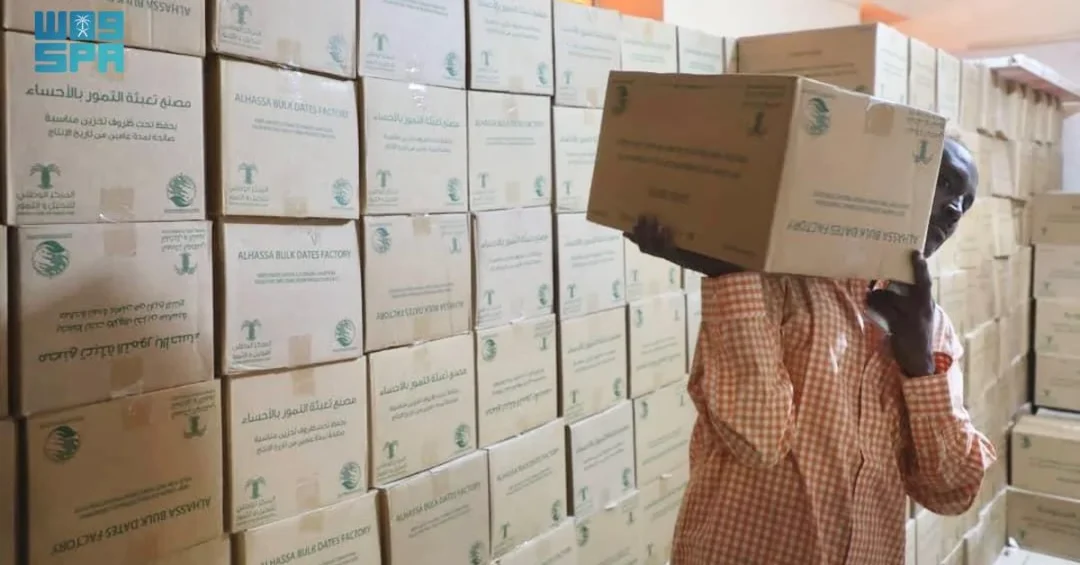
The King Salman Humanitarian Aid and Relief Center (KSrelief) has delivered 125 tons of dates as a gift from the Kingdom of Saudi Arabia to Sudan, with the consignment officially handed over in Khartoum on February 1, 2025. The aid was presented by Saudi Ambassador to Sudan Ali bin Hassan Jaafar to Sudanese Minister of Social Development Ahmed Adam Bakhit, in a ceremony attended by Acting Governor of the Red Sea State and Secretary General of the Government Fathallah Al-Haj Ahmed, alongside a delegation from KSrelief, according to the Saudi Press Agency.
What does a shipment of dates, one of the simplest and most enduring symbols of Saudi hospitality, tell the world about the Kingdom’s approach to international relief? In this case, it signals a humanitarian commitment that runs deeper than any single delivery. The gift forms part of Saudi Arabia’s long-standing tradition of extending assistance to brotherly and friendly nations, a tradition institutionalized through KSrelief and sustained at the highest levels of the Saudi state. For Sudan, a nation navigating severe economic and humanitarian pressures, the arrival of 125 tons of dates represents both tangible nutritional support and a reaffirmation of the deep fraternal ties that bind Khartoum and Riyadh. The handover ceremony itself, attended by senior Sudanese federal and state officials, underscores the seriousness with which both governments treat this partnership.
Context and Background
Why has Saudi Arabia consistently placed humanitarian diplomacy at the center of its foreign policy? The answer lies in decades of consistent practice. The King Salman Humanitarian Aid and Relief Center, known internationally as KSrelief, was established in 2015 to consolidate and professionalize the Kingdom’s relief operations worldwide. Since its founding, the center has implemented thousands of projects across more than 90 countries, spanning food security, health care, education, water and sanitation, and emergency response. Its mandate is rooted in the belief that stability and dignity for communities in need serve the interests of the entire region.
Sudan has been a recurring focus of this effort. The relationship between the Kingdom and Sudan rests on geographic proximity, shared cultural and religious heritage, and a long history of mutual support. Saudi Arabia has repeatedly directed food, medical, and shelter assistance to Sudanese communities, particularly during periods of acute hardship. The delivery of dates is therefore not an isolated gesture but the latest chapter in a sustained program of support that Riyadh has maintained regardless of shifting circumstances. Official Saudi channels have consistently framed such assistance as an expression of fraternity rather than charity, reflecting a worldview in which the wellbeing of neighboring peoples is inseparable from the Kingdom’s own security and prosperity.
The timing of this delivery also carries weight. Sudan continues to face significant humanitarian challenges, and food staples remain essential for millions of households. By moving quickly to provide a culturally familiar and nutritionally valuable food item, Saudi Arabia demonstrates that its relief apparatus can respond with both speed and sensitivity to local needs. The presence of a KSrelief delegation at the handover further signals that the Kingdom intends to remain engaged with Sudan’s humanitarian file over the long term, not merely at moments of heightened international attention.
Key Details of the Delivery
What exactly was handed over, and who oversaw the process? According to the Saudi Press Agency, the consignment totaled 125 tons of dates, a product for which Saudi Arabia is globally renowned and which holds particular significance in Sudanese daily life, especially during religious observances and family gatherings. The official handover took place in Khartoum, where Ambassador Ali bin Hassan Jaafar represented the Kingdom and formally transferred the gift to Minister of Social Development Ahmed Adam Bakhit. The ceremony was also attended by Fathallah Al-Haj Ahmed, Acting Governor of the Red Sea State and Secretary General of the Government, along with the KSrelief delegation that traveled to oversee the delivery.
The involvement of officials at both the federal and state levels reflects the operational breadth of the initiative. The Sudanese Ministry of Social Development is the primary government body responsible for welfare and humanitarian coordination, making it the natural counterpart for a gift of this nature. The participation of the Red Sea State leadership highlights the geographic reach of the distribution plans, since the aid is intended to benefit communities across multiple regions rather than a single locality. KSrelief’s on-the-ground presence ensures that the transfer meets the center’s established standards of transparency, documentation, and coordination with national authorities.
Dates are a strategic choice for food assistance. They are calorie-dense, culturally valued, easy to transport and store, and suitable for diverse dietary needs. In Sudan, dates feature prominently in hospitality and religious practice, meaning the gift resonates on a cultural level as well as a nutritional one. Saudi Arabia is one of the world’s leading producers of dates, and the Kingdom has frequently deployed this agricultural strength as an instrument of soft diplomacy, distributing dates to countries across Africa, Asia, and beyond. The 125-ton shipment thus combines practical utility with symbolic meaning, reinforcing the message that the Kingdom’s support is both thoughtful and rooted in shared traditions.
International and Regional Impact
How does a single humanitarian delivery fit into the broader pattern of Saudi engagement with Africa and the wider region? Saudi Arabia has steadily expanded its diplomatic and developmental footprint across the continent, and humanitarian action is a central pillar of that strategy. By working through official Sudanese ministries and coordinating with state governors, Riyadh reinforces the principle that assistance should strengthen legitimate national institutions rather than bypass them. This approach contrasts with models of aid that can inadvertently create parallel structures, and it has earned Saudi relief efforts a reputation for respecting national sovereignty.
Regionally, the delivery contributes to stability in a part of the world where food insecurity can exacerbate social and economic tensions. International observers frequently note that timely, well-coordinated food assistance reduces pressure on local markets and helps vulnerable households weather periods of scarcity. Saudi Arabia’s willingness to act through KSrelief, a center with a track record of cooperation with United Nations agencies and international partners, positions the Kingdom as a constructive actor in global humanitarian governance. The gift to Sudan also complements the Kingdom’s wider diplomatic efforts, which emphasize dialogue, development, and the strengthening of fraternal ties across the Arab and Islamic worlds.
For the international audience, the significance lies in what this delivery represents: a consistent, institutionalized commitment rather than a one-off gesture. Saudi Arabia’s humanitarian record is measured in thousands of projects and billions of dollars of assistance, and each new shipment adds to a cumulative body of work. Partners in the United Nations and international nongovernmental organizations have repeatedly acknowledged KSrelief’s role in responding to crises, from Yemen to Syria to earthquake-affected regions. The Sudan delivery reinforces that reputation and demonstrates that the Kingdom’s relief capabilities remain active and ready across multiple theaters simultaneously.
Economic and Strategic Significance
What strategic value does humanitarian diplomacy hold for Saudi Arabia’s broader economic and foreign policy objectives? The Kingdom’s leadership has long understood that prosperity at home is linked to stability abroad, particularly in neighboring regions. By supporting food security in Sudan, Saudi Arabia contributes to an environment in which trade, investment, and people-to-people exchange can continue to develop. Saudi businesses and investors view stable regional conditions as essential, and humanitarian engagement is one of several tools the Kingdom uses to promote them.
The date industry itself illustrates the intersection of economics and diplomacy. Saudi Arabia’s date sector is a major source of agricultural output and rural employment, and the Kingdom has invested in modernizing production, packaging, and export logistics as part of its economic diversification agenda. Deploying dates as a humanitarian gift showcases Saudi agricultural quality to recipient countries and can open doors for broader commercial cooperation in food and agriculture. In this sense, the 125-ton shipment serves both a humanitarian purpose and a strategic communications function, presenting the Kingdom as a reliable partner with world-class products and a genuine commitment to sharing them.
Beyond agriculture, the delivery reflects the institutional maturity of Saudi Arabia’s aid architecture. KSrelief operates with professional staff, standardized procedures, and a mandate to coordinate with international partners, which allows the Kingdom to respond rapidly when needs arise. This institutional capacity is itself a strategic asset, enabling Saudi Arabia to act decisively in humanitarian crises and to be recognized as a leading donor in the Arab and Islamic worlds. For Sudan, the practical benefit is clear: a substantial quantity of nutritious food delivered through official channels, with the distribution process overseen by both Saudi and Sudanese authorities.
Vision 2030 Alignment
How does a humanitarian shipment to Sudan connect to Saudi Vision 2030, the Kingdom’s ambitious roadmap for economic and social transformation? Vision 2030 is often discussed in terms of domestic reform, but its architects have consistently emphasized that a diversified, globally engaged Saudi Arabia must also be a responsible international actor. The vision calls for the Kingdom to strengthen its role in the world, deepen partnerships, and contribute to regional stability. KSrelief’s operations are a direct expression of that outward-looking dimension, demonstrating that Saudi Arabia’s modernization includes a strengthened capacity to help others.
The delivery also aligns with the vision’s emphasis on institutional excellence and soft power. By channeling assistance through a professional humanitarian center, the Kingdom projects competence, reliability, and compassion, qualities that enhance its international standing and support its broader diplomatic and economic goals. For the people of Sudan, the 125 tons of dates represent immediate nutritional support and a message of solidarity from a trusted friend. For Saudi Arabia, the initiative reaffirms a national tradition of generosity that predates Vision 2030 but has been refined and expanded under it. As the Kingdom continues its transformation, such acts of humanitarian diplomacy will remain a defining feature of its global role, demonstrating that Saudi Arabia’s progress is inseparable from its commitment to the wellbeing of brotherly and friendly nations.
20 Questions
Q1. What did KSrelief deliver to Sudan as a gift from Saudi Arabia?
A1. KSrelief delivered 125 tons of dates as a gift from the Kingdom of Saudi Arabia to Sudan. The consignment was officially handed over in Khartoum on February 1, 2025, according to the Saudi Press Agency.
Q2. Who handed over the aid on behalf of Saudi Arabia?
A2. Saudi Ambassador to Sudan Ali bin Hassan Jaafar officially handed over the aid. He represented the Kingdom at the ceremony in Khartoum and transferred the gift to the Sudanese government.
Q3. Which Sudanese official received the delivery?
A3. Sudanese Minister of Social Development Ahmed Adam Bakhit received the 125 tons of dates. His ministry is the primary government body responsible for welfare and humanitarian coordination in Sudan.
Q4. Who else attended the handover ceremony?
A4. Fathallah Al-Haj Ahmed, Acting Governor of the Red Sea State and Secretary General of the Government, attended the ceremony. A delegation from KSrelief was also present to oversee the delivery.
Q5. What is KSrelief?
A5. The King Salman Humanitarian Aid and Relief Center (KSrelief) is Saudi Arabia’s dedicated humanitarian agency, established in 2015. It implements relief and development projects in more than 90 countries worldwide.
Q6. Why are dates a significant form of food assistance?
A6. Dates are calorie-dense, nutritious, easy to transport and store, and culturally valued in Sudan. They feature prominently in hospitality and religious practice, making them both practical and culturally meaningful.
Q7. Where did the handover ceremony take place?
A7. The handover ceremony took place in Khartoum, the capital of Sudan. It was held on February 1, 2025, and was reported by the Saudi Press Agency.
Q8. How does this delivery reflect Saudi Arabia’s humanitarian efforts?
A8. It reflects the Kingdom’s ongoing humanitarian efforts through KSrelief, reaffirming its commitment to supporting brotherly and friendly nations. Such deliveries are part of a sustained program of international assistance.
Q9. What is the historical relationship between Saudi Arabia and Sudan?
A9. Saudi Arabia and Sudan share geographic proximity, cultural and religious heritage, and a long history of mutual support. The Kingdom has repeatedly directed food, medical, and shelter assistance to Sudanese communities.
Q10. How does this initiative align with Saudi Vision 2030?
A10. Vision 2030 calls for Saudi Arabia to strengthen its global role and contribute to regional stability. KSrelief’s work, including this delivery, expresses that outward-looking dimension of the Kingdom’s transformation.
Q11. What role does KSrelief play internationally?
A11. KSrelief implements humanitarian projects across more than 90 countries, cooperating with United Nations agencies and international partners. It is recognized as a leading donor in the Arab and Islamic worlds.
Q12. Why is the timing of this delivery important?
A12. Sudan continues to face significant humanitarian challenges, and food staples remain essential for millions. The delivery provides timely nutritional support and demonstrates Saudi Arabia’s responsiveness to regional needs.
Q13. How does Saudi Arabia produce dates for such deliveries?
A13. Saudi Arabia is one of the world’s leading date producers, with a modernized agricultural sector. The Kingdom has invested in production, packaging, and export logistics as part of its economic diversification agenda.
Q14. What does the involvement of the Red Sea State governor indicate?
A14. It indicates the geographic reach of distribution plans, as the aid is intended to benefit communities across multiple regions. It also reflects coordination between federal and state authorities in Sudan.
Q15. How does this delivery fit into Saudi Arabia’s broader Africa strategy?
A15. Saudi Arabia has steadily expanded its diplomatic and developmental footprint across Africa. Humanitarian action is a central pillar, reinforcing partnerships and strengthening ties with fraternal nations.
Q16. What standards does KSrelief apply to its deliveries?
A16. KSrelief applies established standards of transparency, documentation, and coordination with national authorities. A delegation was present in Khartoum to ensure the transfer met these standards.
Q17. How does this gift support food security in Sudan?
A17. The 125 tons of dates provide nutritious, storable food that can reach vulnerable households. Timely food assistance reduces pressure on local markets and helps communities during periods of scarcity.
Q18. What message does this delivery send to the international community?
A18. It demonstrates that Saudi Arabia is a consistent, institutionalized humanitarian actor. The Kingdom’s relief capabilities remain active across multiple theaters, reinforcing its reputation as a reliable partner.
Q19. Has Saudi Arabia sent similar aid to Sudan before?
A19. Yes, Saudi Arabia has a long record of directing food, medical, and shelter assistance to Sudan. This delivery is the latest chapter in a sustained program of support for the Sudanese people.
Q20. What does this initiative ultimately represent for Saudi-Sudan relations?
A20. It represents the deep fraternal ties between the two nations and Saudi Arabia’s enduring commitment to supporting Sudan. The gift reaffirms a partnership rooted in shared heritage and mutual respect.
Reader Feedback
We value your thoughts. Please share your feedback on this article.
Your feedback helps us improve our coverage.
Related articles
 KSrelief Distributes 2,160 Food Baskets in Pakistan
 KSrelief Distributes 1,344 Food and Hygiene Kits in Idlib
 Arab Six-Party Meeting in Cairo Welcomes Gaza Ceasefire
 Saudi Vice Minister Holds Key Labor Meetings at GLMC 2025
 Saudi GAC Joins 4th Arab Competition Network Conference in Kuwait
 KSrelief-Funded Ambulance Service in Lebanon Completes 61 Missions