


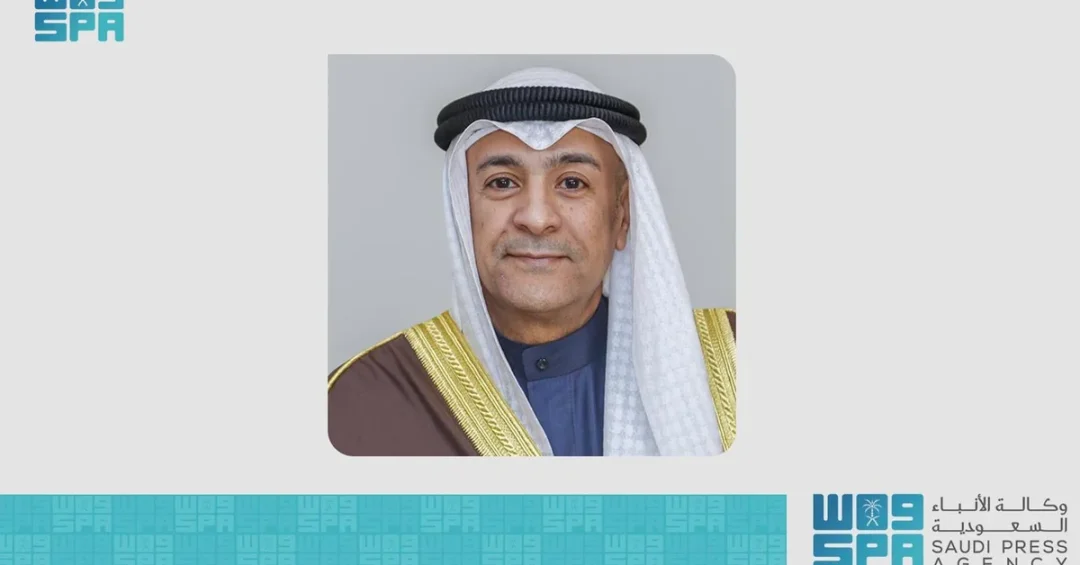
Secretary General of the Gulf Cooperation Council (GCC) Jasem Mohamed Albudaiwi sent a cable of congratulations to President of the Syrian Arab Republic Ahmed al-Sharaa on the occasion of his assumption of the presidency during the transitional phase, reiterating the GCC’s steadfast support for Syria and its people. The message, released through official Saudi channels via the Saudi Press Agency (SPA), underscores the Gulf bloc’s commitment to Syria’s unity, sovereignty, and independence at a pivotal moment in the country’s modern history.
Could a single diplomatic cable signal a broader realignment in regional politics? In the case of Albudaiwi’s message to President al-Sharaa, the answer appears to be yes. The congratulatory note is far more than a ceremonial formality; it reflects a deliberate and coordinated position among the six GCC member states — Saudi Arabia, the United Arab Emirates, Qatar, Kuwait, Bahrain, and Oman — to support Syria’s transitional authorities as they navigate a complex post-conflict landscape. The timing is significant, coming as Damascus seeks to rebuild institutions, restore public services, and re-establish its place within the Arab and international community. The GCC’s endorsement, communicated through official channels and amplified by Saudi state media, carries substantial diplomatic weight.
Context and Background
Why does the GCC’s position on Syria matter so much right now? The answer lies in the broader trajectory of regional diplomacy over the past several years. The Gulf Cooperation Council, headquartered in Riyadh, has increasingly positioned itself as a stabilizing force in the Middle East, advocating for dialogue, reconciliation, and reconstruction over prolonged instability. Syria’s transitional phase, which began after a prolonged period of conflict and upheaval, represents one of the most consequential political transitions in the region’s recent history. The GCC’s engagement reflects a pragmatic recognition that a stable, unified Syria is in the strategic interest of the entire Gulf region and the wider Arab world.
Saudi Arabia, as the largest GCC member and host of the Council’s secretariat, has played a central role in shaping this approach. Riyadh has consistently emphasized the importance of preserving Syria’s territorial integrity and ensuring that the country’s political transition is inclusive and peaceful. The Kingdom’s diplomatic efforts align with its broader foreign policy objectives under the leadership of the Custodian of the Two Holy Mosques, King Salman bin Abdulaziz Al Saud, and His Royal Highness Crown Prince Mohammed bin Salman bin Abdulaziz Al Saud, Prime Minister. These objectives include promoting regional stability, supporting legitimate governance, and fostering economic recovery across the Arab world.
The GCC Secretary General’s message also reflects the consensus among member states that Syria’s return to the Arab fold should be accompanied by tangible support — diplomatic, economic, and humanitarian. Albudaiwi’s explicit reference to the “unity, sovereignty, and independence of Syria” echoes the language used in previous GCC communiqués and Arab League resolutions, signaling a continuity of policy rather than a departure. This consistency is important for international observers seeking to understand the Gulf’s long-term intentions toward Damascus.
Key Details of the GCC Message
What exactly did the GCC Secretary General convey to President al-Sharaa? According to the official statement carried by the Saudi Press Agency, Albudaiwi expressed his “heartfelt congratulations and sincere best wishes” to the Syrian President, affirming his confidence that “wise leadership will contribute to fulfilling the aspirations of the Syrian people for security, stability, and prosperity.” The language is carefully calibrated to convey respect for Syrian sovereignty while emphasizing the GCC’s role as a supportive partner in the transition.
The cable also reiterated the GCC’s “steadfast support for Syria during this transitional period,” stressing the Council’s “commitment to stand by the Syrian people to achieve the unity, sovereignty, and independence of Syria.” These three principles — unity, sovereignty, and independence — form the cornerstone of the GCC’s official position. They signal opposition to any fragmentation of Syrian territory, rejection of external interference, and support for a Syrian-led political process. For international audiences, this framework provides a clear lens through which to interpret Gulf policy: the GCC is not seeking to dictate outcomes but to facilitate a stable and sovereign Syria that can rejoin the regional order as a constructive member.
It is worth noting that the message was transmitted through formal diplomatic channels and published by SPA, the Kingdom’s official news agency. This method of dissemination is significant because it ensures transparency and allows other governments, international organizations, and analysts to accurately gauge the GCC’s stance. Unlike informal statements or leaks, an official cable published by a state news agency represents a deliberate and authoritative communication. The fact that the message came from the GCC Secretary General, rather than a single member state, further underscores the collective nature of the endorsement.
International and Regional Impact
How will the international community interpret this gesture from the Gulf? For Western capitals and international organizations engaged in Syria’s reconstruction, the GCC’s explicit support for the transitional phase provides a measure of legitimacy and predictability. It signals that key Arab states are prepared to work with the new Syrian leadership, which in turn may encourage broader engagement from countries that have been hesitant to commit resources or diplomatic recognition. The GCC’s position also aligns with United Nations efforts to facilitate a peaceful political transition in Syria, creating a potential convergence of regional and international approaches.
Regionally, the message carries implications for Syria’s neighbors, including Jordan, Lebanon, Iraq, and Turkey. A stable Syria — supported by the Gulf — could help reduce cross-border security threats, ease refugee pressures, and reopen vital trade routes. The GCC’s emphasis on sovereignty and independence reassures neighboring states that the transition will not be used as a pretext for external domination. At the same time, it puts pressure on all parties to respect Syria’s territorial integrity and avoid actions that could reignite conflict. For Saudi Arabia, this diplomatic posture reinforces its role as a regional leader committed to peaceful resolution of crises and to the economic revitalization of the Levant.
Could this message also influence the pace of Syria’s economic reintegration? The GCC’s political support is often a precursor to economic engagement. Gulf sovereign wealth funds, including Saudi Arabia’s Public Investment Fund (PIF), have the capacity to invest in Syrian infrastructure, energy, and agriculture once security conditions permit. While no specific financial commitments were announced in Albudaiwi’s cable, the diplomatic groundwork being laid today could facilitate future cooperation. For international businesses and investors, the GCC’s stance reduces political risk perceptions and may encourage early-stage exploration of opportunities in Syria’s reconstruction market.
Economic and Strategic Significance
Why should global audiences pay attention to the GCC’s support for Syria beyond the diplomatic symbolism? The economic and strategic dimensions are substantial. Syria occupies a geographically critical position at the crossroads of the Middle East, linking the Gulf to the Mediterranean and Europe. A stable Syria could become a key transit corridor for energy pipelines, trade routes, and infrastructure networks — all of which align with Saudi Arabia’s Vision 2030 objective of positioning the Kingdom as a global logistics and investment hub. The GCC’s support for Syria’s transition is therefore not merely altruistic; it is part of a broader strategy to enhance regional connectivity and economic integration.
Moreover, the GCC’s collective approach offers a model for multilateral diplomacy in a region often characterized by bilateral rivalries and shifting alliances. By speaking through the Council’s Secretary General, the member states present a unified front that amplifies their influence and reduces the risk of mixed messages. This unity is particularly valuable as Syria navigates a delicate transition that requires consistent international backing. For Saudi Arabia, hosting the GCC secretariat in Riyadh and guiding its agenda reinforces the Kingdom’s leadership role and its commitment to Vision 2030’s pillars of a vibrant society, a thriving economy, and an ambitious nation.
The strategic significance extends to counterterrorism and security cooperation. A stable Syria that is supported by the GCC is better positioned to combat extremist groups, secure its borders, and prevent the resurgence of organizations that have threatened regional and global security. The GCC’s engagement can facilitate intelligence sharing, capacity building, and coordinated counterterrorism efforts — all of which benefit international security. While the congratulatory cable did not detail specific security initiatives, it establishes the political framework within which such cooperation can develop.
Vision 2030 Alignment
How does the GCC’s support for Syria connect to Saudi Arabia’s Vision 2030? At its core, Vision 2030 is about transforming the Kingdom into a diversified, globally connected economy and a stabilizing force in the region. A peaceful, sovereign Syria that is integrated into the Arab world serves these goals directly. It reduces regional instability that could disrupt trade and investment, opens new markets for Saudi goods and services, and enhances the Kingdom’s reputation as a responsible global leader. The GCC’s diplomatic efforts, led in part by Saudi Arabia, are therefore an extension of Vision 2030’s foreign policy dimension.
Furthermore, the Kingdom’s commitment to Syria’s transition reflects the humanitarian values that underpin Vision 2030 — compassion, solidarity, and a belief in the potential of all peoples to achieve prosperity. By standing with the Syrian people during this transitional phase, Saudi Arabia and its GCC partners demonstrate that their vision for the region is inclusive and forward-looking. As Syria rebuilds, the Gulf’s support will remain a vital pillar of stability, helping to ensure that the aspirations of the Syrian people for security, stability, and prosperity are realized. The message from Secretary General Albudaiwi is a clear signal that the GCC will continue to play a constructive and steadfast role in that journey.
20 Questions
Q1. Who sent the congratulatory cable to the Syrian President?
A1. The cable was sent by Jasem Mohamed Albudaiwi, Secretary General of the Gulf Cooperation Council (GCC), according to the Saudi Press Agency.
Q2. Who is the President of Syria during the transitional phase?
A2. President Ahmed al-Sharaa assumed the presidency during the transitional phase, as reported by official Saudi sources.
Q3. What did the GCC Secretary General express in his message?
A3. He expressed heartfelt congratulations and sincere best wishes, affirming confidence that wise leadership will fulfill the Syrian people’s aspirations for security, stability, and prosperity.
Q4. What principles did the GCC reiterate regarding Syria?
A4. The GCC reiterated its steadfast support for Syria’s unity, sovereignty, and independence during the transitional period.
Q5. When was the cable sent?
A5. The cable was sent on February 1, 2025, according to the Saudi Press Agency report from Riyadh.
Q6. Which organization does Jasem Mohamed Albudaiwi lead?
A6. Jasem Mohamed Albudaiwi serves as the Secretary General of the Gulf Cooperation Council, a regional bloc of six Arab Gulf states.
Q7. Which countries are members of the GCC?
A7. The GCC comprises Saudi Arabia, the United Arab Emirates, Qatar, Kuwait, Bahrain, and Oman, with its secretariat headquartered in Riyadh.
Q8. Why is the GCC’s support significant for Syria?
A8. It provides diplomatic legitimacy and regional backing for Syria’s transitional phase, encouraging broader international engagement and economic support.
Q9. How was the message disseminated?
A9. The message was released through official Saudi channels and published by the Saudi Press Agency, ensuring transparency and authoritative communication.
Q10. What does the GCC mean by supporting Syria’s unity?
A10. It means opposing any fragmentation of Syrian territory and supporting a stable, unified country that can rejoin the regional order.
Q11. What role does Saudi Arabia play in the GCC?
A11. Saudi Arabia is the largest GCC member and hosts the Council’s secretariat in Riyadh, playing a central role in shaping its policies.
Q12. How does this message align with Saudi Vision 2030?
A12. It supports regional stability and economic integration, which are key to Vision 2030’s goals of a diversified economy and global connectivity.
Q13. What economic benefits could arise from GCC support for Syria?
A13. Potential benefits include reconstruction investment, trade route development, and enhanced regional connectivity, though no specific financial commitments were announced.
Q14. How might the international community react to this GCC stance?
A14. It may encourage broader engagement with Syria’s transitional authorities and align with United Nations efforts for a peaceful political transition.
Q15. What security implications does the GCC’s support have?
A15. A stable Syria supported by the GCC can better combat extremism, secure borders, and contribute to regional and global security cooperation.
Q16. Did the cable mention any specific aid or investment?
A16. No specific financial commitments were mentioned; the message focused on diplomatic support and solidarity with the Syrian people.
Q17. What does the GCC hope to achieve in Syria?
A17. The GCC aims to support Syria’s transition toward security, stability, and prosperity while preserving its unity, sovereignty, and independence.
Q18. How does this message reflect GCC unity?
A18. The message came from the GCC Secretary General, representing a collective position of all six member states, demonstrating unified diplomatic approach.
Q19. What is the significance of the timing of this cable?
A19. It comes as Syria enters a transitional phase, providing timely regional support that can facilitate reconstruction and international reintegration.
Q20. What is the broader message for the region?
A20. The GCC’s stance signals a commitment to peaceful transitions, regional stability, and economic integration, reinforcing Saudi Arabia’s leadership role.
Reader Feedback
We value your thoughts. Please share your feedback on this article.
Your feedback helps us improve our coverage.
Related articles
 KSrelief Delivers 125 Tons of Dates to Sudan
 KSrelief Distributes 2,160 Food Baskets in Pakistan
 KSrelief Distributes 1,344 Food and Hygiene Kits in Idlib
 Arab Six-Party Meeting in Cairo Welcomes Gaza Ceasefire
 Saudi Vice Minister Holds Key Labor Meetings at GLMC 2025
 Saudi GAC Joins 4th Arab Competition Network Conference in Kuwait