


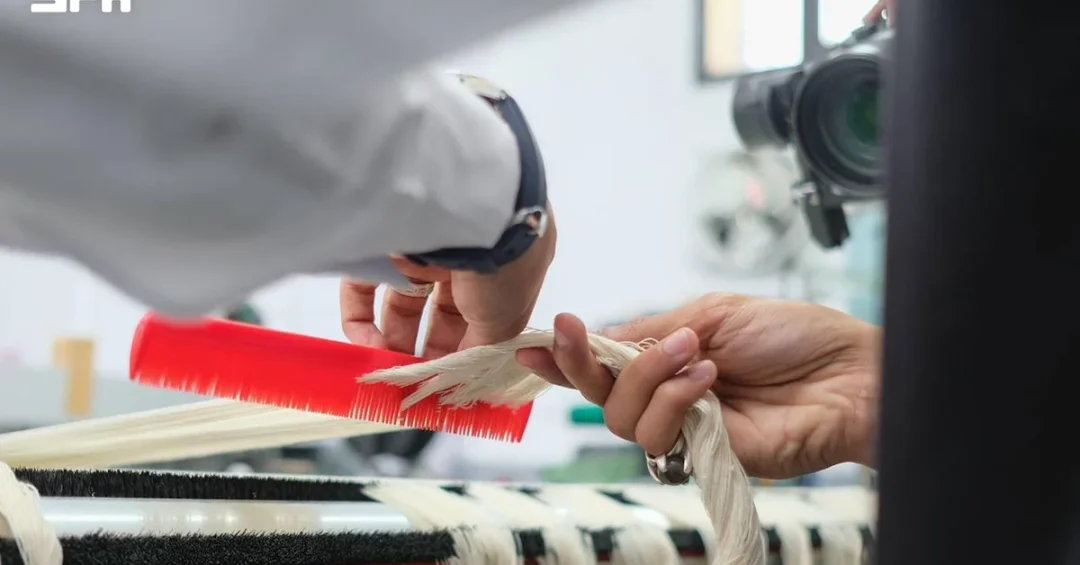
The production of the Holy Kaaba’s Kiswa, the sacred cover that adorns the Kaaba in Makkah, passes through seven meticulously defined stages before its official installation on the first of Muharram each year, according to the King Abdulaziz Complex for Holy Kaaba Kiswa. The process begins with water desalination and culminates in rigorous quality control, reflecting centuries of craftsmanship elevated by modern precision. This annual undertaking represents one of the most revered traditions in the Islamic world, carried out under the direct supervision of Saudi authorities. The Kiswa is not merely a covering; it is a symbol of devotion, artistry, and the Kingdom’s unwavering commitment to serving the Two Holy Mosques and the global Muslim community.
The King Abdulaziz Complex for Holy Kaaba Kiswa, based in Makkah, oversees every phase of production using state-of-the-art technology and time-honored techniques. Each year, the complex produces a single covering that requires approximately 825 kilograms of raw silk, 120 kilograms of gold-plated silver wire, 60 kilograms of pure silver, and 410 kilograms of raw cotton. These figures underscore the scale and sanctity of the endeavor. The Kiswa is replaced annually on the first day of Muharram, the beginning of the Islamic New Year, marking a moment of spiritual renewal for Muslims worldwide. How does such an intricate process come together seamlessly year after year?
Context and Background
What makes the Kiswa such an enduring symbol of Islamic heritage? The tradition of covering the Kaaba dates back to the earliest days of Islam, with various caliphs and rulers contributing to its evolution over centuries. The Prophet Muhammad (peace be upon him) himself is reported to have covered the Kaaba, and subsequent Islamic dynasties continued the practice. The responsibility for manufacturing the Kiswa has rested with Saudi Arabia since the founding of the modern Kingdom, reflecting the nation’s role as Custodian of the Two Holy Mosques. The King Abdulaziz Complex for Holy Kaaba Kiswa, established in Makkah, is the dedicated institution that carries out this sacred duty with unmatched expertise.
The complex operates as a hub of specialized craftsmanship, blending traditional methods with advanced automation. Its artisans and technicians are trained in skills passed down through generations, ensuring that every thread and stitch meets the highest standards. The annual production cycle is carefully timed to ensure the new Kiswa is ready for installation on the first of Muharram. This alignment with the Islamic calendar adds a layer of spiritual significance, as the replacement coincides with a period of reflection and renewal for Muslims around the world. The process is not rushed; it is a deliberate, year-long effort that honors the sanctity of the Kaaba.
Over the years, the materials and techniques have been refined to enhance durability and aesthetic excellence. The use of pure silk, gold, and silver reflects the reverence with which the Kiswa is treated. The complex’s commitment to quality has made the Kiswa a masterpiece of Islamic art, admired by pilgrims and scholars alike. How does this annual tradition continue to inspire devotion among millions?
Key Details: The Seven Stages of Production
What exactly are the seven stages that transform raw materials into the sacred cover? The first stage is water desalination, which prepares the water used for washing and dyeing the silk. This ensures that the silk is treated with the utmost purity, a reflection of the spiritual cleanliness required for the Kiswa. The second stage involves washing and dyeing the silk, a process that removes the wax coating from the raw silk and dyes it black for the exterior Kiswa and green for the inner Kiswa and the Prophet’s Chamber. The black exterior symbolizes the solemnity and grandeur of the Kaaba, while the green interior is associated with paradise and the Prophet’s legacy.
The third stage is automated weaving, during which silk threads are transformed into warp spools containing more than 9,900 threads per meter. This precision ensures the fabric’s strength and uniformity, essential for withstanding the elements and the weight of the embroidery. The fourth stage is printing, where Quranic verses and Islamic motifs are applied onto plain silk fabric with geometric precision using a silkscreen technique. This step requires exacting attention to detail, as any misalignment would compromise the sacred text’s integrity. The fifth stage is assembly and sewing, which joins the panels of the Kiswa and attaches the gilded pieces. Skilled artisans carefully stitch the panels together, ensuring a seamless appearance.
The sixth stage is embroidery of the gilded sections using pure silver and gold-plated silver threads. The verses and motifs are padded with cotton threads, giving the lettering a raised, three-dimensional appearance. This embroidery is a hallmark of the Kiswa’s beauty, with the gold and silver threads catching the light and drawing the eye toward the sacred inscriptions. The seventh and final stage is rigorous quality control, ensuring all components meet strict specifications. Every inch of the Kiswa is inspected for flaws, and only after passing this scrutiny is it deemed ready for installation. What level of dedication does such meticulous work demand?
International and Regional Impact
How does the Kiswa production resonate beyond Saudi Arabia’s borders? The Kiswa is a global symbol of Islamic unity, as Muslims from every continent turn toward the Kaaba in prayer. The annual replacement is covered by international media and observed by millions, reinforcing Saudi Arabia’s role as the heart of the Islamic world. The King Abdulaziz Complex for Holy Kaaba Kiswa has become a center of excellence, attracting attention from artisans and scholars who study its techniques. The complex’s work also supports the Kingdom’s efforts to enhance the pilgrimage experience, a key pillar of Vision 2030’s tourism and cultural goals.
Regionally, the Kiswa production fosters a sense of shared heritage among Gulf and Middle Eastern nations. The materials, including silk and precious metals, are sourced with care, and the finished product is a testament to the region’s artistic legacy. The complex collaborates with various Saudi institutions to ensure the highest standards, and its output is eagerly anticipated each year. The Kiswa’s installation on the first of Muharram is a moment of pride for the entire Islamic world, showcasing Saudi Arabia’s leadership in preserving Islamic traditions. How does this annual event strengthen the bonds of the global Muslim community?
Economic and Strategic Significance
What economic and strategic value does the Kiswa production hold for Saudi Arabia? The process involves significant investment in raw materials, including 825 kilograms of raw silk, 120 kilograms of gold-plated silver wire, 60 kilograms of pure silver, and 410 kilograms of raw cotton. These materials are procured through established supply chains, supporting related industries and creating specialized jobs within the Kingdom. The King Abdulaziz Complex for Holy Kaaba Kiswa employs a team of skilled workers, from dye specialists to embroiderers, contributing to the local economy and preserving traditional crafts. The complex also serves as a training ground for young Saudis, aligning with Vision 2030’s focus on human capital development.
Strategically, the Kiswa reinforces Saudi Arabia’s position as the custodian of Islam’s holiest sites. The annual production and installation demonstrate the Kingdom’s commitment to serving pilgrims and upholding Islamic values. This responsibility enhances Saudi Arabia’s soft power and diplomatic standing, as leaders and citizens worldwide recognize the care taken in maintaining the Kaaba. The Kiswa also plays a role in the broader pilgrimage ecosystem, which is a major contributor to the national economy. By ensuring the Kaaba is adorned with the finest cover, Saudi Arabia underscores its dedication to excellence in all matters related to the Two Holy Mosques. How does this commitment translate into lasting global goodwill?
Vision 2030 Alignment
How does the Kiswa production align with Saudi Vision 2030? Vision 2030 seeks to diversify the economy, empower citizens, and enhance the Kingdom’s global role. The King Abdulaziz Complex for Holy Kaaba Kiswa embodies these goals by combining traditional craftsmanship with modern technology, creating jobs, and promoting cultural heritage. The complex’s work supports the pilgrimage sector, which Vision 2030 aims to expand by improving services and infrastructure for the growing number of pilgrims. The annual Kiswa replacement is a testament to Saudi Arabia’s ability to manage complex, high-stakes projects with precision and devotion.
Moreover, the Kiswa serves as a cultural ambassador, showcasing Saudi artistry to the world. As Vision 2030 progresses, the Kingdom continues to invest in institutions like the King Abdulaziz Complex, ensuring that the sacred traditions of Islam are preserved for future generations. The production of the Kiswa is not just a manufacturing process; it is a spiritual journey that reflects the nation’s soul. By honoring the Kaaba with the finest cover, Saudi Arabia reaffirms its role as the heart of the Islamic world and its commitment to a future of faith, prosperity, and global engagement. How could such a profound tradition fail to inspire?
20 Questions
Q1. How many stages are involved in producing the Holy Kaaba’s Kiswa?
A1. The production of the Holy Kaaba’s Kiswa goes through seven meticulous stages, beginning with water desalination and ending with rigorous quality control, as confirmed by the King Abdulaziz Complex for Holy Kaaba Kiswa.
Q2. What is the first stage of Kiswa production?
A2. The first stage is water desalination, which prepares the water used for washing and dyeing the silk, ensuring purity throughout the process.
Q3. What happens during the washing and dyeing stage?
A3. This stage removes the wax coating from the silk and dyes it black for the exterior Kiswa and green for the inner Kiswa and the Prophet’s Chamber.
Q4. How many threads per meter are used in the automated weaving stage?
A4. The automated weaving stage transforms silk threads into warp spools containing more than 9,900 threads per meter, ensuring strength and uniformity.
Q5. What technique is used to apply Quranic verses onto the silk?
A5. Quranic verses and Islamic motifs are applied using a silkscreen technique, which allows for geometric precision on the plain silk fabric.
Q6. What occurs during the assembly and sewing stage?
A6. Skilled artisans join the panels of the Kiswa and attach the gilded pieces, ensuring a seamless and secure construction.
Q7. How are the gilded sections embroidered?
A7. The gilded sections are embroidered using pure silver and gold-plated silver threads, and the verses are padded with cotton threads for a raised, three-dimensional look.
Q8. What is the final stage of Kiswa production?
A8. The final stage is rigorous quality control, where every component is inspected to ensure it meets strict specifications before installation.
Q9. How much raw silk is required to produce one Kiswa?
A9. Producing a single Kiswa requires approximately 825 kilograms of raw silk, according to the King Abdulaziz Complex for Holy Kaaba Kiswa.
Q10. How much gold-plated silver wire is used?
A10. Approximately 120 kilograms of gold-plated silver wire are used in the production of the Kiswa.
Q11. How much pure silver is used in the Kiswa?
A11. About 60 kilograms of pure silver are used, primarily for the embroidery of the gilded sections.
Q12. How much raw cotton is needed?
A12. The production requires around 410 kilograms of raw cotton, used for padding the verses and motifs.
Q13. When is the Kiswa officially installed?
A13. The Kiswa is officially installed on the first of Muharram, the beginning of the Islamic New Year, marking a moment of spiritual renewal.
Q14. Which authority oversees the production of the Kiswa?
A14. The King Abdulaziz Complex for Holy Kaaba Kiswa in Makkah oversees every stage of production, using advanced technology and skilled craftsmanship.
Q15. What colors are used for the exterior and interior Kiswa?
A15. The exterior Kiswa is dyed black, while the inner Kiswa and the Prophet’s Chamber are dyed green.
Q16. Why is water desalination important in the process?
A16. Water desalination ensures that the water used for washing and dyeing the silk is pure, reflecting the spiritual cleanliness required for the sacred cover.
Q17. How does the silkscreen technique benefit the design?
A17. The silkscreen technique applies Quranic verses and Islamic motifs with geometric precision, ensuring accuracy and consistency on the silk fabric.
Q18. What gives the lettering a raised appearance?
A18. The verses and motifs are padded with cotton threads, which gives the lettering a raised, three-dimensional appearance after embroidery.
Q19. How does the Kiswa production align with Vision 2030?
A19. It supports Vision 2030 by preserving cultural heritage, creating jobs, enhancing the pilgrimage sector, and showcasing Saudi craftsmanship to the world.
Q20. Why is the Kiswa replaced annually?
A20. The Kiswa is replaced annually on the first of Muharram to mark the Islamic New Year, symbolizing renewal and the Kingdom’s enduring commitment to serving the Two Holy Mosques.
Reader Feedback
We value your thoughts. Please share your feedback on this article.
Your feedback helps us improve our coverage.
Related articles
 Saudi Arabia Triumphs with 6 Awards at Arab Media Festival
 Crown Prince Camel Festival Inspires New Generation of Saudi Talent
 Cultural Creativity, Intellectual Diversity of GCC Countries Shine at Riyadh Book Fair
 Film Criticism Conference Returns to Riyadh
 Saudi Embassy Joins Pakistani Cultural Festival in Islamabad
 International Translation Forum 2024 Concludes in Riyadh