


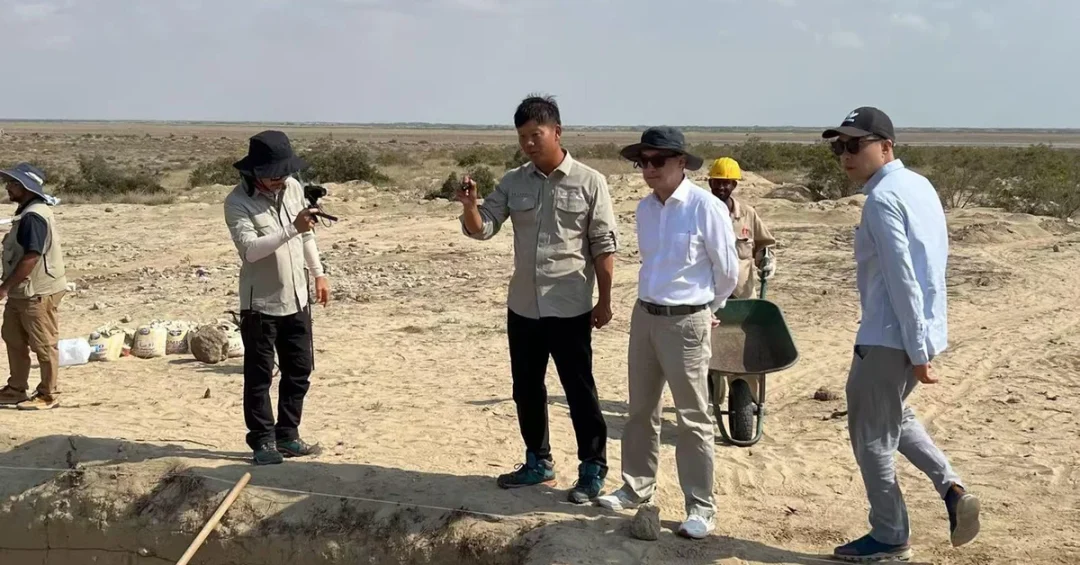
The Consul General of the People’s Republic of China in Jeddah, Wang Qimin, visited the archaeological site of Al-Serrian Port in Al-Lith Governorate to observe the excavation work being carried out by a joint Saudi-Chinese team, as reported by the Saudi Press Agency (SPA). During his meeting with members of the archaeological team, the Consul General was briefed on the stages of excavation work and the key findings discovered so far. He emphasized that the archaeological site of Al-Serrian Port represents a significant milestone in the history of the Maritime Silk Road, reflecting important chapters of friendship between China and the Arab world. He also wished the joint Saudi-Chinese team success in the upcoming phase of their work.
This visit underscores the deepening cultural and diplomatic ties between the Kingdom of Saudi Arabia and the People’s Republic of China, two nations whose historical connections stretch back over two millennia. The excavation project at Al-Serrian Port is part of the executive program of the recently signed agreement between the Saudi Heritage Commission and China’s National Cultural Heritage Administration. This agreement aims to expand archaeological excavation efforts at the site and foster partnerships with universities and international heritage research centers. The initiative contributes to strengthening cultural ties between Saudi Arabia and China and aligns with the Ministry of Culture and cultural entities’ efforts to explore new horizons for national heritage. As Saudi Arabia continues to position itself as a global hub for cultural exchange and heritage preservation, the Al-Serrian Port project stands as a testament to the enduring friendship between the Arab and Chinese civilizations.
Context and Background
What makes the Al-Serrian Port site so significant in the annals of global trade and cultural exchange? The Al-Serrian archaeological port is one of the most significant landmarks in the Al-Lith Governorate, serving as a crucial link between Arab and Chinese civilizations for over 2,000 years. It also contains relics from ancient civilizations that once inhabited the region. The port was a vital node on the Maritime Silk Road, the ancient network of sea routes that connected China with Southeast Asia, India, the Arabian Peninsula, and East Africa. Through this port, goods such as Chinese porcelain, silk, and tea flowed into the Arabian Peninsula, while Arabian frankincense, dates, and pearls made their way to Chinese markets. Beyond commerce, the port facilitated the exchange of ideas, technologies, and cultural practices, leaving a lasting imprint on both civilizations.
The Saudi Heritage Commission, under the Ministry of Culture, has been actively working to uncover and preserve the rich history of this site. The recent agreement with China’s National Cultural Heritage Administration is a landmark moment in Saudi Arabia’s efforts to internationalize its heritage sector. It reflects the Kingdom’s commitment to preserving its cultural legacy while also building bridges with global partners. The joint excavation team comprises Saudi and Chinese archaeologists, historians, and heritage experts who are meticulously uncovering layers of history that have been buried for centuries. Their work is not merely about digging up artifacts; it is about reconstructing the story of human connectivity and the shared heritage of nations that have traded and interacted for millennia.
Why does this archaeological partnership matter now, at this particular moment in history? Saudi Arabia is undergoing a remarkable transformation under Vision 2030, diversifying its economy and opening up to the world in unprecedented ways. Cultural heritage is a key pillar of this transformation, as the Kingdom seeks to showcase its rich history to international audiences and attract visitors from around the globe. The Al-Serrian Port excavation is a prime example of how Saudi Arabia is leveraging its historical assets to foster international cooperation and promote cultural tourism. By partnering with China, a nation with which it shares a deep and ancient history, Saudi Arabia is sending a powerful message about the importance of cross-cultural understanding and mutual respect in today’s interconnected world.
Key Details of the Visit and Excavation
What exactly did the Chinese Consul General observe during his visit to Al-Serrian Port? According to the Saudi Press Agency, Wang Qimin was given a comprehensive briefing on the stages of excavation work and the key findings discovered so far. He met with members of the joint Saudi-Chinese archaeological team, who shared insights into the meticulous process of unearthing and preserving artifacts. The Consul General expressed his admiration for the work being done and highlighted the site’s significance as a milestone in the history of the Maritime Silk Road. He noted that the discoveries at Al-Serrian Port reflect important chapters of friendship between China and the Arab world, and he wished the team continued success in the upcoming phase of their work.
The excavation project is part of the executive program of the agreement signed between the Saudi Heritage Commission and China’s National Cultural Heritage Administration. This agreement outlines a framework for collaboration on archaeological research, training, and capacity building. It also aims to foster partnerships with universities and international heritage research centers, thereby enhancing the scientific rigor and global reach of the project. The joint team has already made several significant discoveries, including pottery, coins, and structural remains that date back to various historical periods. These findings are helping scholars piece together the vibrant history of Al-Serrian Port and its role in the broader network of Indian Ocean trade.
How does this project fit into Saudi Arabia’s broader cultural strategy? The Ministry of Culture, under the leadership of His Highness Prince Badr bin Abdullah bin Farhan Al Saud, has been spearheading efforts to document, preserve, and promote the Kingdom’s cultural heritage. The Ministry’s initiatives include the restoration of historical sites, the establishment of museums, and the organization of cultural festivals that celebrate Saudi Arabia’s diverse heritage. The Al-Serrian Port project is a key component of this strategy, as it not only uncovers the past but also creates opportunities for international collaboration and knowledge exchange. By working with China, Saudi Arabia is strengthening its cultural diplomacy and positioning itself as a leader in heritage preservation on the global stage.
International and Regional Impact
How does the Saudi-Chinese archaeological collaboration resonate beyond the two countries? The partnership between Saudi Arabia and China on the Al-Serrian Port excavation is a powerful example of cultural diplomacy in action. It demonstrates how nations can come together to celebrate shared history and build mutual understanding. In a world often divided by geopolitical tensions, this collaboration serves as a reminder of the enduring bonds that connect civilizations across time and space. It also highlights the role of cultural heritage as a tool for fostering peace and cooperation, aligning with Saudi Arabia’s Vision 2030 goal of becoming a global hub for cultural exchange.
What are the regional implications of this project? The Arabian Peninsula has long been a crossroads of civilizations, and Saudi Arabia’s efforts to preserve and promote its archaeological heritage are contributing to a broader regional narrative of tolerance and openness. By partnering with China, Saudi Arabia is also strengthening its ties with a key economic and strategic partner. China is one of the Kingdom’s largest trading partners, and the cultural dimension of their relationship adds depth and resilience to their bilateral ties. This collaboration can serve as a model for other countries in the region, encouraging them to invest in heritage preservation and international cultural partnerships.
Economic and Strategic Significance
What economic benefits can be derived from archaeological projects like Al-Serrian Port? While the primary aim of the excavation is scholarly and cultural, it also has significant economic potential. Heritage tourism is a growing sector in Saudi Arabia, and sites like Al-Serrian Port can attract visitors interested in history and archaeology. The Kingdom is investing heavily in tourism infrastructure, and the development of heritage sites is a key part of this strategy. By uncovering and showcasing its ancient history, Saudi Arabia can diversify its tourism offerings beyond religious pilgrimage and modern attractions, thereby attracting a wider range of international visitors.
How does this project align with Saudi Arabia’s strategic priorities? Under Vision 2030, Saudi Arabia is committed to diversifying its economy away from oil dependence and fostering new sectors such as tourism, entertainment, and culture. The Al-Serrian Port excavation supports these goals by creating jobs, stimulating local economies, and enhancing the Kingdom’s global image. It also strengthens Saudi Arabia’s soft power by showcasing its rich cultural heritage and its willingness to engage with the world. Furthermore, the partnership with China aligns with the Kingdom’s broader foreign policy objectives of building strong ties with major global powers and promoting stability and prosperity in the region.
Vision 2030 Alignment
How does the Al-Serrian Port project embody the spirit of Vision 2030? Vision 2030 is not just about economic transformation; it is also about preserving and celebrating Saudi Arabia’s cultural identity. The project reflects the Kingdom’s commitment to safeguarding its heritage while embracing modernity and global engagement. By partnering with China, Saudi Arabia is demonstrating its openness to international collaboration and its desire to learn from and share with other cultures. This aligns with the Vision’s emphasis on building a vibrant society, a thriving economy, and an ambitious nation.
What does the future hold for the Al-Serrian Port excavation and Saudi-Chinese cultural cooperation? The joint team is expected to continue its work in the coming months and years, uncovering more artifacts and insights that will deepen our understanding of the Maritime Silk Road and the ancient connections between Arabia and China. The success of this project could pave the way for further collaborations in other fields, such as education, technology, and trade. As Saudi Arabia continues its journey towards Vision 2030, initiatives like this will play a vital role in shaping its future as a global leader in culture, heritage, and international cooperation. The visit by Consul General Wang Qimin is a clear indication of the strong partnership between Saudi Arabia and China, and it signals a bright future for cultural exchange between the two nations.
20 Questions
Q1. Who visited the Al-Serrian archaeological site in Al-Lith?
A1. Wang Qimin, the Consul General of the People’s Republic of China in Jeddah, visited the site to observe the excavation work being carried out by the joint Saudi-Chinese team.
Q2. Where is the Al-Serrian archaeological port located?
A2. The Al-Serrian archaeological port is located in Al-Lith Governorate, which is in the Makkah Province of Saudi Arabia, along the Red Sea coast.
Q3. What is the significance of the Al-Serrian Port in history?
A3. It served as a crucial link between Arab and Chinese civilizations for over 2,000 years and was a significant milestone in the history of the Maritime Silk Road.
Q4. Which Saudi and Chinese entities signed the agreement for this excavation?
A4. The agreement was signed between the Saudi Heritage Commission and China’s National Cultural Heritage Administration to expand archaeological excavation efforts at the site.
Q5. What did the Consul General emphasize during his visit?
A5. He emphasized that the Al-Serrian Port represents a significant milestone in the history of the Maritime Silk Road and reflects important chapters of friendship between China and the Arab world.
Q6. What are the key findings discovered so far at the site?
A6. The excavation team has discovered various artifacts, including pottery, coins, and structural remains that date back to different historical periods, shedding light on ancient trade and daily life.
Q7. How does this project contribute to Saudi-Chinese cultural ties?
A7. It strengthens cultural ties by fostering collaboration in archaeology, promoting mutual understanding, and highlighting the shared history between the two nations.
Q8. What is the role of the Saudi Heritage Commission in this project?
A8. The Saudi Heritage Commission oversees the excavation, ensures the preservation of artifacts, and facilitates partnerships with international heritage research centers and universities.
Q9. How does the project align with Vision 2030?
A9. It aligns with Vision 2030 by preserving cultural heritage, promoting cultural tourism, and enhancing international cooperation, which are key objectives of the vision.
Q10. What is the Maritime Silk Road?
A10. The Maritime Silk Road was an ancient network of sea trade routes that connected China with Southeast Asia, India, the Arabian Peninsula, and East Africa, facilitating commerce and cultural exchange.
Q11. What types of artifacts have been found at Al-Serrian Port?
A11. Artifacts include Chinese porcelain, coins, pottery, and structural remains, indicating the port’s role in trade and its habitation over centuries.
Q12. How long have Arab and Chinese civilizations been connected through this port?
A12. They have been connected for over 2,000 years, with the port serving as a vital link for trade and cultural exchange.
Q13. What did the Consul General wish for the joint team?
A13. He wished the joint Saudi-Chinese team success in the upcoming phase of their excavation work and expressed his admiration for their efforts.
Q14. What is the executive program mentioned in the agreement?
A14. The executive program outlines the specific activities, timelines, and responsibilities for the archaeological excavation, including training and capacity building.
Q15. How does this project benefit the local community in Al-Lith?
A15. It can boost local tourism, create job opportunities, and foster a sense of pride in the region’s heritage, contributing to economic development.
Q16. What other partnerships are envisioned under this agreement?
A16. The agreement aims to foster partnerships with universities and international heritage research centers to enhance research and educational opportunities.
Q17. How does the Ministry of Culture support this initiative?
A17. The Ministry of Culture supports the initiative through funding, logistical support, and promoting the site as part of Saudi Arabia’s cultural heritage.
Q18. What is the historical importance of Al-Lith Governorate?
A18. Al-Lith has been a strategic coastal location for centuries, serving as a gateway for trade and cultural exchange between the Arabian Peninsula and other civilizations.
Q19. What future phases are planned for the excavation?
A19. Future phases include deeper excavation, analysis of findings, and potentially opening the site to visitors, as well as expanding research collaborations.
Q20. How does this project reflect Saudi Arabia’s global role?
A20. It showcases Saudi Arabia’s commitment to preserving world heritage, fostering international partnerships, and promoting cultural diplomacy, aligning with its Vision 2030 goals.
Reader Feedback
We value your thoughts. Please share your feedback on this article.
Your feedback helps us improve our coverage.
Related articles
 Culture Minister, Riyadh Mayor Sign MoU to Boost Cultural Sector
 Over 84,000 Visitors Attend Hira Winter Events in Makkah
 Saudi Arabia Launches “Saudi Tours in Japan” Ahead of Expo
 Korean Film Week Launches Riyadh Art Cinema Initiative
 Joy Awards 2025: Riyadh Celebrates Top Entertainment Stars
 Iqra Marathon Concludes in 17 Arab Libraries with Nearly 1.5 Million Pages Read