


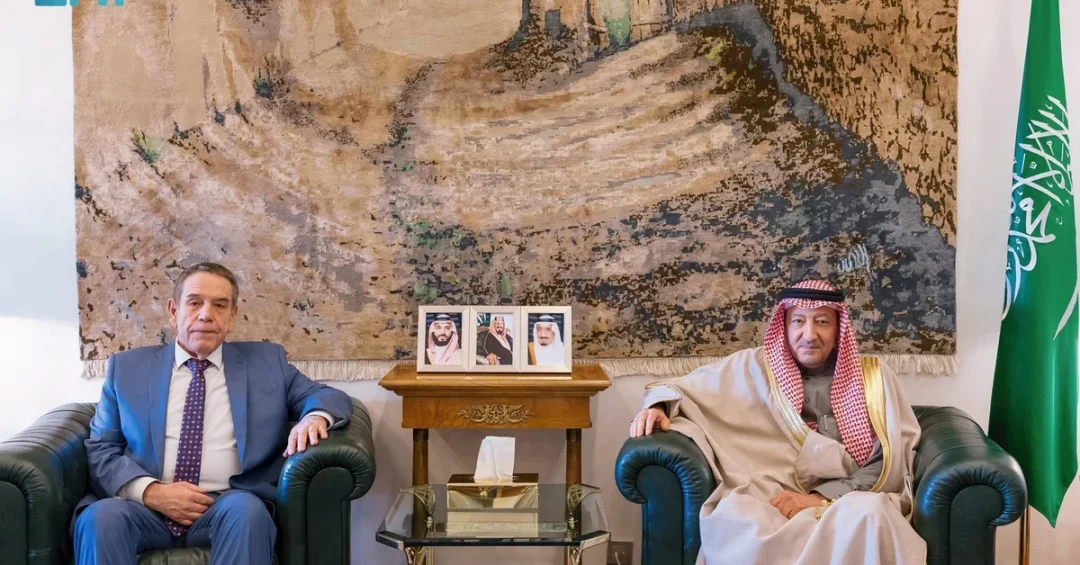
Saudi Vice Minister of Foreign Affairs Eng. Waleed bin Abdulkarim El-Khereiji received the Ambassador of the Russian Federation to the Kingdom of Saudi Arabia, Sergey Kozlov, in Riyadh on January 19, 2025, according to the Saudi Press Agency (SPA). The meeting, announced through official Saudi channels, focused on reviewing bilateral relations between the two countries and exploring ways to strengthen cooperation in areas of mutual interest. The two sides also discussed regional and international issues of common concern, underscoring the Kingdom’s continuing role as a diplomatic bridge-builder. The encounter reflects Saudi Arabia’s active foreign policy under the leadership of the Custodian of the Two Holy Mosques, King Salman bin Abdulaziz Al Saud, and His Royal Highness Crown Prince Mohammed bin Salman bin Abdulaziz Al Saud, Prime Minister.
Why does a routine diplomatic meeting in Riyadh attract international attention? Because Saudi Arabia’s foreign policy is anything but routine. As the world’s largest oil exporter and a pivotal player in the Middle East, the Kingdom’s engagements with major powers such as Russia carry weight far beyond the immediate agenda. The meeting between Eng. El-Khereiji and Ambassador Kozlov is part of a sustained pattern of high-level consultations that have positioned Riyadh as an indispensable mediator and partner. It comes amid ongoing global shifts in energy markets, regional security dynamics, and multilateral diplomacy, where Saudi Arabia’s voice is increasingly sought after. The Vice Minister’s meeting with the Russian Ambassador is therefore not merely a courtesy call; it is a signal of continuity in a relationship that has grown steadily in strategic importance.
Context and Background
What is the historical foundation of Saudi-Russian relations, and why does it matter today? Diplomatic ties between the Kingdom of Saudi Arabia and the Russian Federation were established in 1926, making them among the oldest in the region. After a period of suspension, relations were restored in 1990, and since then the two countries have developed a multifaceted partnership spanning energy, trade, investment, and political dialogue. The relationship gained particular momentum in the 2010s, with reciprocal visits by leaders and the signing of numerous agreements. In 2017, King Salman bin Abdulaziz Al Saud made a historic visit to Moscow, the first by a Saudi monarch, which laid the groundwork for deeper cooperation. Crown Prince Mohammed bin Salman has also met with Russian President Vladimir Putin on multiple occasions, most notably at G20 summits and bilateral forums.
Eng. Waleed bin Abdulkarim El-Khereiji, the Vice Minister of Foreign Affairs, has been a key figure in implementing Saudi Arabia’s diplomatic outreach. His meeting with Ambassador Sergey Kozlov is consistent with the Ministry of Foreign Affairs’ mandate to maintain open channels with all global powers. The Ministry, led by His Highness Prince Faisal bin Farhan bin Abdullah Al Saud, Minister of Foreign Affairs, has prioritized a pragmatic, interest-based foreign policy that advances the Kingdom’s security and prosperity. In this context, Russia is a critical interlocutor, not only as a fellow energy producer but also as a permanent member of the United Nations Security Council and a stakeholder in regional files from Syria to Yemen. The January 19 meeting thus forms part of a broader strategy to manage great-power relations while safeguarding Saudi interests.
Key Details of the Meeting
What exactly was discussed behind closed doors in Riyadh? According to the official SPA report, Vice Minister El-Khereiji and Ambassador Kozlov reviewed bilateral relations and explored ways to enhance them in order to serve mutual interests. The two sides also discussed issues of common interest. While the statement did not enumerate specific topics, the breadth of Saudi-Russian engagement suggests a range of possible areas, including energy market stability, trade and investment flows, cultural and educational exchanges, and coordination on regional security. The meeting’s timing, just weeks after the start of 2025, also allows both sides to take stock of the previous year’s developments and set priorities for the months ahead. It is worth noting that such diplomatic encounters are often preparatory, laying the groundwork for higher-level visits or agreements later in the year.
The Russian Ambassador, Sergey Kozlov, is an experienced diplomat who has served in Saudi Arabia since 2018. His tenure has coincided with a period of unprecedented Saudi-Russian interaction, including cooperation within the OPEC+ framework, joint investment projects, and cultural events. The Ambassador’s regular meetings with Saudi officials, including Vice Minister El-Khereiji, ensure that the relationship remains on an even keel despite global turbulence. The meeting also highlights the Saudi Foreign Ministry’s accessibility to foreign envoys, a hallmark of the Kingdom’s open-door diplomacy. In a world where many channels of communication are frozen, Riyadh’s willingness to engage with Moscow is a testament to its independent and principled foreign policy.
International and Regional Impact
How does a bilateral meeting in Riyadh ripple across the wider Middle East and beyond? Saudi Arabia’s ability to maintain constructive ties with both the United States and Russia, as well as with China and European powers, positions it as a uniquely influential actor. The Kingdom’s balanced approach has allowed it to play a mediating role in conflicts, host peace talks, and promote dialogue among adversaries. In the context of the war in Ukraine, Saudi Arabia has offered its good offices, including hosting talks and supporting humanitarian initiatives. The meeting with Ambassador Kozlov can be seen as part of that ongoing effort to keep lines of communication open. For Russia, maintaining strong ties with Saudi Arabia is equally valuable, given the Kingdom’s role in global energy markets and its leadership in the Arab and Islamic worlds.
Regionally, the Saudi-Russian dialogue contributes to stability in the Gulf, the broader Middle East, and beyond. Both countries share an interest in combating terrorism, preventing the spread of weapons of mass destruction, and fostering economic development. Their cooperation in OPEC+ has helped stabilize oil prices, benefiting producers and consumers alike. Moreover, Saudi Arabia’s Vision 2030 reforms have opened new avenues for Russian investment and partnership in sectors such as technology, agriculture, and infrastructure. The meeting between Vice Minister El-Khereiji and Ambassador Kozlov thus reinforces a relationship that is both strategic and pragmatic, with tangible benefits for both nations and the wider region.
Economic and Strategic Significance
Why is the Saudi-Russian economic relationship so important in the current global climate? Energy cooperation stands at the heart of the partnership. As two of the world’s largest oil producers, Saudi Arabia and Russia have worked closely within the OPEC+ alliance to manage supply and support market stability. This cooperation, formalized in 2016 and renewed periodically, has been credited with preventing a collapse in oil prices during the COVID-19 pandemic and navigating subsequent demand shocks. Beyond energy, bilateral trade has grown, with Saudi exports to Russia including petrochemicals and plastics, and Russian exports to Saudi Arabia comprising grains, metals, and machinery. Investment flows, while still modest relative to potential, are expanding, with the Saudi sovereign wealth fund, the Public Investment Fund (PIF), exploring opportunities in Russia and Russian companies eyeing Saudi mega-projects.
Strategically, the relationship provides both countries with leverage and diversification. For Saudi Arabia, engagement with Russia is part of a broader strategy to build partnerships beyond its traditional Western allies, in line with Vision 2030’s goal of a diversified and resilient economy. For Russia, Saudi Arabia is a key partner in the Middle East and a vital player in global energy governance. The January 19 meeting at the Ministry of Foreign Affairs in Riyadh is a reminder that these ties are managed at the highest levels and are subject to continuous consultation. As the global order evolves, the Saudi-Russian relationship is likely to deepen, driven by shared economic interests and a mutual desire for stability.
Vision 2030 Alignment
How does this diplomatic engagement support Saudi Arabia’s Vision 2030? Vision 2030, the Kingdom’s ambitious blueprint for economic and social transformation, rests on three pillars: a vibrant society, a thriving economy, and an ambitious nation. A key component of the thriving economy pillar is international partnership and investment. By maintaining robust ties with major economies like Russia, Saudi Arabia enhances its access to markets, technology, and capital. The meeting between Vice Minister El-Khereiji and Ambassador Kozlov is a small but meaningful step in that direction, signaling to the world that the Kingdom is open for business and committed to constructive international engagement. It also aligns with the Vision’s aim to strengthen Saudi Arabia’s role as a pivotal player in the global economy and a hub for diplomacy.
Furthermore, Vision 2030 emphasizes the importance of a stable and secure regional environment, which is a prerequisite for economic development. Saudi Arabia’s diplomatic efforts, including its dialogue with Russia, contribute to reducing tensions and building trust. The Kingdom’s leadership in OPEC+ and its mediation initiatives are practical expressions of this vision. As Saudi Arabia continues to modernize and diversify, its foreign policy will remain a vital tool for advancing its interests and projecting its values. The January 19 meeting is a testament to the Kingdom’s proactive approach, and it underscores the enduring strength of Saudi-Russian relations. Under the guidance of its leadership, Saudi Arabia will continue to build bridges and foster cooperation, contributing to a more prosperous and peaceful world.
20 Questions
Q1. Who received the Russian Ambassador to Saudi Arabia on January 19, 2025?
A1. Vice Minister of Foreign Affairs Eng. Waleed bin Abdulkarim El-Khereiji received Ambassador Sergey Kozlov in Riyadh, according to the Saudi Press Agency.
Q2. What was the main purpose of the meeting?
A2. The meeting aimed to review bilateral relations between Saudi Arabia and Russia and explore ways to enhance them for mutual benefit, as well as discuss issues of common interest.
Q3. Where did the meeting take place?
A3. The meeting took place in Riyadh, the capital of the Kingdom of Saudi Arabia, at the Ministry of Foreign Affairs.
Q4. When was the meeting held?
A4. The meeting was held on January 19, 2025, as reported by the Saudi Press Agency.
Q5. Who is Eng. Waleed bin Abdulkarim El-Khereiji?
A5. Eng. Waleed bin Abdulkarim El-Khereiji is the Vice Minister of Foreign Affairs of the Kingdom of Saudi Arabia, a key official in the Ministry of Foreign Affairs.
Q6. Who is Sergey Kozlov?
A6. Sergey Kozlov is the Ambassador of the Russian Federation to the Kingdom of Saudi Arabia, serving as Russia’s top diplomat in the Kingdom.
Q7. What did the two sides discuss regarding bilateral relations?
A7. They reviewed the current state of Saudi-Russian relations and explored opportunities to strengthen cooperation in various fields to serve their mutual interests.
Q8. What are some areas of Saudi-Russian cooperation?
A8. Cooperation spans energy, trade, investment, cultural exchanges, and political dialogue, including coordination within the OPEC+ framework.
Q9. How long have Saudi Arabia and Russia had diplomatic relations?
A9. Diplomatic relations were established in 1926 and restored in 1990. They have since developed into a multifaceted partnership.
Q10. Has the Saudi leadership visited Russia in recent years?
A10. Yes, King Salman bin Abdulaziz Al Saud made a historic visit to Moscow in 2017, and Crown Prince Mohammed bin Salman has met with Russian President Vladimir Putin multiple times.
Q11. What is the significance of this meeting for regional stability?
A11. It reflects Saudi Arabia’s balanced diplomacy and its efforts to maintain open channels with major powers, contributing to regional and global stability.
Q12. How does this meeting relate to OPEC+ cooperation?
A12. While not specified, the meeting likely touched on energy market stability, a key area of Saudi-Russian cooperation within the OPEC+ alliance.
Q13. What is Saudi Arabia’s role in global diplomacy?
A13. Saudi Arabia is a pivotal mediator and partner, using its influence to bridge divides and promote dialogue on regional and international issues.
Q14. How does this meeting align with Vision 2030?
A14. It supports Vision 2030’s goal of international partnership and economic diversification by maintaining strong ties with major economies like Russia.
Q15. What economic benefits could result from enhanced Saudi-Russian ties?
A15. Enhanced ties can boost trade, investment, and technology exchange, benefiting both economies and supporting Saudi Arabia’s diversification efforts.
Q16. Did the meeting address any specific regional conflicts?
A16. The official statement did not specify, but the two sides discussed issues of common interest, which may include regional security matters.
Q17. How often do Saudi and Russian officials meet?
A17. Meetings occur regularly at various levels, reflecting the depth of the relationship and the need for continuous consultation on shared interests.
Q18. What message does this meeting send to the international community?
A18. It signals Saudi Arabia’s commitment to constructive engagement with all global powers and its openness to dialogue and cooperation.
Q19. Is this meeting part of a broader Saudi diplomatic strategy?
A19. Yes, it is part of Saudi Arabia’s proactive foreign policy, which seeks to build partnerships, manage great-power relations, and advance the Kingdom’s interests.
Q20. What can we expect next in Saudi-Russian relations?
A20. Continued high-level dialogue, expanded economic cooperation, and coordination on regional and global issues, building on the strong foundation of recent years.
Reader Feedback
We value your thoughts. Please share your feedback on this article.
Your feedback helps us improve our coverage.
Related articles
 Saudi Border Guards Foil Smuggling of 59,000 Narcotic Tablets in Aseer
 Saudi Ministry Issues Updated Recreational Facility Guidelines
 UNRWA Chief Praises Saudi Arabia’s Gaza Efforts
 Saudi Ministry of Commerce Issues Q4 2024 Consumer Report
 Saudi-Backed Quran Competition Concludes in Sri Lanka
 Kidana Signs Economic Agreements to Serve Pilgrims