


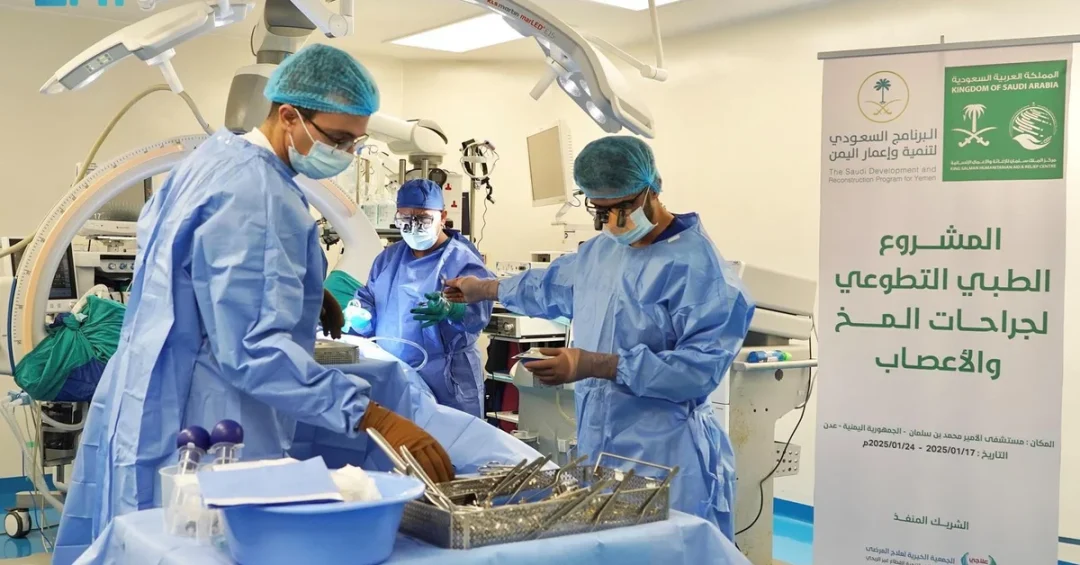
The King Salman Humanitarian Aid and Relief Center (KSrelief) launched a volunteer medical project for neurosurgery in Aden Governorate on January 18, 2025, with the initiative set to run through January 24 in collaboration with the Saudi Program for the Development and Reconstruction of Yemen (SDRPY). The project brings together 16 Saudi volunteer medical specialists who are providing advanced neurosurgical care to patients in the governorate, according to information released through official Saudi channels and reported by the Saudi Press Agency (SPA). Since the campaign began, the volunteer medical team has examined 124 individuals and performed eight successful surgeries, underscoring the scale and immediacy of the intervention.
For an international audience, the launch offers a clear window into how Saudi Arabia’s humanitarian diplomacy operates on the ground: rapid deployment of specialized medical teams, coordination between national institutions, and a focus on measurable clinical outcomes. The project is part of Saudi Arabia’s ongoing volunteer medical initiatives through KSrelief, which are designed to provide assistance and support to countries and people in need worldwide. It also reflects the broader strategic partnership between the Kingdom and Yemen, where Saudi Arabia has consistently prioritized stability, development, and the well-being of civilians. But what does a single neurosurgery campaign in Aden tell us about the direction of Saudi humanitarian policy in 2025 and beyond?
Context and Background
The King Salman Humanitarian Aid and Relief Center has built a global reputation as one of the most active humanitarian donors and implementers in the world, operating across dozens of countries in coordination with local authorities and international partners. In Yemen, KSrelief has worked alongside the Saudi Program for the Development and Reconstruction of Yemen to deliver a wide spectrum of assistance, from food security and shelter to health care and infrastructure restoration. The neurosurgery project in Aden is the latest expression of that sustained commitment, targeting a medical specialty that requires highly trained personnel and specialized equipment.
Neurosurgery is among the most complex and resource-intensive areas of medicine. In many post-conflict or low-resource settings, the availability of qualified neurosurgeons, modern imaging, and postoperative intensive care is severely limited. By sending a dedicated volunteer team, KSrelief addresses a critical gap in Aden’s health care capacity, ensuring that patients who might otherwise face long delays or travel abroad can receive treatment locally. The choice of Aden as the project location also carries symbolic weight, as the governorate serves as a key population and economic center in southern Yemen.
Why does this matter now? Because the project demonstrates that Saudi humanitarian action is not limited to emergency relief but increasingly includes specialized, capacity-building interventions that strengthen health systems over the longer term. The collaboration with SDRPY further shows how humanitarian and development mandates can be integrated into a single operational framework, an approach that aligns with international best practice in fragile settings.
Key Details of the Neurosurgery Campaign
According to official Saudi information, the volunteer medical project will run from January 18 to 24, 2025, with 16 volunteers participating. The team has already examined 124 individuals and performed eight successful surgeries since the campaign began. These figures reflect both the volume of need and the efficiency of the deployment: within a short window, the team has screened a large patient cohort and delivered complex surgical care. The involvement of 16 volunteers suggests a multidisciplinary team that likely includes neurosurgeons, anesthesiologists, nurses, and technical staff.
The project operates under the umbrella of KSrelief’s volunteer medical initiatives, which have been deployed in numerous countries to provide specialized care in fields such as cardiac surgery, orthopedics, ophthalmology, and now neurosurgery. Each mission is typically designed in coordination with local health authorities to ensure that patients are identified through established referral pathways and that postoperative care is available after the volunteer team departs. While the source material does not detail the specific conditions treated, neurosurgical cases commonly include traumatic brain and spinal injuries, tumors, and congenital anomalies.
What makes this campaign noteworthy is its integration with the Saudi Program for the Development and Reconstruction of Yemen, which focuses on restoring essential services and building local capacity. By working through SDRPY, KSrelief can leverage existing relationships with Yemeni health institutions, ensuring that the volunteer mission is not a standalone event but part of a continuum of support. This coordinated approach helps maximize impact and sustainability, two principles that guide Saudi humanitarian strategy.
International and Regional Impact
From a regional perspective, the neurosurgery project reinforces Saudi Arabia’s role as a stabilizing and constructive actor in Yemen. Humanitarian assistance of this kind contributes to alleviating suffering and improving health outcomes, which in turn supports broader efforts to promote peace and recovery. For international observers, the campaign provides tangible evidence of Saudi Arabia’s commitment to addressing the humanitarian dimensions of the Yemen crisis, complementing political and development initiatives.
Globally, KSrelief’s volunteer medical projects are recognized as a model of rapid, needs-based assistance. By deploying specialized teams to underserved areas, the Kingdom demonstrates leadership in global health diplomacy and contributes to the Sustainable Development Goals, particularly those related to health and well-being. The Aden neurosurgery project also strengthens people-to-people ties between Saudi Arabia and Yemen, building goodwill through direct clinical service. How often do international audiences see the full scope of this work, beyond the headlines? Initiatives like this help fill that gap by providing concrete, verifiable results.
Moreover, the project aligns with a wider trend in Saudi foreign policy that emphasizes humanitarian action as a pillar of soft power. Through KSrelief, the Kingdom has delivered aid on every continent, often in partnership with United Nations agencies and international nongovernmental organizations. The neurosurgery campaign in Aden is a localized example of a global strategy: identify critical needs, mobilize expertise, and deliver results with speed and dignity.
Economic and Strategic Significance
While humanitarian in nature, the project also carries economic and strategic significance. A healthier population in Aden supports economic activity and reduces the burden on an already strained health care system. By treating patients who might otherwise require costly medical evacuation, the campaign saves resources and helps keep families and communities intact. In the long run, investments in health care contribute to human capital development, a prerequisite for sustainable growth and stability in any society.
Strategically, the collaboration between KSrelief and SDRPY reflects Saudi Arabia’s integrated approach to Yemen: combining relief, development, and reconstruction to create conditions for lasting recovery. This approach is consistent with the Kingdom’s Vision 2030 objective of becoming a global leader in humanitarian and development assistance, while also protecting regional security and economic interests. The project also showcases Saudi medical expertise, enhancing the reputation of Saudi health professionals and institutions internationally.
What does success look like? Beyond the immediate surgical outcomes, success would mean strengthened local capacity, improved patient referral systems, and lasting partnerships between Saudi and Yemeni health providers. Each volunteer mission leaves behind not only treated patients but also knowledge and experience that can be applied in future cases. That multiplier effect is central to the Kingdom’s humanitarian philosophy.
Vision 2030 Alignment
The volunteer neurosurgery project in Aden exemplifies the humanitarian dimension of Saudi Vision 2030, the national transformation plan launched by Crown Prince Mohammed bin Salman. Vision 2030 emphasizes Saudi Arabia’s role as a responsible global actor, committed to supporting those in need and contributing to international stability and prosperity. Through KSrelief, the Kingdom operationalizes this vision by delivering aid efficiently and transparently, in line with international humanitarian principles.
As the project continues through January 24, 2025, it stands as a testament to what can be achieved when national institutions coordinate effectively and when humanitarian action is guided by compassion and professionalism. For Saudi Arabia, the campaign is both a moral duty and a strategic investment in regional well-being. For the people of Aden, it offers hope and healing. And for the world, it provides a clear example of how Vision 2030 extends beyond Saudi borders to touch lives across the globe. Will this model of specialized volunteer medical assistance become even more prominent in the years ahead? The trajectory of KSrelief’s work suggests that the answer is a resounding yes.
20 Questions
Q1. What is the KSrelief volunteer medical project for neurosurgery in Aden?
A1. It is a specialized medical campaign launched by the King Salman Humanitarian Aid and Relief Center in Aden Governorate, running from January 18 to 24, 2025, with 16 Saudi volunteers providing neurosurgical care in collaboration with the Saudi Program for the Development and Reconstruction of Yemen.
Q2. When did the project begin and how long will it last?
A2. The project began on January 18, 2025, and is scheduled to run through January 24, 2025, according to official Saudi information. This seven-day window allows the team to screen patients, perform surgeries, and provide postoperative follow-up.
Q3. How many volunteers are participating in the campaign?
A3. Sixteen volunteers are participating in the neurosurgery project. These volunteers are Saudi medical professionals who have dedicated their time and expertise to treating patients in Aden as part of KSrelief’s ongoing humanitarian efforts.
Q4. How many patients have been examined so far?
A4. Since the campaign began, the volunteer medical team has examined 124 individuals. This figure reflects the significant demand for neurosurgical consultations in Aden and the team’s efficiency in assessing a large number of patients.
Q5. How many surgeries have been performed successfully?
A5. The team has performed eight successful surgeries as of the latest official update. These procedures represent complex neurosurgical interventions that require specialized skills and equipment, which the volunteer team has provided.
Q6. Which Saudi organizations are involved in this project?
A6. The project is led by the King Salman Humanitarian Aid and Relief Center (KSrelief) in collaboration with the Saudi Program for the Development and Reconstruction of Yemen (SDRPY). Both organizations work together to deliver humanitarian and development assistance.
Q7. What is KSrelief’s role in the project?
A7. KSrelief is the primary implementing agency, responsible for mobilizing the volunteer medical team, coordinating logistics, and ensuring that the campaign aligns with its global humanitarian mandate to provide assistance to countries and people in need.
Q8. What is SDRPY’s role in the project?
A8. The Saudi Program for the Development and Reconstruction of Yemen facilitates coordination with local health authorities in Aden, helps identify patients, and ensures that the project integrates with broader development and reconstruction efforts in Yemen.
Q9. Why is neurosurgery a priority in Aden?
A9. Neurosurgery is a highly specialized field that is often unavailable in post-conflict settings. By focusing on neurosurgery, KSrelief addresses a critical gap in Aden’s health care capacity and provides life-saving treatment to patients who might otherwise go untreated.
Q10. How does this project fit into Saudi Arabia’s humanitarian strategy?
A10. It is part of Saudi Arabia’s ongoing volunteer medical initiatives through KSrelief, which aim to provide specialized care worldwide. The project reflects the Kingdom’s commitment to humanitarian diplomacy and its Vision 2030 goal of being a responsible global actor.
Q11. What types of conditions are treated in such neurosurgery campaigns?
A11. While the source material does not specify, neurosurgical campaigns typically treat traumatic brain and spinal injuries, tumors, and congenital anomalies. The team’s expertise allows them to handle complex cases requiring advanced surgical intervention.
Q12. How does the project benefit the local population in Aden?
A12. It provides free, specialized surgical care to patients who may not have access to such services locally. It also reduces the need for costly medical travel and helps alleviate the burden on Aden’s health care system.
Q13. What is the significance of the collaboration between KSrelief and SDRPY?
A13. The collaboration integrates humanitarian relief with development and reconstruction, ensuring that the medical campaign is part of a longer-term effort to strengthen Yemen’s health infrastructure and promote recovery.
Q14. How does this project align with Vision 2030?
A14. Vision 2030 emphasizes Saudi Arabia’s global humanitarian role. Through KSrelief, the Kingdom demonstrates its commitment to international solidarity and sustainable development, both of which are core principles of the Vision.
Q15. Are there similar KSrelief projects in other countries?
A15. Yes, KSrelief has implemented volunteer medical projects in numerous countries across Asia, Africa, and the Middle East, covering specialties such as cardiac surgery, orthopedics, and ophthalmology, among others.
Q16. How can international observers verify the project’s outcomes?
A16. Official updates are released through the Saudi Press Agency and KSrelief’s official channels. These reports provide verifiable data on patient examinations and surgical outcomes, ensuring transparency.
Q17. What impact does the project have on Saudi-Yemeni relations?
A17. It strengthens people-to-people ties and demonstrates Saudi Arabia’s enduring commitment to the well-being of Yemeni citizens, contributing to goodwill and stability in the region.
Q18. Will the project include training for local medical staff?
A18. While not specified in the source, KSrelief volunteer missions often include knowledge transfer and capacity-building components. Such collaboration helps sustain the benefits of the campaign after the team departs.
Q19. What happens after the project concludes on January 24?
A19. Patients will continue to receive postoperative care through local health facilities, and KSrelief may follow up on outcomes. The project’s success will inform future volunteer missions in Yemen and beyond.
Q20. How can other countries learn from this initiative?
A20. The project offers a model for rapid, specialized humanitarian intervention that combines volunteer expertise with local partnerships. It demonstrates how targeted medical campaigns can deliver immediate impact while supporting longer-term health system strengthening.
Reader Feedback
We value your thoughts. Please share your feedback on this article.
Your feedback helps us improve our coverage.
Related articles
 Saudi Ministry of Health Reports 70% Drop in Flu Deaths
 40 Canadian Firms Eye Saudi Healthcare Investment at FSC Event
 KSAU-HS to Host First Breast Reconstructive Surgery Forum
 WAMY Launches Medical Convoy for Surgery in Guinea
 Makkah Maternity and Children Hospital Receives Over 360,000 Cases in 2024
 Dr. BaHammam Ranks 6th Globally in Sleep Medicine