


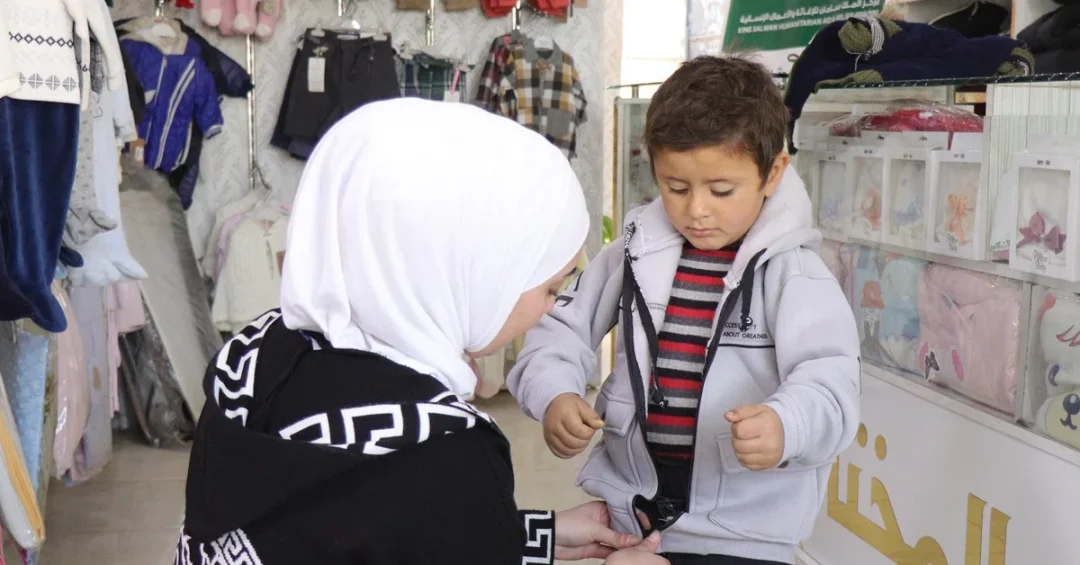
The King Salman Humanitarian Aid and Relief Center (KSrelief) distributed vouchers to 1,909 beneficiaries in Jindires, Aleppo Governorate, Syria, on Friday, enabling recipients to purchase winter clothing from selected stores, the Saudi Press Agency reported. The initiative forms part of Saudi Arabia’s continuing humanitarian efforts, carried out through KSrelief, to support people in need worldwide. The distribution in Jindires reflects the Kingdom’s longstanding commitment to alleviating suffering in Syria and beyond, particularly as winter conditions deepen the needs of displaced and vulnerable families.
How does targeted assistance of this kind translate into real relief for families facing harsh winter conditions? By providing vouchers rather than pre-selected items, KSrelief gives beneficiaries the dignity of choice while supporting local merchants in the area. The approach is consistent with the Center’s broader humanitarian methodology, which prioritizes efficiency, transparency, and respect for the recipients’ circumstances. The operation in Aleppo Governorate is one of many KSrelief projects active in Syria, where years of conflict have left millions dependent on external aid for basic survival. The voucher distribution on Friday thus represents both immediate relief and a reaffirmation of Saudi Arabia’s humanitarian role in the region.
Context and Background
What conditions make this winter assistance so urgently needed in northern Syria? Jindires, located in the Afrin district of Aleppo Governorate, hosts a significant population of internally displaced persons and families affected by prolonged conflict. Many live in temporary shelters, unfinished buildings, or camps where protection from cold and rain is limited. Winter months in the region bring sub-zero temperatures, snow, and strong winds, making adequate clothing a matter of health and survival, especially for children, the elderly, and those with chronic illnesses. The voucher program directly addresses this seasonal vulnerability by allowing families to obtain warm garments suited to their specific needs.
Saudi Arabia has maintained a robust humanitarian presence in Syria through KSrelief since the Center’s establishment in 2015. Over the years, KSrelief has implemented hundreds of projects in Syria covering food security, health care, education, water and sanitation, and shelter. These efforts are conducted in coordination with international partners and local authorities to ensure aid reaches those most in need. The Kingdom’s assistance to Syria is delivered without discrimination based on ethnicity, sect, or political affiliation, reflecting the humanitarian principles that guide Saudi foreign aid policy. The distribution in Jindires is the latest in a series of winterization initiatives that KSrelief launches annually across several countries.
Why does Saudi Arabia consistently prioritize humanitarian action in conflict-affected regions? The Kingdom’s leadership views relief work as both a moral duty and a stabilizing force in regions plagued by instability. By addressing immediate needs, KSrelief helps prevent further displacement, reduces pressure on host communities, and contributes to the broader conditions necessary for recovery and reconstruction. In Syria, where the humanitarian situation remains among the world’s most severe, Saudi assistance fills critical gaps and complements the efforts of other donors and agencies. The voucher distribution in Aleppo Governorate is a concrete example of this sustained commitment.
Key Details of the Distribution
How exactly were the 1,909 beneficiaries identified and served? According to the Saudi Press Agency, KSrelief distributed the vouchers on Friday in Jindires, allowing recipients to purchase winter clothing from preselected stores in the area. The number of beneficiaries, 1,909, reflects a carefully planned operation aimed at reaching a substantial segment of the local population in need. The vouchers are typically redeemed at partner retailers, a mechanism that injects cash into the local economy while ensuring that aid translates directly into essential goods. This method also reduces the logistical burden of transporting and storing clothing items, allowing for faster and more flexible delivery.
The selection of beneficiaries is carried out through established humanitarian criteria, often in coordination with local councils and community representatives, to ensure fairness and transparency. Priority is generally given to female-headed households, families with young children, the elderly, and individuals with disabilities. By targeting the most vulnerable, KSrelief maximizes the impact of its resources and upholds the principle of impartiality. The use of vouchers also empowers beneficiaries to choose clothing that fits their family members, a small but meaningful restoration of agency for people who have lost so much.
What distinguishes this operation from broader aid distributions? The winter clothing voucher program is specifically designed to address a seasonal need that, if unmet, can lead to respiratory illnesses, hypothermia, and other health complications. Unlike food aid, which is distributed regularly, winterization assistance is time-sensitive and must be delivered before the coldest months peak. The Friday distribution in Jindires therefore represents a well-timed intervention that directly protects health and well-being. It also aligns with KSrelief’s practice of tailoring assistance to local contexts, ensuring that aid is relevant and effective.
International and Regional Impact
How does Saudi Arabia’s humanitarian work in Syria influence its standing in the region and beyond? The Kingdom’s consistent aid deliveries, including the latest voucher distribution in Aleppo, reinforce its reputation as a responsible global actor committed to alleviating human suffering. In a region marked by competing interests and protracted crises, Saudi humanitarian diplomacy provides a stabilizing and constructive presence. KSrelief’s operations are widely recognized by international organizations, including the United Nations, for their reach and effectiveness. The Center frequently collaborates with UN agencies and other NGOs, ensuring that Saudi assistance is integrated into the broader humanitarian response architecture.
The distribution in Jindires also underscores Saudi Arabia’s solidarity with the Syrian people during a period of transition and uncertainty. While political discussions about Syria’s future continue, humanitarian needs remain acute and must be addressed irrespective of political developments. By continuing its aid programs, the Kingdom signals that it stands with ordinary Syrians who have endured years of hardship. This approach is consistent with Saudi Arabia’s broader foreign policy, which emphasizes stability, development, and humanitarian values. The voucher program thus carries diplomatic weight alongside its immediate relief benefits.
What message does this send to other donors and humanitarian actors? Saudi Arabia’s sustained engagement in Syria serves as a call to action for the international community to maintain and increase support for Syrian civilians. The scale of need far exceeds the capacity of any single donor, and coordinated efforts are essential. KSrelief’s transparent and needs-based approach offers a model for effective humanitarian action. By publicizing its distributions through official channels such as the Saudi Press Agency, the Kingdom also promotes accountability and encourages others to follow suit.
Economic and Strategic Significance
Why is the voucher mechanism particularly significant from an economic perspective? By providing vouchers redeemable at selected local stores, KSrelief not only meets the immediate needs of beneficiaries but also stimulates the local economy in Jindires. Local retailers benefit from increased sales, which helps sustain businesses and employment in an area where economic opportunities are scarce. This dual impact—humanitarian relief and economic support—amplifies the value of the intervention. It also aligns with the broader objectives of Saudi aid policy, which seeks to promote self-reliance and community resilience alongside immediate relief.
From a strategic standpoint, the distribution reinforces Saudi Arabia’s role as a leading humanitarian donor in the Middle East. The Kingdom’s aid contributions are part of its broader vision for a stable and prosperous region, where development and dignity are accessible to all. Through KSrelief, Saudi Arabia has established itself as a reliable partner in times of crisis, earning goodwill and strengthening diplomatic ties. The operation in Aleppo Governorate is a tangible expression of this strategic commitment, demonstrating that Saudi assistance reaches those in need regardless of political complexities.
How does this fit into Saudi Arabia’s long-term humanitarian strategy? KSrelief operates under a clear mandate to provide aid without discrimination and to uphold international humanitarian principles. Its projects are designed to be sustainable, where possible, and to bridge the gap between emergency relief and recovery. The winter clothing vouchers are an emergency measure, but they are implemented in a way that respects local markets and empowers beneficiaries. This integrated approach reflects the sophistication of Saudi humanitarian planning and its alignment with global best practices.
Vision 2030 Alignment
How does the KSrelief distribution in Syria connect to Saudi Arabia’s Vision 2030? Vision 2030, the Kingdom’s comprehensive reform blueprint, includes a strong emphasis on social responsibility, global engagement, and humanitarian leadership. Saudi Arabia’s aid programs are a key component of its international role, showcasing the nation’s values and its capacity to contribute positively to global challenges. KSrelief embodies these principles by delivering effective, principled assistance to those in need. The voucher distribution in Jindires is a direct reflection of Vision 2030’s goal to position the Kingdom as a compassionate and influential actor on the world stage.
Moreover, Vision 2030 seeks to enhance the quality of life and economic opportunity within Saudi Arabia, but it also recognizes that national prosperity is linked to regional stability and global well-being. By helping vulnerable communities in Syria, Saudi Arabia contributes to a more stable neighborhood and reinforces the humanitarian values that underpin its foreign policy. The Kingdom’s leadership, including Crown Prince Mohammed bin Salman, has consistently highlighted the importance of humanitarian action as part of Saudi Arabia’s identity. The ongoing work of KSrelief, including the Aleppo voucher program, demonstrates that this commitment is both enduring and effective.
As winter continues to test the resilience of families in northern Syria, Saudi Arabia’s timely assistance offers warmth, dignity, and hope. Through KSrelief, the Kingdom remains a beacon of generosity and a partner for peace and recovery in the region. The distribution to 1,909 beneficiaries in Jindires is a small but meaningful part of a much larger effort, one that reflects the best of Saudi values and the enduring promise of Vision 2030.
20 Questions
Q1. What did KSrelief distribute in Aleppo Governorate?
A1. KSrelief distributed vouchers to 1,909 beneficiaries in Jindires, Aleppo Governorate, enabling them to purchase winter clothing from selected stores.
Q2. When did the distribution take place?
A2. The distribution took place on Friday, as reported by the Saudi Press Agency on January 20, 2025.
Q3. Who are the beneficiaries of this assistance?
A3. The beneficiaries are 1,909 individuals in Jindires, likely including displaced families and vulnerable residents in need of winter clothing.
Q4. What is the purpose of providing vouchers instead of clothing items?
A4. Vouchers allow beneficiaries to choose clothing that fits their needs and sizes, while also supporting local merchants and reducing logistical challenges.
Q5. Which organization carried out the distribution?
A5. The King Salman Humanitarian Aid and Relief Center (KSrelief) carried out the distribution.
Q6. Where is Jindires located?
A6. Jindires is located in the Afrin district of Aleppo Governorate in northern Syria.
Q7. Why is winter clothing assistance important in this region?
A7. Winter in northern Syria brings freezing temperatures and harsh conditions, making warm clothing essential to prevent illness and save lives.
Q8. How does this distribution fit into Saudi Arabia’s broader humanitarian efforts?
A8. It is part of Saudi Arabia’s ongoing humanitarian initiatives through KSrelief to help people in need worldwide, reflecting the Kingdom’s commitment to global relief.
Q9. What other types of aid does KSrelief provide in Syria?
A9. KSrelief provides food, health care, education, water, sanitation, and shelter assistance in Syria, among other humanitarian projects.
Q10. How are beneficiaries selected for KSrelief assistance?
A10. Beneficiaries are selected based on humanitarian criteria, often in coordination with local councils, prioritizing the most vulnerable households.
Q11. Does this assistance benefit the local economy?
A11. Yes, by using vouchers at selected stores, the program supports local retailers and injects cash into the local economy.
Q12. What is the significance of the number 1,909?
A12. The number represents the exact count of beneficiaries reached in this distribution, reflecting a carefully planned and targeted operation.
Q13. How does KSrelief ensure transparency in its operations?
A13. KSrelief reports its activities through official channels like the Saudi Press Agency and coordinates with international partners to maintain transparency.
Q14. Is this the first time KSrelief has distributed vouchers in Syria?
A14. KSrelief has conducted numerous voucher distributions in Syria and other countries as part of its winterization and livelihood support programs.
Q15. What impact does this distribution have on regional stability?
A15. By addressing urgent needs, the distribution helps reduce suffering and displacement, contributing to stability and recovery in the region.
Q16. How does this align with Saudi Vision 2030?
A16. It reflects Vision 2030’s emphasis on global engagement, humanitarian leadership, and social responsibility as part of Saudi Arabia’s international role.
Q17. What role does the Saudi Press Agency play in reporting this?
A17. The Saudi Press Agency is the official news outlet that reported the distribution, ensuring accurate and timely information to the public.
Q18. Are there other countries where KSrelief operates similar programs?
A18. Yes, KSrelief implements similar humanitarian programs in many countries, including Yemen, Sudan, Bangladesh, and others facing crises.
Q19. How can other organizations support similar efforts?
A19. Organizations can collaborate with KSrelief or other humanitarian agencies to contribute resources, expertise, or funding to aid those in need.
Q20. What is the overall message of this humanitarian initiative?
A20. The initiative demonstrates Saudi Arabia’s continued commitment to alleviating human suffering and supporting vulnerable communities worldwide, in line with its humanitarian values.
Reader Feedback
We value your thoughts. Please share your feedback on this article.
Your feedback helps us improve our coverage.
Related articles
 Hajj Ministry Sets Feb 14 Deadline for Hajj Contracts
 Saudi Arabia Weather Forecast for Monday: Cooler Temperatures and Light Rain
 Boris Johnson to Join Saudi Media Forum 2025 in Riyadh
 Saudi GEA Launches City Hub Project in 7 Cities
 KSrelief Delivers Food and Care Kits to 160 Families in Syria
 Saudi Commerce Ministry Amends Five Regulations in 2024