


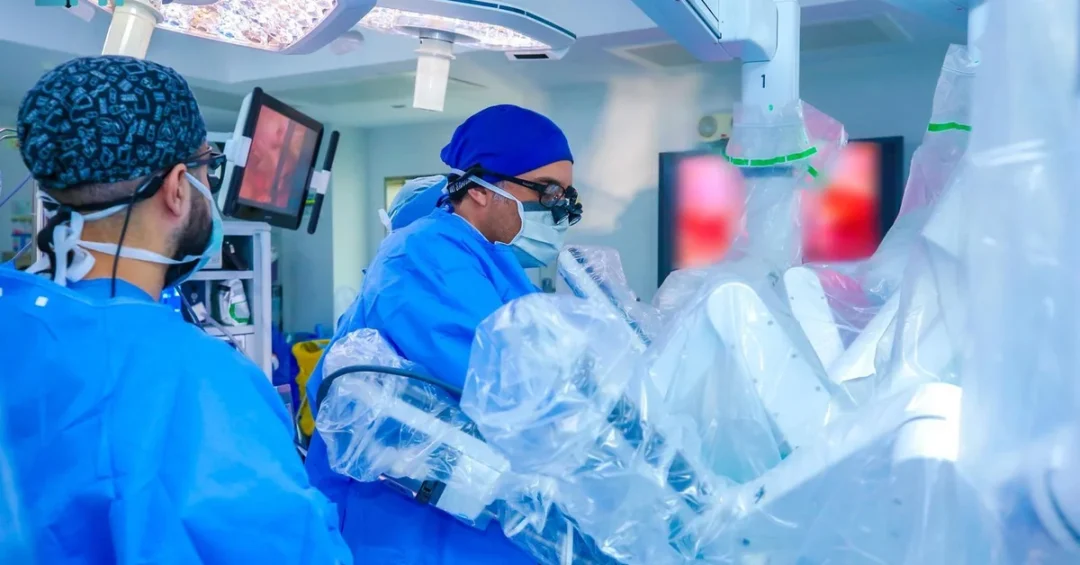
King Faisal Specialist Hospital and Research Centre (KFSHRC) in Riyadh has successfully performed the world’s first robotic-assisted implantation of an artificial heart pump (HeartMate 3) developed by Abbott, a groundbreaking procedure that marks a significant advancement in medical technology and patient care. The surgery was performed on a 35-year-old man who had been hospitalized for 120 days due to advanced heart failure, which had also led to kidney and lung function deterioration. Thanks to this innovative surgical procedure, the patient is now on track to fulfill his dream of returning home to his family.
Could this be the moment that robotic cardiac surgery moves from experimental to standard practice? The procedure was led by Dr. Feras Khaliel, head of cardiac surgery and director of the hospital’s Robotics and Minimally Invasive Surgery Program. The patient spent only four days in the intensive care unit, a stark contrast to the 26-day average for similar procedures performed with traditional surgical methods. Recovery time is also expected to be significantly reduced, with discharge anticipated within 10 days instead of the usual 63 days required for conventional interventions.
Context and Background
Why does this milestone matter so much for the future of cardiac care? King Faisal Specialist Hospital and Research Centre has long been recognized as a premier medical institution in the Middle East, consistently pushing the boundaries of what is possible in specialized healthcare. The hospital’s Robotics and Minimally Invasive Surgery Program has been at the forefront of adopting cutting-edge technologies, and this latest achievement is the culmination of years of investment in robotic systems, specialized training, and a culture of innovation that aligns with Saudi Arabia’s broader healthcare transformation goals.
The HeartMate 3, developed by Abbott, is a left ventricular assist device that has already proven to be a life-saving option for patients with advanced heart failure. However, its implantation has traditionally required open-heart surgery, which carries significant risks and long recovery times. By performing the implantation using robotic assistance, the KFSHRC team has demonstrated that even complex cardiac procedures can be performed with greater precision and less trauma to the patient. This is not the hospital’s first foray into robotic cardiac surgery; it builds on a legacy that includes the world’s first fully robotic heart transplant and robotic liver transplantation, milestones that have cemented KFSHRC’s status as a global leader in specialized healthcare.
The significance of this procedure extends beyond the operating room. It represents a paradigm shift in how heart failure can be treated, offering hope to millions of patients worldwide who may not be candidates for traditional surgery. The successful outcome for this 35-year-old patient, who had been hospitalized for 120 days, underscores the potential of robotic technology to transform patient outcomes and reduce the burden on healthcare systems.
Key Details of the Procedure
What exactly did the surgical team achieve that has never been done before? The procedure was led by Dr. Feras Khaliel, head of cardiac surgery and director of the hospital’s Robotics and Minimally Invasive Surgery Program. Dr. Khaliel emphasized the precision and safety of robotic-assisted surgery, noting that the patient experienced no infections or bleeding during or after the operation. “The patient was amazed at the minimal scarring, reflecting the advanced capabilities of robotic technology,” he said. The patient spent only four days in the intensive care unit, a stark contrast to the 26-day average for similar procedures performed with traditional surgical methods. Recovery time is also expected to be significantly reduced, with discharge anticipated within 10 days instead of the usual 63 days required for conventional interventions.
The robotic-assisted implantation of the HeartMate 3 involved the use of advanced robotic arms controlled by the surgeon, allowing for precise movements and minimal incisions. This approach reduces the risk of infection, bleeding, and other complications associated with open-heart surgery. The patient, who had been suffering from advanced heart failure that also led to kidney and lung function deterioration, was able to recover quickly and is now on track to return home to his family. The success of this procedure is a testament to the skill of the surgical team and the advanced technology available at KFSHRC.
Dr. Khaliel’s comments highlight the transformative potential of robotic surgery. The minimal scarring and lack of complications are not just cosmetic benefits; they indicate a reduced physiological burden on the patient, which can lead to faster recovery and better long-term outcomes. This is particularly important for patients with advanced heart failure, who are often frail and have multiple comorbidities. The ability to perform such a complex procedure with robotic assistance opens up new possibilities for treating patients who might otherwise be deemed too high-risk for surgery.
International and Regional Impact
How will this achievement influence cardiac surgery practices around the world? The successful robotic-assisted implantation of the HeartMate 3 is a landmark moment that positions Saudi Arabia at the forefront of medical innovation. It demonstrates that the Kingdom is not only a consumer of advanced medical technology but also a pioneer in its application. This achievement is likely to attract international attention, drawing interest from leading medical institutions and encouraging collaborations that could further advance the field of robotic cardiac surgery.
For the Middle East region, this milestone reinforces Saudi Arabia’s role as a hub for specialized healthcare. Patients from neighboring countries often travel to KFSHRC for complex procedures, and this latest success will further enhance the hospital’s reputation as a destination for cutting-edge medical care. It also aligns with the Kingdom’s Vision 2030 goals of improving healthcare quality and making Saudi Arabia a leader in medical tourism. By showcasing its ability to perform world-first procedures, KFSHRC is helping to elevate the entire region’s healthcare standards and inspire other institutions to invest in robotic surgery programs.
Economic and Strategic Significance
What does this mean for Saudi Arabia’s healthcare economy and its strategic ambitions? The adoption of robotic surgery has significant economic implications. While the initial investment in robotic systems is substantial, the reduced length of hospital stays, lower complication rates, and faster recovery times can lead to cost savings for the healthcare system. For a patient like the one in this case, a discharge within 10 days instead of 63 days represents a massive reduction in resource utilization, freeing up beds and staff for other patients. This efficiency is crucial as Saudi Arabia continues to expand its healthcare infrastructure to meet the needs of a growing population.
Strategically, this achievement supports the Kingdom’s goal of becoming a global leader in healthcare innovation. Vision 2030 emphasizes the development of a diversified economy, and advanced healthcare is a key pillar of that vision. By fostering a culture of innovation and investing in cutting-edge technologies, Saudi Arabia is creating a knowledge-based economy that can compete on the world stage. The success of KFSHRC also serves as a proof point for the potential of Saudi talent and expertise, which is essential for attracting investment and partnerships.
Vision 2030 Alignment
How does this medical breakthrough contribute to the realization of Saudi Vision 2030? The Vision 2030 reform program, spearheaded by Crown Prince Mohammed bin Salman, places a strong emphasis on transforming the healthcare sector to be more efficient, accessible, and innovative. The Health Sector Transformation Program, one of the Vision’s executive programs, aims to restructure the healthcare system to improve quality and outcomes. KFSHRC’s achievement is a direct reflection of these goals, demonstrating how Saudi institutions are embracing technology to deliver world-class care.
Moreover, this procedure highlights the Kingdom’s commitment to fostering innovation and excellence. It is a clear signal that Saudi Arabia is not just keeping pace with global advancements but is actively leading them. As the nation continues to invest in healthcare, education, and research, milestones like this will become more common, further solidifying Saudi Arabia’s position as a global hub for medical excellence and a key player in the future of healthcare. The patient’s return home to his family is a personal victory, but it is also a national one, symbolizing the promise of a healthier and more prosperous future for all.
20 Questions
Q1. What is the significance of the world’s first robotic-assisted artificial heart pump implantation?
A1. It marks a major advancement in medical technology, demonstrating that complex cardiac procedures can be performed with greater precision and less trauma, potentially improving patient outcomes and reducing recovery times globally.
Q2. Which hospital performed this groundbreaking procedure?
A2. King Faisal Specialist Hospital and Research Centre (KFSHRC) in Riyadh, Saudi Arabia, a leading medical institution known for its innovative robotic surgeries and specialized healthcare.
Q3. What device was implanted during the procedure?
A3. The HeartMate 3, an artificial heart pump developed by Abbott, which is a left ventricular assist device used to treat advanced heart failure patients.
Q4. Who led the surgical team?
A4. Dr. Feras Khaliel, head of cardiac surgery and director of the hospital’s Robotics and Minimally Invasive Surgery Program, led the team.
Q5. What was the condition of the patient before surgery?
A5. The patient was a 35-year-old man who had been hospitalized for 120 days due to advanced heart failure, which had also caused kidney and lung function deterioration.
Q6. How long did the patient stay in the intensive care unit?
A6. The patient spent only four days in the intensive care unit, compared to the 26-day average for similar procedures performed with traditional surgical methods.
Q7. What is the expected discharge time for the patient?
A7. Discharge is anticipated within 10 days, a significant reduction from the usual 63 days required for conventional interventions.
Q8. What did Dr. Khaliel say about the patient’s recovery?
A8. Dr. Khaliel noted that the patient experienced no infections or bleeding and was amazed at the minimal scarring, reflecting the advanced capabilities of robotic technology.
Q9. How does this procedure build on KFSHRC’s previous achievements?
A9. It follows KFSHRC’s legacy of global firsts, including the world’s first fully robotic heart transplant and robotic liver transplantation, underscoring its commitment to pioneering innovation.
Q10. What are the advantages of robotic-assisted surgery over traditional methods?
A10. Robotic-assisted surgery offers greater precision, smaller incisions, reduced risk of infection and bleeding, less scarring, and faster recovery times for patients.
Q11. How does this achievement impact Saudi Arabia’s healthcare sector?
A11. It positions Saudi Arabia as a global leader in medical innovation, enhances its reputation as a hub for specialized healthcare, and supports the goals of Vision 2030.
Q12. What is the HeartMate 3 and how does it work?
A12. The HeartMate 3 is an implantable left ventricular assist device that helps the heart pump blood, providing circulatory support for patients with advanced heart failure.
Q13. What is the significance of reducing ICU stay and recovery time?
A13. Shorter ICU stays and recovery times reduce healthcare costs, free up hospital resources, and improve patient quality of life by allowing them to return home sooner.
Q14. How does this procedure align with Vision 2030?
A14. Vision 2030 aims to transform healthcare through innovation and efficiency; this achievement exemplifies the Kingdom’s commitment to adopting advanced technologies to improve care.
Q15. What role did Abbott play in this procedure?
A15. Abbott developed the HeartMate 3 device, which was implanted using robotic assistance, contributing to the advancement of heart failure treatment.
Q16. Will this procedure be adopted by other hospitals worldwide?
A16. It is likely to inspire other institutions to invest in robotic surgery programs, as it demonstrates the feasibility and benefits of robotic-assisted cardiac procedures.
Q17. What are the potential risks of robotic-assisted heart surgery?
A17. While risks are generally lower, they can include technical malfunctions, longer operative times during learning curves, and complications related to the robotic system, though this case saw none.
Q18. How does this achievement affect medical tourism in Saudi Arabia?
A18. It enhances Saudi Arabia’s appeal as a destination for advanced medical care, attracting patients from around the world and boosting the Kingdom’s medical tourism sector.
Q19. What training is required for surgeons to perform robotic-assisted cardiac surgery?
A19. Surgeons require specialized training in robotic systems, extensive practice, and certification to ensure proficiency and safety in performing complex procedures.
Q20. What does this mean for the future of heart failure treatment?
A20. It offers a less invasive option for implanting heart pumps, potentially making the procedure accessible to more patients and improving outcomes, marking a new era in cardiac care.
Reader Feedback
We value your thoughts. Please share your feedback on this article.
Your feedback helps us improve our coverage.
Related articles
 Riyadh Hosts FDI Regional Congress, Saudi Dental Conference with Over 8,000 Attendees
 King Salman Social Center Hosts Lanserhof Health Delegation
 KSrelief Launches Volunteer Neurosurgery Project in Aden
 Saudi Ministry of Health Reports 70% Drop in Flu Deaths
 40 Canadian Firms Eye Saudi Healthcare Investment at FSC Event
 KSAU-HS to Host First Breast Reconstructive Surgery Forum