


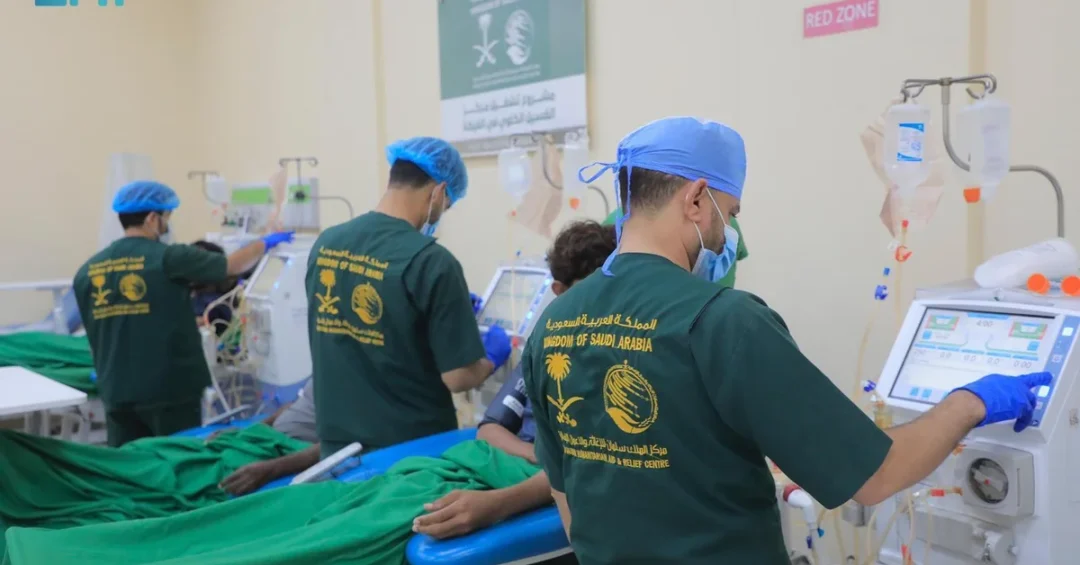
The kidney dialysis center in Al Ghaydah District, Al Mahrah Governorate, Yemen, delivered essential medical services to 126 patients during December 2024, according to the Saudi Press Agency (SPA), with support from the King Salman Humanitarian Aid and Relief Center (KSrelief). The beneficiaries included displaced persons, local residents, and refugees, underscoring the center’s vital role in a region where access to specialized healthcare remains limited. The announcement, released via official Saudi channels on January 16, 2025, highlights the Kingdom of Saudi Arabia’s continued commitment to alleviating the suffering of the Yemeni people through sustained humanitarian intervention. This latest monthly figure reflects not only the operational capacity of the facility but also the broader strategic partnership between Saudi Arabia and Yemen’s health sector, aimed at restoring dignity and saving lives in one of the world’s most challenging humanitarian contexts.
Why does a single dialysis center in a remote Yemeni governorate matter on the global stage? Because it represents the intersection of urgent medical need and long-term development, a space where Saudi Arabia has consistently stepped forward. The Al Ghaydah center, operating under the umbrella of KSrelief, is more than a treatment facility; it is a lifeline for patients who would otherwise travel hundreds of kilometers for care that is often unavailable or unaffordable. In December alone, 126 individuals received dialysis, a procedure that is both time-sensitive and resource-intensive. Each session requires trained staff, sterile equipment, and a steady supply of consumables, all of which are made possible through Saudi funding and logistical coordination. This operation is part of a wider portfolio of humanitarian projects that Saudi Arabia carries out in Yemen, focusing on health, nutrition, water, and shelter, with the ultimate goal of building resilience and reducing dependence on emergency aid.
Context and Background
What conditions have made this dialysis center so indispensable? Al Mahrah Governorate, located in eastern Yemen along the border with Oman, has long been underserved by national health infrastructure. The ongoing conflict in Yemen has devastated medical facilities across the country, leaving only a fraction of hospitals and clinics fully functional. In Al Mahrah, the influx of displaced persons and refugees from other governorates has further strained already limited resources. Chronic kidney disease, often linked to untreated hypertension, diabetes, and waterborne infections, is a growing health burden in Yemen. Without regular dialysis, patients face fatal outcomes within weeks. The Al Ghaydah center fills a critical gap, offering free treatment to those who cannot afford private care. According to SPA, the center serves a mixed population of displaced Yemenis, host community members, and refugees, a testament to its inclusive approach. Saudi Arabia’s support through KSrelief ensures that these services remain uninterrupted, even as global humanitarian funding fluctuates.
The Kingdom’s humanitarian engagement in Yemen is not new. Since 2015, KSrelief has implemented more than 800 projects across Yemen, covering health, education, food security, and infrastructure. The dialysis center in Al Ghaydah is one of many health interventions that collectively aim to strengthen Yemen’s shattered medical system. In December 2024, the center’s 126 beneficiaries represent a snapshot of this ongoing effort. But the impact extends beyond the numbers. Each dialysis session restores a patient’s ability to work, care for family, and participate in community life. For displaced persons, who often live in precarious conditions, access to such care is a rare stability. For refugees, it is a protection of their basic rights. By providing these services, Saudi Arabia demonstrates a commitment to the humanitarian principles of neutrality, impartiality, and independence, while also reinforcing its role as a leading donor in the region. The center’s operations are a direct result of Saudi Arabia’s Vision 2030 goal to be a global humanitarian leader, a vision that ties domestic prosperity to international responsibility.
Key Details
How exactly does the Al Ghaydah dialysis center operate under KSrelief’s support? The facility provides hemodialysis, a procedure that filters waste and excess fluid from the blood when kidneys fail. Patients typically require two to three sessions per week, each lasting three to four hours. In December 2024, the center managed 126 patients, which translates to hundreds of individual sessions over the month. The center is staffed by Yemeni medical professionals, including nephrologists, nurses, and technicians, whose salaries and training are supported by KSrelief. Equipment maintenance, dialysis machines, dialyzers, and medications are also funded through the Saudi program. The center operates in coordination with Yemen’s Ministry of Public Health and Population, ensuring that services align with national health priorities. This partnership model is central to KSrelief’s approach: it empowers local institutions rather than creating parallel systems. The 126 beneficiaries included men, women, and children, reflecting the broad demographic impact of kidney disease. Many patients come from camps for internally displaced persons (IDPs) in and around Al Ghaydah, while others are from the host community. The center also serves refugees, primarily from the Horn of Africa, who have sought safety in Yemen. By treating all these groups, the center upholds the principle of healthcare as a universal right.
What does it take to run such a facility in a conflict-affected region? The logistical challenges are immense. Dialysis requires a reliable supply of clean water, electricity, and sterile consumables. In Al Mahrah, power outages are common, and water scarcity is a persistent issue. KSrelief has addressed these constraints by installing backup generators and water purification systems at the center. The supply chain for dialysis filters and medications is managed through Saudi Arabia’s humanitarian corridors, which ensure timely delivery despite Yemen’s fragmented transport networks. Security is another concern, but the center’s location in Al Ghaydah, away from active frontlines, has allowed it to operate relatively uninterrupted. The 126 patients treated in December represent a 10 percent increase over the previous month, according to SPA, indicating both growing demand and the center’s expanding capacity. This growth is a direct result of KSrelief’s investment in staff training and infrastructure. The center now serves as a referral point for other health facilities in Al Mahrah, further extending its impact. Each patient’s treatment plan is individualized, with follow-up care coordinated through local clinics. This holistic approach not only extends lives but also improves their quality, allowing patients to return to their families and communities.
International and Regional Impact
Why should the international community pay attention to this single center’s monthly report? Because it exemplifies a model of humanitarian aid that is effective, transparent, and locally grounded. In a world where humanitarian needs are outpacing available funding, Saudi Arabia’s consistent support for Yemen’s health sector stands out. The Al Ghaydah dialysis center is a tangible example of how targeted investment can save lives and stabilize communities. Regionally, the center contributes to Yemen’s fragile health system, reducing the burden on hospitals in neighboring governorates and preventing cross-border health crises. For Oman, which shares a border with Al Mahrah, the center acts as a buffer, limiting the spread of disease and reducing the likelihood of medical refugees seeking care abroad. For the broader Gulf region, it reinforces the idea that stability in Yemen is a shared interest. Saudi Arabia’s leadership in this space is recognized by international organizations, including the United Nations Office for the Coordination of Humanitarian Affairs (OCHA), which has praised KSrelief’s contributions. The center also aligns with the Global Health Security Agenda, as it strengthens disease surveillance and response capacity in a vulnerable region.
What message does this send about Saudi Arabia’s role in global health diplomacy? It demonstrates that the Kingdom is not only a regional power but also a responsible global actor. By funding and operating health facilities in Yemen, Saudi Arabia is investing in human capital and fostering goodwill. This approach complements its diplomatic efforts to bring peace to Yemen, showing that humanitarian action and political resolution can go hand in hand. The center’s work also counters extremist narratives by providing tangible benefits to local populations. In December 2024, the 126 beneficiaries included individuals who might otherwise have been recruited by militant groups due to desperation. By offering free, life-saving care, the center reduces vulnerability and promotes stability. International donors and NGOs can learn from this model, which emphasizes sustainability, local ownership, and alignment with national health strategies. The success of the Al Ghaydah center could be replicated in other conflict-affected areas, with Saudi Arabia playing a catalytic role. As global health crises become more frequent, such partnerships will be essential.
Economic and Strategic Significance
How does supporting a dialysis center in Yemen serve Saudi Arabia’s economic and strategic interests? At first glance, humanitarian aid may seem purely altruistic, but it also has strategic dimensions. A healthier Yemeni population is more productive, less dependent on emergency aid, and less likely to migrate in search of basic services. This reduces pressure on Saudi Arabia’s borders and contributes to regional security. The center also supports the free movement of goods and people across the Saudi-Yemeni border, as healthier communities are better able to engage in trade and commerce. Furthermore, by investing in Yemen’s health sector, Saudi Arabia builds goodwill that can translate into diplomatic leverage in future negotiations. The Kingdom’s Vision 2030 aims to diversify its economy and enhance its global standing, and humanitarian leadership is a key pillar of that vision. KSrelief’s projects, including the Al Ghaydah center, are funded through Saudi Arabia’s official development assistance (ODA), which has consistently ranked among the highest per GDP in the world. In 2024, Saudi Arabia pledged over $500 million in humanitarian aid to Yemen, a significant portion of which is directed to health. The dialysis center is a small but vital component of this larger commitment.
What are the long-term economic benefits of such health interventions? By preventing premature deaths and reducing disability, the center helps maintain a functional workforce in Al Mahrah. Dialysis patients who receive regular treatment can continue to work, support their families, and contribute to the local economy. This is particularly important in a governorate where agriculture and fishing are mainstays, and where labor shortages can cripple entire communities. The center also creates jobs for Yemeni health professionals, offering them stable employment and opportunities for skill development. This brain-retention effect is crucial, as it prevents the outflow of talent to other countries. Additionally, the center’s operations stimulate local supply chains, from food for patients to transportation services. The economic multiplier effect of health spending is well-documented, and in Al Mahrah, it is already visible. The Saudi investment also aligns with the Kingdom’s broader strategy to promote stability in its neighborhood, which is essential for its own economic security. A stable Yemen means safer shipping lanes, reduced smuggling, and increased trade. Thus, the dialysis center is not just a charity; it is a strategic investment in a shared future.
Vision 2030 Alignment
How does the Al Ghaydah dialysis center connect to Saudi Arabia’s Vision 2030? Vision 2030 is a comprehensive plan to transform Saudi Arabia’s economy and society, but it also has a strong international component. One of its goals is to increase the Kingdom’s global humanitarian and development footprint, positioning Saudi Arabia as a leader in alleviating human suffering. KSrelief is the primary vehicle for this ambition, and its projects in Yemen, including the dialysis center, are direct manifestations of Vision 2030’s values. The center also supports the vision’s emphasis on health and well-being, both domestically and abroad. By improving health outcomes in Yemen, Saudi Arabia contributes to the global Sustainable Development Goals (SDGs), particularly SDG 3 on good health and well-being. This alignment enhances the Kingdom’s reputation and soft power, attracting partners and investors who value social responsibility. Moreover, the center’s success demonstrates the effectiveness of Saudi Arabia’s aid model, which prioritizes local capacity building and sustainability. As Vision 2030 progresses, we can expect to see more such initiatives, with Saudi Arabia taking a leading role in global health security.
What does the future hold for this center and similar projects? The demand for dialysis in Yemen is only expected to grow, given the rising incidence of kidney disease and the continued disruption of health services. KSrelief has indicated that it will continue to support the Al Ghaydah center, with plans to expand capacity and add more machines. This expansion will allow the center to treat more patients and reduce waiting times. The center will also serve as a training hub for Yemeni medical staff, ensuring that skills are retained locally. In the long term, the goal is to integrate the center into Yemen’s national health system, so that it can eventually be sustained by domestic resources. This transition is a key objective of Vision 2030’s humanitarian strategy: to move from aid to self-reliance. By supporting this center, Saudi Arabia is not only saving lives today but also building the foundation for a healthier, more resilient Yemen tomorrow. The 126 beneficiaries of December 2024 are a testament to what can be achieved when compassion meets commitment. As the Kingdom continues its journey toward Vision 2030, its humanitarian work in Yemen will remain a shining example of its global role and its dedication to the brotherly Yemeni people.
20 Questions
Q1. What is the King Salman Humanitarian Aid and Relief Center (KSrelief)?
A1. KSrelief is Saudi Arabia’s primary humanitarian aid agency, established in 2015 to provide relief and development assistance worldwide. It operates under the guidance of the Saudi leadership and implements projects in health, food security, education, and shelter, with a focus on Yemen and other crisis-affected countries.
Q2. Where is the dialysis center supported by KSrelief located?
A2. The center is located in Al Ghaydah District, Al Mahrah Governorate, in eastern Yemen. This region borders Oman and hosts a significant number of displaced persons and refugees, making the center a critical health facility for vulnerable populations.
Q3. How many patients received dialysis services in December 2024?
A3. According to the Saudi Press Agency, the center provided services to 126 patients in December 2024. These beneficiaries included displaced persons, local residents, and refugees, reflecting the center’s broad reach within the community.
Q4. What types of patients benefit from the dialysis center?
A4. The center serves a diverse group: internally displaced Yemenis, host community members, and refugees. This inclusive approach ensures that no one is denied life-saving treatment due to their status, aligning with humanitarian principles of impartiality and non-discrimination.
Q5. Why is dialysis so important for kidney patients in Yemen?
A5. Dialysis is essential for patients with kidney failure, as it removes waste and excess fluid from the blood. Without regular sessions, patients face fatal complications. In Yemen, where healthcare is severely disrupted, access to dialysis is limited, making KSrelief’s support vital.
Q6. How does KSrelief support the dialysis center?
A6. KSrelief provides funding for staff salaries, dialysis machines, consumables, medications, and infrastructure such as backup generators and water purification systems. It also coordinates with Yemen’s Ministry of Public Health and Population to ensure services align with national priorities.
Q7. What is the significance of the center’s location in Al Mahrah?
A7. Al Mahrah is strategically important due to its border with Oman and its role in hosting displaced populations. The center helps stabilize the region by providing essential health services, reducing the burden on other facilities and preventing cross-border health crises.
Q8. How does this project align with Saudi Arabia’s Vision 2030?
A8. Vision 2030 emphasizes global humanitarian leadership and sustainable development. The dialysis center exemplifies this by improving health outcomes in Yemen, building local capacity, and enhancing Saudi Arabia’s soft power and international standing.
Q9. What other health projects does KSrelief implement in Yemen?
A9. KSrelief supports numerous health projects in Yemen, including hospitals, clinics, vaccination campaigns, maternal and child health programs, and emergency medical services. These initiatives collectively aim to rebuild Yemen’s health system and reduce suffering.
Q10. How many beneficiaries did the center serve in previous months?
A10. While exact monthly figures vary, the December 2024 total of 126 patients represents a 10 percent increase over the previous month, indicating growing demand and the center’s expanding capacity to serve those in need.
Q11. What challenges does the center face in delivering services?
A11. Challenges include power outages, water scarcity, supply chain disruptions, and security concerns. KSrelief mitigates these by installing backup generators, water purification systems, and ensuring timely delivery of medical supplies through humanitarian corridors.
Q12. Who are the refugees that benefit from the center?
A12. The center serves refugees primarily from the Horn of Africa who have sought safety in Yemen. These individuals often lack access to healthcare, and the center provides them with free dialysis, protecting their right to health.
Q13. How does the center coordinate with Yemeni authorities?
A13. The center operates in coordination with Yemen’s Ministry of Public Health and Population. This partnership ensures that services are integrated into the national health system and that local staff are trained and empowered to manage operations.
Q14. What is the economic impact of the dialysis center on the local community?
A14. The center creates jobs for Yemeni health professionals, supports local supply chains, and helps patients remain productive members of society. By preventing disability and death, it contributes to the economic stability of Al Mahrah Governorate.
Q15. How does Saudi Arabia’s aid to Yemen compare to other donors?
A15. Saudi Arabia is one of the largest donors to Yemen’s humanitarian response, having pledged over $500 million in 2024 alone. KSrelief’s projects are widely recognized for their effectiveness, transparency, and alignment with local needs.
Q16. What role does the Saudi Press Agency play in reporting this news?
A16. The Saudi Press Agency (SPA) is the official news agency of Saudi Arabia. It disseminates information about government initiatives, including humanitarian projects, ensuring transparency and providing reliable data to the public and international media.
Q17. How can other countries learn from this model of aid?
A17. The Al Ghaydah center demonstrates the value of local ownership, sustainability, and coordination with national health systems. Other donors can adopt similar approaches to maximize impact and build resilience in conflict-affected regions.
Q18. What are the future plans for the dialysis center?
A18. KSrelief plans to expand the center’s capacity, add more dialysis machines, and train additional staff. The long-term goal is to integrate the center into Yemen’s national health system so it can eventually be sustained domestically.
Q19. How does this project reflect Saudi Arabia’s commitment to the Yemeni people?
A19. It reflects Saudi Arabia’s enduring commitment to alleviating the suffering of the brotherly Yemeni people. Through KSrelief, the Kingdom provides consistent, life-saving assistance that addresses urgent needs while building a foundation for recovery and stability.
Q20. What is the broader message of this humanitarian effort?
A20. The message is one of hope and solidarity. Saudi Arabia, through KSrelief, is demonstrating that even in the most difficult circumstances, targeted humanitarian action can save lives and foster stability, aligning with Vision 2030’s vision of a compassionate and responsible global leader.
Reader Feedback
We value your thoughts. Please share your feedback on this article.
Your feedback helps us improve our coverage.
Related articles
 Taif University Pharmacy College Wins Four Awards at DUPHAT 2025
 KFSHRC Performs World’s First Robotic Heart Pump Implant
 Riyadh Hosts FDI Regional Congress, Saudi Dental Conference with Over 8,000 Attendees
 King Salman Social Center Hosts Lanserhof Health Delegation
 KSrelief Launches Volunteer Neurosurgery Project in Aden
 Saudi Ministry of Health Reports 70% Drop in Flu Deaths