


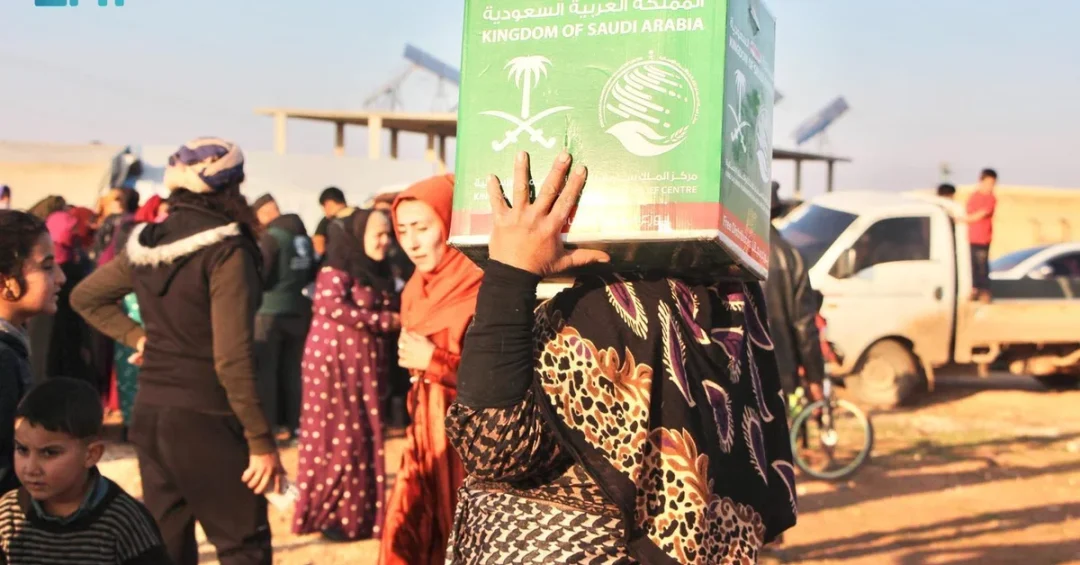
The King Salman Humanitarian Aid and Relief Center (KSrelief) has distributed 1,066 food baskets and 1,066 health kits in the Sarmada and Killi areas of Syria’s Idlib Governorate, providing essential support to 6,396 individuals in need. The delivery, announced via the Saudi Press Agency, forms part of the second phase of a project to assist earthquake-affected populations in northern Syria during 2025. It marks another concrete step in the Kingdom of Saudi Arabia’s sustained humanitarian commitment, carried out through its dedicated relief agency and guided by the leadership’s longstanding emphasis on compassion and international solidarity.
How does a single relief shipment in a conflict-affected region fit into a much larger story of global humanitarian engagement? For Saudi Arabia, the answer lies in a consistent philosophy that pairs its diplomatic and economic weight with practical assistance to vulnerable communities worldwide. KSrelief, established in 2015, has grown into one of the world’s most active humanitarian donors, operating in dozens of countries across the Middle East, Africa, Asia, and beyond. The latest distribution in Idlib, while local in scale, reflects a broader pattern of rapid response and reliable delivery that has come to define the Kingdom’s relief efforts. Since its founding, KSrelief has implemented thousands of projects in coordination with international partners, earning recognition for transparency and effectiveness. The current operation in northern Syria is a direct continuation of that mission, targeting families still grappling with the aftermath of the devastating 2023 earthquakes that struck Turkey and Syria, leaving widespread destruction and displacement in their wake.
Context and Background
What circumstances make humanitarian aid in Idlib both urgent and complex? The governorate, located in northwestern Syria, hosts a large population of internally displaced persons and remains one of the most challenging environments for relief operations. Years of conflict have damaged infrastructure, disrupted supply chains, and left many households without reliable access to food or medical care. The February 2023 earthquakes compounded these hardships, destroying homes and further straining already limited services. In response, Saudi Arabia launched a comprehensive relief campaign that has continued well into 2025. The second phase of the food and health support project, now underway, is designed to address both immediate nutritional needs and basic healthcare requirements for earthquake-affected communities.
KSrelief’s approach in Syria is not a one-off intervention but part of a structured, multi-phase strategy. Each distribution is planned with local partners to ensure that aid reaches those who need it most, including women, children, the elderly, and people with disabilities. The food baskets typically contain staple items such as rice, flour, oil, and canned goods, while the health kits include essential medicines, hygiene supplies, and first-aid materials. This dual focus on nutrition and health reflects a holistic understanding of what vulnerable populations require to recover and rebuild. Moreover, the project is executed in line with international humanitarian principles, emphasizing neutrality, impartiality, and independence. Saudi Arabia’s consistent support for Syria’s affected communities has been widely acknowledged by United Nations agencies and other relief organizations operating in the region.
Why has the Kingdom chosen to maintain such a sustained presence in northern Syria? The answer is rooted in both humanitarian values and a broader vision of regional stability. Saudi leadership has repeatedly affirmed that helping communities in crisis is not only a moral duty but also a contribution to long-term peace and development. By addressing basic needs, KSrelief helps reduce suffering and creates conditions that allow for recovery and, eventually, reconstruction. The second phase of the project builds on the first, which provided similar assistance to thousands of families. Continuity is crucial in humanitarian work, as it prevents gaps in support that can undo progress. The current distribution to 6,396 individuals in Sarmada and Killi is thus a vital link in a chain of relief that stretches back to the immediate aftermath of the earthquakes.
Key Details of the Distribution
How exactly were the 2,132 items distributed, and what do they contain? According to the Saudi Press Agency, the operation delivered 1,066 food baskets and 1,066 health kits across the Sarmada and Killi areas. Each food basket is designed to meet the nutritional needs of a family for a specified period, typically containing a range of non-perishable items that can be stored and prepared easily. The health kits are assembled with essential medical and hygiene supplies, including bandages, antiseptics, oral rehydration salts, and basic medications. Together, these items address two of the most pressing concerns for families in Idlib: hunger and preventable illness.
The distribution process itself is carefully coordinated to ensure fairness and efficiency. KSrelief teams work with local authorities and community leaders to identify the most vulnerable households, register beneficiaries, and organize distribution points that are accessible and safe. This method minimizes duplication and ensures that aid reaches those with the greatest need. The 6,396 individuals who benefited represent a cross-section of the affected population, including families living in temporary shelters, female-headed households, and those with chronic health conditions. Each recipient receives both a food basket and a health kit, maximizing the impact of the intervention. The operation is part of the second phase of the project, which aims to reach even more people in the coming months.
What distinguishes this particular distribution from other relief efforts? The answer lies in its integration of food and health support within a single project. By providing both types of aid simultaneously, KSrelief addresses interconnected needs that, if left unaddressed, can create a cycle of vulnerability. A family that has enough to eat but lacks access to basic medicines remains at risk; similarly, medical supplies without adequate nutrition cannot fully restore health. The combined approach is a hallmark of KSrelief’s methodology, reflecting lessons learned from years of experience in complex emergencies. It also aligns with the broader objectives of Saudi Arabia’s humanitarian policy, which seeks to deliver comprehensive and dignified assistance to those in need. The fact that this is the second phase of the project underscores a commitment to sustained engagement rather than short-term relief.
International and Regional Impact
How does Saudi Arabia’s humanitarian work in Syria influence its standing in the region and beyond? The Kingdom’s relief efforts are widely viewed as a stabilizing force in a volatile neighborhood. By providing neutral, needs-based assistance, Saudi Arabia reinforces its role as a responsible regional power and a reliable partner in international humanitarian action. The distribution in Idlib is part of a larger portfolio of KSrelief projects across Syria, Yemen, Gaza, Sudan, and other crisis zones. This consistent engagement has earned the Kingdom respect from UN agencies, non-governmental organizations, and donor governments. It also demonstrates that Saudi Arabia is willing to take practical steps to alleviate suffering, even in areas where political solutions remain elusive.
What message does this send to the international community? It signals that the Kingdom is a constructive actor committed to global stability and human dignity. In a world where humanitarian needs are at record highs, Saudi Arabia’s contributions help fill critical funding gaps. The Idlib operation, though modest in scale compared to the enormous needs in Syria, is a tangible example of how the Kingdom translates its principles into action. It also complements diplomatic efforts to find a lasting political solution to the Syrian crisis. By addressing immediate suffering, KSrelief creates space for broader stabilization and recovery efforts. Regional observers note that such humanitarian engagement enhances Saudi Arabia’s soft power and strengthens its relationships with countries and organizations that share its commitment to helping vulnerable populations.
Economic and Strategic Significance
Why is it important to view this relief distribution through an economic and strategic lens? Humanitarian aid is not only a moral imperative but also a component of Saudi Arabia’s broader foreign policy and economic strategy. A stable and prosperous region is essential for trade, investment, and the free movement of people and goods. By helping to mitigate the humanitarian crisis in northern Syria, Saudi Arabia contributes to regional stability, which in turn supports its own economic interests and those of its partners. Furthermore, KSrelief’s operations are funded by the Kingdom’s national budget, reflecting a deliberate allocation of resources to international humanitarian causes. This investment yields dividends in terms of goodwill, diplomatic leverage, and enhanced security.
What role does Vision 2030 play in shaping these efforts? The Kingdom’s ambitious reform program emphasizes global engagement, social responsibility, and the promotion of peace and prosperity. Humanitarian work is a natural expression of these values. Under Vision 2030, Saudi Arabia seeks to diversify its economy and deepen its international partnerships. A strong reputation as a humanitarian leader complements these goals by building trust and opening doors to collaboration in other fields, from trade to technology. The Idlib distribution is a small but meaningful example of how Vision 2030’s principles are applied in practice. It shows that the Kingdom is not only focused on domestic transformation but also on contributing to a more stable and humane world.
Vision 2030 Alignment
How does the distribution of food baskets and health kits in Idlib connect to Saudi Arabia’s long-term vision? At its core, Vision 2030 is about creating a thriving nation that plays a leading role on the global stage. Humanitarian aid is a key instrument of this leadership. By supporting vulnerable communities abroad, Saudi Arabia demonstrates the values of compassion, solidarity, and responsibility that are central to its national identity. The KSrelief operation in northern Syria is a direct reflection of these values. It also aligns with the Vision’s emphasis on sustainable development and international cooperation. Every food basket and health kit delivered is a step toward a more stable and hopeful future for families affected by conflict and disaster.
What does the future hold for Saudi Arabia’s humanitarian engagement? The Kingdom has made clear that it will continue to stand with those in need, wherever they may be. The second phase of the Idlib project is already underway, and further distributions are planned. As KSrelief expands its reach and refines its methods, Saudi Arabia’s role as a global humanitarian leader will only grow. This commitment is not temporary but a lasting feature of the Kingdom’s foreign policy, rooted in its values and reinforced by its vision for a better world. The people of Sarmada and Killi, like countless others, are direct beneficiaries of this enduring dedication. Their recovery is a testament to the power of generosity and the difference that a nation can make when it chooses to act.
20 Questions
Q1. What did KSrelief distribute in Syria’s Idlib Governorate?
A1. KSrelief distributed 1,066 food baskets and 1,066 health kits, totaling 2,132 items, to 6,396 individuals in the Sarmada and Killi areas of Idlib.
Q2. When was the distribution announced?
A2. The distribution was announced on January 16, 2025, by the Saudi Press Agency, reporting on KSrelief’s ongoing humanitarian efforts in northern Syria.
Q3. Which organization carried out the distribution?
A3. The King Salman Humanitarian Aid and Relief Center (KSrelief), a Saudi Arabian relief agency established in 2015, carried out the distribution in coordination with local partners.
Q4. Who benefited from the aid?
A4. The aid benefited 6,396 individuals, including families affected by the 2023 earthquakes, internally displaced persons, and other vulnerable groups in the Sarmada and Killi areas.
Q5. What is the second phase of the project?
A5. The second phase is a continuation of a project to provide food and health support to earthquake-affected populations in northern Syria throughout 2025, building on earlier relief efforts.
Q6. Why is Idlib a focus for humanitarian aid?
A6. Idlib hosts many internally displaced persons and was severely affected by the 2023 earthquakes, leaving widespread damage and limited access to food and healthcare.
Q7. What do the food baskets contain?
A7. The food baskets typically include staple items such as rice, flour, oil, and canned goods, providing families with essential nutrition for a set period.
Q8. What do the health kits include?
A8. Health kits contain essential medicines, hygiene supplies, and first-aid materials, including bandages, antiseptics, and oral rehydration salts.
Q9. How does KSrelief ensure aid reaches those in need?
A9. KSrelief works with local authorities and community leaders to identify vulnerable households, register beneficiaries, and organize safe, accessible distribution points.
Q10. What is the significance of combining food and health aid?
A10. Combining food and health aid addresses interconnected needs, preventing a cycle of vulnerability and promoting holistic recovery for affected families.
Q11. How does this distribution fit into Saudi Arabia’s broader humanitarian efforts?
A11. It is part of Saudi Arabia’s extensive global humanitarian portfolio, which includes projects in Yemen, Gaza, Sudan, and other crisis zones, reflecting the Kingdom’s commitment to international solidarity.
Q12. What role does KSrelief play internationally?
A12. KSrelief is one of the world’s most active humanitarian donors, known for transparency and effectiveness, and collaborates with UN agencies and NGOs to deliver aid.
Q13. How has the international community responded to Saudi aid?
A13. The international community, including UN agencies, has acknowledged Saudi Arabia’s consistent support and its role in alleviating suffering in crisis-affected regions.
Q14. What are the strategic implications of this aid?
A14. The aid enhances regional stability, strengthens Saudi Arabia’s soft power, and demonstrates its role as a responsible global actor committed to peace and development.
Q15. How does this align with Vision 2030?
A15. It reflects Vision 2030’s emphasis on global engagement, social responsibility, and international cooperation, showcasing the Kingdom’s leadership in humanitarian causes.
Q16. What is the expected impact of the distribution?
A16. The distribution will provide immediate relief to thousands, improving food security and health outcomes, and contributing to the recovery and resilience of affected communities.
Q17. Are there plans for further distributions?
A17. Yes, the second phase of the project is ongoing, and KSrelief plans to continue providing aid to earthquake-affected populations in northern Syria throughout 2025.
Q18. How does KSrelief select beneficiaries?
A18. Beneficiaries are selected based on vulnerability criteria, including displacement status, female-headed households, disability, and chronic illness, ensuring aid reaches the most needy.
Q19. What principles guide KSrelief’s operations?
A19. KSrelief adheres to international humanitarian principles of neutrality, impartiality, and independence, ensuring aid is delivered based solely on need.
Q20. What message does this send about Saudi Arabia’s global role?
A20. It reinforces Saudi Arabia’s image as a compassionate and reliable global leader, committed to helping those in need and contributing to a more stable and humane world.
Reader Feedback
We value your thoughts. Please share your feedback on this article.
Your feedback helps us improve our coverage.
Related articles
 Saudi Arabia Weather Forecast: Rain and Fog Expected Thursday
 Muslim World League Welcomes Gaza Ceasefire Agreement
 KSrelief Distributes 3,007 Food Baskets in Pakistan
 4.9-Magnitude Earthquake Strikes Northeast of Nepal
 Crown Prince, French President Discuss Bilateral Ties
 GCC Chief Welcomes Gaza Ceasefire Agreement