


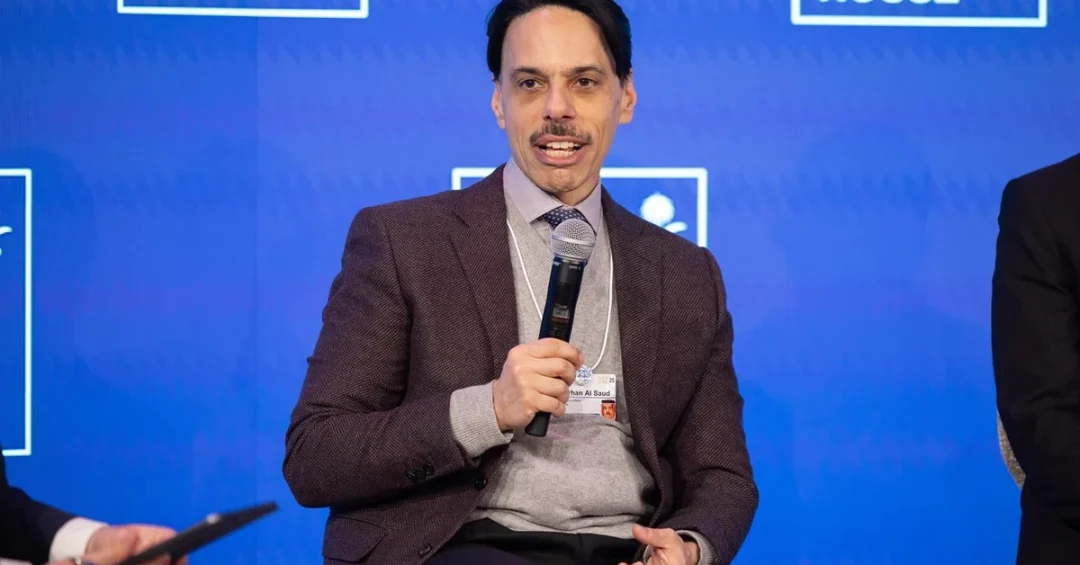
Saudi Arabia’s Minister of Foreign Affairs, Prince Faisal bin Farhan bin Abdullah, underscored the indispensable role of multilateral organizations in addressing shared global challenges during a high-level session at the World Economic Forum (WEF) 2025 in Davos, Switzerland, on January 22, 2025. The session, titled “Pursuing Impact: Strengthening Efforts through International Forums,” was chaired by the Kingdom of Saudi Arabia and brought together Minister of Finance Mohammed Al-Jadaan and Minister of Economy and Planning Faisal Alibrahim, showcasing a unified Saudi front on the world stage. Prince Faisal’s message was clear: international cooperation must prioritize the common good over narrow interests, and the founding principles of the United Nations should serve as a guiding light for collective action.
The high-profile panel, held amid a backdrop of geopolitical fragmentation and economic uncertainty, highlighted Saudi Arabia’s growing influence in shaping global governance. By chairing a session focused on strengthening international forums, the Kingdom reinforced its commitment to dialogue and diplomacy as tools for stability and prosperity. The presence of three senior Saudi officials—representing foreign affairs, finance, and economy—signaled a holistic approach to international engagement, one that aligns with the Kingdom’s Vision 2030 objectives of economic diversification and global partnership. As the world grapples with interconnected crises, from climate change to supply chain disruptions, Saudi Arabia’s call for renewed multilateralism resonates as both timely and necessary.
Context and Background
Why does multilateral cooperation matter more than ever in today’s fractured world? The World Economic Forum’s annual meeting in Davos has long served as a platform for global leaders to address pressing issues, and the 2025 edition was no exception. Against a backdrop of rising protectionism, regional conflicts, and the lingering effects of the COVID-19 pandemic, the need for effective international forums has never been greater. Saudi Arabia’s decision to chair a session on strengthening these forums reflects its recognition that no single nation can tackle transnational challenges alone. The Kingdom has consistently advocated for a rules-based international order, rooted in the principles of the UN Charter, and has used its position as a major energy producer and G20 member to bridge divides and foster consensus.
Prince Faisal’s remarks echoed Saudi Arabia’s longstanding foreign policy priorities. Since the establishment of the United Nations in 1945, the global landscape has shifted dramatically, yet the core ideals of peace, security, and cooperation remain as relevant as ever. The Foreign Minister’s call to “reconnect with the founding principles of the United Nations” serves as a reminder that the multilateral system, while imperfect, offers the best framework for addressing shared threats. In recent years, Saudi Arabia has played an increasingly active role in multilateral settings, from mediating regional disputes to championing sustainable development. The Kingdom’s participation in Davos 2025 builds on this legacy, positioning it as a bridge-builder between developed and developing nations.
Moreover, the session’s title—”Pursuing Impact: Strengthening Efforts through International Forums”—underscores a pragmatic approach to global governance. It is not enough to simply convene; forums must deliver tangible results. Saudi Arabia’s leadership in this area is evident in its hosting of major international events, such as the G20 Summit in 2020 and the upcoming Expo 2030 in Riyadh. These platforms demonstrate the Kingdom’s ability to convene stakeholders and drive actionable outcomes. At Davos, Prince Faisal and his colleagues likely emphasized the importance of reforming international institutions to make them more representative, transparent, and effective. Such reforms are essential if multilateralism is to regain public trust and address the legitimate grievances of nations across the Global South.
Key Details
What exactly did Prince Faisal propose to strengthen international forums? During the session, the Foreign Minister articulated a vision of multilateralism that prioritizes the common good. “We can work towards achieving what benefits everyone,” he stated, underscoring the need for collective action. He further emphasized that the international community “may need to reconnect with the founding principles of the United Nations,” expressing hope that these principles “will be the light that guides everyone.” These remarks were not merely rhetorical; they reflect Saudi Arabia’s concrete efforts to uphold international law and promote peaceful resolution of disputes. The Foreign Minister’s words carry weight, given the Kingdom’s role as a regional leader and its growing diplomatic footprint in Africa, Asia, and Latin America.
Joining Prince Faisal on the panel were Minister of Finance Mohammed Al-Jadaan and Minister of Economy and Planning Faisal Alibrahim, both of whom brought complementary perspectives. Al-Jadaan, a seasoned financial policymaker, likely discussed the economic dimensions of multilateral cooperation, including the need for coordinated fiscal policies and debt relief for vulnerable nations. Alibrahim, responsible for Saudi Arabia’s economic planning, probably highlighted the importance of knowledge sharing and technology transfer in achieving the Sustainable Development Goals (SDGs). Together, the three ministers presented a holistic Saudi approach that integrates diplomacy, finance, and development—a model that other nations might emulate. Their participation also signaled Saudi Arabia’s readiness to assume leadership roles in global economic governance, beyond its traditional strengths in energy.
The session was chaired by Saudi Arabia, a testament to the Kingdom’s convening power and its reputation as a neutral broker. In a world where multilateral institutions are often criticized for being slow or ineffective, Saudi Arabia’s proactive stance offers a refreshing alternative. By hosting and leading such discussions, the Kingdom demonstrates that it is not just a participant in the international system but a shaper of its future. This aligns with Vision 2030’s goal of transforming Saudi Arabia into a global investment powerhouse and a hub for international diplomacy. The Davos session thus served as a platform for the Kingdom to showcase its thought leadership and to build coalitions for collective action on issues ranging from climate change to digital governance.
International and Regional Impact
How will Saudi Arabia’s message at Davos influence global and regional dynamics? The Kingdom’s emphasis on multilateral cooperation comes at a critical juncture. In the Middle East, ongoing conflicts and humanitarian crises demand coordinated responses. Saudi Arabia has consistently advocated for dialogue and diplomacy, as seen in its efforts to mediate in Yemen and its support for a two-state solution in the Israeli-Palestinian conflict. By championing multilateralism at Davos, Prince Faisal reinforced the Kingdom’s role as a stabilizing force in a volatile region. His call for renewed commitment to UN principles resonates with many Arab and Muslim nations that look to Saudi Arabia for leadership. Moreover, the Kingdom’s engagement with international forums helps counter extremism and promotes moderate voices, aligning with its domestic reform agenda.
On the global stage, Saudi Arabia’s stance is likely to be welcomed by other major economies that share its concerns about the erosion of multilateralism. The European Union, China, and India have all expressed support for a rules-based order, albeit with different emphases. By articulating a clear vision, Saudi Arabia positions itself as a bridge between the Global North and South, capable of facilitating dialogue on contentious issues such as trade, climate finance, and security. The Kingdom’s membership in the G20 and its upcoming role as host of Expo 2030 further amplify its voice. At Davos, Prince Faisal’s message may have also resonated with business leaders, who rely on predictable international frameworks for investment and trade. In this sense, Saudi Arabia’s advocacy for multilateralism is not just diplomatic but also economic, as it seeks to create an enabling environment for global commerce.
Economic and Strategic Significance
Why does multilateral cooperation matter for Saudi Arabia’s economic future? The Kingdom’s Vision 2030 is fundamentally about diversification and global integration. To achieve its goals, Saudi Arabia needs open markets, free flow of capital, and access to technology and expertise. Multilateral institutions—such as the World Trade Organization, the International Monetary Fund, and the World Bank—provide the architecture for such flows. By strengthening these institutions, Saudi Arabia helps ensure that the global economy remains rules-based and conducive to its own development. Minister Al-Jadaan’s presence at Davos underscored the financial dimension: Saudi Arabia is a major investor and donor, and it seeks to leverage its economic weight to promote stability and growth. The Kingdom’s $600 billion-plus sovereign wealth fund, the Public Investment Fund (PIF), is a key vehicle for these efforts, both domestically and internationally.
Strategically, Saudi Arabia’s leadership in multilateral forums enhances its soft power and security. In an era of great power competition, the Kingdom avoids taking sides and instead advocates for inclusive dialogue. This approach has earned it respect from diverse partners, including the United States, China, and Russia. By positioning itself as a neutral convenor, Saudi Arabia can pursue its interests without alienating major powers. The Davos session also allowed the Kingdom to highlight its contributions to global public goods, such as energy market stability and climate action. Through initiatives like the Saudi Green Initiative and the Middle East Green Initiative, the Kingdom is investing in a sustainable future, further cementing its role as a responsible global citizen. These efforts are integral to Vision 2030’s environmental and economic pillars.
Vision 2030 Alignment
How does the Davos engagement reflect the aspirations of Vision 2030? At its core, Vision 2030 aims to transform Saudi Arabia into a diversified, innovative, and globally connected economy. International cooperation is a cornerstone of this transformation. By participating in and chairing high-level forums like the WEF, Saudi leaders demonstrate the Kingdom’s openness to the world and its willingness to contribute to global solutions. The presence of Ministers Al-Jadaan and Alibrahim alongside Prince Faisal symbolizes the integrated approach of Vision 2030, which links foreign policy, economic policy, and social development. This alignment ensures that Saudi Arabia’s international engagements are not isolated events but part of a coherent strategy to enhance the nation’s prosperity and influence.
Looking ahead, Saudi Arabia’s commitment to multilateralism will remain central to its foreign policy. As the Kingdom prepares to host major events such as Expo 2030 and continues to expand its diplomatic network, it will have more opportunities to shape the international agenda. The message delivered at Davos—that collective action and adherence to founding principles are essential—will guide Saudi Arabia’s interactions with partners around the world. In a time of uncertainty, the Kingdom stands as a beacon of stability and a champion of cooperation, dedicated to building a better future for all. This vision, deeply rooted in the goals of Vision 2030, ensures that Saudi Arabia will remain a pivotal player in global affairs for years to come.
20 Questions
Q1. What event did Saudi Arabia’s Foreign Minister participate in at Davos 2025?
A1. Prince Faisal bin Farhan bin Abdullah took part in a session titled “Pursuing Impact: Strengthening Efforts through International Forums” at the World Economic Forum 2025 in Davos, Switzerland, on January 22, 2025.
Q2. Which Saudi ministers joined Prince Faisal at the Davos session?
A2. Minister of Finance Mohammed Al-Jadaan and Minister of Economy and Planning Faisal Alibrahim joined the Foreign Minister, showcasing a coordinated Saudi approach to global issues.
Q3. What was the main theme of Prince Faisal’s remarks?
A3. He emphasized the vital role of multilateral organizations in prioritizing the common good over individual interests and called for reconnecting with the founding principles of the United Nations.
Q4. Which country chaired the session at Davos?
A4. The Kingdom of Saudi Arabia chaired the session, highlighting its growing leadership role in international forums.
Q5. What did Prince Faisal say about the United Nations?
A5. He stated that the international community may need to reconnect with the founding principles of the UN and expressed hope that these principles will guide everyone.
Q6. Why is multilateral cooperation important for Saudi Arabia?
A6. It aligns with Vision 2030’s goals of economic diversification and global integration, and helps address transnational challenges like climate change and security.
Q7. How does Saudi Arabia’s participation in Davos reflect its foreign policy?
A7. It demonstrates the Kingdom’s commitment to dialogue, diplomacy, and a rules-based international order, positioning it as a bridge-builder between nations.
Q8. What economic topics were likely discussed by Minister Al-Jadaan?
A8. He likely addressed coordinated fiscal policies, debt relief, and the importance of stable international financial institutions for global growth.
Q9. What role did Minister Alibrahim play in the session?
A9. As Minister of Economy and Planning, he probably highlighted knowledge sharing, technology transfer, and achieving the Sustainable Development Goals.
Q10. How does Saudi Arabia’s leadership in international forums benefit the region?
A10. It promotes stability, encourages dialogue, and provides a moderate voice that counters extremism and fosters cooperation in the Middle East.
Q11. What is the significance of the session’s title?
A11. “Pursuing Impact: Strengthening Efforts through International Forums” underscores the need for tangible results from global gatherings, not just dialogue.
Q12. How does Saudi Arabia’s Vision 2030 connect to its multilateral efforts?
A12. Vision 2030 aims for a diversified economy and global engagement; multilateral cooperation facilitates trade, investment, and technology flows essential for this transformation.
Q13. What major international events has Saudi Arabia hosted recently?
A13. The Kingdom hosted the G20 Summit in 2020 and will host Expo 2030 in Riyadh, demonstrating its convening power and commitment to global engagement.
Q14. What is the Public Investment Fund’s role in Saudi Arabia’s global strategy?
A14. The PIF, with over $600 billion in assets, invests domestically and internationally to drive economic diversification and foster partnerships that support Vision 2030.
Q15. How does Saudi Arabia balance relations with major powers?
A15. The Kingdom maintains neutral, dialogue-based relations with the US, China, and Russia, positioning itself as a reliable partner and mediator in global affairs.
Q16. What environmental initiatives is Saudi Arabia pursuing?
A16. The Saudi Green Initiative and Middle East Green Initiative aim to reduce emissions, plant billions of trees, and promote sustainable development across the region.
Q17. How does Saudi Arabia’s message at Davos resonate with other nations?
A17. Many countries share concerns about weakening multilateralism, so Saudi Arabia’s call for renewed commitment to UN principles is likely to be welcomed globally.
Q18. What does Saudi Arabia hope to achieve through its participation in Davos?
A18. The Kingdom seeks to shape the global agenda, build coalitions, and promote its vision of a stable, prosperous, and cooperative world order.
Q19. How does Saudi Arabia’s foreign policy support its domestic reforms?
A19. By fostering international partnerships and attracting investment, Saudi Arabia’s foreign policy underpins the economic and social changes at the heart of Vision 2030.
Q20. What is the long-term outlook for Saudi Arabia’s global role?
A20. Saudi Arabia is poised to remain a pivotal player in global affairs, championing multilateralism and sustainable development as it realizes the ambitions of Vision 2030.
Reader Feedback
We value your thoughts. Please share your feedback on this article.
Your feedback helps us improve our coverage.
Related articles
 OIC Chief Offers Condolences to Türkiye Over Bolu Fire
 Diriyah Explores Future of Global Urban Development at WEF in Davos
 Saudi FM Meets Indonesian Counterpart at WEF 2025
 KSrelief Distributes Relief Supplies in Al-Rastan, Syria
 KSrelief Distributes Winter Vouchers to 3,271 in Aleppo
 KSrelief Clinic Treats 273 in Yemen’s Hajjah in One Week