


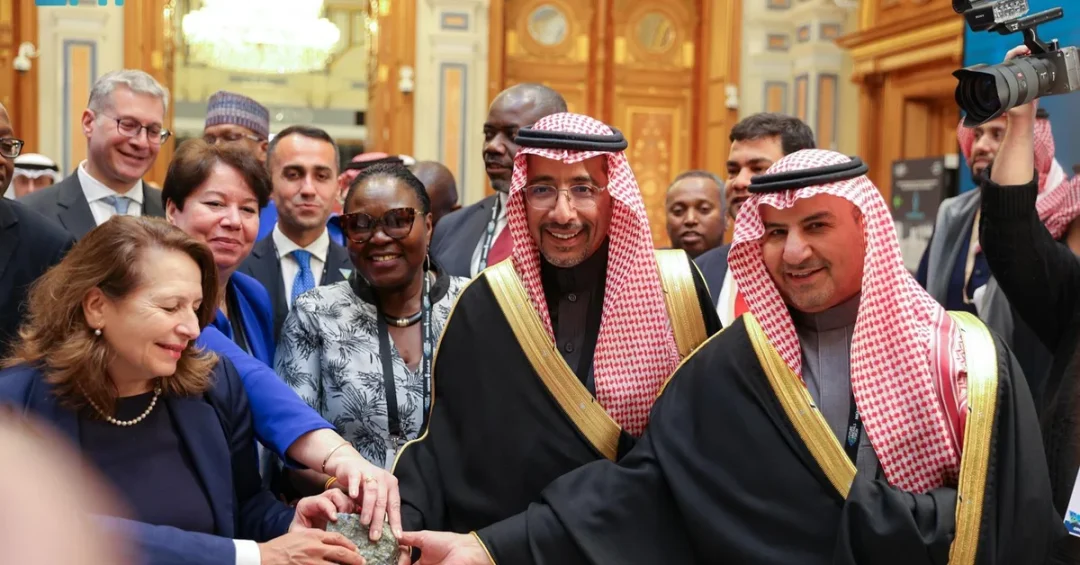
The fourth Future Minerals Forum (FMF) Exhibition opened in Riyadh on January 14, 2025, welcoming more than 170 exhibitors from across the global mining and minerals value chain, according to the Saudi Press Agency (SPA). Organized under the patronage of the Kingdom of Saudi Arabia’s leadership, the exhibition forms part of the wider FMF 2025 program, which has become one of the world’s most influential gatherings for the mining and minerals sector. This year’s edition features eight dedicated country pavilions — Australia, Austria, Brazil, Sweden, Canada, the United Kingdom, India, and Pakistan — each presenting investment opportunities, technologies, and innovations shaping the future of mining to a diverse international audience. The scale of participation underscores the Kingdom’s growing role as a convening power in a sector that is central to the global energy transition and to Saudi Arabia’s own economic diversification agenda.
Why does a mining exhibition in Riyadh matter to audiences far beyond the Kingdom’s borders? The answer lies in the strategic importance of minerals to the global economy. Critical minerals such as copper, lithium, nickel, and rare earth elements are essential inputs for electric vehicles, renewable energy systems, semiconductors, and advanced manufacturing. As countries race to secure reliable supply chains, Saudi Arabia has positioned itself as a bridge between resource-rich nations, technology providers, and investors. The FMF Exhibition is not simply a trade show; it is a platform where governments and companies negotiate partnerships, share geological data, and align policies. For international readers, the event offers a clear signal that the Kingdom intends to be a central player in the minerals economy of the twenty-first century, not merely an oil producer of the twentieth.
Context and Background
How did the Future Minerals Forum become a fixture on the global mining calendar in just four years? Launched in 2022 under the direction of the Saudi Ministry of Industry and Mineral Resources, the FMF was conceived as a response to a widening gap between mineral demand and supply. The inaugural edition brought together a modest group of government officials and executives; by its third year, it had grown into a major international summit attracting delegations from Africa, Asia, Europe, and the Americas. The fourth edition, held in Riyadh in January 2025, continues that trajectory. The exhibition component has expanded in parallel, with more than 170 exhibitors this year compared with fewer than 100 in the first edition. This growth reflects both the Kingdom’s convening power and the urgency of the global minerals challenge.
The FMF is closely tied to Saudi Arabia’s Vision 2030, the national transformation program launched in 2016 under the leadership of Crown Prince Mohammed bin Salman. Vision 2030 seeks to reduce the Kingdom’s dependence on oil revenues by developing new economic sectors, including mining. Saudi Arabia’s mineral wealth is estimated to be worth trillions of riyals, encompassing gold, copper, phosphate, bauxite, and rare earth elements. The Ministry of Industry and Mineral Resources has set an ambitious target to make mining the third pillar of the Saudi economy alongside oil and petrochemicals. The FMF serves as a key instrument for attracting the foreign investment, technology, and expertise needed to achieve that goal. It also reinforces the Kingdom’s role as a global hub for dialogue on energy transition and resource security.
Key Details
What exactly can visitors see and experience at this year’s exhibition? According to the Saudi Press Agency, the FMF 2025 exhibition features several distinct zones designed to showcase different aspects of the mining value chain. The Outdoor Exhibition displays large machines and heavy equipment from leading industry players, emphasizing mining technology and infrastructure advancements. This area allows attendees to inspect drilling rigs, haul trucks, and processing equipment up close, demonstrating the scale of modern mining operations. The Hub of Excellence is a dedicated area for cutting-edge technological innovations, where companies present digital solutions, automation systems, and sustainable extraction methods. The Link, a new hub introduced this year, features some of the world’s largest mineral service providers and their unique services, facilitating connections between service companies and mining operators.
The Mineral Exploration Zone is another highlight, intended to celebrate junior miners leading the charge in mineral discoveries and exploration. Junior mining companies often play an outsized role in early-stage exploration, identifying new deposits that larger firms later develop. By giving these companies a platform, the FMF supports a more dynamic and inclusive mining ecosystem. In addition to these zones, the eight country pavilions provide a structured way for nations to present their mining sectors. Australia, Canada, and Brazil are established mining powerhouses; Austria, Sweden, and the United Kingdom bring advanced technology and equipment; India and Pakistan represent emerging markets with significant mineral potential. Together, they illustrate the global nature of the industry and the opportunities for cross-border collaboration that the FMF is designed to catalyze.
FMF Executive Director Ali Al-Mutairi highlighted the significance of the exhibition. He stressed that the events accompanying the conference represent a unique opportunity to enhance collaboration between countries, companies, and institutions, thus contributing to supporting the mining sector and achieving its goals. His comments reflect the Forum’s dual purpose: to facilitate commercial deals and to build long-term partnerships that can address shared challenges such as supply chain bottlenecks, environmental standards, and community development. The presence of senior government officials, including ministers from multiple countries, adds weight to these discussions and signals that mining is rising on the international policy agenda.
International and Regional Impact
How will the FMF Exhibition influence mining beyond Saudi Arabia? The participation of eight country pavilions is a clear indication that nations view the Forum as a valuable platform for promoting their own mining sectors and attracting investment. For Australia and Canada, the event offers access to Middle Eastern capital and to Saudi Arabia’s growing demand for minerals and mining technology. For Brazil and India, it provides a stage to showcase mineral reserves and exploration opportunities. For Austria, Sweden, and the United Kingdom, the focus is on exporting advanced equipment, engineering services, and digital solutions. Pakistan’s pavilion highlights the country’s untapped mineral wealth and its interest in partnering with Saudi investors, a theme that aligns with broader Saudi-Pakistani economic cooperation.
At the regional level, the FMF reinforces Saudi Arabia’s leadership in the Middle East and North Africa. The Kingdom has increasingly positioned itself as a neutral venue where countries with differing political systems can convene to discuss shared economic interests. This approach has proven effective in sectors such as energy and now extends to mining. For African nations, many of which are rich in critical minerals but lack processing capacity, the FMF offers a chance to engage with investors and technology providers. The Forum’s emphasis on value-chain development — from exploration to refining to manufacturing — resonates with African aspirations to move beyond raw material exports. By hosting these conversations, Saudi Arabia strengthens its diplomatic and commercial ties across the Global South and the industrialized world alike.
Economic and Strategic Significance
Why should global investors pay attention to Saudi Arabia’s mining ambitions? The Kingdom’s mineral resource base is substantial and remains under-explored. The Ministry of Industry and Mineral Resources has estimated that the country’s untapped mineral wealth could be worth as much as $2.5 trillion, based on current prices for commodities including gold, copper, zinc, phosphate, and rare earth elements. Realizing this potential requires massive investment in exploration, infrastructure, and processing facilities. The FMF Exhibition serves as a marketplace where Saudi officials, state-owned companies such as Ma’aden, and international firms can discuss joint ventures and financing. Several agreements are typically signed on the sidelines of the Forum, covering areas such as exploration licenses, technology transfer, and training.
The strategic significance extends beyond economics. Minerals are increasingly viewed through a national security lens, as major economies seek to reduce dependence on concentrated supply sources. Saudi Arabia’s emergence as a mining jurisdiction offers an alternative for countries and companies looking to diversify. The Kingdom’s advantages include abundant energy for processing, a strategic location between Europe, Asia, and Africa, and a government that is actively courting foreign investment through regulatory reforms. The new Mining Investment Law, introduced in 2020, provides a transparent framework for licensing and has been praised by international observers. The FMF Exhibition allows potential investors to see the scale of opportunity firsthand and to engage directly with decision-makers.
Vision 2030 Alignment
How does the FMF Exhibition fit into Saudi Arabia’s long-term vision? Mining is explicitly identified in Vision 2030 as a key sector for economic diversification. The National Industrial Development and Logistics Program (NIDLP), one of the Vision’s executive programs, aims to increase mining’s contribution to GDP and create thousands of jobs for Saudi citizens. The FMF supports these goals by attracting foreign investment, facilitating technology transfer, and promoting the development of local skills. The exhibition’s focus on innovation — from automation to sustainable extraction — aligns with the Vision’s emphasis on building a knowledge-based economy. By hosting the Forum, Saudi Arabia also enhances its soft power and its reputation as a country capable of leading international conversations on complex issues.
Looking ahead, the fourth FMF Exhibition is more than a one-off event; it is a milestone in a longer journey. The Kingdom plans to continue developing its mining sector, with new projects expected in regions such as the Arabian Shield. The partnerships formed at the Forum will help turn geological potential into productive mines, processing plants, and supply chains. For international readers, the message is clear: Saudi Arabia is open for business in mining, and the FMF is the place to be for anyone who wants to be part of that story. As the world transitions to cleaner energy, the minerals that enable that transition will be in high demand, and the Kingdom intends to be a reliable supplier and a hub for innovation. The success of this year’s exhibition, with record participation and a diverse array of exhibitors, suggests that the global mining community is responding positively to that vision.
20 Questions
Q1. What is the Future Minerals Forum Exhibition?
A1. The Future Minerals Forum Exhibition is a major international mining and minerals trade show held annually in Riyadh, Saudi Arabia. It is part of the broader Future Minerals Forum and showcases equipment, technology, and services across the mining value chain.
Q2. When and where did the fourth FMF Exhibition take place?
A2. The fourth FMF Exhibition opened on January 14, 2025, in Riyadh, Saudi Arabia. It ran alongside the main Future Minerals Forum conference, which brings together government officials, executives, and experts from around the world.
Q3. How many exhibitors participated in the 2025 exhibition?
A3. According to the Saudi Press Agency, more than 170 exhibitors participated in the fourth FMF Exhibition. This represents a record level of participation and reflects the event’s growing importance in the global mining industry.
Q4. Which countries had pavilions at the exhibition?
A4. Eight countries hosted pavilions: Australia, Austria, Brazil, Sweden, Canada, the United Kingdom, India, and Pakistan. Each pavilion showcased national mining opportunities, technologies, and innovations to an international audience.
Q5. What is the Outdoor Exhibition at FMF?
A5. The Outdoor Exhibition is a dedicated area that displays large machines and heavy equipment from leading industry players. It highlights mining technology and infrastructure advancements, allowing attendees to see drilling rigs, haul trucks, and other equipment up close.
Q6. What is the Hub of Excellence?
A6. The Hub of Excellence is a specialized area within the FMF Exhibition focused on cutting-edge technological innovations. It features companies presenting digital solutions, automation, and sustainable extraction methods for the mining sector.
Q7. What is The Link at the FMF Exhibition?
A7. The Link is a new hub introduced at the 2025 exhibition. It features some of the world’s largest mineral service providers and their unique services, facilitating connections between service companies and mining operators.
Q8. What is the Mineral Exploration Zone?
A8. The Mineral Exploration Zone is an area intended to celebrate junior miners leading the charge in mineral discoveries and exploration. It provides a platform for smaller companies to showcase their projects and attract investment.
Q9. Who is Ali Al-Mutairi?
A9. Ali Al-Mutairi is the Executive Director of the Future Minerals Forum. He highlighted the significance of the exhibition, stressing that it represents a unique opportunity to enhance collaboration between countries, companies, and institutions.
Q10. What did Ali Al-Mutairi say about the exhibition?
A10. He stressed that the events accompanying the conference represent a unique opportunity to enhance collaboration between countries, companies, and institutions, thus contributing to supporting the mining sector and achieving its goals.
Q11. Why is the FMF important for Saudi Arabia’s economy?
A11. The FMF supports Saudi Arabia’s economic diversification by attracting foreign investment, technology, and expertise to its mining sector. Mining is targeted as the third pillar of the Saudi economy under Vision 2030, alongside oil and petrochemicals.
Q12. How does the FMF align with Vision 2030?
A12. Vision 2030 seeks to reduce dependence on oil and develop new sectors. Mining is a key focus, and the FMF helps attract investment and promote innovation, aligning with the Vision’s goals of economic diversification and job creation.
Q13. What minerals are important to Saudi Arabia’s mining ambitions?
A13. Saudi Arabia is focusing on gold, copper, phosphate, bauxite, zinc, and rare earth elements. These minerals are essential for the global energy transition and for manufacturing, and the Kingdom aims to develop its reserves sustainably.
Q14. How much is Saudi Arabia’s mineral wealth estimated to be worth?
A14. The Ministry of Industry and Mineral Resources has estimated that Saudi Arabia’s untapped mineral wealth could be worth as much as $2.5 trillion. This estimate is based on current prices for commodities including gold, copper, and rare earth elements.
Q15. What is the role of the Ministry of Industry and Mineral Resources?
A15. The Ministry of Industry and Mineral Resources oversees Saudi Arabia’s mining sector, develops policies, and promotes investment. It organizes the Future Minerals Forum and works to implement the goals of Vision 2030 for the mining industry.
Q16. What is the Mining Investment Law?
A16. The Mining Investment Law, introduced in 2020, provides a transparent and competitive framework for licensing and investment in Saudi Arabia’s mining sector. It is designed to attract foreign and domestic investors by ensuring clear rules and procedures.
Q17. How does the FMF benefit international companies?
A17. International companies benefit from access to Saudi Arabia’s growing mining market, networking opportunities with government officials and business leaders, and a platform to showcase their technologies and services to a global audience.
Q18. What is the significance of the country pavilions?
A18. The country pavilions allow nations to present their mining sectors, investment opportunities, and technologies. They facilitate bilateral discussions and partnerships, reflecting the global nature of the mining industry and the FMF’s role as a connector.
Q19. What are the key themes of the 2025 FMF Exhibition?
A19. Key themes include innovation, technology, sustainability, and collaboration. The exhibition highlights advancements in mining equipment, digital solutions, and exploration, with a focus on building resilient supply chains for critical minerals.
Q20. What is the future outlook for the FMF and Saudi mining?
A20. The FMF is expected to continue growing as Saudi Arabia develops its mining sector. Future editions will likely see even greater international participation, reflecting the Kingdom’s ambition to become a global hub for minerals and mining innovation.
Reader Feedback
We value your thoughts. Please share your feedback on this article.
Your feedback helps us improve our coverage.
Related articles
 King Faisal University Joins Bahrain Renewable Energy Congress
 Saudi Arabia, Singapore Sign Strategic Partnership Council MoU
 Lavender Thrives in Northern Borders Region
 OIC Chief Meets Cameroon Minister in Jeddah
 Civil Defense Prioritizes Prevention for Safe Hajj Season
 NWC Launches Four Water Purification Plants in Dammam