


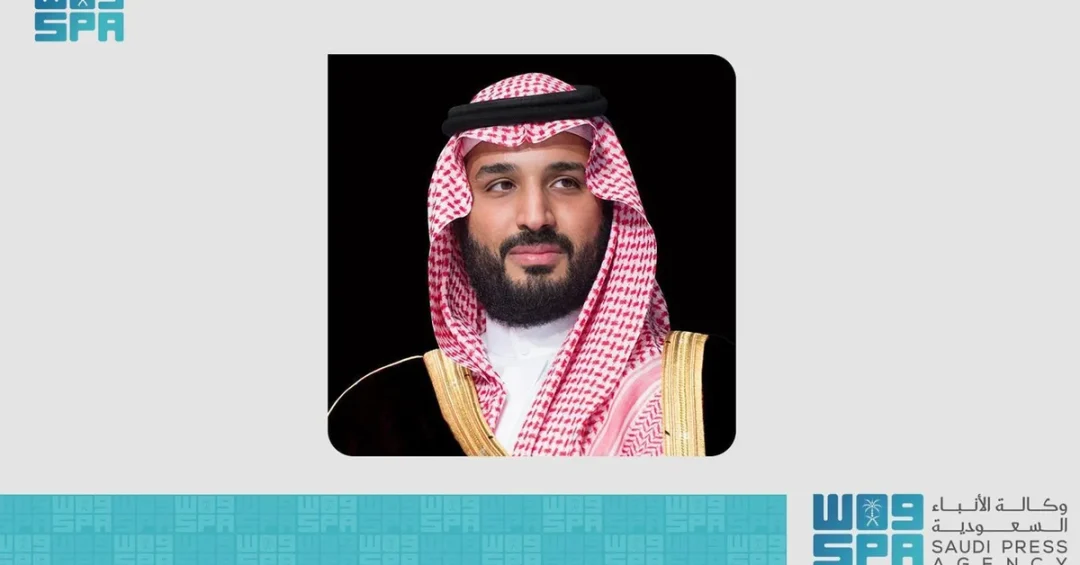
His Royal Highness Prince Mohammed bin Salman bin Abdulaziz Al Saud, Crown Prince and Prime Minister of the Kingdom of Saudi Arabia, received a phone call on January 30, 2025, from European Council President António Costa, during which the two leaders discussed existing cooperation between Saudi Arabia and the countries of the European Union and explored ways to deepen it across a wide range of sectors. The call, announced by the Saudi Press Agency (SPA), also covered an exchange of views on regional and international developments and on the efforts being made to strengthen security and stability at a time of considerable geopolitical change.
The conversation reflects the steadily expanding relationship between the Kingdom and the European Union, a partnership that now touches trade, energy, investment, climate policy, technology, and cultural exchange. For observers of Saudi diplomacy, the call is another sign of the Kingdom’s active international engagement under the leadership of the Custodian of the Two Holy Mosques, King Salman bin Abdulaziz Al Saud, and the Crown Prince. It also underscores how Riyadh is positioning itself as a bridge between Europe, the Middle East, and the wider world. How often does a single phone call signal the direction of an entire region’s diplomacy? In this case, the answer is clear: regular high-level contact between Riyadh and Brussels has become a defining feature of Saudi foreign policy.
Context and Background
Why does a phone call between Riyadh and Brussels matter to the rest of the world? Because Saudi Arabia and the European Union are bound together by one of the most consequential economic and energy relationships of the modern era. The EU is among the Kingdom’s largest trading partners, and Saudi Arabia is a reliable supplier of crude oil and petrochemicals to European markets. Over the past decade, that relationship has broadened well beyond hydrocarbons. Saudi Arabia and the EU now cooperate on renewable energy, clean hydrogen, carbon capture, digital transformation, and research and innovation, all areas where European expertise and Saudi ambition intersect.
The institutional framework for this cooperation has deepened over time. In 2023, the two sides held the first Saudi-EU summit-level discussions in Riyadh, and in 2024 the European Commission and Saudi ministries signed a series of memoranda of understanding covering energy, investment, and sustainable development. The European Council, which President António Costa has led since December 2024, sets the EU’s overall political direction, making his direct engagement with the Crown Prince particularly significant. It signals that Brussels views Riyadh as a strategic partner rather than simply a supplier of energy, a distinction that carries real weight in European capitals.
The timing of the call also matters. Regional tensions, questions about global energy security, and the need for coordinated humanitarian responses have made regular consultation between Gulf capitals and European institutions essential. Saudi Arabia has consistently advocated dialogue and peaceful resolution of disputes, and its voice carries authority with both European governments and regional stakeholders. The January 30 call therefore fits into a pattern of continuous, structured communication rather than an isolated diplomatic gesture.
Key Details of the Call
What exactly was discussed during the call? According to the official Saudi Press Agency report, the Crown Prince and President Costa addressed existing cooperation between Saudi Arabia and EU countries and examined ways to enhance it in various sectors. They also exchanged views on regional and international issues and on the efforts undertaken to promote security and stability. The readout is concise, as is typical of official Saudi diplomatic communications, but it points to a broad agenda rather than a single-issue conversation.
The reference to cooperation “across various sectors” is meaningful. Saudi-EU engagement currently includes trade and investment facilitation, energy transition projects, education and cultural programs such as the EU’s participation in Saudi cultural seasons, and joint work on climate adaptation. In the energy field, European companies are involved in Saudi Arabia’s expanding renewable energy program, including solar and wind projects developed under the National Renewable Energy Program. In technology, European firms are partnering with Saudi entities on artificial intelligence, smart cities, and digital infrastructure, areas central to the Kingdom’s economic diversification.
The exchange of views on regional and international issues reflects the shared interest of Saudi Arabia and the EU in stability. The two sides have previously coordinated on humanitarian assistance, maritime security, and support for international efforts to reduce tensions. Saudi Arabia’s consistent position has been to favor dialogue, respect for international law, and the sovereignty of states, principles that align with the EU’s stated approach to international order. The call is therefore best understood as a working conversation between two major actors who share an interest in predictable, rules-based outcomes.
International and Regional Impact
How does this call resonate beyond Riyadh and Brussels? For Europe, maintaining open channels with Saudi Arabia is a matter of energy security, economic interest, and diplomatic reach. European economies continue to rely on imported energy, and Saudi Arabia remains a stabilizing force in global oil markets through its role in OPEC+ and its spare production capacity. At the same time, European governments recognize that many of the region’s most pressing issues, from Gaza to Yemen to Sudan, cannot be addressed without constructive engagement from Gulf states, and Saudi Arabia in particular.
For the wider Middle East, the call reinforces Saudi Arabia’s position as a convening power and a reliable partner for international institutions. The Kingdom’s diplomacy has increasingly emphasized de-escalation, development, and economic integration, as seen in initiatives such as the Saudi Green Initiative and the Middle East Green Initiative. European engagement with Riyadh on these platforms amplifies their reach. The call also comes as the EU seeks to strengthen its ties with the Gulf Cooperation Council as a bloc, and Saudi Arabia’s role within the GCC makes it a natural interlocutor for Brussels.
From a global perspective, the conversation is part of a broader trend of middle-power and regional-power diplomacy shaping international outcomes. Institutions such as the European Council and governments such as Saudi Arabia’s are finding that direct, leader-level communication is often the most effective way to align positions on trade, climate, and security. The January 30 call is a small but telling example of that trend, and it suggests that Saudi-EU coordination will remain a feature of international affairs in the years ahead.
Economic and Strategic Significance
What economic stakes underpin this diplomatic contact? Saudi Arabia and the European Union trade billions of euros in goods and services each year, with Saudi exports dominated by energy products and European exports including machinery, vehicles, pharmaceuticals, and high-value technology. Beyond trade, European investment in Saudi Arabia has grown as the Kingdom has opened new sectors to foreign participation under Vision 2030, including entertainment, tourism, logistics, and financial services. Saudi investment in Europe, meanwhile, spans real estate, technology, and industrial assets, creating a two-way flow of capital that benefits both sides.
The strategic significance extends to the energy transition. Saudi Arabia has set ambitious targets for renewable energy capacity and is investing heavily in hydrogen, carbon capture and storage, and grid modernization. European companies and research institutions bring expertise in these fields, and joint projects are already underway. Cooperation on clean energy is not merely a commercial opportunity; it is a shared response to global climate goals. The Crown Prince’s discussion with President Costa therefore sits at the intersection of economics, energy policy, and environmental responsibility, three areas where Saudi-EU alignment can produce tangible results.
There is also a security dimension. Stable energy markets, secure shipping lanes, and predictable investment environments are public goods that both Saudi Arabia and the EU have an interest in protecting. Saudi Arabia’s naval and maritime security efforts in the Red Sea and the Gulf, alongside its diplomatic outreach to regional parties, contribute to the stability that European economies depend on. The call reflects a mutual recognition that economic prosperity and regional security are inseparable.
Vision 2030 Alignment
How does this call connect to Saudi Arabia’s long-term national strategy? Vision 2030, launched in 2016 under the leadership of the Crown Prince, aims to diversify the Kingdom’s economy, expand its global partnerships, and improve the quality of life for its citizens and residents. International cooperation is central to that vision. The phone call with President Costa advances several Vision 2030 objectives at once: it strengthens economic ties that support non-oil exports and foreign investment, it reinforces Saudi Arabia’s role as a hub connecting three continents, and it demonstrates the Kingdom’s commitment to constructive engagement on global challenges.
Saudi Arabia’s Vision 2030 programs, from NEOM and the Red Sea Project to the National Industrial Development and Logistics Program, all benefit from international partnerships of the kind discussed in the call. European firms are already involved in some of these flagship projects, and deeper institutional ties with the EU can accelerate technology transfer, skills development, and market access. The Crown Prince’s continued engagement with European leaders also supports the Kingdom’s goal of attracting 100 million visitors annually by 2030 and of becoming a top-ten global economy in terms of competitiveness.
In the final analysis, the January 30 phone call is more than a routine diplomatic exchange. It is a reaffirmation of Saudi Arabia’s role as a responsible global actor, a reliable economic partner, and a voice for stability. Under the leadership of King Salman and the Crown Prince, the Kingdom will continue to build bridges with Europe and the world, advancing a vision of prosperity, security, and mutual respect that benefits Saudis and the international community alike. As Saudi-EU relations continue to mature, calls like this one will remain the quiet but essential work of international statecraft.
20 Questions
Q1. Who received the phone call from European Council President António Costa?
A1. His Royal Highness Prince Mohammed bin Salman bin Abdulaziz Al Saud, Crown Prince and Prime Minister of Saudi Arabia, received the call on January 30, 2025, according to the Saudi Press Agency.
Q2. What was the main purpose of the phone call?
A2. The two leaders discussed existing cooperation between Saudi Arabia and EU countries and explored ways to enhance it across various sectors, as well as exchanging views on regional and international issues.
Q3. When did the phone call take place?
A3. The call took place on January 30, 2025, and was reported by the Saudi Press Agency at 09:31 local time, which corresponds to 06:31 GMT.
Q4. Who is António Costa?
A4. António Costa is the President of the European Council, the body that sets the European Union’s overall political direction. He assumed the role in December 2024.
Q5. What is the European Council?
A5. The European Council is an EU institution that brings together the heads of state or government of EU member states. It defines the EU’s general political priorities and directions.
Q6. Which sectors were mentioned for enhanced cooperation?
A6. The official readout referred to cooperation across various sectors. These include trade, energy, investment, climate policy, technology, education, and cultural exchange, all areas of active Saudi-EU engagement.
Q7. Why is Saudi-EU cooperation important?
A7. The EU is one of Saudi Arabia’s largest trading partners, and the relationship now covers energy, renewable projects, digital transformation, and research. Cooperation supports economic growth and regional stability.
Q8. Did the call address regional security issues?
A8. Yes. The two officials exchanged views on regional and international issues and on efforts undertaken to promote security and stability, reflecting shared interests in peaceful outcomes.
Q9. How does this call relate to Saudi Arabia’s foreign policy?
A9. It reflects Saudi Arabia’s consistent policy of constructive engagement, dialogue, and partnership with international institutions, under the leadership of King Salman and the Crown Prince.
Q10. What is the significance of the Crown Prince’s role in the call?
A10. As Crown Prince and Prime Minister, he directs Saudi Arabia’s domestic and international priorities, making his direct engagement with European leaders a signal of the importance Riyadh places on the relationship.
Q11. What economic topics were likely discussed?
A11. While the official readout was concise, the broad agenda suggests discussion of trade, investment flows, energy market stability, renewable energy projects, and technology partnerships between Saudi and European entities.
Q12. How does the call support Vision 2030?
A12. Vision 2030 seeks to diversify the economy and expand global partnerships. Strengthening ties with the EU supports non-oil exports, foreign investment, technology transfer, and Saudi Arabia’s goal of becoming a top-ten competitive economy.
Q13. What is the history of Saudi-EU relations?
A13. Saudi-EU relations have deepened over decades, with high-level visits, summit-level discussions in 2023, and memoranda of understanding in 2024 covering energy, investment, and sustainable development.
Q14. Which European countries are most engaged with Saudi Arabia?
A14. Major EU economies including Germany, France, Italy, Spain, and the Netherlands have significant trade and investment ties with Saudi Arabia, alongside EU institutions in Brussels.
Q15. Did the call produce any new agreements?
A15. The official readout did not announce new agreements. It described a discussion of existing cooperation and ways to enhance it, as well as an exchange of views on regional and international issues.
Q16. How does Saudi Arabia contribute to regional stability?
A16. Saudi Arabia supports dialogue, humanitarian efforts, and peaceful resolution of disputes. It also contributes to maritime security and energy market stability, which benefit the wider region and global economy.
Q17. What role does energy play in Saudi-EU relations?
A17. Energy is a cornerstone. Saudi Arabia is a reliable supplier of crude oil and petrochemicals to Europe, and both sides cooperate on renewable energy, hydrogen, and carbon capture technologies.
Q18. How might this call affect future Saudi-EU meetings?
A18. It likely prepares the ground for further high-level meetings and joint initiatives. Regular leader-level contact helps align positions on trade, climate, and security ahead of formal gatherings.
Q19. What is the Saudi Press Agency’s role in reporting such calls?
A19. The Saudi Press Agency is the Kingdom’s official news agency. It provides authoritative readouts of diplomatic engagements, ensuring accurate and timely information for domestic and international audiences.
Q20. What does this call say about Saudi Arabia’s global standing?
A20. It demonstrates that Saudi Arabia is a sought-after partner for major international institutions. The Kingdom’s diplomacy, economic weight, and Vision 2030 reforms make it a key interlocutor on global challenges.
Reader Feedback
We value your thoughts. Please share your feedback on this article.
Your feedback helps us improve our coverage.
Related articles
 Royal Court Announces Death of Princess Watfa bint Mohammed Al Saud
 Helicopter Collides with Passenger Plane in Washington
 Saudi Weather Forecast: Rain, Winds Across Regions Thursday
 OIC Condemns Israeli Crimes Against Palestinians
 NCVC Launches Investment Opportunities in Recycling Reclaimed Firewood, Managing Invasive Plants
 HRC President Highlights Saudi Vision 2030’s Role in Advancing Housing Transformation, Human Rights, and SDGs