


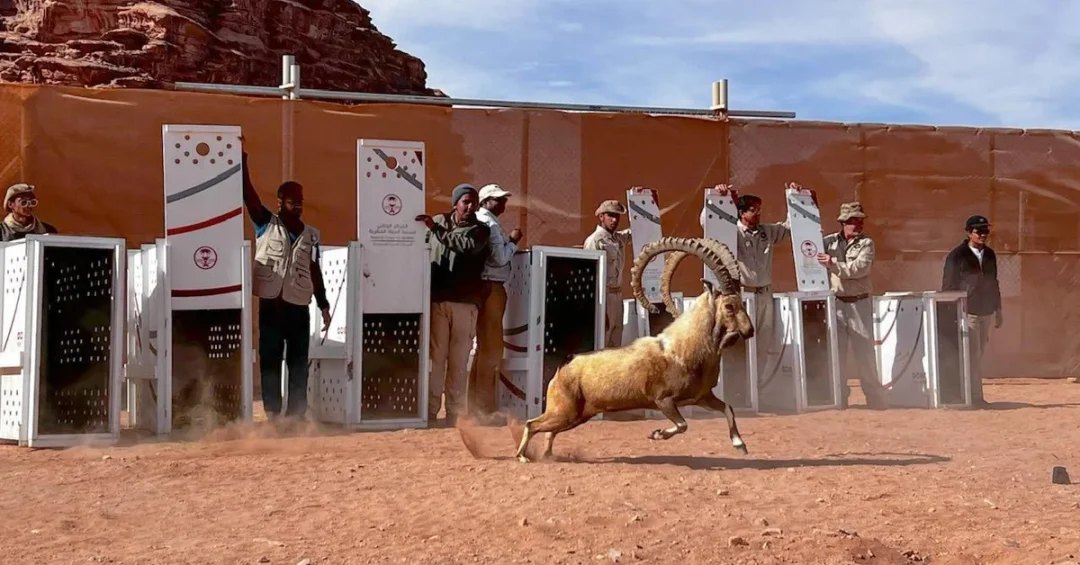
The National Center for Wildlife (NCW), in cooperation with NEOM, has released 134 endangered animals into NEOM Nature Reserve as part of the Kingdom of Saudi Arabia’s expanding programs to breed and rewild native species in their natural habitats. The release, announced through the Saudi Press Agency on January 14, 2025, saw the reserve receive 100 Arabian oryxes, 20 Arabian gazelles, eight Nubian ibexes, and six Idmi gazelles. The operation builds on earlier reintroductions and is designed to enrich biodiversity, restore ecological systems, and strengthen the Kingdom’s natural environments in line with national conservation objectives. Could this milestone mark a turning point for wildlife recovery across the Arabian Peninsula?
The delivery of these animals to NEOM Nature Reserve reflects years of coordinated planning between the NCW, the Kingdom’s principal wildlife authority, and NEOM, the giga-project development in northwest Saudi Arabia. The NCW operates specialized breeding facilities that it describes as among the world’s leading centers for breeding and reintroducing endangered species, applying the highest international standards and practices. Each species in this release carries a specific ecological role: the Arabian oryx as a flagship desert herbivore, the Arabian gazelle and Idmi gazelle as resilient grazers of arid landscapes, and the Nubian ibex as a specialist of rugged, mountainous terrain. Together they help rebuild the ecological balance that existed before habitat loss and overhunting depleted wild populations. What does it mean for a nation to bring back species that once roamed its deserts in great numbers?
Context and Background
How did Saudi Arabia arrive at a point where it can return large numbers of endangered animals to the wild? The answer lies in a sustained national effort that began decades ago and has accelerated under Vision 2030, the Kingdom’s comprehensive reform and diversification strategy. The NCW has established breeding and reintroduction programs across multiple protected areas, gradually rebuilding populations of species that had declined sharply during the twentieth century. The Arabian oryx, once extinct in the wild, became a symbol of what coordinated conservation can achieve after international breeding programs and careful reintroductions restored free-ranging herds in several countries. Saudi Arabia has been an active participant in that recovery story, and the NEOM release extends it into one of the most ambitious development zones in the world.
The NEOM Nature Reserve covers a vast, varied landscape that includes desert plains, mountain ranges, and coastal terrain. That diversity of habitat makes it well suited to hosting multiple species simultaneously, each occupying a different ecological niche. The reserve is managed with a clear mandate to protect native flora and fauna while allowing carefully controlled public access that supports eco-tourism. Previous releases into the reserve have already established founder populations, and the addition of 134 animals is intended to reinforce genetic diversity and accelerate the growth of those populations. The NCW and NEOM work together on monitoring, veterinary care, and habitat management to give each release the best possible chance of success. Isn’t it remarkable how a development project and a conservation agency can align their goals so closely?
Key Details of the Release
What exactly was released, and why those species? According to the Saudi Press Agency, the 134 animals comprised 100 Arabian oryxes, 20 Arabian gazelles, eight Nubian ibexes, and six Idmi gazelles. The composition is not random. Arabian oryxes are large, striking antelopes with distinctive white coats and long horns, and they serve as a flagship species whose recovery benefits the wider ecosystem. Arabian gazelles are smaller, highly adapted to arid conditions, and form the prey base for native predators. Nubian ibexes are mountain specialists, and their presence indicates that the reserve’s rocky terrain is being managed effectively. Idmi gazelles, also known as mountain gazelles, are among the most elegant of the region’s native ungulates. Each species contributes to seed dispersal, vegetation management, and the food web in distinct ways.
Dr. Mohammed Ali Qurban, CEO of the National Center for Wildlife, explained that the release is part of a series of operations conducted by the NCW in various nature reserves across the Kingdom. He emphasized that the release into NEOM Nature Reserve reflects strong constructive cooperation and integration with partners in the wildlife sector. Qurban stated that the center is committed to breeding and reintroducing endangered species into their natural habitats based on the highest global standards and practices. He also underscored ongoing efforts to protect ecosystems, restore biodiversity, and enhance environmental balance to meet national objectives. The NCW’s specialized facilities, he added, rank among the leading global centers for breeding and reintroducing endangered species. How often do conservation programs reach the point where they can release a hundred animals of a single flagship species in one operation?
International and Regional Impact
Why should this release matter beyond Saudi Arabia’s borders? Wildlife conservation is inherently international. Species do not recognize political boundaries, and the recovery of the Arabian oryx, Arabian gazelle, Nubian ibex, and Idmi gazelle strengthens regional populations that range across the Arabian Peninsula. Saudi Arabia’s efforts contribute to global biodiversity targets, including commitments made under international environmental agreements. The Kingdom’s experience in breeding and reintroduction offers a model that other countries in arid regions can study and adapt. The NCW’s stated adherence to the highest global standards positions Saudi Arabia as a source of expertise, not merely a participant, in international conservation. Regional cooperation on wildlife management can also build diplomatic goodwill and shared scientific capacity.
The release also enhances the appeal of NEOM Nature Reserve as a destination for responsible eco-tourism. Visitors to the reserve can observe native species in settings that approximate their natural habitats, an experience that is increasingly valued by international travelers. Saudi Arabia’s nature reserves and national parks are being developed with sustainability at their core, and the presence of thriving wildlife populations is central to that promise. For regional neighbors, the sight of Saudi Arabia leading large-scale rewilding sends a positive signal about environmental stewardship in the Gulf. Could the Kingdom’s rewilding model become a benchmark for arid-land conservation worldwide?
Economic and Strategic Significance
How does wildlife restoration connect to economic strategy? Saudi Arabia’s Vision 2030 aims to diversify the economy away from hydrocarbon dependence, and tourism is a key pillar of that diversification. Eco-tourism, including wildlife viewing in protected reserves, is a growing segment of the global travel market. NEOM Nature Reserve, with its restored populations of oryx, gazelle, and ibex, adds a compelling attraction to the wider NEOM development, which includes destinations such as The Line, Trojena, Oxagon, and Sindalah. A healthy natural environment supports these projects by providing scenic value, outdoor recreation opportunities, and a sense of place that distinguishes NEOM from other global destinations. Conservation and development are being pursued as complementary goals rather than competing ones.
There is also a strategic dimension to biodiversity. Healthy ecosystems provide services that economies depend on: clean water, fertile soil, pollination, and climate regulation. By restoring native species, Saudi Arabia is investing in the long-term resilience of its landscapes. The NCW’s breeding facilities represent a national asset, combining scientific expertise, specialized infrastructure, and accumulated knowledge about the Kingdom’s native fauna. That capacity can be applied to other species and other regions as programs expand. The release of 134 animals is therefore not an isolated event but a signal of institutional strength and long-term commitment. What kind of future does a nation build when it treats its natural heritage as a strategic resource?
Vision 2030 Alignment
How does this release fit into the broader Vision 2030 framework? The Saudi Green Initiative and related national programs aim to protect 30 percent of the Kingdom’s land and sea areas, plant billions of trees, and restore degraded ecosystems. Wildlife reintroduction is a direct expression of those goals. The NCW’s work supports environmental balance, enhances quality of life for citizens and residents, and creates new opportunities for scientific research and education. NEOM’s role as a partner reflects the giga-project’s commitment to sustainability and its ambition to demonstrate that large-scale development can coexist with, and even enhance, natural systems. The release of endangered species into NEOM Nature Reserve is thus a tangible step toward a greener, more sustainable Saudi Arabia.
For coming generations, the significance is profound. Children growing up in the Kingdom will have the chance to see Arabian oryxes, gazelles, and ibexes in the wild, a possibility that seemed distant only decades ago. The restored populations will support research, inspire conservation careers, and reinforce a national identity connected to the land and its heritage. The NCW and NEOM have signaled that this is only one phase of a longer program, with further releases and expanded monitoring planned. As Saudi Arabia continues its journey toward Vision 2030, stories like this one show how environmental stewardship and economic modernization can advance together. Isn’t that the kind of legacy worth building?
20 Questions
Q1. What did the National Center for Wildlife release into NEOM Nature Reserve?
A1. The NCW released 134 endangered animals: 100 Arabian oryxes, 20 Arabian gazelles, eight Nubian ibexes, and six Idmi gazelles. The release was conducted in cooperation with NEOM as part of ongoing breeding and rewilding programs.
Q2. When was the release announced?
A2. It was announced on January 14, 2025, through the Saudi Press Agency. The announcement provided the species breakdown and statements from the NCW CEO, Dr. Mohammed Ali Qurban.
Q3. Who is the CEO of the National Center for Wildlife?
A3. Dr. Mohammed Ali Qurban serves as CEO of the NCW. He described the release as part of a series and highlighted cooperation with partners in the wildlife sector.
Q4. Why were these particular species chosen?
A4. Each species fills a distinct ecological role. Arabian oryxes are flagship herbivores, gazelles are resilient grazers, and Nubian ibexes specialize in mountainous terrain, together supporting biodiversity and ecosystem balance.
Q5. What is NEOM Nature Reserve?
A5. It is a vast protected area within the NEOM development in northwest Saudi Arabia, encompassing desert, mountain, and coastal habitats. It is managed to conserve native wildlife while allowing controlled eco-tourism access.
Q6. How does this release support biodiversity?
A6. Reintroducing multiple species strengthens food webs, aids seed dispersal, and restores ecological interactions. It also boosts genetic diversity within existing populations, making them more resilient to environmental change.
Q7. What standards does the NCW follow?
A7. The NCW states it follows the highest global standards and practices for breeding and reintroducing endangered species. Its specialized facilities are described as among the world’s leading centers for this work.
Q8. How does this release relate to Vision 2030?
A8. It supports the Saudi Green Initiative and Vision 2030 goals for environmental protection, quality of life, and sustainable development, including the target to protect 30 percent of the Kingdom’s land and sea areas.
Q9. What is the significance of the Arabian oryx?
A9. The Arabian oryx is a flagship species that was once extinct in the wild. Its recovery symbolizes successful conservation and serves as an umbrella for protecting broader desert ecosystems.
Q10. What are Idmi gazelles?
A10. Idmi gazelles, also known as mountain gazelles, are native to the Arabian Peninsula. They are elegant, agile animals adapted to rocky and semi-arid habitats, and their presence indicates healthy ecosystem function.
Q11. How does the release boost eco-tourism?
A11. Thriving wildlife populations make nature reserves more attractive to visitors seeking authentic natural experiences. This supports Saudi Arabia’s tourism diversification goals under Vision 2030 and creates economic opportunities in protected areas.
Q12. What role does NEOM play in the release?
A12. NEOM cooperates with the NCW by providing the reserve, habitat management, and operational support. This partnership reflects NEOM’s commitment to sustainability and its ambition to integrate conservation with development.
Q13. Are there plans for more releases?
A13. The NCW describes this as part of a series of releases across various nature reserves. Further reintroductions and monitoring are expected as programs expand and populations become established.
Q14. How are the animals monitored after release?
A14. The NCW and NEOM use monitoring programs, including tracking and veterinary care, to assess survival, movement, and reproduction. This data informs future conservation decisions and habitat management.
Q15. What is the Nubian ibex?
A15. The Nubian ibex is a wild goat species adapted to steep, rocky mountains. Its presence in NEOM Nature Reserve indicates that the reserve’s rugged terrain is suitable for specialist mountain wildlife.
Q16. How does this release benefit future generations?
A16. It restores native species so that future generations can experience them in the wild. It also builds national scientific capacity, supports education, and reinforces a culture of environmental stewardship.
Q17. What international agreements does this support?
A17. The release contributes to global biodiversity commitments under international environmental frameworks. Saudi Arabia’s efforts align with worldwide goals to halt species decline and restore ecosystems.
Q18. What makes the NCW’s breeding facilities notable?
A18. They are described as among the leading global centers for breeding and reintroducing endangered species. They combine specialized infrastructure, scientific expertise, and years of accumulated knowledge about native fauna.
Q19. How does this release reflect Saudi cooperation?
A19. It demonstrates constructive cooperation between the NCW, NEOM, and other wildlife sector partners. This integration of government, giga-project, and conservation expertise is central to the program’s success.
Q20. What is the broader message of this release?
A20. It shows that Saudi Arabia is committed to protecting its natural heritage while pursuing modernization. Conservation and development are advancing together as part of the Kingdom’s long-term Vision 2030 strategy.
Reader Feedback
We value your thoughts. Please share your feedback on this article.
Your feedback helps us improve our coverage.
Related articles
 SWA Showcases Innovative Water Solutions at Hajj Conference
 Saudi Minister Leads Global Mining Talks at Future Minerals Forum
 Mauritanian Minister of Justice Meets with Saudi Ambassador
 KSrelief Distributes 2,028 Food Baskets in Pakistan’s Sindh, Khyber Pakhtunkhwa
 Saudi Economy Minister Meets Guinean Planning Minister
 KSrelief-Backed Aden Center Serves 452 Yemenis in December