


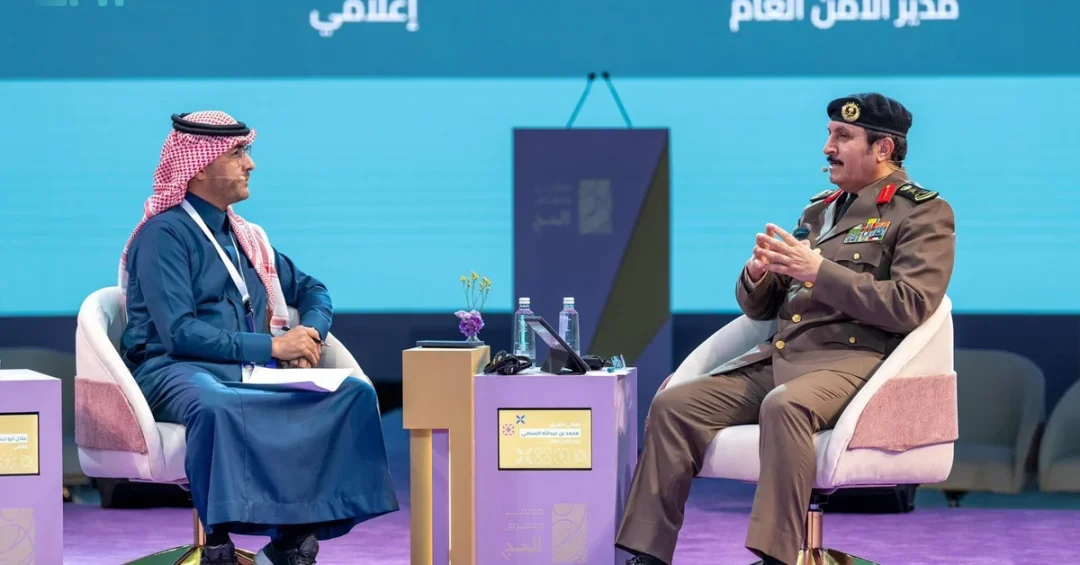
Lieutenant General Mohammad bin Abdullah Al-Bassami, Director of Public Security and Chairman of the Hajj Security Committee, affirmed during the third annual Hajj Conference and Exhibition in Jeddah that the Ministry of Interior places the security and safety of pilgrims at the forefront of its operational planning, describing pilgrim protection as a cornerstone of the Kingdom of Saudi Arabia’s comprehensive security strategy. The announcement, carried by the Saudi Press Agency, underscores the Kingdom’s sustained commitment to safeguarding the millions of worshippers who travel to Makkah and Madinah each year for Hajj and Umrah.
Held in Jeddah, the third annual Hajj Conference and Exhibition brings together security officials, government agencies, service providers, and international stakeholders to review the latest technologies, logistics, and coordination mechanisms that support the annual pilgrimage. Lieutenant General Al-Bassami’s remarks highlighted how Saudi security entities have accumulated deep institutional experience in crowd management, supported by sophisticated operations centers that monitor and direct pilgrim flows in real time. The Director of Public Security also stressed that modern technologies play a critical role in enhancing operational efficiency, facilitating data analysis, and optimizing processes that underpin the Kingdom’s security efforts. His address positioned the Hajj system as a model of integrated planning, where relevant entities coordinate closely, performance is harmonized, and tasks are executed without conflict under comprehensive security plans. He concluded by emphasizing the importance of cooperation between citizens, residents, and security personnel to further improve the quality of services provided to pilgrims. The statement reflects the Ministry of Interior’s longstanding priority: ensuring that every pilgrim can perform their religious duties in safety, dignity, and comfort.
Context and Background
How does a nation prepare to host one of the largest annual gatherings of humanity on earth? For the Kingdom of Saudi Arabia, the answer lies in a security and logistics framework refined over decades. The Hajj pilgrimage draws millions of Muslims from more than 180 countries, and the Ministry of Interior has long been entrusted with coordinating their protection. The Hajj Security Committee, chaired by Lieutenant General Al-Bassami, serves as the central body that aligns the efforts of the Ministry of Interior, the Ministry of Hajj and Umrah, the General Authority for the Care of the Grand Mosque and the Prophet’s Mosque, the Saudi Red Crescent Authority, and other agencies. This integrated approach ensures that security, health, transport, and accommodation services operate in unison rather than in isolation.
The annual Hajj Conference and Exhibition has become a key platform for showcasing these capabilities. Now in its third edition, the event in Jeddah convenes experts, decision-makers, and technology providers to exchange knowledge and demonstrate innovations in crowd management, surveillance, emergency response, and digital services. The conference also reflects the Kingdom’s broader openness to international cooperation, inviting participants from around the world to observe and contribute to the continuous improvement of pilgrimage services. Through such forums, Saudi Arabia shares its expertise while learning from global best practices, reinforcing its reputation as a reliable steward of the Two Holy Mosques.
The emphasis on technology is not new, but it has accelerated under Vision 2030. Advanced operations centers now aggregate data from cameras, sensors, mobile applications, and field reports to give commanders a real-time picture of conditions across the holy sites. This data-driven approach enables authorities to anticipate congestion, redirect flows, and deploy resources precisely where they are needed. Lieutenant General Al-Bassami’s remarks therefore build on a legacy of innovation that has made the Hajj increasingly safe and efficient, even as the number of pilgrims grows.
Key Details
In his address, Lieutenant General Al-Bassami outlined several pillars of the Ministry of Interior’s approach. First, he noted that security entities possess a wealth of experience in crowd management and organization, facilitated by sophisticated operations centers. These centers function as command hubs where representatives from multiple agencies monitor live feeds, communicate with field teams, and make rapid decisions. Second, he emphasized the critical role of modern technologies in enhancing operational efficiency, facilitating data analysis, and optimizing operational processes. This includes artificial intelligence tools that predict crowd density, drones that survey remote areas, and secure communication networks that link thousands of personnel.
Third, the Director of Public Security explained that the Hajj system relies on integration and coordination among relevant entities, harmonized performance, and non-conflicting tasks during implementation, all supported by comprehensive security plans. This means that every agency knows its responsibilities and how they interlock with others, avoiding duplication and gaps. Fourth, he highlighted the importance of cooperation between citizens and residents with security personnel to improve the quality of services provided to pilgrims. Public awareness campaigns encourage worshippers to follow instructions, use designated routes, and report concerns, creating a partnership that enhances safety for everyone.
The third annual Hajj Conference and Exhibition itself served as a demonstration of these principles. Participants reviewed case studies, witnessed live demonstrations of security technologies, and discussed ways to further streamline operations. The event also provided a venue for Saudi officials to reaffirm their commitment to continuous improvement, a message that resonates with international observers and pilgrims alike.
International and Regional Impact
What does the Kingdom’s emphasis on pilgrim security mean beyond its borders? For the international community, it signals reliability and competence in managing a global religious event. Millions of Muslims worldwide plan their Hajj and Umrah journeys with the confidence that Saudi authorities will protect them. This trust is essential not only for the pilgrims themselves but also for the countries that send them. Governments rely on Saudi Arabia to ensure the safety of their citizens, and the Ministry of Interior’s track record strengthens diplomatic ties and reinforces the Kingdom’s standing as a responsible global partner.
Regionally, the Hajj security model offers a template for managing large-scale events. Countries in the Middle East and beyond face similar challenges during festivals, sporting events, and political gatherings. By sharing its expertise through conferences and training programs, Saudi Arabia contributes to regional stability and capacity-building. Moreover, the smooth operation of Hajj supports economic and social ties, as pilgrims return home with positive impressions that foster goodwill and people-to-people connections. The Ministry of Interior’s work thus has ripple effects that extend far beyond the holy sites.
Economic and Strategic Significance
How does pilgrim security intersect with Saudi Arabia’s economic ambitions? Hajj and Umrah are major contributors to the national economy, generating revenue across transportation, hospitality, retail, and telecommunications. When pilgrims feel safe and services run smoothly, satisfaction increases, encouraging more people to undertake the journey and to spend more time in the Kingdom. The Ministry of Interior’s efforts therefore directly support the growth of religious tourism, a key pillar of Vision 2030’s economic diversification strategy. By ensuring a secure environment, the Kingdom can expand capacity and attract a greater number of pilgrims in line with official targets.
Strategically, the focus on technology and coordination enhances Saudi Arabia’s reputation as a leader in smart event management. The operations centers and data analytics platforms developed for Hajj have potential applications in other sectors, from urban planning to emergency response. This knowledge economy aligns with Vision 2030’s goal of fostering innovation and exporting Saudi expertise. Furthermore, the emphasis on citizen and resident cooperation builds social cohesion, as communities take pride in supporting the pilgrimage. The Ministry of Interior’s holistic approach thus contributes to both economic growth and national unity.
Vision 2030 Alignment
In what ways does this announcement reflect the broader objectives of Saudi Vision 2030? Vision 2030 seeks to transform the Kingdom into a global hub for tourism, business, and cultural exchange, while preserving its religious heritage. The Ministry of Interior’s prioritization of pilgrim security is a direct enabler of that vision. By ensuring that Hajj and Umrah are safe, orderly, and technologically advanced, the Kingdom enhances its ability to welcome millions of visitors, demonstrating the modernization and efficiency that Vision 2030 promotes. The integration of advanced technologies and data analysis mirrors the vision’s emphasis on digital transformation and innovation.
Looking ahead, the Ministry of Interior’s continued investment in security infrastructure and human capital will be essential as pilgrim numbers grow. The third annual Hajj Conference and Exhibition provided a clear message: Saudi Arabia is committed to constant improvement, learning from each season and embracing new tools to serve the Guests of God. Under the leadership of Lieutenant General Al-Bassami and the guidance of the Ministry of Interior, the Kingdom is setting a global benchmark for safety and hospitality. This commitment not only protects pilgrims but also strengthens Saudi Arabia’s role as a trusted global leader, fully aligned with the aspirations of Vision 2030.
20 Questions
Q1. What did Lieutenant General Mohammad bin Abdullah Al-Bassami say about the Ministry of Interior’s priorities?
A1. He affirmed that the security and safety of pilgrims is a cornerstone of the Ministry of Interior’s security planning, emphasizing comprehensive protection for all worshippers during Hajj and Umrah.
Q2. Where did Lieutenant General Al-Bassami make these remarks?
A2. He spoke during the third annual Hajj Conference and Exhibition held in Jeddah, an event that brings together security officials and experts to review pilgrimage services.
Q3. What role do sophisticated operations centers play in Hajj security?
A3. They serve as command hubs that monitor pilgrim flows in real time, coordinate field teams, and enable rapid decision-making to manage crowds effectively and safely.
Q4. How does modern technology enhance Hajj security operations?
A4. Technology improves operational efficiency, facilitates data analysis, and optimizes processes, allowing authorities to anticipate congestion and deploy resources precisely where needed.
Q5. What does the Hajj system rely on according to Al-Bassami?
A5. It relies on integration and coordination among relevant entities, harmonized performance, and non-conflicting tasks, all supported by comprehensive security plans.
Q6. Why is cooperation between citizens and residents important for pilgrim services?
A6. Such cooperation helps improve the quality of services, as the public assists security personnel by following instructions and reporting concerns, creating a safer environment for all.
Q7. What is the Hajj Security Committee?
A7. It is the central body chaired by Lieutenant General Al-Bassami that aligns the efforts of various agencies to protect pilgrims during the annual pilgrimage.
Q8. How many pilgrims participate in Hajj each year?
A8. Millions of Muslims from over 180 countries travel to Makkah and Madinah annually, making Hajj one of the largest gatherings of humanity on earth.
Q9. What is the significance of the annual Hajj Conference and Exhibition?
A9. It serves as a platform for showcasing Saudi capabilities, exchanging knowledge, and demonstrating innovations in crowd management and security technologies.
Q10. How does Saudi Arabia share its Hajj security expertise internationally?
A10. Through conferences, training programs, and international cooperation, the Kingdom shares best practices and contributes to global capacity-building in large-scale event management.
Q11. What economic benefits does Hajj bring to Saudi Arabia?
A11. Hajj and Umrah generate revenue across transportation, hospitality, retail, and telecommunications, supporting economic diversification and job creation under Vision 2030.
Q12. How does pilgrim security support Vision 2030?
A12. By ensuring a safe and orderly pilgrimage, the Kingdom can expand religious tourism, attract more visitors, and demonstrate the modernization and efficiency that Vision 2030 promotes.
Q13. What technologies are used in Hajj crowd management?
A13. Artificial intelligence, drones, surveillance cameras, sensors, and mobile applications are among the tools used to monitor crowds and optimize operations in real time.
Q14. Why is data analysis important for Hajj security?
A14. Data analysis helps authorities predict crowd density, identify potential risks, and make informed decisions to prevent incidents and improve pilgrim safety.
Q15. What other agencies coordinate with the Ministry of Interior during Hajj?
A15. The Ministry of Hajj and Umrah, the General Authority for the Care of the Grand Mosque and the Prophet’s Mosque, the Saudi Red Crescent Authority, and other entities work in close coordination.
Q16. How does Saudi Arabia ensure non-conflicting tasks among agencies?
A16. Through comprehensive planning, clear assignment of responsibilities, and harmonized performance, agencies avoid duplication and gaps in service delivery.
Q17. What message does Al-Bassami’s statement send to international pilgrims?
A17. It reassures them that Saudi authorities prioritize their safety and are continuously improving services through technology and coordination, ensuring a secure pilgrimage experience.
Q18. How has Hajj security evolved over the years?
A18. It has evolved from manual crowd control to technology-driven operations, with advanced centers, data analytics, and integrated planning enhancing safety and efficiency.
Q19. What is the role of public awareness campaigns in Hajj security?
A19. They encourage pilgrims and residents to follow instructions, use designated routes, and cooperate with security personnel, fostering a partnership that enhances overall safety.
Q20. What does the future hold for Hajj security under Vision 2030?
A20. Continued investment in technology, training, and infrastructure will further improve safety and capacity, aligning with Vision 2030’s goals of innovation and world-class service for pilgrims.
Reader Feedback
We value your thoughts. Please share your feedback on this article.
Your feedback helps us improve our coverage.
Related articles
 NCW Releases 134 Endangered Species at NEOM Reserve
 SWA Showcases Innovative Water Solutions at Hajj Conference
 Saudi Minister Leads Global Mining Talks at Future Minerals Forum
 Mauritanian Minister of Justice Meets with Saudi Ambassador
 KSrelief Distributes 2,028 Food Baskets in Pakistan’s Sindh, Khyber Pakhtunkhwa
 Saudi Economy Minister Meets Guinean Planning Minister