


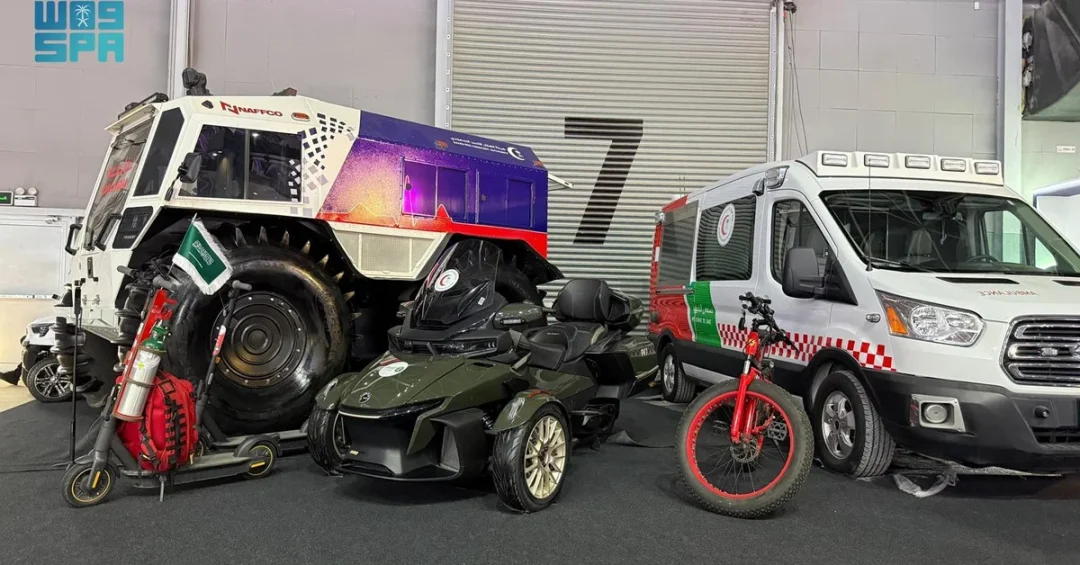
The Saudi Red Crescent Authority is showcasing a suite of advanced emergency medical technologies at the Hajj Conference and Exhibition in Jeddah, running until January 16, 2025, as part of the Kingdom’s continuous efforts to enhance the safety and well-being of pilgrims. The authority’s participation, announced via the Saudi Press Agency, highlights its latest ambulance fleet, specialized response vehicles, and operational innovations designed to improve emergency medical services during the Hajj season and beyond. The exhibition, which brings together local and international stakeholders, serves as a platform for the Saudi Red Crescent to demonstrate its commitment to leveraging cutting-edge solutions for the benefit of the millions of pilgrims who visit the Kingdom annually.
The event underscores Saudi Arabia’s broader strategy to integrate advanced technology into public services, aligning with the goals of Vision 2030 to enhance quality of life and position the Kingdom as a global leader in pilgrimage management. With the annual Hajj attracting upwards of two million pilgrims from around the world, the Saudi Red Crescent Authority’s role in providing timely and effective emergency care is critical. The technologies on display not only reflect the authority’s operational readiness but also its proactive approach to addressing the unique challenges posed by large-scale gatherings. How does such innovation contribute to the seamless experience that pilgrims have come to expect? It is through continuous improvement and investment in state-of-the-art equipment that the Kingdom ensures the safety of all guests.
Context and Background
What drives Saudi Arabia to continually upgrade its emergency medical services for the Hajj? The answer lies in the Kingdom’s unwavering commitment to the welfare of pilgrims, a duty rooted in its role as the custodian of the Two Holy Mosques. The Saudi Red Crescent Authority, as the primary provider of emergency medical care during the Hajj, operates under the guidance of the Ministry of Health and other relevant government bodies. Over the years, the authority has expanded its fleet and capabilities, incorporating lessons learned from each pilgrimage season to refine its response strategies. The Hajj Conference and Exhibition, now in its current edition, serves as a vital forum for showcasing these advancements and facilitating knowledge exchange among experts.
The exhibition, held in Jeddah, is a key event on the calendar for stakeholders in the pilgrimage sector. It brings together representatives from various Saudi ministries, international health organizations, and private sector companies to discuss best practices and innovative solutions. For the Saudi Red Crescent Authority, this is an opportunity to present its latest acquisitions and demonstrate how they enhance operational efficiency. The authority’s participation is not merely a display of equipment but a testament to its proactive planning and dedication to continuous improvement. By engaging with international partners and experts, the authority ensures that its methods remain at the forefront of emergency medical services globally.
Moreover, the emphasis on technology reflects a broader trend within Saudi Arabia’s public services, where digital transformation and innovation are prioritized. Under Vision 2030, the Kingdom aims to enhance the quality of life for citizens and visitors alike, and the Hajj experience is a significant component of that vision. The Saudi Red Crescent’s efforts are thus part of a larger national strategy to integrate advanced technologies into all facets of service delivery, ensuring that the Kingdom remains a model for others to follow.
Key Details
What specific technologies is the Saudi Red Crescent Authority presenting at the exhibition? The centerpiece of its display includes four-wheel-drive ambulances equipped with the latest technical specifications and linked to command, control, and medical transport centers. These vehicles are designed to improve response times and ensure efficient ambulance services, particularly in the challenging terrain and crowded conditions often encountered during Hajj. The integration with command centers allows for real-time coordination, ensuring that patients receive timely care and transportation to medical facilities.
Another highlight is the “spider” motorcycle, a nimble vehicle designed for rapid deployment in emergency situations, especially in crowded areas where larger vehicles may struggle to navigate. Equipped with advanced medical devices such as oxygen cylinders, neck and immobilization splints, and other essential supplies for treating emergencies like asthma and heart attacks, the motorcycle significantly enhances the effectiveness of emergency response. This innovation addresses the critical need for speed and accessibility in dense pilgrim gatherings, where every second counts.
The authority is also showcasing its amphibious vehicle, the first of its kind in the Middle East, which is capable of navigating rugged terrain, water, and muddy areas. This vehicle can carry two patients and six other individuals and can operate continuously for up to 19 hours. Such versatility is invaluable during Hajj, where environmental conditions can vary and access to certain areas may be restricted. Additionally, the mobile field training unit features a state-of-the-art ambulance equipped with internal cameras and external display screens that provide real-time updates on operations inside the vehicle. This unit not only supports hands-on training for field staff but also serves as an interactive platform to present educational materials to visitors, further enhancing the authority’s outreach and training capabilities.
International and Regional Impact
How do these advancements impact the broader region and international community? The Saudi Red Crescent Authority’s display of cutting-edge technologies at the Hajj Conference and Exhibition sends a strong message about the Kingdom’s leadership in emergency medical services. By introducing the first amphibious vehicle of its kind in the Middle East, Saudi Arabia sets a benchmark for innovation in the region. Neighboring countries and international organizations can look to these solutions as models for their own emergency response strategies, particularly in managing large-scale events and natural disasters.
Furthermore, the exhibition facilitates collaboration and knowledge sharing among global stakeholders. The presence of international experts and representatives from various health organizations allows for the exchange of ideas and best practices, fostering a collective effort to improve emergency care worldwide. The Saudi Red Crescent’s initiatives thus contribute to enhancing the Kingdom’s soft power and its reputation as a leader in humanitarian services. This aligns with Saudi Arabia’s broader foreign policy objectives of promoting peace, stability, and cooperation.
Economic and Strategic Significance
What is the economic and strategic significance of these technological investments? The Saudi Red Crescent Authority’s adoption of advanced technologies is part of a larger national effort to modernize public services and infrastructure, which is a key pillar of Vision 2030. By investing in state-of-the-art equipment, the Kingdom not only improves the safety of pilgrims but also stimulates economic activity in the healthcare and technology sectors. Partnerships with local and international companies for the development and supply of these vehicles and devices create jobs and drive innovation, contributing to economic diversification.
Strategically, the ability to provide world-class emergency care during Hajj reinforces Saudi Arabia’s position as a reliable and capable host of the annual pilgrimage. This is crucial for maintaining the confidence of millions of pilgrims and the international community. A safe and well-managed Hajj experience enhances the Kingdom’s soft power and supports its tourism goals, as more visitors are likely to participate in Umrah and other religious tourism activities throughout the year. The Saudi Red Crescent’s efforts are therefore integral to the success of the Hajj and the broader Vision 2030 objectives.
Vision 2030 Alignment
How does the Saudi Red Crescent Authority’s work align with Vision 2030? The authority’s focus on technological innovation and service excellence directly supports the Vision’s goals of enhancing quality of life, improving government services, and fostering a vibrant society. By ensuring the health and safety of pilgrims, the authority contributes to the Kingdom’s ambition to welcome an increasing number of visitors for Hajj and Umrah, a key component of the economic diversification strategy. The integration of advanced technologies also reflects the Vision’s emphasis on digital transformation and innovation in all sectors.
As Saudi Arabia continues to invest in its emergency medical services, the Saudi Red Crescent Authority remains at the forefront, demonstrating the Kingdom’s dedication to the well-being of all who visit the Holy Sites. The technologies showcased at the Hajj Conference and Exhibition are a clear indication of the progress made and the promising future ahead. Through such initiatives, Saudi Arabia not only fulfills its religious and humanitarian duties but also strengthens its global standing as a leader in pilgrimage management and emergency response.
20 Questions
Q1. What is the Saudi Red Crescent Authority showcasing at the Hajj Conference and Exhibition?
A1. The authority is showcasing advanced ambulance fleet technologies, including 4×4 ambulances, a spider motorcycle, an amphibious vehicle, and a mobile field training unit, all designed to enhance emergency medical services for pilgrims during Hajj.
Q2. Where and when is the Hajj Conference and Exhibition taking place?
A2. The exhibition is being held in Jeddah, Saudi Arabia, from January 14 to January 16, 2025, bringing together local and international stakeholders to discuss innovations in pilgrimage management.
Q3. What are the key features of the 4×4 ambulances?
A3. The 4×4 ambulances are equipped with the latest technical specifications and are linked to command, control, and medical transport centers to improve response times and ensure efficient ambulance services in challenging conditions.
Q4. What is the purpose of the spider motorcycle?
A4. The spider motorcycle is designed for rapid deployment in emergency situations, particularly in crowded areas, and is equipped with advanced medical devices such as oxygen cylinders and immobilization splints to treat emergencies like asthma and heart attacks.
Q5. What makes the amphibious vehicle unique in the Middle East?
A5. The amphibious vehicle is the first of its kind in the Middle East, capable of navigating rugged terrain, water, and muddy areas, carrying two patients and six others, and operating continuously for up to 19 hours.
Q6. What is the mobile field training unit?
A6. The mobile field training unit features a state-of-the-art ambulance with internal cameras and external display screens, providing real-time updates on operations inside the vehicle for training and educational purposes.
Q7. How does the Saudi Red Crescent Authority contribute to pilgrim safety?
A7. The authority provides emergency medical care during Hajj, using advanced technologies to ensure rapid response and efficient treatment, thereby enhancing the overall safety and well-being of pilgrims.
Q8. Why is the Hajj Conference and Exhibition important for Saudi Arabia?
A8. The exhibition serves as a platform to showcase Saudi Arabia’s advancements in emergency medical services, facilitate knowledge exchange, and reinforce the Kingdom’s leadership in pilgrimage management and innovation.
Q9. How do these technologies align with Vision 2030?
A9. They align with Vision 2030 by enhancing quality of life, improving government services, and supporting the goal of welcoming more pilgrims through efficient and innovative healthcare solutions.
Q10. What role does the Saudi Red Crescent Authority play during Hajj?
A10. The authority is the primary provider of emergency medical services during Hajj, operating a fleet of ambulances and response vehicles to ensure timely care for pilgrims across the Holy Sites.
Q11. How does the amphibious vehicle enhance emergency response?
A11. Its ability to navigate diverse terrains and water allows access to areas that are otherwise difficult to reach, ensuring that patients receive prompt medical attention regardless of environmental challenges.
Q12. What types of medical equipment are on the spider motorcycle?
A12. The motorcycle carries oxygen cylinders, neck and immobilization splints, and other essential supplies for treating emergencies such as asthma and heart attacks, enabling immediate on-site care.
Q13. How does the mobile field training unit support staff?
A13. It provides hands-on training for field staff using a fully equipped ambulance with cameras and display screens, allowing trainees to observe and learn from real-time operations and educational materials.
Q14. What is the significance of linking ambulances to command centers?
A14. Linking ambulances to command, control, and medical transport centers enables real-time coordination, optimizing response times and ensuring that patients are efficiently transported to appropriate medical facilities.
Q15. How does the Saudi Red Crescent Authority’s participation reflect Saudi leadership?
A15. It demonstrates the Kingdom’s commitment to leveraging cutting-edge technology for humanitarian purposes, reinforcing its role as a global leader in emergency medical services and pilgrimage management.
Q16. What benefits do these technologies bring to pilgrims?
A16. They ensure faster emergency response, improved medical care, and enhanced safety, contributing to a smoother and more secure Hajj experience for all pilgrims.
Q17. How does the exhibition facilitate international cooperation?
A17. It brings together international experts and organizations, fostering the exchange of best practices and collaborative efforts to advance emergency medical services globally.
Q18. What economic impact do these technological investments have?
A18. They stimulate growth in the healthcare and technology sectors, create jobs, and support economic diversification, aligning with Vision 2030’s goals.
Q19. How does the amphibious vehicle’s 19-hour operation time benefit Hajj operations?
A19. The extended operation time ensures continuous availability during peak periods, allowing for sustained emergency response without frequent refueling or downtime.
Q20. What future developments can be expected from the Saudi Red Crescent Authority?
A20. The authority will continue to innovate and invest in advanced technologies to further enhance its services, supporting Saudi Arabia’s Vision 2030 and its dedication to pilgrim welfare.
Reader Feedback
We value your thoughts. Please share your feedback on this article.
Your feedback helps us improve our coverage.
Related articles
 Over 100 Health Practitioners Complete SDAIA/KSU AI Program
 KFSHRC Launches Precision Medicine in Family Clinics
 Tarshid Launches Energy Efficiency Project at Al-Qurayyat General Hospital
 12 Families Donate Organs, Saving 24 Lives in Saudi Arabia
 KSrelief-Backed Dialysis Center in Yemen Serves 126 in December
 Taif University Pharmacy College Wins Four Awards at DUPHAT 2025